I have no intention of leaving Europe as a stage inhabited by herbivores, only for carnivores to come and devour according to their agenda.
As Europeans, we must be clear-sighted, ambitious, and determined about our own agenda—an agenda of sovereignty.
Donald Trump was elected by Americans to defend the interests of Americans.
The question we, as Europeans, must ask ourselves is, are we ready to defend the interests of Europeans?
The overall story, so far: Nothing here looks like a story of various campaign decisions or a VP choice or big set piece speeches. It's an electorate mad at the incumbent WH's record and expressing it pretty uniformly everywhere, blue and red states alike.
My main thought:
We're probably going back, but we can't go anywhere.
Our era will be about protecting their attempts to dismantle the progress that was made in the last century or so. It's a more sober mission than pushing for progress but it is an important one. ☮️
I wanted to share a few thoughts, offering a snapshot of the current situation in general, and discuss a few key points.
- The situation in Pokrovsk is indeed severe but far from hopeless. Ukrainian command has the resources needed for stabilization, though this will require difficult and potentially unpopular decisions.
- Resource shortages stem from both internal and external factors. Internally, issues include delayed mobilization, an ineffective recruitment process, an awful commanding culture, and the government's struggle to balance public opinion with necessary measures. Externally, delays in Western aid, persistent restrictions on weapon use, insufficient military production ramp-up, and slow aid delivery contribute to the problem.
- The issues in Pokrovsk are not new. Delayed aid from the U.S., hindered by an isolationist faction in the US Congress, made the fall of Avdiivka easier for Russian forces. This was exacerbated by inadequate defenses behind Avdiivka, which Ukrainian leadership chose to overlook, shifting responsibility to already overstretched and undermanned brigades.
- The situation in Pokrovsk worsened with the Kursk offensive operation, which diverted experienced and motivated brigades, stripping stabilization reserves and allowing Russian forces to advance rapidly. This also echoes back to Bakhmut, where the decision to reinforce the semi-encircled city with experienced troops, instead of opting for a timely withdrawal, resulted in the loss of many skilled soldiers and officers, weakening the backbone of several effective units
- Western sanctions on Russia were never fully enforced, enabling Russia to maintain and even expand its pre-war military production. This leniency suggests that some Western countries left a "backdoor" open for a post-war return, allowing Russia to significantly increase military recruitment payouts without the anticipated economic collapse
- Russia is more formidable than many pro-Ukrainian analysts suggest but weaker than the pro-Russian camp portrays. Russia does not have unlimited resources: whether in terms of personnel, budget, or societal support. While it can be defeated, this will not happen if Ukraine and its Western partners continue to make the same mistakes.
- Mistakes can be mitigated by an abundance of resources. Russia's ability to sustain the war despite its failures is largely due to its resource advantages. Unfortunately, Ukraine lacks similar resources, and the West is less inclined to bear the cost of these mistakes by Ukraine, even if this will become more costly for the West in the future.
- Despite the propaganda, Ukraine faces one of the most capable militaries in the world. Historical comparisons to the Russian army of the 18th, 19th, and 20th centuries reveal striking similarities, yet these armies won numerous large-scale wars. The achievements of Ukrainian soldiers on the ground should not be belittled
- Russia has failed to achieve its strategic objective thus far - overthrowing the government in Kyiv and turning Ukraine into a pro-Russian state. The war has been far less favorable for Russia than anticipated, and despite all its efforts, anything short of a complete occupation will not bring Ukraine back into its sphere of influence.
- Sooner or later, discussions about negotiations and a "frozen conflict" will resurface in the media again, suggesting that a post-war Ukraine with minimal foreign military aid and no security guarantees is preferable to the current situation. In reality, this will give Russia a significant advantage, allowing it to prepare for a potentially more successful invasion.
- If the West genuinely wants this war to end soon, now is the best time to provide Ukraine with the support it needs to gain a strong negotiating position. Forcing Ukraine into negotiations without such an advantage won't succeed, just as Minsk I and Minsk II ultimately failed
After all, Ukraine has repeatedly demonstrated its ability to defy the odds and achieve victories - whether in the defense of Kyiv, Chernihiv, and Sumy, the counteroffensive in Kharkiv, or the liberation of Kherson. Successful strikes on Russian targets deep within its territory, significant damage to the Black Sea Fleet, and inflicting hundreds of thousands of casualties is not something that people thought in January of 2022
Ever since Ukraine launched its Kursk incursion, I like everyone else have been trying to guess their strategic calculus in launching such a risky operation. With some of the recent reporting citing anonymous sources in UA, I feel I'm starting to get a grasp on it though. 1/16
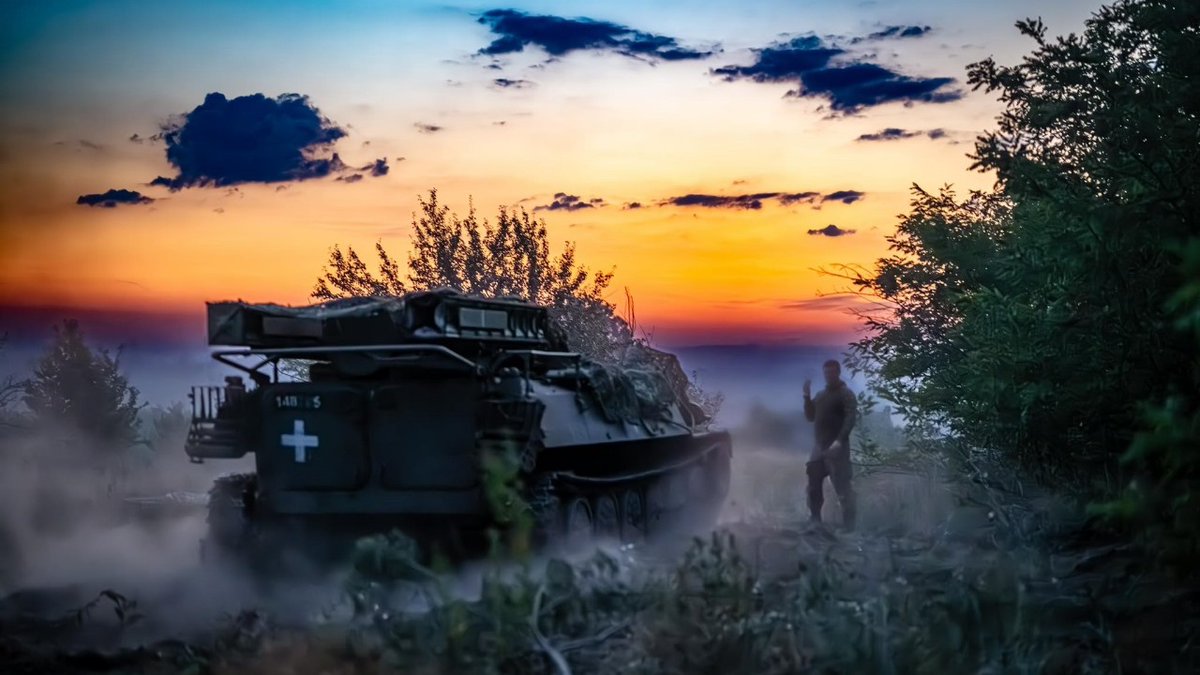
Now that we have had a couple of days to observe the new Ukrainian cross-border attack into Kursk, I wanted to offer a quick assessment of what we know, as well as Ukraine's potential objectives and the challenges it faces. 1/23 🧵( (Image: @DefenceU)
Like all regular people in America's heartland, JD Vance studied at Yale, had his career funded by Silicon Valley billionaires, and wrote a bestseller trashing that community.
Come on.
I can't wait to debate the guy—that is, if he's willing to get off the couch and show up.
Before I became vice president and before I was elected as U.S. senator, I was the attorney general of California. Before that, I was a prosecutor who took on predators, fraudsters, and cheaters.
So I know Donald Trump’s type.
In this campaign, I will put my record against his.
Almost any criticism of Trump is already being spun by Maga as an incitement to assassinate him. This is an Orwellian attempt to silence what remains of the effort to stop him from regaining power.