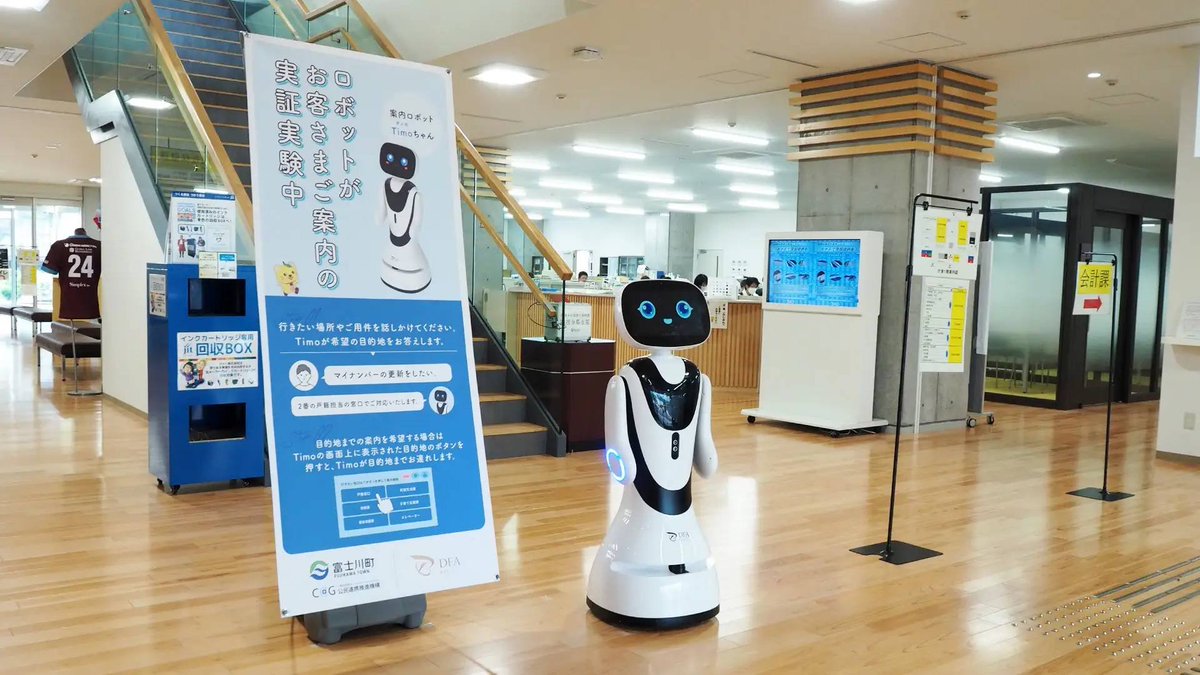
@darrenpjones Quite. Our UK and Japan research finds people fairly open to AI for routine public-sector tasks, but support drops for complex decisions. Trust in government strongly predicts acceptance.
https://t.co/urKamM1yKK
@merettm There’s a public-attitudes dimension here too. In our UK-Japan surveys, support was higher for AI helping MPs than for AI making decisions instead of them. Keeping humans responsible matters for democratic legitimacy as well as safety.
https://t.co/w2m43uT6LD
@glukianoff A comparative angle: our survey of 3,352 people in the UK and Japan found that support for academic freedom varies with ideology and trust in scientists. We tested controversial cases instead of agreement with the principle alone.
https://t.co/XMdkITjKSs
@MichaelLCrick There’s a wider trust question here. Our 19-month England–Japan study found BBC trust sharply divided by political affiliation, while NHK trust was less politically divided. We didn’t test forms of address, but the comparison may interest you:
https://t.co/rt3X8sJFKu
@XHNews Our research in Japan and the UK finds that people who see AI as beneficial, and trust government and scientists, tend to trust AI more. In Japan, even believing AI will replace your job is associated with greater trust in it.
https://t.co/GMLH6Km8Sb
What makes people trust AI? Find out in our new paper. One curious finding: in Japan, people who think AI may replace their job actually trust AI more.
https://t.co/GMLH6Km8Sb
https://t.co/dH2CafBWDC
@sunaharay@MartinEjnar
Ghent University says academic freedom has "great importance" but is "not unlimited" and "goes hand in hand with responsibility". We tested this tension in the UK and Japan:
https://t.co/JHhFDOn5c0
(1/4)
In both the UK and Japan, people on the political right were more likely to support protecting controversial or offensive research, while those on the left saw social sensitivity and avoiding potential harm as more important.
(3/4)
@SarahLudford I ran a recent Dutch e-bike survey, which found that physically separated cycle lanes were the most popular infrastructure option and were also seen as likely to increase cycling. One Dutch lesson is to separate cyclists and pedestrians, not make them compete for the same space.
@afneil Though *perhaps* not the case for Japan's NHK. While levels of trust in the BBC are clearly polarised, levels of trust in NHK are uniformly in the doldrums. But to be fair, we surveyed on trust, not content.
https://t.co/rt3X8sJFKu
"If Nigel Farage was watching this interview, what would you say to him?" In a Japanese TV exclusive, @tbsnewsdig asks the big questions of @CountBinface