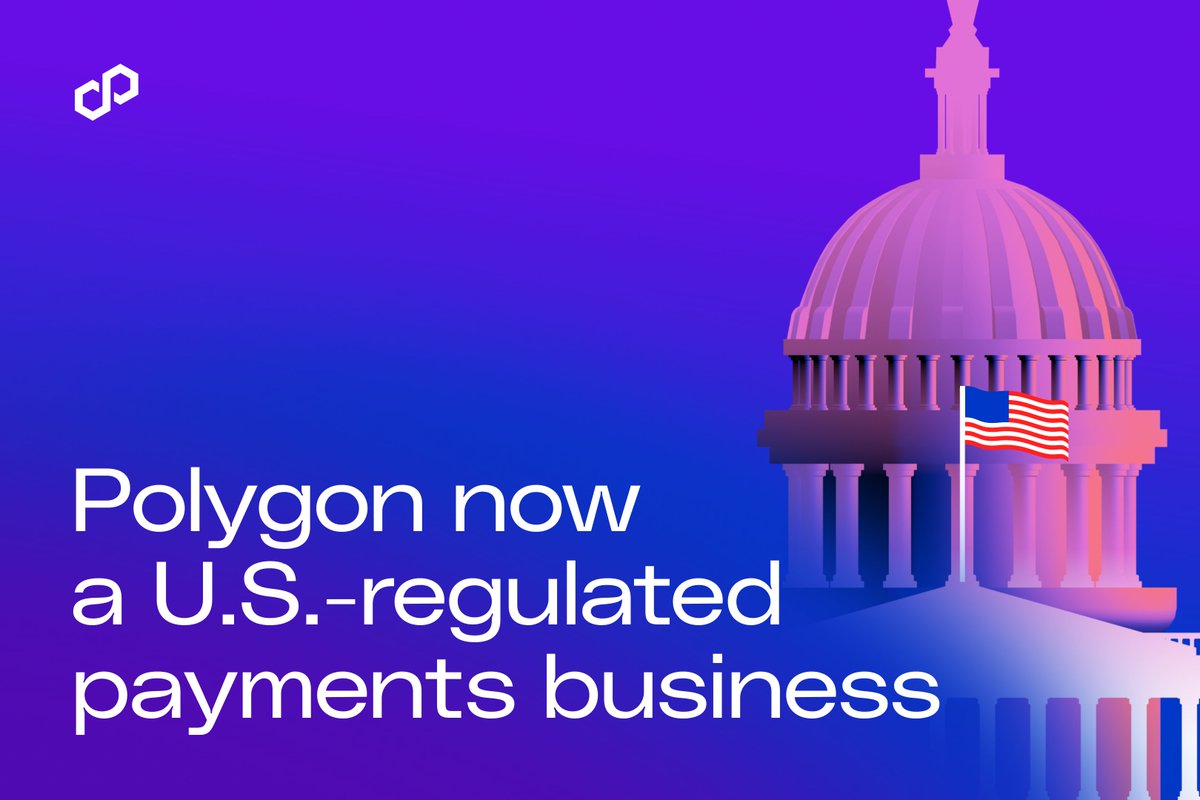
Polygon Labs finalized its acquisition of Coinme this morning, absorbing state money transmitter licenses across forty eight states to launch the Polygon Open Money Stack. This natively bridges traditional banking cores with onchain stablecoin settlement for live enterprise partners like Tazapay, Toku, and Mesh. Complete market and compliance analysis is pinned in the comment below.
BREAKING: Polygon Labs is now a U.S.-regulated payments business.
The Coinme acquisition is complete. It brings regulated U.S. money movement into Polygon Open Money Stack.
@Tazapay, @meshpay, @useToku, and Kira join as the first set of businesses moving money with the unified stack.
The fundamental bottleneck in institutional digital asset roadmaps is the account architecture holding the assets, not network speed.
Relying on legacy Externally Owned Accounts (EOAs) introduces material operational risk and severe gas fee capital inefficiencies for enterprise treasury workflows.
To scale platform infrastructure to production, the architecture must decouple off-chain security from on-chain logic by combining Multi-Party Computation (MPC) with Account Abstraction (AA).
I wrote a detailed risk-benefit evaluation breaking down this hybrid stack, including a production blueprint for real-time stablecoin settlement, on my Substack.
Read the full analysis here: https://t.co/FaybMkQKKx
#CryptoInfrastructure #Fintech #DigitalAssets #Stablecoins
The digital asset ecosystem has reached a significant maturity milestone, transitioning from the initial building phase into an era focused on integration and commercial scale.
With the ECB launching its Pontes DLT infrastructure and the SEC and CFTC issuing parallel administrative guidance last week, next-generation infrastructure is increasingly evaluated by the transactional volume and utility it can securely support on a corporate balance sheet.
Because turn-key FinTech aggregators now offer integration-in-a-box capabilities, the primary focus for product leadership has expanded beyond baseline code configuration. The core opportunity lies in defining the strategic business case, identifying exact enterprise requirements, and architecting sustainable revenue models.
Full analysis of this operational shift and the three-step methodology is linked in the reply below.
The SEC and CFTC just permanently split the regulatory path for tokenized securities. No more unified compliance strategy.I just published a complete 6-page Executive Briefing breaking down the ADV caps, sunset clocks, and the 60-day Day-Zero timeline. Read the full breakdown and download the slide deck here:
https://t.co/7GBidvXmFW🧵👇
#digitalassets
Visa, Mastercard, and Ant International just launched a joint Know Your Agent KYA framework bridging global card networks with Chinese digital wallet ledgers. Backed by the Monetary Authority of Singapore MAS Financial AI Builder Program and https://t.co/FP06l20V2N, this architecture unifies machine identity, intent validation, and atomic USD to CNY currency swaps. I broke down the complete structural data lineage, API gateway payloads, and ledger reconciliation layers in my latest piece. Full deep dive and official announcements in the link below.
The future of finance isn't a winner take all chain race. It is a segmented, multi layered payments stack where commercial gateways, private contract engines, and cross currency liquidity bridges interlock.
Here is my breakdown of how zero knowledge privacy rails, Ethereum layer 2 infrastructure, digital asset ledger bridges, and Canton Network map directly against traditional rails like FedNow, ACH, and SWIFT for my payments peers.
Full brief in the comments below.
@sandeepnailwal@sandeepnailwal Predictable pricing is a massive differentiator in this market. It’s exactly what separates a speculative network from actual commercial payment infrastructure.