$BONK will go on another parabolic run.
No shot @theunipcs and @iamkadense let solana:DezXAZ8z7PnrnRJjz3wXBoRgixCa6xjnB7YaB1pPB263 die off.
The OG Solana dog meme that took us out the bear market will have another day to shine, soon.
Catching skin cancer early is a home robotics problem.
Melanoma is highly treatable when detected early, yet today’s screening process depends heavily on patients noticing tiny changes across their entire skin surface. This requires patients to solve a near-impossible visual-memory and registration problem.
I built OpenDerm, an open-source 4-DOF robot that captures high-resolution images of the skin and uses them to reconstruct and track the skin surface in 3D over time.
The best way to make skin screening truly routine is to bring it into the home. OpenDerm shows that inexpensive robotic skin imaging is possible, but the path to scale is not a dedicated screening robot in every household—it is to make skin screening one of the many useful things a general-purpose home robot can do.
Read more about why I built OpenDerm and how it works here:
Blog: https://t.co/KYlNIkF3TV
Project: https://t.co/c9d4KuwXUP
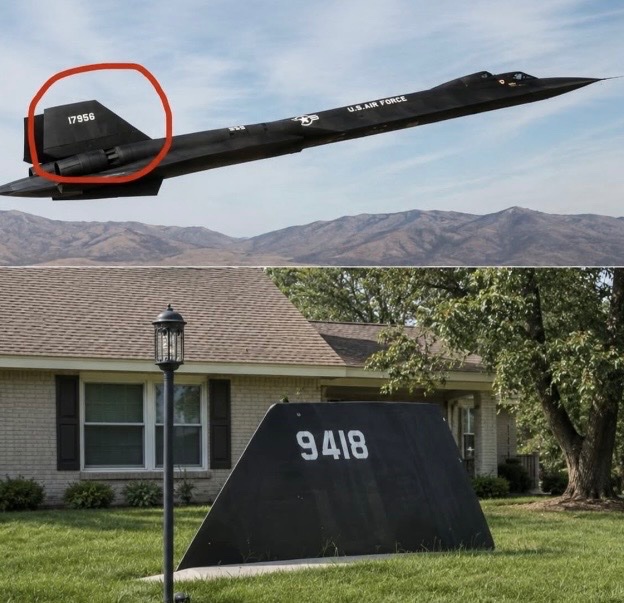
This homeowner uses a genuine surplus SR-71 Blackbird rudder as his house number sign. The piece of aviation history is anchored in hundreds of pounds of concrete to prevent it from being stolen. (Via Linda Sheffield)
When it comes to engineering achievements, the SR-71 Blackbird remains one of the clearest examples of the Skunk Works team building technology far ahead of its time. While its Mach 3 speed and titanium construction often steal the attention, the aircraft’s revolutionary rudder system was one of its most impressive innovations.
Most aircraft rely on a movable rudder attached to a fixed vertical tail fin to control direction. However, at speeds above Mach 3, the extreme aerodynamic forces would make a traditional design unreliable and vulnerable to failure.
To overcome this challenge, Kelly Johnson and the Skunk Works engineers created an innovative all-moving vertical tail system. Instead of using a small hinged control surface, the Blackbird’s entire twin vertical stabilizers pivoted as a single structure, providing exceptional control and stability while flying through the harsh conditions of the upper atmosphere.
The inward-canted design of the tail fins also served another purpose: reducing the aircraft’s radar signature. This combination of aerodynamic performance and stealth technology allowed the SR-71 to remain stable at altitudes of around 80,000 feet while avoiding enemy detection. It stands as a remarkable example of engineers turning impossible challenges into groundbreaking solutions.
If you’re into the game from early 2021, you should remember how @RobinhoodApp fucked GameStop investors. They were the #1 reason for switching from stonks to crypto for many. Now they build a crypto chain and everything is cool? No way I’m trusting my funds on these clowns 🤡
El CEO de Anthropic viendo como China lanza un nuevo modelo de IA que supera a Claude Opus 4.8 en TODO, iguala a Fable 5 costando 8 VECES MENOS, que encima es 100% Open source y no puede hacer nada al respecto
Personal update: I've joined Anthropic. I think the next few years at the frontier of LLMs will be especially formative. I am very excited to join the team here and get back to R&D. I remain deeply passionate about education and plan to resume my work on it in time.
Um cara colocou US$ 2 mil no Polymarket apostando na temperatura de Paris.
Depois foi lá e esquentou o sensor de previsão do tempo com um secador de cabelo.
Resultado: bateu a meta de temperatura, sacou US$ 36.900 e sumiu no meio da multidão.
O mercado previu tudo.
Menos o secador.
bro was right.
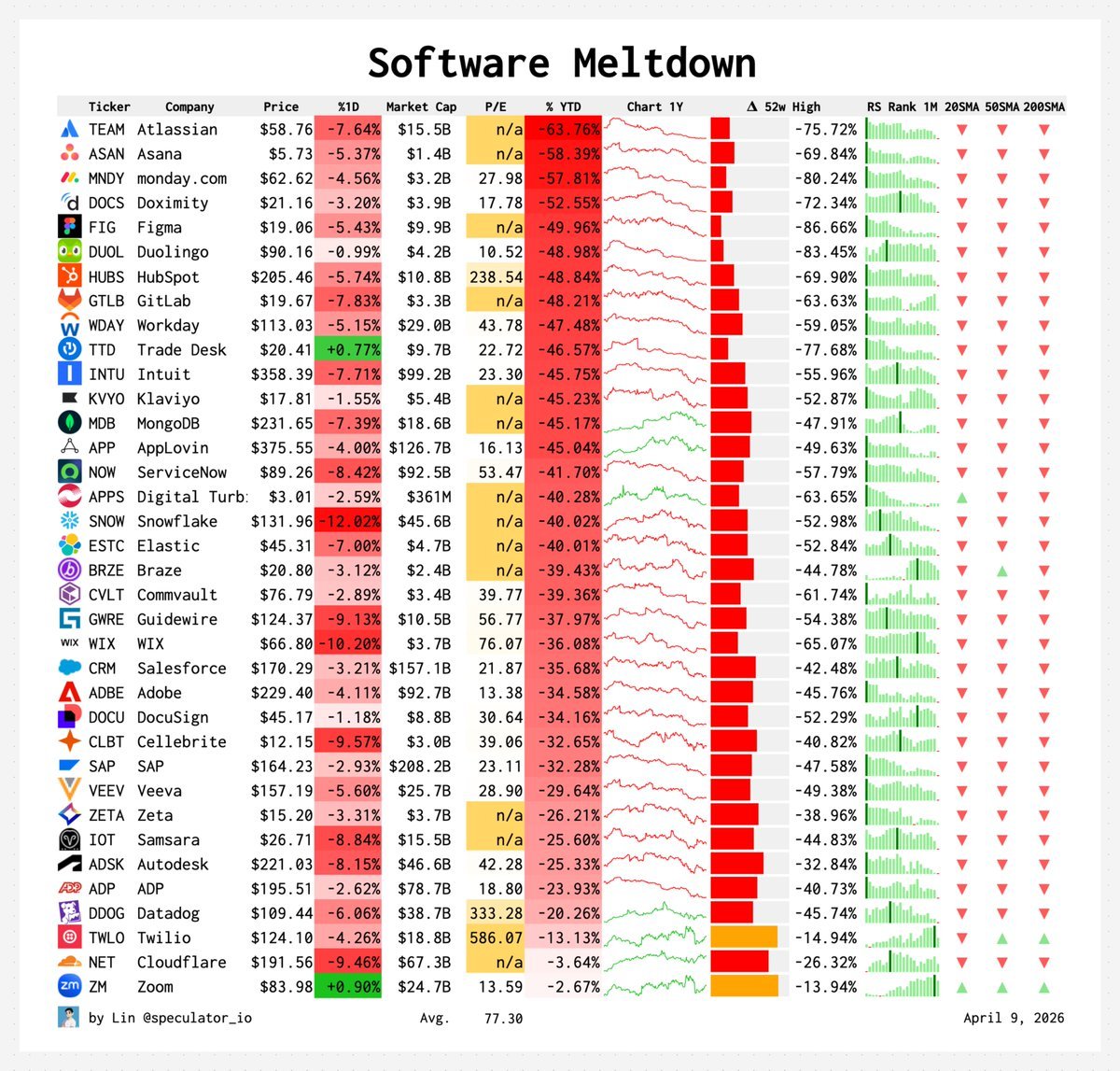
Atlassian down 75%. HubSpot down 69%. Figma down 86%.
Almost all of them down 30–70% from their 52-week highs.
AI is literally eating software alive and repricing every company in real time.
SaaS is cooked fr 😭
Artemis Mission Route in 3D
- This animation visualizes the Artemis mission trajectory in a dynamic 3D perspective, showing how the spacecraft travels through the Earth–Moon system while all celestial bodies are in motion. Instead of a static path, the Sun, Earth, and Moon move simultaneously, revealing the true complexity of orbital mechanics. The result highlights how the Artemis route is not a simple curve, but a constantly shifting trajectory shaped by gravity and motion. This view provides a clearer understanding of how modern space missions navigate through space in real time. Right now, Artemis is on its return path to Earth and is expected to arrive back soon as it completes its mission. The sizes and distances of the Sun, Earth, and Moon are not to scale and are adjusted for visual purposes.