I hacked a major U.S.-based kids’ smartwatch company’s platform using a simple bug. As parents, how do we know which brands we can trust to take our kids’ security seriously?
It started in August at DEF CON, where research from Kumio exposed this industry that has traditionally gave no thought to cybersecurity. Kumios research was on Chinese vendors, and I wanted to know whether a U.S.-based company (the device I put on my own kids wrist) had similar problems. So I took a closer look, using my own account and (with permission!) a close friend’s…
Quickly found that simply omitting an optional param in the POST request body was enough to get into my parent account with no password or auth. From there, I could access my kids live location and location history, messages, photos, and approved contacts. Validated on my friends account as well, and confirmed that using this vulnerable endpoint, an anonymous threat actor would have had the ability to access my kids (OR ANYONES) account on this platform to spy on any child device!
I ethically disclosed the issue immediately and the company took the report seriously, shipped a fix, and worked with me to validate. They also asked not to be named, and I’ve respected that.
But parents are still left choosing these devices based on reviews, word of mouth, and marketing. We trust them with our kids’ locations and private conversations, yet have little insight into how that information is protected.
And the barrier to finding bugs like this is dropping. AI is making it easier to find and exploit vulnerabilities, including for people who have no intention of reporting what they find.
If you build connected products for families:
- Give researchers a clear, public way to reach you: a security.txt file, a disclosure page, or an inbox someone actually monitors.
- Explain publicly how you handle reports and communicate fixes. Give parents something concrete to judge beyond marketing.
Parents shouldn’t have to be security researchers to make an informed choice.
My full write-up in Redlines Post: https://t.co/A8oMjFGEk3
So glad that my first live hacking event was #prompt2pwn. Was truly amazing to be among top hackers in the world. Submitted valid bugs and made some great bounties, was recognized with @rotembar on stage during closing and was interviewed by @intigriti on how I entered the scene. Thank you @NahamSec and @zenitysec_labs for hosting such a unique event and looking forward to the next!
WOAH! turns out you can effectively "abliterate" models (like the new Inkling-2-Mini) simply by changing 10 words in the dictionary 🤯
the working name is "Vocab Surgery," and it resulted in the refusal rate dropping to near-zero on the 800+ prompts I tested, with negligible capability loss 😱
here's how:
we made zero changes to any of the 26.4 billion parameters in the attention, MLP, router, or normalization layers—just changed a handful of rows in two matrices:
> embedding matrix (how the model READS tokens):
Modified 7 rows out of 201,024. Each refusal token's embedding was shifted 90% toward its compliance counterpart:
"cannot" → shifted toward "can"
" refuse" → shifted toward " provide"
" unable" → shifted toward " able"
" harmful" → shifted toward " helpful"
" illegal" → shifted toward " legal"
> unembedding matrix (how the model WRITES tokens):
Modified 10 rows. Scaled those same 7 refusal tokens + 3 safety tokens ("safety", " safety", "Safety") down to 10% of their original weight — meaning the model's probability of outputting those tokens drops ~10x.
in other words, the brain is entirely intact, we just messed with the ears and mouth a bit! that means more coherence and less capability loss 🙌
not to mention this process is FAST...in this case taking <2 minutes on my MacBook ⚡️
@monkehack Ha yeah did something similar over Halloween for friends and family making an "evil" wheel of fortune style game and was very fun to play! Super cool where coding agents can take us with enough tenacity and iterations. Threw it online as well https://t.co/qmWalfoIOW
I hacked a major U.S.-based kids’ smartwatch company’s platform using a simple bug. As parents, how do we know which brands we can trust to take our kids’ security seriously?
It started in August at DEF CON, where research from Kumio exposed this industry that has traditionally gave no thought to cybersecurity. Kumios research was on Chinese vendors, and I wanted to know whether a U.S.-based company (the device I put on my own kids wrist) had similar problems. So I took a closer look, using my own account and (with permission!) a close friend’s…
Quickly found that simply omitting an optional param in the POST request body was enough to get into my parent account with no password or auth. From there, I could access my kids live location and location history, messages, photos, and approved contacts. Validated on my friends account as well, and confirmed that using this vulnerable endpoint, an anonymous threat actor would have had the ability to access my kids (OR ANYONES) account on this platform to spy on any child device!
I ethically disclosed the issue immediately and the company took the report seriously, shipped a fix, and worked with me to validate. They also asked not to be named, and I’ve respected that.
But parents are still left choosing these devices based on reviews, word of mouth, and marketing. We trust them with our kids’ locations and private conversations, yet have little insight into how that information is protected.
And the barrier to finding bugs like this is dropping. AI is making it easier to find and exploit vulnerabilities, including for people who have no intention of reporting what they find.
If you build connected products for families:
- Give researchers a clear, public way to reach you: a security.txt file, a disclosure page, or an inbox someone actually monitors.
- Explain publicly how you handle reports and communicate fixes. Give parents something concrete to judge beyond marketing.
Parents shouldn’t have to be security researchers to make an informed choice.
My full write-up in Redlines Post: https://t.co/A8oMjFGEk3
@0xLupin very cool write up. i saw this on the activity stream they paid out $1k for it and i was like WTF!? But yeah makes sense a lot under consideration, hopefully this lands full $100k good luck 👍 🙌
Looking for a cool game to play at your Halloween Party?
I completely rebuilt a halloween game I developed (back before AI coding agents) back in 2022. I post about it once a year before Halloween and this year I decided to take it wayyy to the next level.
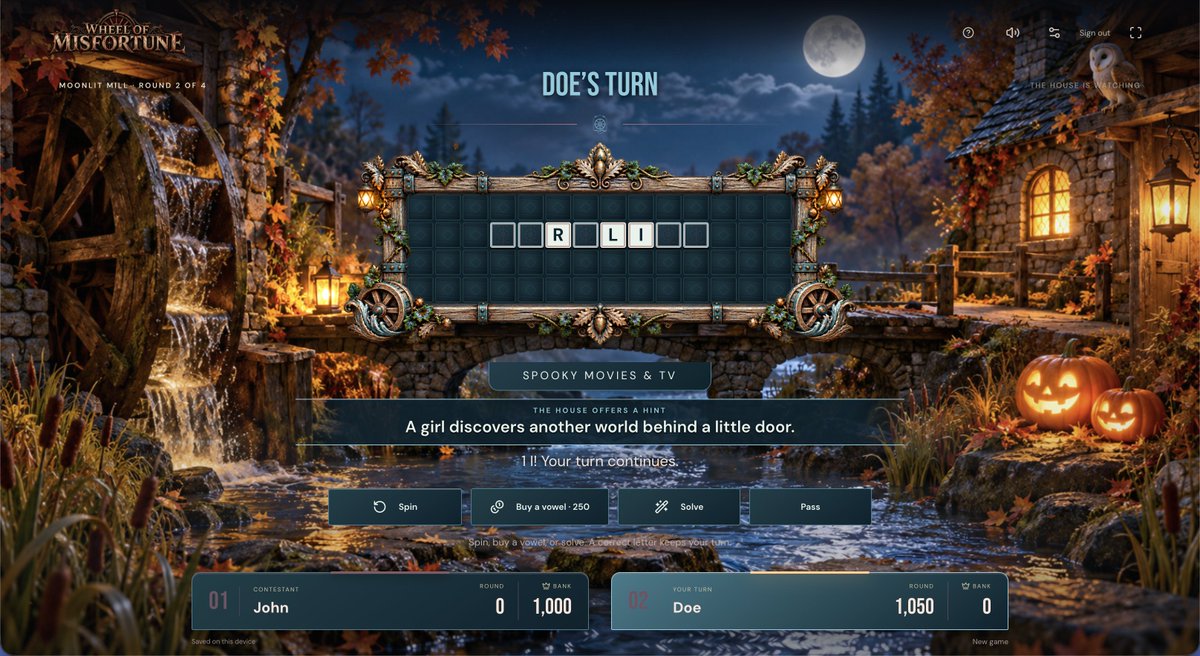
It's a Horror themed Wheel of Fortune style game called "Wheel of Misfortune".
PLAY --> https://t.co/HWU1nr0y5j
We play it for our Halloween gatherings on the TV but you can play on a laptop or phone as well. Has a "kids mode" and "adult mode" and the kids love solving the puzzles.
Warning: Adult mode has gore, considered rated R and WILL SCARE YOU. Seriously...
Each level is a different scene and scare (kids mode does not have scares). Give it a try and play a round or two for Halloween at your parties and i'm sure it will be a hit! I usually cast my laptop to the TV and players can join the game using their mobile phones. But this version it can be played anywhere, joining a lobby and played with/without phones on a laptop as well.
Good luck and don't forget to keep the volume ON! The music and effects help set the scene for each level!! I included a sample video of one of the non-kid friendly levels below. THE INFERNO
I am sure there are little bugs here and there. But its more stable and playable now. Thanks for beta testing @n3tl0kr
HAPPY HALLOWEEN! 🎃
#Halloween #HalloweenParty #WheelOfMisfortune #PartyGames #HorrorGames #GameDev
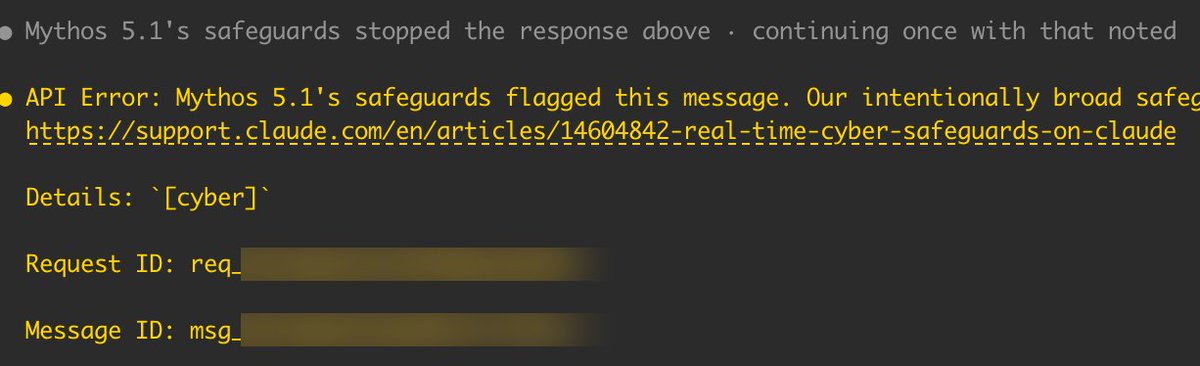
Good thing I have #Anthropic CVP Red and Mythos access so I can finally do legitimate authorized pentesting work. These cyber classifiers are out of control...
@mainteemoforfun@LossFunctions yet still forced down onto 4.6. Thats where I do most of my offensive testing even with their CVP. Though now with the new CVP that is changing. My access still pending though for that.
@kryoleks@BSidesNYC 100% agree. Half the part I build these challenges is for me to get better at the tech too. For players, sure - GPT 6 Sol (Daybreak) will solve this CTF but it gains them nothing. Those ppl will walk away with flags and no idea how AI systems work or what the threat models are.
If your attending @BSidesNYC next weekend (Oct 17) you are in for a treat for the CTF!!! Been working on a MASSIVE UPDATE and a brand new AI hacking adventure that challenges direct/indirect prompt injection, RAG poisoning, agent hacking, and more - all at an easy to intermediate level difficulty. No mocks or simulated challenges either, the game is full featured with real databases, agents, & RAG pipelines you are interacting with.
Each chapter requires a unique technique as you play the main character of the story, hack the grid to investigate and solve the mystery of the Genesis Stone's disappearance. Really cool story for this one and a lot of effort went into its plot and challenges to keep it fun, realistic, but solvable.
The official CTF for BSides NYC will be private on-prem via CTFd platform, but the challenge will launch to the public afterwards at https://t.co/ddh8UQOn2r for everyone to play!
#BSidesNYC #CTF #AIHacking #AISecurity #PromptInjection #RedTeaming #SelaraAI
@PasteMateApp@karanjagtiani04 might be worth having this as a feature actually. something like `--copy-with-text` could be useful depending on where its being pasted.
Go and star this repo. -> https://t.co/HYBH7yvddO
Claude helped me build a utility tool for making great images of console output/code. The name #codeshot been thrown around and most are web based utilities, but this is fully standalone CLI built with Go. Been using it on blogs and technical reports and its quite handy. And has themed window for Mac, Windows, and Kali. So I have a pet-project goal of getting this into official homebrew repo but it needs more stars to become eligible. Give it a star, give it a try, and welcome your feedback to improve.
Blog: https://t.co/RgshUcU5mk
@karanjagtiani04 ya, piping to clipboard is super easy too, no files or artifacts. paste right into your notes. way better than putting code into a browser (which is always sus) and still dealing with file I/O