Preprint alert 🚨I am excited about our new paper titled “The representational nature of spatio-temporal recurrent processing in visual object recognition.” 🥳🌟
https://t.co/5wJJDxUl7V
1/7 Does the infant brain have representational structure? 👶🧠In the FOUNDCOG project, we scanned 134 awake infants using fMRI. Published in Nature Neuroscience, our research reveals 2-month-old infants already possess complex visual representations in VVC that align with DNNs.
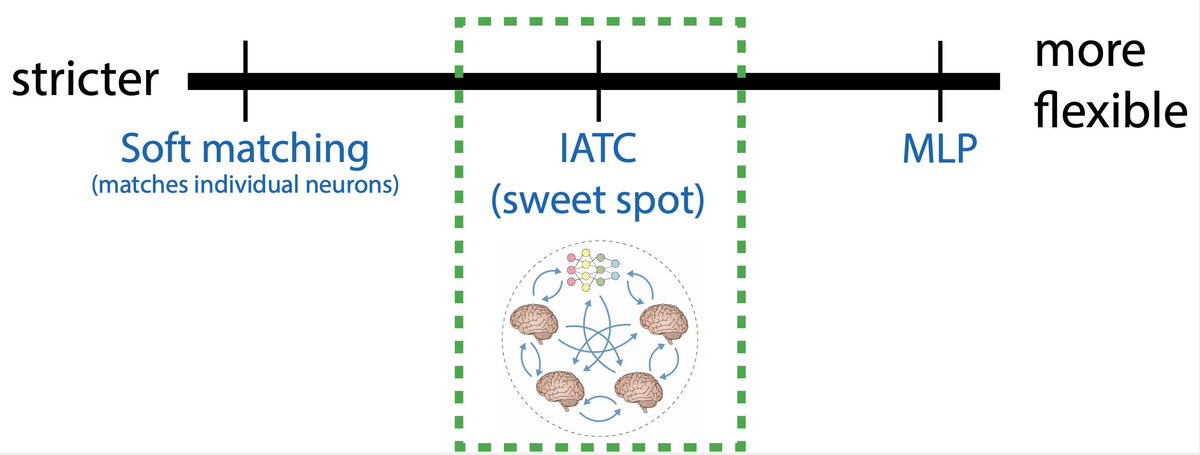
1/x Our new method, the Inter-Animal Transform Class (IATC), is a principled way to compare neural network models to the brain. It's the first to ensure both accurate brain activity predictions and specific identification of neural mechanisms.
Preprint: https://t.co/hPqo5PrZoc
🚨 Finally out in Nature Machine Intelligence!! "Visual representations in the human brain are aligned with large language models"
https://t.co/GB5k6IV4Jg
Exciting new preprint from the lab: “Adopting a human developmental visual diet yields robust, shape-based AI vision”. A most wonderful case where brain inspiration massively improved AI solutions.
Work with @lu_zejin@martisamuser and Radoslaw Cichy
https://t.co/XVYqQPjoTA
Now out in Nature Human Behaviour @NatureHumBehav: “End-to-end topographic networks as models of cortical map formation and human visual behaviour”. Please check our NHB link: https://t.co/lgb4ZQmWo0
Paolo Papale's THINGS ventral stream spiking dataset (TVSD) came out. It is open and contains neuronal responses in V1, V4 and IT to ~25,000 THINGS images. We expect that the dataset will be useful to compare the visual brain to deep neural networks.
https://t.co/CF8lJBrfBl
🚀 New paper out in Psychological Review!
How does learning change across the lifespan? We propose that resource rationality—adapting belief updating to cognitive limitations—can explain age-related differences in learning.
📖 https://t.co/hoB2uNx4rv
👇 A short thread:
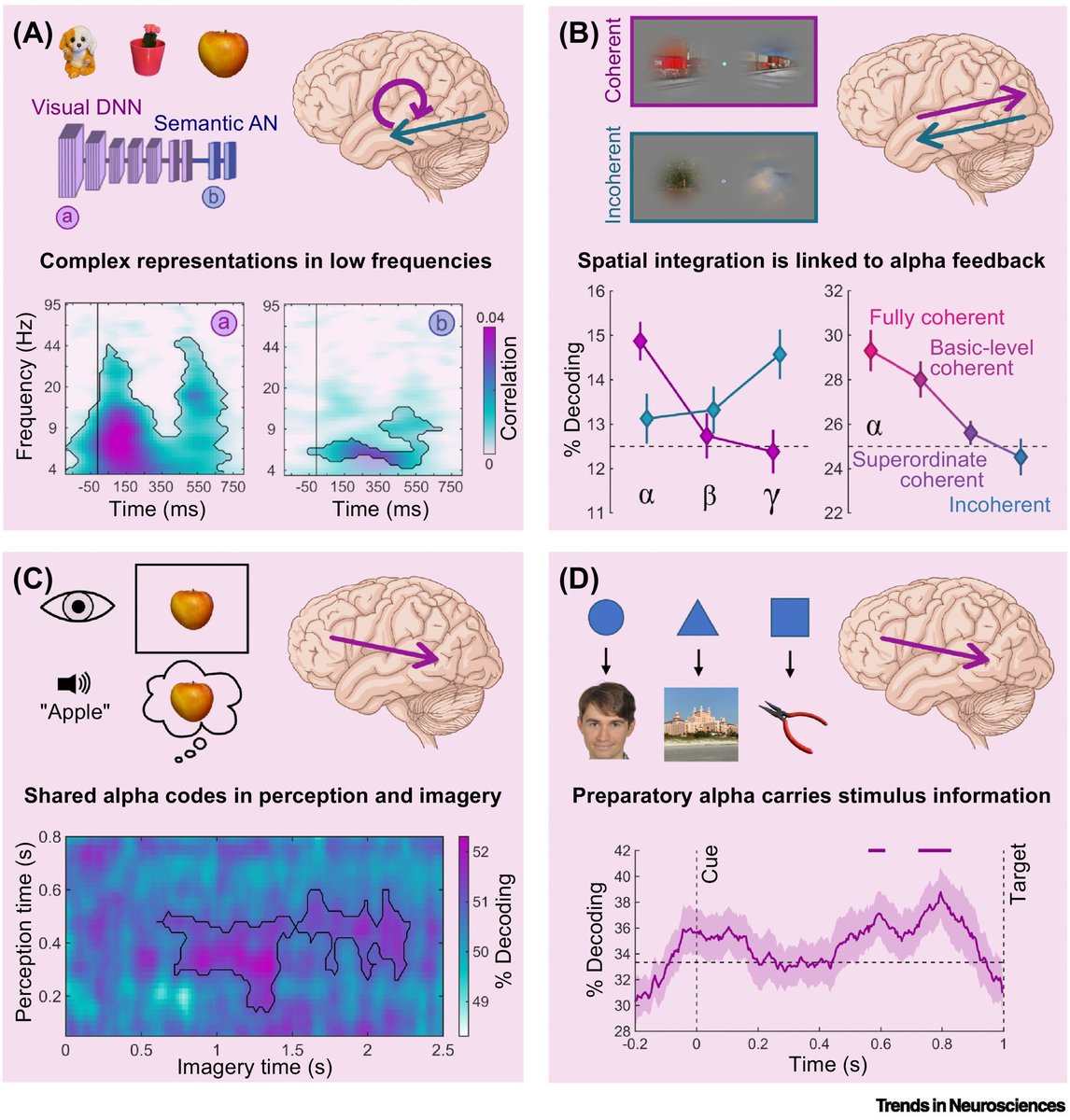
Now out in @TrendsNeuro: We discuss how the contents of visual perception, imagery, and prediction can be decoded from rhythmic brain activity and argue that such rhythmic representations offer new insights into neural information propagation. @RicoStecher https://t.co/kR8RqCcJsj
New priprint!
When I started my PhD (ages ago), I ran what I thought was a pilot for several iconic memory experiments down the line. This was interesting because iconic memory is (allegedly) linked to rich perceptual experience, and so I had many questions. 1/🧵
New preprint led by @LuChunYeh, with @MariusPeelen & @SuryaGayet: Using EEG, we delineate how neural representations of real-world object size emerge from interactions of the object's retinal size and pictorial distance cues from the scene context. 🐻🧸🛤️https://t.co/orXC7i8B36
I had the chance to write an Opinion Article with Radek Cichy & Daniel Kaiser. We argue that recent efforts in applying decoding methods to rhythms in visual cortex reveal a new function as carriers of content information. The preprint is now out: https://t.co/Ee6yrdyCgE
1/n
Examining the robustness and generalizability of the shape bias: a meta-analysis - new paper by Samah Abdelrahim and me.
Lots of heterogeneity in this important phenomenon, perhaps masking true developmental and cross-linguistic trends...
https://t.co/GsrMjZ5cFV
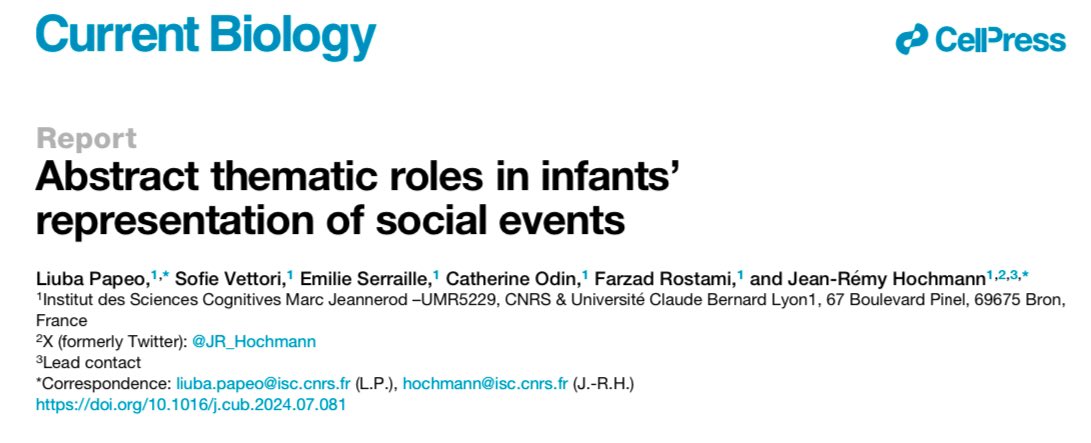
The September issue @CurrentBiology What do infants think when they see social interactions? 👶🏻
The representation of interacting people as agent and patient reveals a language-of-thought before language development
https://t.co/jfG7Lz0Epz
@JR_Hochmann@ISC_MJ@BabyLyon11 🧵👇
On the centenary of the first human #EEG recording, @faisalmushtaq et al. ask more than 500 experts to reflect on the impact of this discovery and potential of its application in science and society over the next 100 years.
https://t.co/rRBzi3PMhz
Computational cognitive neuroscience #ccn2025, will be in Amsterdam from 12 until the 15th of August. Co-chairs me and @iris_groen. So looking forward to it already!
Excited to be back at @CogCompNeuro!
Check out my poster with @LourencoLab on Friday at 11 AM (C5): Fast and robust visual recognition in young children
We explore the upper-limits of children's recognition abilities and benchmark them against a range of DNNs
#CCN2024
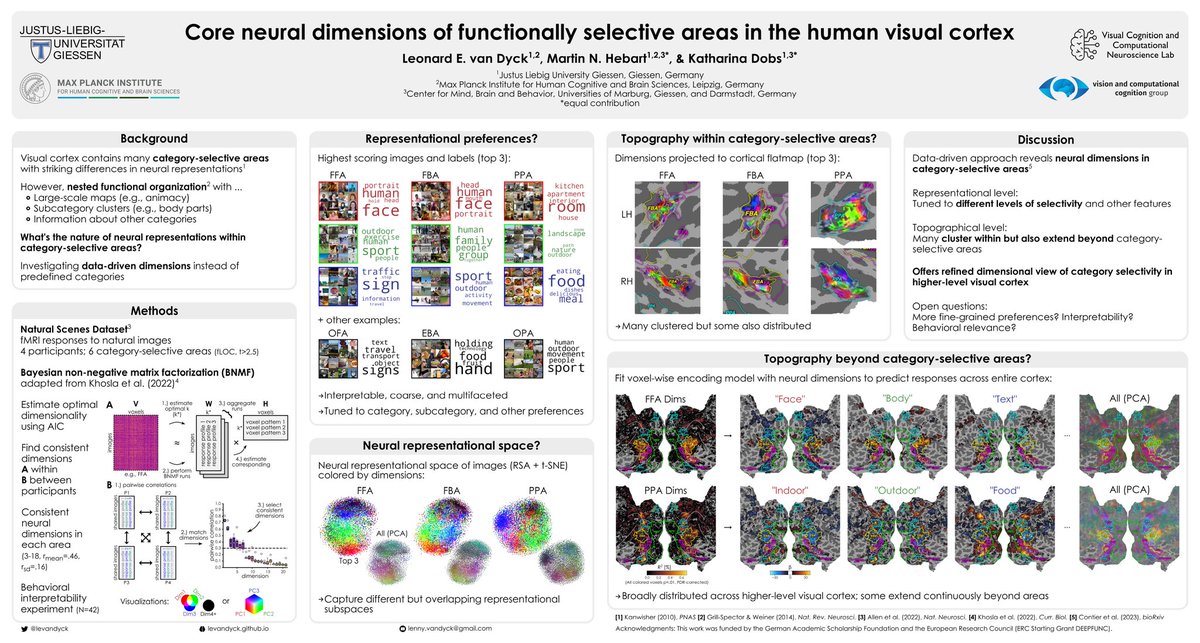
Excited to present findings from my first PhD project with @martin_hebart and @KathaDobs at #CCN2024
If you're into visual cortex, functional selectivity, and/or representational dimensions, make sure to stop by poster P154 today! 🧠🌈