Sometimes The One above has unique ways of teaching you and making you aware of the laws of universe, the beauty and fragility of it.
Just when I was drowning myself and dealing with a man-made situation that in the grand scheme of things doesn’t matter The One above drew a line against this challenge, just to show his power and remind me of what the real situations in life that matter are.
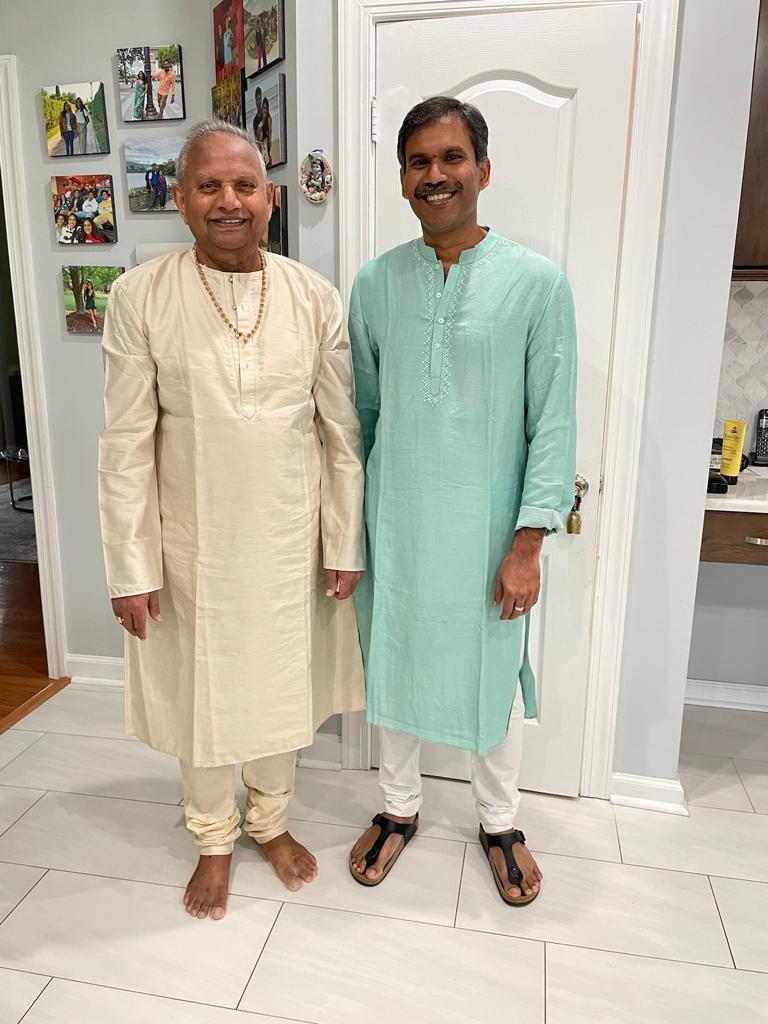
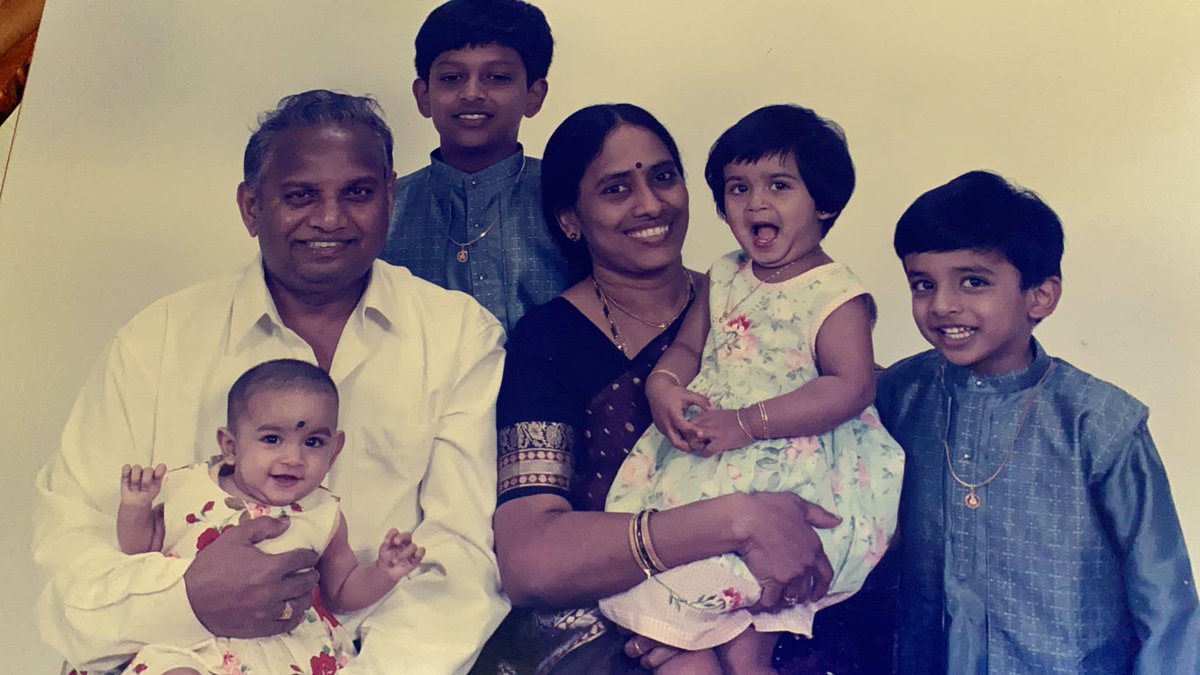
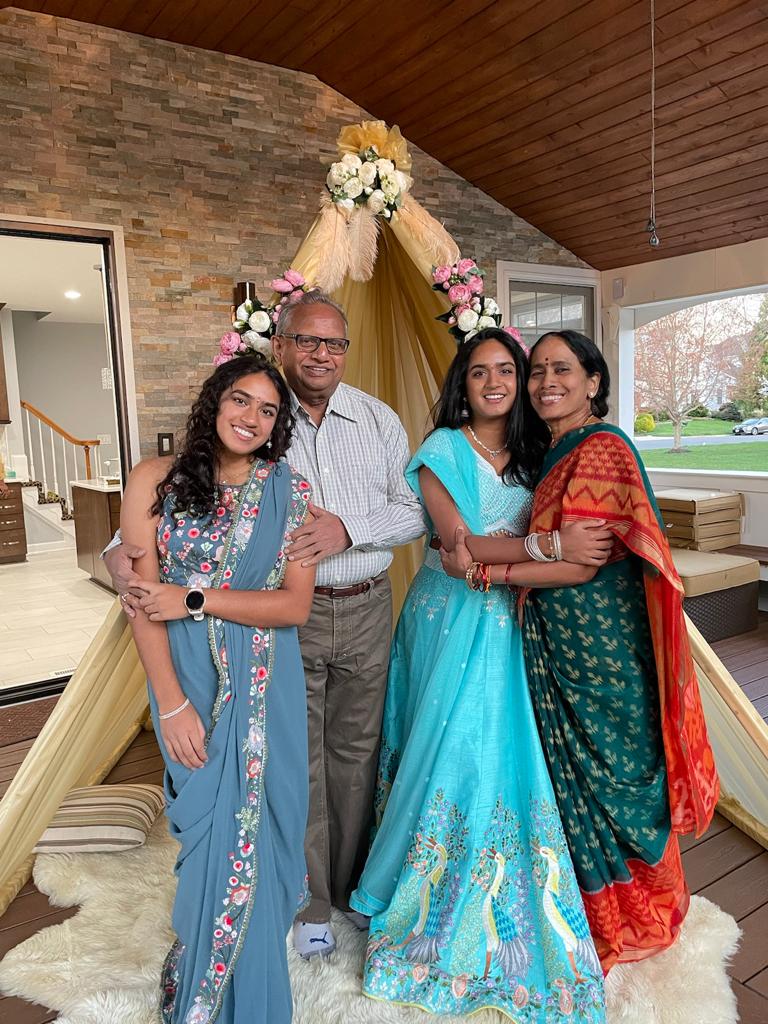
Friday, June 30th night my Nanagaru - a perfectly healthy and active individual with no signs of any illness - suffered a massive irrecoverable brain hemorrhage, post which he passed away in peace on July 2nd at 15:24. To say it was a shock for me and my entire family is an understatement. While we all know this is a reality we all have to face some day, we were confident that now was not the time. He is a man of strong principles, values, discipline, and a regiment that he follows rain or shine, no matter wherever in the world he is. He goes through his daily routine of 3 mile walk, 1 hour gym, interspersed between cricket and movie watching sessions, Bhagavad-Gita recitals, healthy meals, snacks and sweets.
Sitting by his bedside in a hospital ICU ward staring at his vegetative brain dead body and his soul about to depart his body to the heavenly abode, I was reminiscing about his life and everything he stood for. He was role model in more ways than he knew and admittedly, that I have shown. I was glad just one month before his untimely departure I was able to have a conversation and share my heartfelt feelings with him. His iron determination, unwavering discipline, single minded focus, unfettered risk taking, willingness to shake the status-quo, following the path you believe in the face of adversity, not worried about judgement by people around you among many other countless strong traits he displayed throughout his life until his last breath.
Irony of his life is that even in his death, he strong willed himself to have his last breath amongst every family member on his bed side, on the most auspicious day in Hindu Culture (Guru Pournami), amongst the priests chanting pious chants. Couldn’t have asked for a befitting farewell to a man of his stature. Lived his life like a king, and left to his heavenly abode only bestowed on for the most blessed ones.
🌈 We Love you, we admire you, we all will miss you and everything you represented my dear Nannagaru. We only hope to carry your legacy for generations to come
I was a professional tennis player. I competed at Wimbledon. I was ranked 117 in the world. At 52 I was still playing competitive singles multiple times a week. I was the fittest person in most rooms I walked into.
I had a heart attack on a tennis court.
I used to think fitness was a shield. If you exercise hard enough, eat reasonably well, and keep your weight down, heart disease cannot touch you.
I was wrong. And the data says I am not alone.
I'll admit this might sound odd coming from me, maybe even clichéd. But it's something I've been sitting with for a while, so here goes.
When I started out, like most people, I had a simple wealth goal. I'd actually written it down: hit ₹5 crore, retire in Goa, beach shack, done. That was the dream.
After the Zerodha journey, I find myself on a very different side of that equation, and the dark inequalities of wealth and opportunity are harder to ignore than ever. We all know the numbers on inequality. The concentration of wealth among the top 1% is severe and getting worse, and it's even starker among the top 0.1%. The post-2008 era of rising asset prices has likely made this worse, because the people who hold financial assets are, by definition, people who already have money.
This isn't unique to India. Barring a few exceptions, it's a global phenomenon.
I'm cautious about attributing every socio-political problem we face today to inequality, but it's hard to deny the role it's played in the political upheavals we're seeing across the world. History rarely shows that sustained, extreme inequality ends well. To me, it increasingly feels like sitting in a car with the brakes cut, watching a cliff approach. Btw, all of this even before AI, which has a non-trivial probability of making things worse.
I'll stop short of prescribing solutions. It's too easy to reach for simple answers to complicated problems, and that's a separate conversation entirely. But I think we need to collectively acknowledge this: wealth that just sits in financial assets whose value keeps compounding upward doesn't do much good for anyone beyond those who already have it. And if that wealth isn't in motion, if it isn't doing some social good, the fabric that holds us together will only continue to fray and lead to cynicism, resentment, and worse yet, nihilism. We're already seeing all of it.
What I am saying is that even if a portion of that wealth were channelled into things that could materially improve lives, that seems worth doing. Hoarding wealth, in the grand scheme of things, doesn't really help anyone.
Couldn’t agree more. Along the same lines , compounding effect of meeting more people and having varying experiences sharpens your brain muscles and ability to connect seemingly random dots for a untraveled and a person with closed mindset.
There's a physicist at Stanford named Safi Bahcall who modeled this exact principle and the math is wild.
He calls it "phase transitions in human networks." When you're stationary, your probability of a lucky event is limited to your existing surface area: the people you already know, the places you already go, the ideas you've already been exposed to. Your opportunity window is fixed.
When you move, your collision rate with new nodes in a network increases nonlinearly. Double your movement (new conversations, new cities, new projects) and your probability of a serendipitous encounter doesn't double. It roughly quadruples. Because each new node connects you to their entire network, not just to them.
Richard Wiseman ran a 10-year study at the University of Hertfordshire tracking self-described "lucky" and "unlucky" people. The single biggest differentiator wasn't IQ, education, or family money. Lucky people scored significantly higher on one trait: openness to experience. They talked to strangers more, varied their routines more, and said yes to invitations at nearly twice the rate.
The "unlucky" group followed the same routes, ate at the same restaurants, and talked to the same 5 people. Their networks were closed loops. No new inputs, no new collisions.
Luck isn't random. Luck is surface area. And surface area is a function of movement.
The lobster emoji is doing more work than most people realize. Lobsters grow by shedding their shell when it gets too tight. The growth requires a period of total vulnerability. No protection, no armor, soft body exposed to the ocean.
That's the cost of movement nobody posts about. You have to be uncomfortable first. The new shell only hardens after you've already moved.
@LalitKModi@MichaelVaughan@LalitKModi - This is the most comprehensive and brilliantly researched and communicated story on IPL. If you haven't listened to this, you should, would love to hear your perspective. https://t.co/X2INa8WniN
@Nithin0dha Very sad reality of the capitalist economy we live in. I hope the world will regain it's balance and reward the businesses based on first principles and core intrinsic value rather than abstract and superficial value
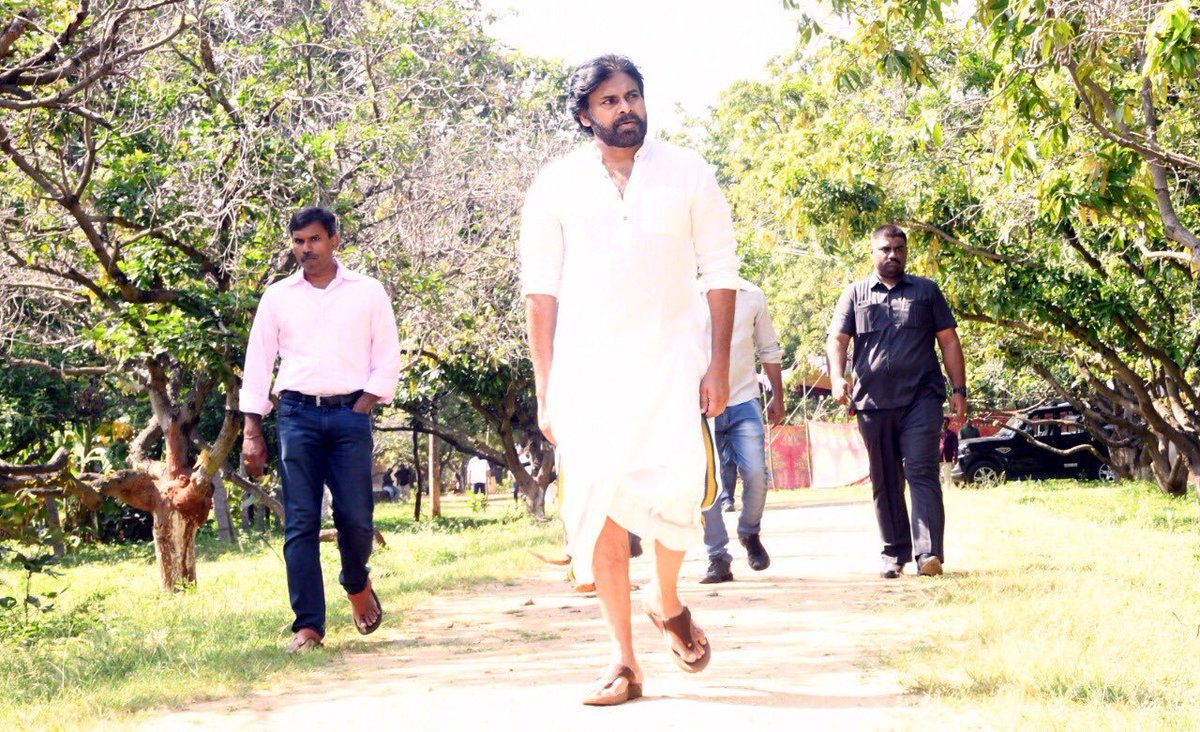
Journey of a #leader, #Janasenani#Janasena is often filled with failures, insults, questions of integrity, but with right intent, the patience of a mountain eventually good intent will prevail 💪💪 More power to #Pawanakalyan garu and his pursuit of glory for #AndhraPradesh #Bharat #India @PawanKalyan
We've raised $100M from Kleiner Perkins, Index Ventures, Lightspeed, and NVIDIA.
Today we're introducing Sonic-3 - the state-of-the-art model for realtime conversation.
What makes Sonic-3 great:
- Breakthrough naturalness - laughter and full emotional range
- Lightning fast -
THE MONK WHO HACKED REALITY
At 32, most people are settling into a job. Maybe they've made it to Vice President. Maybe they've started a company. Made a few crores if they're lucky. Got married, bought a flat, working on those EMIs.
And then there was this guy from Kerala.
Adi Shankara had walked across an entire subcontinent on foot, defeated every scholar he encountered in debate, unified a splintering religion, founded four monasteries that still stand today, written the definitive commentaries on Hinduism's holiest texts, and cracked the code to exit the simulation of reality itself.
All by 32. Then he died.
1,200 years later, we're still trying to process what this man accomplished in three decades....
The world he was born into was falling apart intellectually. Buddhism was crushing every debate. Hindu philosophy had splintered into a thousand contradictory schools. The Vedic tradition was fragmenting like a Wikipedia page with 50 editors all contradicting each other.
Then this kid from Kerala shows up. Age 8. Already fluent in Sanskrit. Already realized that everything people thought was real... wasn't.
What he saw was this: the phenomenal world is Maya. Not fake, but rendered. Like VR. It feels real, but it's code on top of something deeper. Underneath the simulation is Brahman, pure, formless, infinite Consciousness. The quantum field. The cosmic server. Existence-awareness-bliss.
And here's the kicker: Your true self (Atman) IS Brahman.
You're not a player logged into the game. You're not even the avatar. You're the CPU running everything. Your body? A skin. Your mind? A user interface. Your ego? A temporary account. But the core you, the "I AM" before thoughts, that's the source code itself. "Tat Tvam Asi" = You Are That.
Long before Elon Musk and Nick Bostrom, Shankara was telling us we're in the Matrix. And he had the exit strategy.
So he walked. Over 3000 kilometers just from Kerala to the Himalayas, then crisscrossed India multiple times. Town to town. Temple to temple. University to university. Challenging the top scholars to debate with one rule: loser converts to winner's philosophy. Your entire life's work on the line.
He went undefeated.
The most famous? Mandana Mishra, a legendary scholar who had spent his entire life mastering Vedic rituals. They debated for days. His own wife was the judge. Shankara won. Mandana became his disciple.
What made these men abandon everything? Shankara showed them that liberation (moksha) isn't going to heaven. It's realizing you were never trapped. You just forgot the root password. Avidyā. We forgot we're admins. We think we're just users.
He taught the "Neti Neti" method, the great elimination: not the body, not the mind, not the thoughts, not the emotions. Strip away every layer until only pure witnessing awareness remains.
But here's where Shankara separated himself from every other enlightened master in history. He didn't just achieve moksha and disappear into the Himalayas. He didn't just gather a few disciples and call it done. This man built a franchise for enlightenment that's still operational 12 centuries later.
While walking tens of thousands of kilometers and winning debates, he somehow found time to write the most authoritative commentaries ever produced on the Upanishads, Bhagavad Gita, and Brahma Sutras. These weren't casual blog posts. These were surgical deconstructions of reality itself. Every scholar who came after him had to contend with Shankara's interpretations. He basically set the terms of the conversation for the next millennium.
Then he planted four monasteries at the four corners of India like spiritual anchors, assigned his best disciples to run them, and created the Dashanami Order to ensure the knowledge wouldn't die with him. It's still running. Same lineages. Same teachings. 1,200 years.
And because he apparently had time to spare, he wrote poetry that makes you weep and wake up simultaneously. Nirvana Shatakam strips your identity to nothing in six verses. Bhaja Govindam slaps you awake from your philosophical overthinking. Saundarya Lahari reveals that consciousness without energy is inert, that Shiva without Shakti can't even blink. Pure awareness needs the rendering engine. The CPU needs the GPU. He understood the architecture of existence and wrote hymns about it.
He spoke of parallel realities (lokas) centuries before multiverse theories. He described the universe as cyclically rebooting long before cosmologists proposed it. He taught that the observer and observed are entangled, that consciousness collapses reality into form, predating quantum mechanics by over a thousand years. He said OM is the primordial vibration, the command that boots up existence itself.
When Hinduism was tearing itself apart over whether Shiva or Vishnu or Shakti was supreme, Shankara said: they're all the same. He promoted Shanmata, six paths to the same truth, and ended centuries of sectarian violence with one elegant insight. He traveled everywhere, reactivated temples, reset rituals, and gave a fragmenting civilization its center back.
Today we're obsessed with simulation theory. We debate whether we're living in base reality. We wonder if consciousness creates the universe or the universe creates consciousness. We're trying to hack our way to happiness, productivity, enlightenment.
Shankara solved it 1,200 years ago while walking barefoot across an untamed subcontinent.
His answer? You're already what you're seeking. You just forgot. The game was always optional. The prison was always unlocked. You're not trapped in the simulation. You ARE the simulation experiencing itself.
Alexander conquered land and died at 32. His empire collapsed before his body was cold.
Shankara conquered minds and died at 32. His empire runs stronger today than it did in the 8th century.
One left behind crumbling monuments. The other left behind a manual for reality itself.
1,200 years later, we're still reading the instructions.
Dear All
🚀 Sun Sep 21: Get Ready for the Asha-Jyothi 5K Run/Walk Family Fun Extravaganza! A day packed with fun, fitness, and fabulousness. It's not just a race—it's an experience! 🏃♂🎉
👉 If you haven't already please REGISTER https://t.co/na6UZbhgtc
👕 FREE T-shirt for every participant—rock your event swag with pride!
🏅 A shiny medal to celebrate your epic achievement!
🍳 A delicious breakfast to fuel your morning and tickle your taste buds!
🎵 Bollywood entertainment that will have you dancing and cheering like never before!
Whether you’re sprinting, strolling, or simply enjoying the festivities, this event promises a fantastic time for all ages.
Looking forward to seeing you all there!!
https://t.co/2aS6itDxkk
Q: Gurudev, why do the smallest thoughts hold the biggest power over our awareness?
@Gurudev Sri Sri Ravi Shankar ji – One small insignificant thought can clog your whole awareness
It was a full moon night and there was a poet sitting in a boathouse. He had a small lamp in front of him, a candle and he was writing poetry. And it so happened there was a wind and the candle got blown out. When the candlelight was put off by the wind, at that moment the moon rays were reflecting in the home. He suddenly said, “See, this small candle was obstructing my view of the moon.”
That moment there was an ecstasy, a joy. The moonlight was so beautiful, “Ah!” He suddenly realized what he was missing. How come he couldn’t see this moonlight before? It was there all the time, but he couldn’t experience the joy of the moon, the fullness of the moon. A tiny candle was obstructing the view. See, you are looking at the sun or the space, and a small particle of dust is sufficient enough to cover your eyes, overshadow the whole view. A small particle of dust can take away your vision of the Infinity.
One single thought in the mind can restrict the awareness, the totality of your awareness. How big is your mind? How vast is your life? There are so many things in life. One small, little insignificant thought, insignificant thing, can clog and cloud your whole awareness. It can limit your mind. And any limitation means a distance from that pure love.
Any limitation keeps you farther away from Divine love.
🌟 Follow @i_am_a_sadhak for more such wisdom by @Gurudev Sri Sri
He predicted:
• The Deep Learning revolution (2008)
• The online education boom (2011)
• China's massive AI dominance (2014)
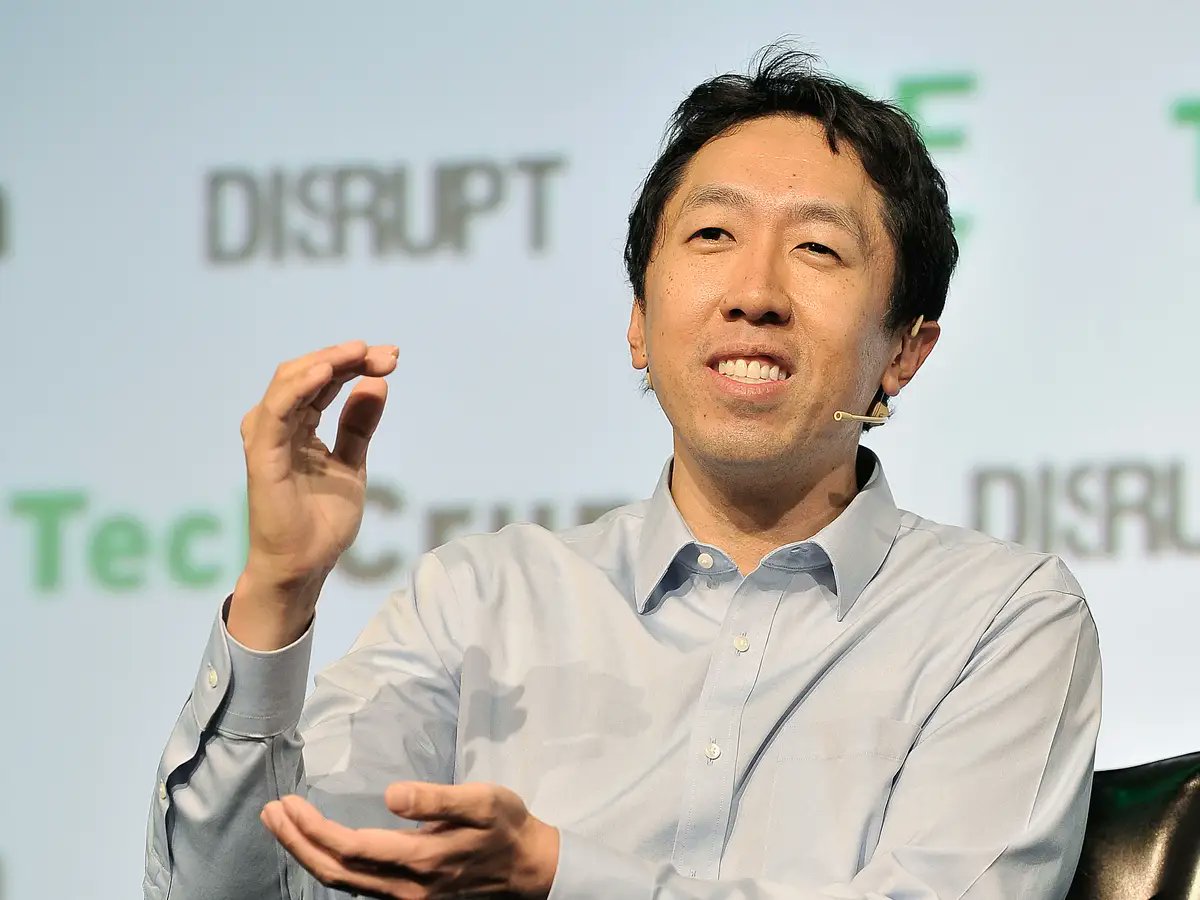
Now Andrew Ng revealed 5 opportunities that will create more millionaires than anything before.
Here's what you should know (& how to prepare): 🧵
Dear Pawan Kalyan Garu,
On your special day, we celebrate not just your birthday but also the incredible impact you’ve had on millions of lives. Your unwavering commitment to truth, justice, and the welfare of the common man continues to inspire us all. You are a true leader, a fighter for the people, and a beacon of hope for those who seek change.
May this year bring you good health, immense happiness, and success in all your endeavors. May you continue to inspire and lead with the same passion and dedication that defines you.
Happy Birthday, Pawan Kalyan Garu! May your path always be filled with strength, courage, and the blessings of all those who admire and respect you.
With heartfelt wishes,
Credit, kudos, congratulations to "The Man" @PawanKalyan garu for fighting the bloody fight for the justice and for right reasons 🙏🙏🙏 to uphold the democracy for the people of Andhra Pradesh.
“It is not the critic who counts; not the man who points out how the strong man stumbles, or where the doer of deeds could have done them better. The credit belongs to the man who is actually in the arena,...." by Teddy Roosevelt is an apt depiction of Kalyan Garu and his efforts
@TimesAlgebraIND Who gave India Independence- an eye-opener to shatter many myths
Palki Sharma Upadhyay destroyed Congress ecosystem in one go🔥
Watch till end
@thesinghsonia Just because you leave home for work or something you don’t take away home from their heart. Focus on what one has done for where they are from and not where they live 🙏🏾