OAP. Ex-Labour member since 4 April 2020.
"Genuine equality means not treating everyone the same, but attending equally to everyone's needs"
Terry Eagleton
@henrydodds@spencerbeswick Reckon folks who've used the NHS, lived in a council house, received a state pension, worked a 5 day week, been supported by a union, health and safety, ban of child labour, helped to find work & supported when not working, etc, etc. - millions of them, would disagree with you.
There’s a persistent myth that our government is somehow at the mercy of the financial markets and that it has to dance to their tune. This is most definitely doing the rounds this week, mainly as a result of Labour's mismanagement of its own party, and Rachel Reeves' subsequent very public tears.
It’s a myth I have been challenging for years, so let me summarise why.
1. The government creates the money
The UK government is the monopoly issuer of the pound. It spends all of that money into existence. Every pound of government spending creates a matching financial asset for someone else. It is only afterwards that the government issues bonds, not because it needs the money, but to provide a safe place for savers to deposit their funds when banks cannot provide this service.
This point is critical. The government does not need the markets to ‘fund’ its spending. It is simply swapping one form of money (reserves) for another (gilts). Bizarrely, it pays interest to those to whom it provides this service.
2. Gilts are a choice, not a necessity
The sale of government bonds, gilts in the UK, is presented as if the government is dependent on the markets to keep spending. This is nonsense. The government issues gilts largely because:
It wants to drain reserves from the banking system to help the Bank of England hit its (currently too high) interest rate target.
It wants to give pension funds and insurance companies a safe deposit facility to underpin their promises to those who use their services.
It believes it must maintain an outdated and now unnecessary City-based financial architecture.
None of this means it needs the markets to spend. If no one bought gilts, the government could continue to spend. In fact, as quantitative easing and now quantitative tightening prove, there is no relationship between bond issues and Bank of England market interventions and the capacity of the government to spend: the evidence is all there for anyone to see.
3. The central bank is always the buyer of last resort
When financial markets are in turmoil, as happened in the mini-budget fiasco under Liz Truss, the Bank of England steps in. Its role is to stabilise prices and yields. This is not optional. It is a fundamental part of having a sovereign currency and a central bank that acts as the lender of last resort. This means the financial markets are, in fact, dependent on the government and its central bank. Not the other way around.
4. Interest rates are a policy choice
People say, “but the markets set interest rates, and so they can discipline the government.” Again, this misunderstands monetary operations. The Bank of England sets the base rate. It can cap or control longer-term rates by buying or selling bonds as it chooses. The so-called market rates are policy-contingent. When push comes to shove, the central bank can always enforce the interest rate it wants.
5. What markets really influence is ideology
So why the obsession with ‘market confidence’? The reality is, politicians and economists often invoke markets to justify austerity. It is easier to say “the markets demand it” than to admit their own ideological choice, which would otherwise be unpalatable to the electorate. Financial markets do, in that case, play a political role, but they do not hold the government hostage. They operate within the monetary framework that the government and its central bank set. We could just as easily choose to run the economy with other priorities, but it does not suit neoliberal politicians to do so. That is because they view politics as the City does, at cost to us all.
Summary
I keep returning to this issue because it is so fundamental: the UK government is a currency creator, not a currency user. It is not like a household. It does not need to beg or borrow from the markets to spend. Financial markets are accommodated by the government, not the other way around.
Understanding this changes everything. It means that economic policy decisions — on public services, investment, climate action, and inequality — are political choices, not technical constraints imposed by bond traders. That is why misinformation on this issue matters so much, and the fact that it is so widespread shows just how strong are the forces that wish to deny that democratic choices can still be made in the UK.
I live in a country that gives military support to another country which is killing thousands of civilians while proscribing an organisation which protests about it.
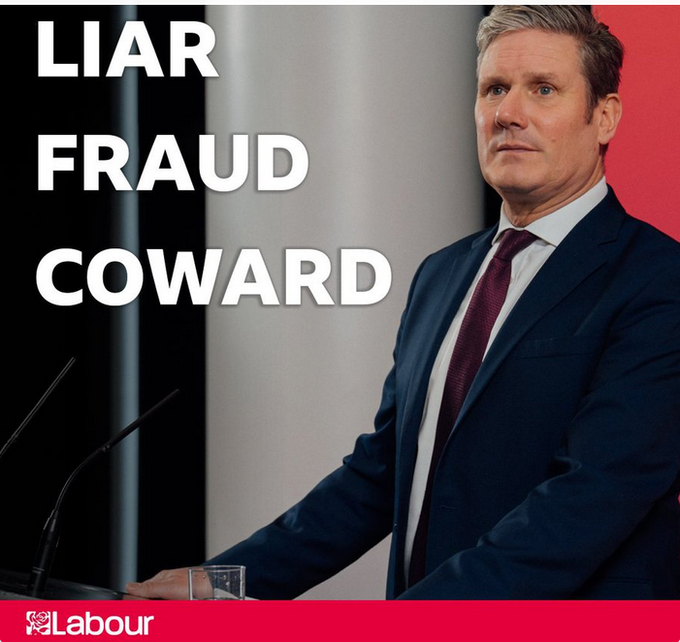
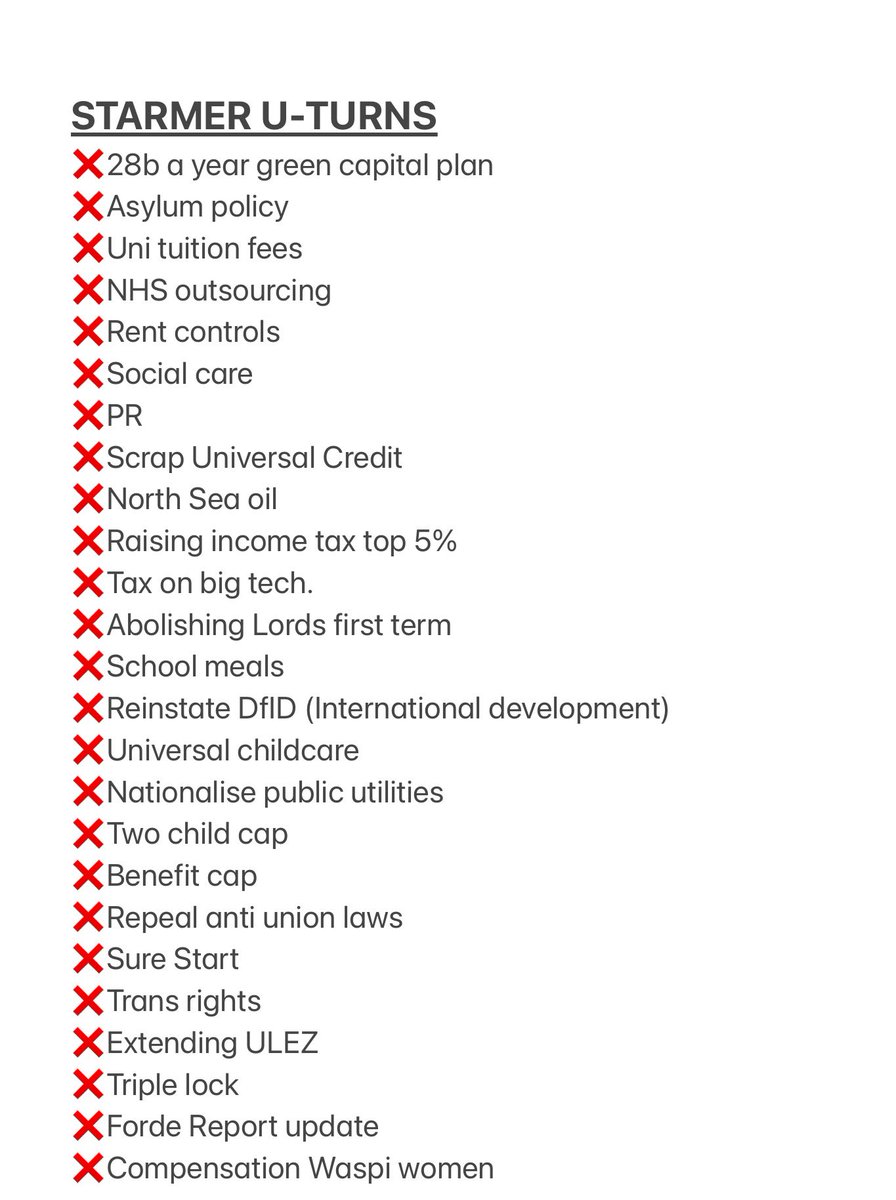
Starmer's favourite word seems to be 'pledge', and his most frequent decision is to break them. He's repeatedly proven to be underhand, unbelievable, untrustworthy and underwhelming. To think he'll be any different as PM is to ignore his behaviour over the last 5 years.
If the Labour Party National Policy Forum showed us anything, it is that Keir Starmer is too afraid to take a position on anything, The fixation under him and Rachel Reeves and their fiscal rules is to look tough on the economy, look responsible, by not actually ruling anything in, but ruling everything out. That's neith tough, nor responsible. If the nation were a household it might look prudent but it isn't and the opposite is actually true. #DamoRants #StarmerLies
Dislodging Corbyn from the Labour Party and power took endless lies by the Labour right and the Tories backed up by the hostile media.
There is no need for any of us to lie about Starmer, the truth condemns him.
So throughout the Labour National Policy Forum there was no policy ironically, because whatever delegates, members and trade unions asked for, they got told no. It seemed as if Labour were too scared to nail their colours to any particualr mast, but actually it seems in their pursuit of donors, they may have put policy up for sale...#DamoRants #LabourParty
@Keir_Starmer@laurenjamess22 "Did I ever tell you my dad played in goal for Toolmakers United? And he had a trial season with Adjustable Spanners County? Brilliant he was!"
Having U-turned on children getting free school lunches, and decided many children shouldn't get decent meals at home either, #SirKidStarver wants better (highly subsidised) meals at his work-place
🚨 BREAKING: Lancaster University Student Disrupts Graduation Ceremony
🎓 Callum, 24, interrupted their own graduation because our government won’t listen to the science.
🛢️ There’ll be no jobs — no liveable future — and our degrees will mean nothing if our government continue to license new oil and gas.
👩🎓 Join Just Stop Oil Students for a mass youth training on 1–2 September in London, or join a Zoom call every Thursday at 6pm — sign up at https://t.co/T9djaS6dZg
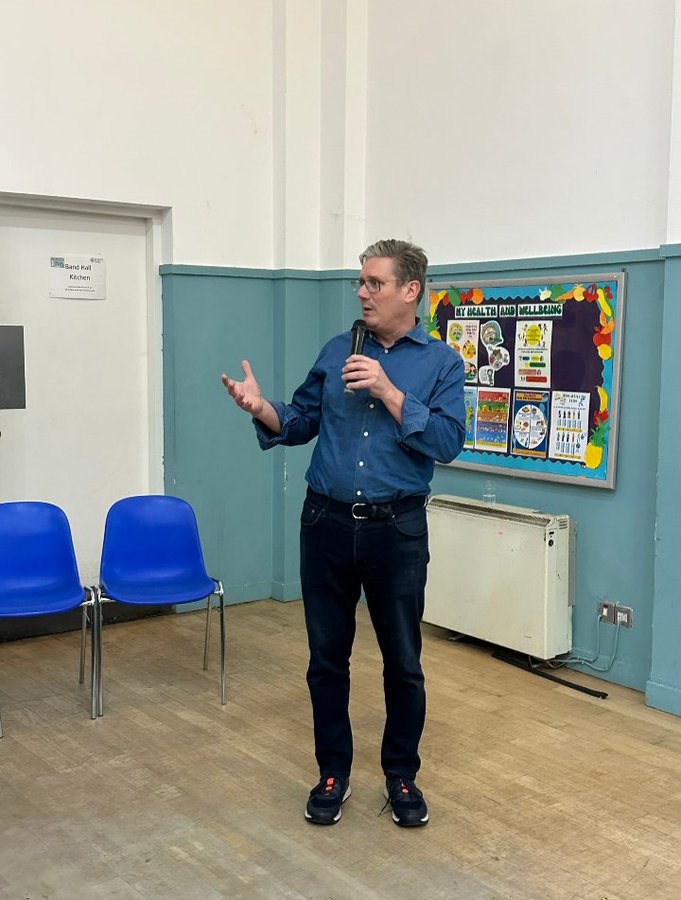
Starmer tells ex-wife and daughter of 'antisemitism' Ware his worry about food - in Parliament's canteens. Chatting happily, 'Kid Starver' - or #KeirieAntoinette - raises his driving vision for better nutrition in parliamentary eateries
https://t.co/ptaPImfUFc
The Labour left are in denial. Their continued membership of @UKLabour helps to create an illusion that Labour is different to the Tories, even though its economic and social policies are virtually identical to the Tories, as is its support for war.
https://t.co/nbGJjcbGzf
'Starmer is chaining himself to the demands of a tiny wealthy elite in the dying days of “business as normal”.'
Excellent analysis by @Jonathan_K_Cook 👏
https://t.co/4v6JjHfeNk