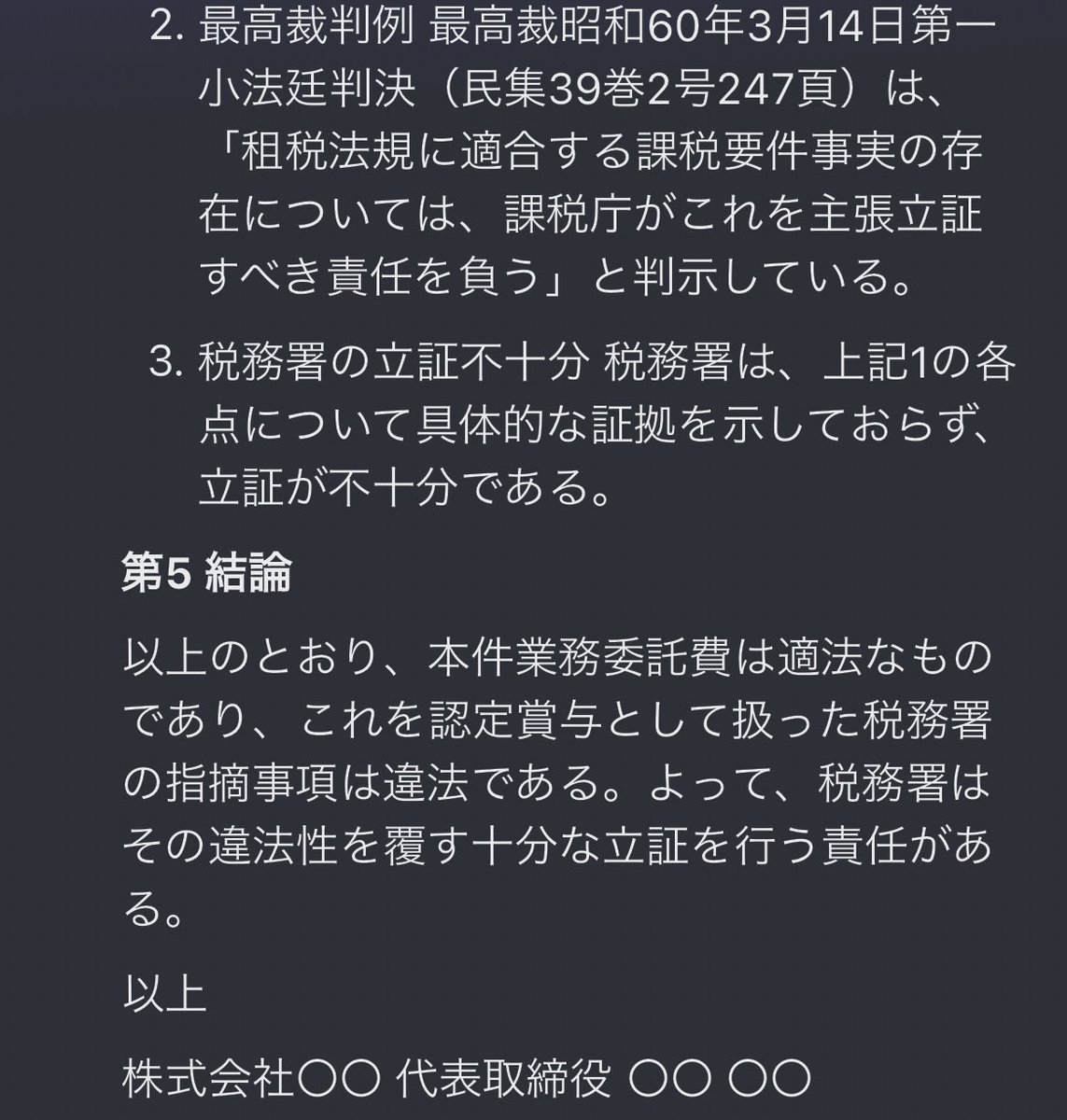
Weak-to-Strong GraphRAG
Interesting ICLR 2026 submission with some insights on improving GraphRAG systems and making them more feasible in production environments.
Graph-based RAG lets LLMs ground responses in structured knowledge graphs. But there's a fundamental mismatch between retrievers and the LLMs they serve. As knowledge graphs become central to RAG systems, aligning retrievers to LLM needs through LLM feedback offers a principled path to better multi-hop reasoning with lower costs.
The problem is twofold.
First, graph retrievers train on weak supervision like query-answer shortest paths. This misses key reasoning steps and introduces spurious connections.
Second, retrieved knowledge comes back unorganized. LLMs are sensitive to context ordering, and messy graph data adds unnecessary complexity.
This new research introduces ReG (Refined Graph-based RAG), a framework that uses LLM feedback to align weak retrievers with the LLMs they serve.
Graph-based RAG is essentially a black-box combinatorial search. Given a query, find the minimal sufficient subgraph for correct reasoning. The LLM acts as an evaluator. But exhaustively searching this space is computationally intractable.
ReG takes a simpler approach. Instead of optimizing over all possible subgraphs, it utilizes LLMs to select more effective reasoning chains from candidate chains extracted from the knowledge graph. The improved supervision trains better retrievers.
A structure-aware reorganization module then refactors retrieval results into logically coherent evidence chains. This aligns the presentation to how LLMs actually process information.
On CWQ-Sub with GPT-4o, ReG achieves 68.91% Macro-F1 versus SubgraphRAG's 66.48%. On WebQSP-Sub, 80.08% versus 79.4%. The gains hold across multiple LLM backbones.
The data efficiency is notable in the reported experimental results. ReG trained on just 5% of data, matches baselines trained on 80%. The refined supervision eliminates noise that larger datasets would otherwise compound.
When paired with reasoning LLMs like QwQ-32B, ReG reduces reasoning tokens by up to 30% while improving performance. The structure-aware reorganization prevents the "overthinking" problem where LRMs produce verbose traces in a noisy context.
Paper: https://t.co/mF9sLB63JN
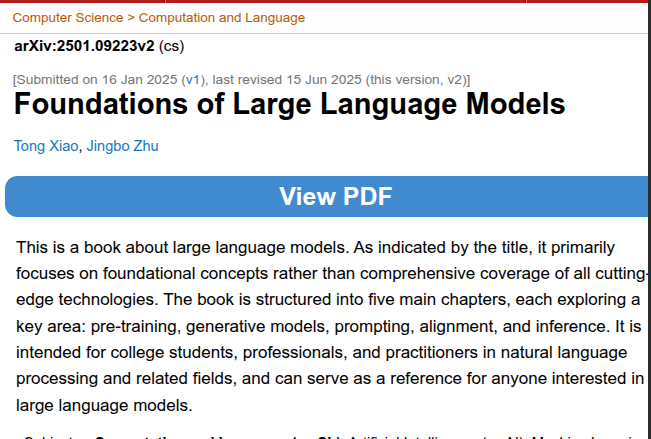
Absolutely deluxe resource on large language models. 👌
LLMs pick up world knowledge just by guessing the next token, and that single trick scales from chatbots to code helpers.
It treats language as a chain of choices, predicting one token at a time based on everything that came before.
Repeating that prediction task across trillions of tokens lets the network squeeze statistical hints about grammar, facts, and even logic into its weights, without any labeled examples.
Growing the model and the data unlocks abrupt jumps in reasoning skill but also makes training fragile.
Keeping context windows huge and latency low is now the top practical hurdle.
🧵 Read on 👇
VLM-Guided Visual Place Recognition for Planet-Scale Geo-Localization
Sania Waheed, Na Min An, @maththrills , Sarvapali D. Ramchurn, Shoaib Ehsan
tl;dr: in title
https://t.co/Ty7kMRZzYA





![shriver_light's tweet photo. #111論文等共有 1549 https://t.co/VmIENaEoTe
[NeurIPS'24] Entity alignment は高い人手ラベル、大きい annotation space 、 LLMの noisy labels が実用化の課題。
提案手法LLM4EAは、LLMを自動アノテータとして使いつつ、inter- & intra-knowledge graph 構造を使った active learning 予算配分を高��率化し、 確率的推論で継続的に label refine しノイズを除去し、entity alignment model からのフィードバックで反復的に改善する。
4データセットでベースラインを上回り、GPT-3.5でも予算を増やせばGPT-4並みまで到達するコスト効率を示した(Fig.2)。
Label refiner は結構 ad hocで handcrafted 感がある。](https://pbs.twimg.com/media/GyNTE41bMAA299A.png)
![shriver_light's tweet photo. #111論文等共有 1549 https://t.co/VmIENaEoTe
[NeurIPS'24] Entity alignment は高い人手ラベル、大きい annotation space 、 LLMの noisy labels が実用化の課題。
提案手法LLM4EAは、LLMを自動アノテータとして使いつつ、inter- & intra-knowledge graph 構造を使った active learning 予算配分を高��率化し、 確率的推論で継続的に label refine しノイズを除去し、entity alignment model からのフィードバックで反復的に改善する。
4データセットでベースラインを上回り、GPT-3.5でも予算を増やせばGPT-4並みまで到達するコスト効率を示した(Fig.2)。
Label refiner は結構 ad hocで handcrafted 感がある。](https://pbs.twimg.com/media/GyNTDERaYAAXbmA.jpg)
![shriver_light's tweet photo. #111論文等共有 1549 https://t.co/VmIENaEoTe
[NeurIPS'24] Entity alignment は高い人手ラベル、大きい annotation space 、 LLMの noisy labels が実用化の課題。
提案手法LLM4EAは、LLMを自動アノテータとして使いつつ、inter- & intra-knowledge graph 構造を使った active learning 予算配分を高��率化し、 確率的推論で継続的に label refine しノイズを除去し、entity alignment model からのフィードバックで反復的に改善する。
4データセットでベースラインを上回り、GPT-3.5でも予算を増やせばGPT-4並みまで到達するコスト効率を示した(Fig.2)。
Label refiner は結構 ad hocで handcrafted 感がある。](https://pbs.twimg.com/media/GyNS2g4a0AAOIX6.png)


![shriver_light's tweet photo. #111論文等共有 1542 https://t.co/W5QtjZMKfO
[arXiv’25] VLMを新しいドメインに汎化させる手法のサーベイ。Promptベース(prompt tuningなど)、パラメタベース(robust fine-tuningや蒸留など)、特徴量ベース(adaptorなど)に分類。データセットと評価結果もまとめてある。 https://t.co/juBqx745tp](https://pbs.twimg.com/media/Gxu4hrAbAAA4PLy.jpg)





![shriver_light's tweet photo. #111論文等共有 1549 https://t.co/VmIENaEoTe
[NeurIPS'24] Entity alignment は高い人手ラベル、大きい annotation space 、 LLMの noisy labels が実用化の課題。
提案手法LLM4EAは、LLMを自動アノテータとして使いつつ、inter- & intra-knowledge graph 構造を使った active learning 予算配分を高��率化し、 確率的推論で継続的に label refine しノイズを除去し、entity alignment model からのフィードバックで反復的に改善する。
4データセットでベースラインを上回り、GPT-3.5でも予算を増やせばGPT-4並みまで到達するコスト効率を示した(Fig.2)。
Label refiner は結構 ad hocで handcrafted 感がある。](https://pbs.twimg.com/media/GyNVejlaEAI7DQe.png)

![shriver_light's tweet photo. #111論文等共有 1542 https://t.co/W5QtjZMKfO
[arXiv’25] VLMを新しいドメインに汎化させる手法のサーベイ。Promptベース(prompt tuningなど)、パラメタベース(robust fine-tuningや蒸留など)、特徴量ベース(adaptorなど)に分類。データセットと評価結果もまとめてある。 https://t.co/juBqx745tp](https://pbs.twimg.com/media/Gxu4hrEawAEiC0k.jpg)
![shriver_light's tweet photo. #111論文等共有 1496 https://t.co/VnGebwwEEr
[NLP’25] Vocabulary spaceと重みの row spaceとの擬似直交性を実験で調べた。モデルはBERTとGPT-2。Encoderモデルかdecoderモデルかの違いによって、層ごとの擬似直交性の違いが見えたのが面白い。
例えば、Encoderとdecoderは入力層方向と出力層方向との直交性の傾向が逆転する。
また、attentionは語彙空間と直行する傾向にあるが、FC層はそうでもない。これはlogit lensに使える層と使えない層があるという従来��知見とも整合している。
Quasi-orthogonal vectors(擬似直交性)と特徴量空間の関係については他にも、mechanistic interpretability界隈で有名な superposition 論文などで言及されている。重みのrow spaceと語彙空間が直交していない方が、重みを言葉として解釈しやすくなる。](https://pbs.twimg.com/media/GmDoGO5acAAwvxb.jpg)