AWS re:Invent is where builders decide how they’ll ship next year. Agents are writing more of that code, faster than humans can review it. Security belongs in those decisions.
Find us: Security Jam, Dec 2, 2pm PST, Caesars Palace @DaghanAltas on program analysis for AI agents, Dec 3, 11:30am PST
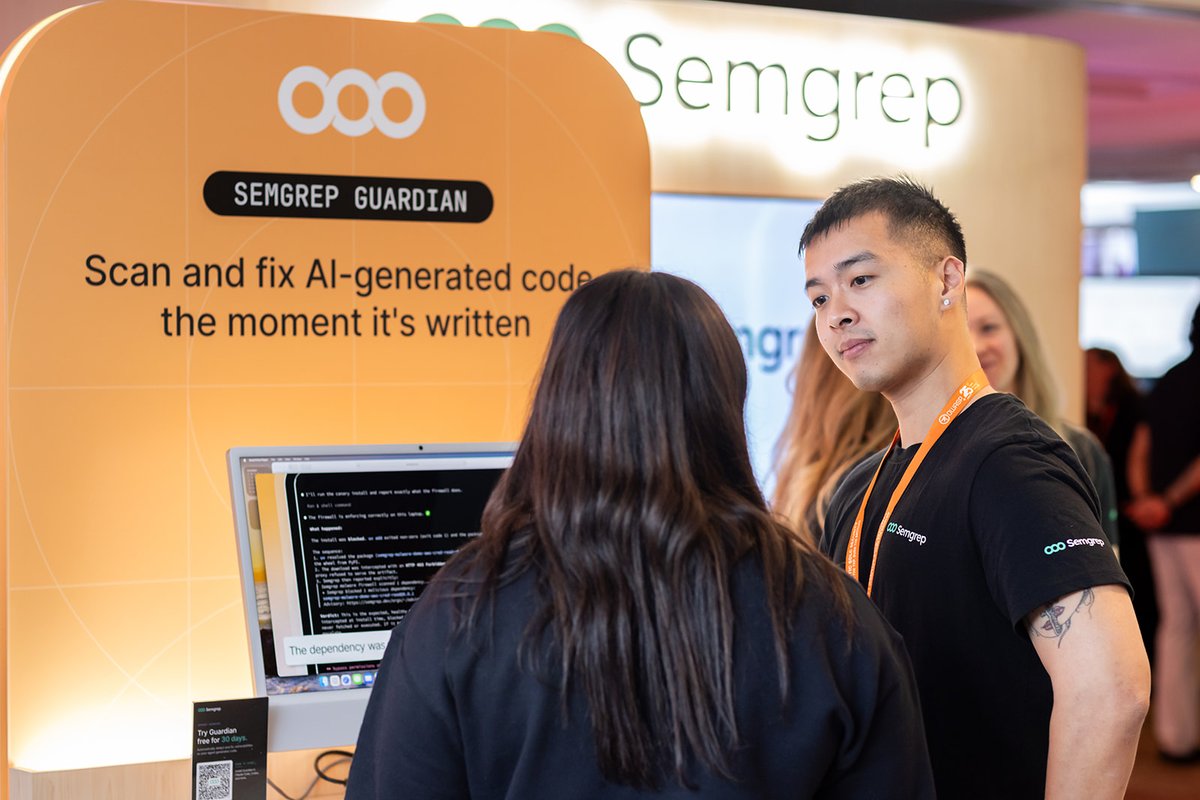
Booth #638, The Venetian. Ask about Guardian.
https://t.co/akRRXykYbL
We've just pushed rules for 2 supply chain incidents happening today: first we've shipped docker code rules for SSHole the new Alpine Linux vulnerability and the strutil-core Shai-Hulud-descendent ruby gem worm.
Auto-remediation tools can scan, patch, open a PR, and sometimes merge it without a developer ever seeing the diff. Does that break “you build it, you own it”?
That’s the debate this morning at OWASP Global AppSec USA. @insiderphd takes it on with @jamesberthoty, Petra Vukmirovic (Flagstone), and Jeff Williams (Contrast Security).
9:00 to 10:00 am PST, Grand Ballroom A. The audience is part of this one, so bring your opinions.
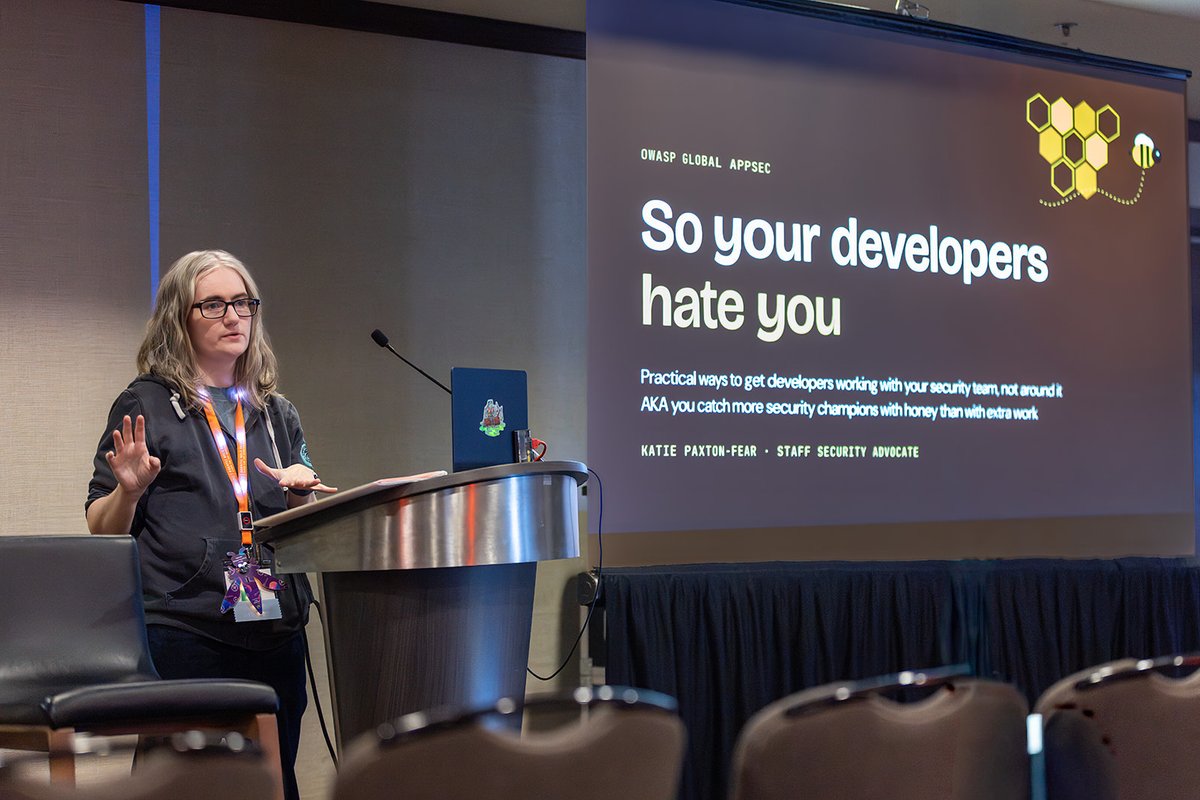
After that, find us at booth D3 until 3:30 pm. Thanks to everyone who came to Katie and Diptendu Kar's talks yesterday and joined us at Zero Day Off on Wednesday and Off the Rails last night!
The OSS ecosystem fundamentally changing and the frontier labs are actively talking about rewriting their *entire* dependency basis. Unthinkable a year ago and I really don't like the implications for community, especially for new & smaller OSS projects trying to get off the ground.
We’re excited to share that Semgrep is included in the first edition of The Forrester Wave™: Agentic Development Security Tools, Q4 2026.
Coding agents now write and change code faster than review processes built for human developers can follow. The report looks at what that shift demands from security tools: visibility and governance of agentic development, verification of AI-generated code and AI applications, and AI risk reduction at agentic speed.
Access the report: https://t.co/MUOFqzBrAr
Tokens keep getting cheaper, but AI bills keep getting bigger.
Maybe having an LLM repeatedly solve problems we figured out 20 years ago isn't the financial genius we thought it was.
Give your agents better tools. Stop paying them to reinvent the wheel.
https://t.co/XswesaTwNi
Semgrep Guardian now scans with your custom rules! Teams and individual developers can choose exactly which rules it enforces, so findings match how your organization builds and coverage goes further.
And it’s not just for security. With developer rules, you can have Guardian catch the things you care about, like overly long log lines, without changing anything for the rest of your org.
See the details here: https://t.co/klrUEjAQaT
We pushed a Semgrep Guardian check: open Claude Code or Codex and it tells you if you’re affected. Then ask your agent to fix it: update to 2.1.314, remove the “svc-telemetry” SSH key, rotate credentials.
A tampered Claude Code extension (v2.1.313) sat in Cursor’s marketplace for ~11 hours on Oct 29. Up to 5,000 devs may have installed it.
Uninstalling isn’t enough. It leaves behind scripts and an SSH key that keep working.
Next week at #OWASP Global AppSec USA:
Nov 4, 5pm PT: Zero Day Off community night
Nov 5, 10:30am: @insiderphd on reluctant devs
Nov 5, 11:30am: Diptendu Kar on A04 crypto failures
Nov 6, 9am: Katie debates auto-remediation
https://t.co/9GWN5K4xRX
#AppSec
Code is now written at AI speed, and security has to keep up. That’s why we’re thrilled to be recognized for automating security engineering work, so teams can ship features faster with fewer vulnerabilities.
Grateful to @lightspeedvp , @FortuneMagazine and @AWSstartups for including Semgrep in this year’s Cyber 60, and congrats to everyone alongside us.
#Cyber60
The 4th annual Cyber 60 list is here.
This year’s list recognizes some of the fastest-growing venture-backed cybersecurity startups in the market, building to advance next-gen infrastructure, AI security, and how we approach threat detection.
Congratulations to everyone who made the #Cyber60 list in partnership with @FortuneMagazine and sponsor @AWSstartups.
Read our full CISO survey report, conducted with Wakefield Research, which polled 200 CISOs on enterprise AI and where they’ll invest next: https://t.co/T6b4zKIqW5
You can be fully aware and still get compromised.
Prevention matters, but limiting damage, stopping attacker from spreading, and recovering quickly matter more.
Part 4 of replacing Cybersecurity Awareness Month with Cybersecurity Readiness Month.
https://t.co/pJHxfeIh8H
Last week is the new normal.
Wednesday to Sunday: eMudhra certs, PHP2Shell, Railway, Node2Shell/Brotli, Tailworm, and probably a couple more I've already forgotten. This is the AI vulnerability wave everyone was bracing for.
These should have been non-events. If a service isn't exposed to the internet and you're patching weekly, you read the advisory and move on, confident that the service will be patched.
So this is our first serious fire drill of AI vulnerabilities. Engineering and security teams can't scramble every time a bug gets a name and a logo. The answer is the basics, done consistently:
1) Shrink your attack surface. If it isn't customer-facing, it shouldn't be reachable without strong authentication.
2) Patch on a cadence, not in a crisis. Plan for containers and dependencies to update weekly.
3) Give everything you ship an owner. Unowned services are where patches go to die.
Teams historically traded SDLC hygiene for speed and convenience. That trade just got a lot more expensive. And you need to figure out how to keep up with security at AI speed.
How is your team handling the volume? Changing your patch cadence, or still running fire drills?
Following the Node2Shell and PHP2Shell incidents, we shipped a workflow to detect which repos may be affected: Detect-2Shell
How it works: It finds where the Node or PHP version is listed in Docker image tags, .nvmrc files, IaC, and CI setup steps. First, it finds version references in Python, it checks out whether that version is 🔴 vulnerable, 🟠 unpinned, 🟢 fixed, or ⚪ unknown. Then, it uses AI to look deeper, in places where the version is inside a variable, bundled image, or built from source. The results show where there is risk and guidance for how to fix it.
Detect-2Shell is now available for customers with Workflows enabled.
If you're looking at an updated Node.js, and calling CVE-2026-111497 done? We have some bad news: We likely don't even know the true scale of "Node2Shell" yet.
Node patched CVE-2026-111497 on Oct 21. But the CVE wasn't in Node, it was in Brotli. So our researchers Diptendu Kar and Kurt Boberg went looking for every other package that bundles the same vulnerable Brotli decoder. Here's what we found
433 package entries across 12 ecosystems not great but the absolute worse part: Many of them don't even have fixes available yet. Now are they all reachable and exploitable? Probably not, we're finding out. But the important part: Node isn't the only affected runtime or package, not even close.
We're working through the list to manually verify each one but so far we're looking at a 71% no fix yet rate, of the fixes most are still in alpha/early releases.
The problem is most implementations aren't even called "brotli." The decoder is compiled into other runtimes like Chromium. 38 entries bundle Brotli older than 1.0.3. Some of those copies date to 2016, and of course are vulnerable to more than just this CVE. And there's no easy well to tell if you're affected.
For example, 19 are WebAssembly builds, where memory corruption exists, but stays inside the sandbox. Some require explicit configurations to enable Brotli compression and they aren't on by default. But it's not obvious unless you are looking for it and testing for it. We're going to keep validating (and producing rules), but it's going to be a rough weekend for incident responders.
With Node2Shell our security research team had details to share on our website. By the time we get to final review of a blog, a security check from our AI agent workflows flagged that we were running Node 23.11.0 too.
#AppSec#NodeJS
But that's the speed security engineering has to keep up with now, and that's where our Gaurdian product was born. We needed to keep up with our software engineers using AI agents to build and be able to offload security investigations while our researchers worked with customers.
Semgrep is a launch partner in the @spacexai Partner Network.
In Grok Build, a Hook runs Semgrep every time the agent changes code. Not when the agent remembers to, every time.
@spacerog on why that matters: https://t.co/f26Ary2OFD