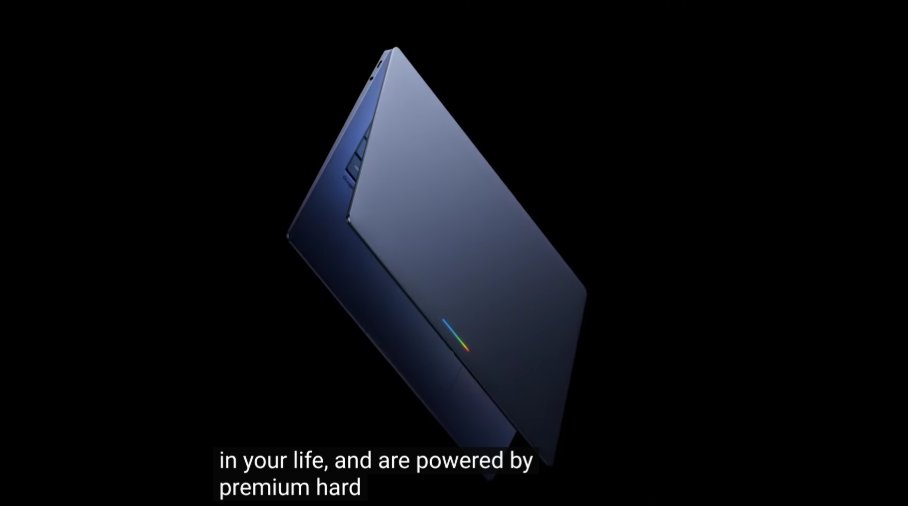
The @verge misses the point. Merging @Android + ChromeOS into one platform is massive convergence that @Apple & @Microsoft never achieved. Real phone-to-desktop power. This is huge. 🔥 #Googlebook https://t.co/Lj8SFxNqU3
We'll explore best practices from the Corporate Rebels network on trading outdated hierarchies for trust, turning AI into a liberating factor rather than an instrument for control.🎟️ Tickets & info: https://t.co/1hx6mLPYyE #BusinessFest#HRFEST
AI commoditizes intelligence in milliseconds; our only remaining advantage is radical humanity. 🤖On June 11, I'm taking the stage at Business Fest Budapest to present: "Building Human-Centric Organizations to Win in the Age of AI". 🏛️
💻 >15 years ago, we introduced the Chromebook.
As computing shifts from traditional OSes to intelligence systems, we're rethinking laptops again.
We're taking the best of Android & bringing it together with the best of ChromeOS to create...
Googlebook.
The 7-year wait is over!! From the OG 2017 Pixelbook to today's massive reveal: the AI-native #Googlebook with Aluminium OS is finally real. 💻✨ The ultimate no-compromise Google hardware is back. #TheAndroidShow#AluminiumOS 🚀
Nothing beats a perfectly organized engineering roadmap! 🛠️ Just wrapped up Phase 1.1 for @mitronotes using Cascade from my Chromebook. Tamed the Linux env, nailed the GitHub automations, and tagged the v0.0.0.0.1 baseline. Agentic coding is the absolute future. 🔥 #windsurf#ai
First stones of @mitronotes are officially set. 🏛️ Local environment synced with Senator-Labs on GitHub, architecture specs locked in, and the first 'chore' commit is live. Despite global #GitHub jitters, the foundation is solid. Engineering mode: ON. 🚀 #Building#Mitro
Validation from the best in the industry. @mitronotes is being built on the principle of 'Design as Code'. No silos, no lost intent—just pure, plain-text ground truth for both humans and agents. 🏛️✨ #DesignSystem#LocalFirst
Spot on. This is exactly why we baked a .semantic_registry/DESIGN.md directly into the core architecture. You can't manage fleets of coding agents with mood boards. You need plain-text, version-controlled ground truth. Markdown is the universal API for human-agent collaboration.
Key takeaways from using Google's DESIGN.md
1. Google wants a shared design language for AI. DESIGN.md gives designers, developers, and agents one standard way to describe how a product should look, instead of translating taste through prompts, screenshots, and scattered notes.
2. The standard makes design rules portable. Because DESIGN.md is plain markdown, the same visual system can move between Stitch, coding agents, repos, and builders without being trapped inside one design tool.
3. DESIGN.md is reusable project memory. If you keep telling every tool the same colors, typography, spacing, and component preferences, DESIGN.md turns those instructions into something the whole workflow can reuse.
4. Markdown is the right middle layer. It is structured enough for agents to parse, but readable enough for designers and developers to inspect without feeling like they are editing raw data.
5. Start from a real reference system. Tools like Stitch, Neuform, Variant, getdesign.md, and strong community examples help beginners inherit useful design logic before steering it toward their own product.
6. Pair the spec with visual context. DESIGN.md provides rules, screenshots communicate taste, and HTML gives implementation clues, so using them together reduces drift.
7. Use Remix and Iterate intentionally. Iterate keeps a design close to the current direction, while Remix opens up broader exploration, so choosing the right mode prevents accidental overcorrection.
8. Curation is part of design. Favoriting strong generations, hiding noisy ones, and keeping promising directions visible turns AI design from a pile of options into a usable decision process.
9. Small prompts are design operations. Requests such as adding social proof, switching to light mode, changing color direction, or adding motion are interface edits expressed in language.
10. Agents need guardrails, not just inspiration. The goal is to make AI follow a real system, so new sections and screens feel related instead of looking like separate one-off generations.
11. A good hero should expand into a system. The same direction should branch into pricing, testimonials, motion, mobile layouts, branding boards, and social formats before it becomes a complete site.
12. Exploration tools and build tools have different jobs. Some tools are better for generating directions, while others are better for assembling full sites with domains, SEO, and publishing.
13. The workflow order matters. Start with DESIGN.md, generate the first design, remix and expand it, create section variations, move into a builder, and then assemble the full site.
14. The standard raises the floor for quality and accessibility. A DESIGN.md file can be linted for missing essentials, broken references, section order, and contrast issues before those problems become shipped UI.
15. DESIGN.md is the foundation, not the finish line. Its value is that it keeps the finished product consistent as the work moves through design exploration, marketing sections, mobile, motion, and implementation.
Pure gold. This shift from 'coordinating roadmaps' to 'managing fleets of agents' is exactly why we're building @mitronotes . We're moving beyond building features to building the 'harness' for agents to execute safely. Agent-native PKM isn't coming; it's being built tonight. 🏗️
My biggest takeaways from Claude Code's Head of Product @_catwu:
1. Anthropic’s product development timelines have gone from six months to one month, sometimes one week, sometimes one day. Part of this acceleration is access to the latest models (i.e. Mythos). Another is shipping new products into “research preview,” making clear it's early, experimental, and might not be supported forever. Another is an evergreen "launch room "where engineers post ready features and marketing turns around announcements the next day.
2. The PM role is shifting from coordinating multi-month roadmaps to enabling teams to ship daily. As Cat puts it, “There should be less emphasis on making sure you are aligning your multi-quarter roadmaps with your partner teams and more emphasis on, OK, how can we figure out the fastest way to get something out the door?”
3. The most efficient shipping unit is an engineer with great product taste. On Cat’s team, many engineers go end-to-end—from seeing user feedback on Twitter to shipping a product by the end of the week—without a PM involved. Also, almost all the PMs on the Claude Code team have either been engineers or ship code themselves, and the designers have been front-end engineers. The roles are merging, and the most valuable skill is product taste, not job title.
4. Build products that are on the edge of working. Claude Code’s code review product failed multiple times because earlier models weren’t accurate enough. But because the prototype was already built, they could swap in Opus 4.5 and 4.6 and immediately test whether the gap was closed. Teams that wait for the model to be ready will always be a cycle behind.
5. The most underrated skill for building AI products is asking the model to introspect on its own mistakes. Cat regularly asks the model why it made an unexpected decision. The model will explain that something in the system prompt was confusing, or that it delegated verification to a subagent that didn’t check its work. This reveals what misled the model so the team can fix the harness.
6. Every model release forces their team to revisit existing products and audit their system prompt to remove features the model no longer needs. Claude Code’s to-do list was a crutch for earlier models that couldn’t track their own work. With Opus 4, the model handles it natively. Features built as scaffolding for weaker models become debt when the model catches up—so the team actively strips them.
7. Anthropic employees build custom internal tools instead of buying SaaS products. A sales team member built a web app that pulls from Salesforce, Gong, and call notes to auto-customize pitch decks—work that used to take 20 to 30 minutes now takes seconds. Their core stack is Claude Code, Cowork, and Slack. No Notion, no Linear, no Figma.
8. People underestimate how much Claude’s personality contributes to its success. As Cat describes it, “When you reflect on everyone you’ve worked with, there’s just some people where you’re like, I really like their energy, their vibe.” Claude is designed to be low-ego, positive, competent, and earnest—qualities that make it feel like a great coworker, not just a tool. This isn’t cosmetic; it’s what makes people want to use Claude for hours every day. The team has a dedicated person, Amanda, who “molds Claude’s character,” and it’s one of the hardest roles at the company because success is so subjective.
9. The future of work is managing fleets of AI agents, not doing the work yourself. Cat sees a clear progression: first, individual tasks become successful. Then people start running multiple tasks at the same time (multi-Clauding). Next, people will run 50 or 100 tasks simultaneously, which will require new infrastructure—remote execution, better interfaces for managing tasks, agents that fully verify their work, and self-improving systems that incorporate feedback. The human role shifts from doing the work to knowing which tasks to look into, verifying outputs, and giving feedback that makes the system better over time.
10. Hire people who lean into chaos and face every challenge with a smile. At Anthropic, there are weeks when a P0 on Sunday becomes a P00 by Monday and a P000 by Monday afternoon. If you get too stressed about any one thing, you’ll burn out. Their team looks for people who can look at a hard challenge and say, “Wow, that’s gonna be hard. But I’m excited to tackle it and I’m gonna do the best that I possibly can.” This mindset—optimism, resilience, and comfort with constant change—is increasingly essential as the pace of AI development accelerates.
Don't miss the full conversation: https://t.co/1wOUHcdYQN
Just finalized the Core Spec for @mitronotes . 00:00 deadline hit, but the foundation is sovereign. Tauri 2.0 + Rust backend, Loro CRDTs for seamless human-agent collab, and pure Markdown as the absolute source of truth. The build begins now. #LocalFirst#SemanticEngineering
Hello world. AI agents are changing how we process ideas, but they need a fast, private workspace to thrive. We're building the ultimate local-first home for your thoughts, where pure .md files are the absolute source of truth. Just registered https://t.co/NgXpncNBXj to start. 🚀
Inspired by @karpathy’s "Idea File": if we share ideas and let local AI agents build our wikis, those agents need a true home. Not a locked SaaS database, but a local workspace where pure .md files are the absolute source of truth. Today I'm building @mitronotes. 🚀
Wow, this tweet went very viral!
I wanted share a possibly slightly improved version of the tweet in an "idea file". The idea of the idea file is that in this era of LLM agents, there is less of a point/need of sharing the specific code/app, you just share the idea, then the other person's agent customizes & builds it for your specific needs.
So here's the idea in a gist format: https://t.co/NlAfEJjtJV
You can give this to your agent and it can build you your own LLM wiki and guide you on how to use it etc. It's intentionally kept a little bit abstract/vague because there are so many directions to take this in. And ofc, people can adjust the idea or contribute their own in the Discussion which is cool.
Google I/O 2026 (May 19-20) is all about AI. Expect major reveals around Gemini 4, the universal AI assistant Project Astra, video-gen model Veo, and the highly anticipated debut of Aluminium OS. Time for the next step! https://t.co/PWkTs7y8l5