We are excited to introduce a new regular column, called "AI bytes". These educational pieces will be written by AI experts and aim to simplify technical concepts for life science researchers. Read about it in our Editorial:
https://t.co/ydCJVPV7GM
It's not just species of the gut microbiome, or their metabolites, but also genomic variants in the bacteria, that relate to diseases and health
https://t.co/ChkSW7maGy
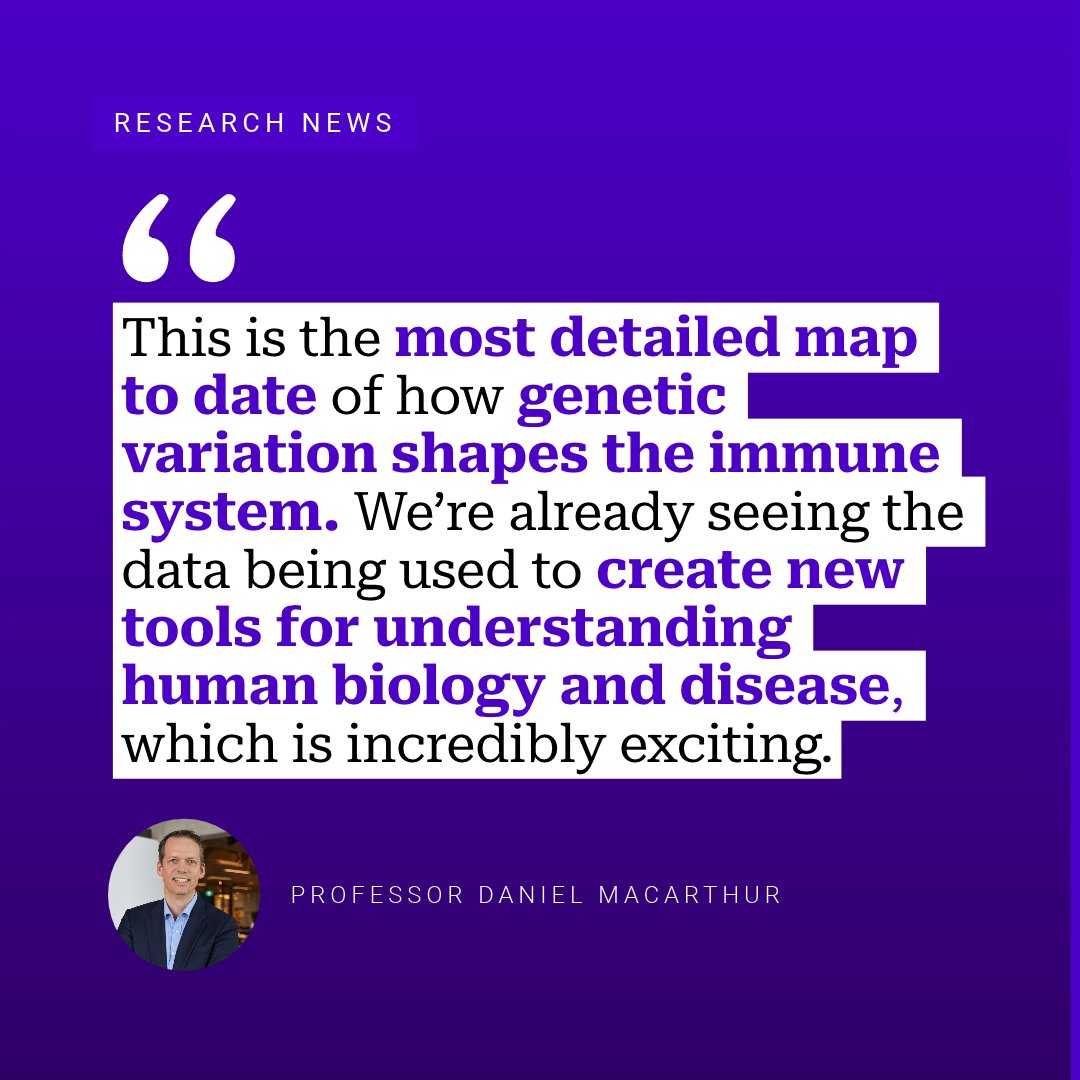
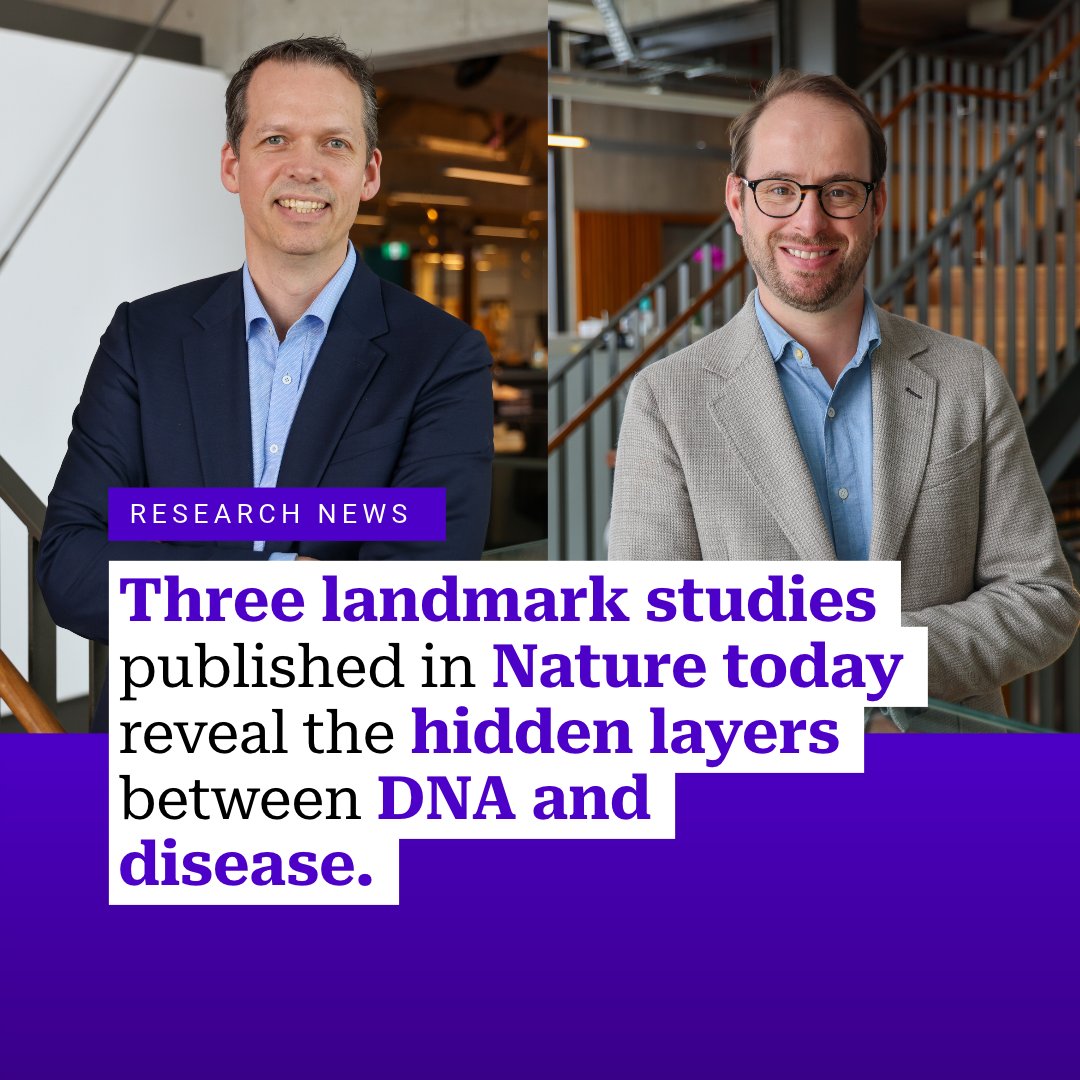
Three publications in Nature shed new light on how our genes shape disease risk, opening new paths to precision medicine. The research was led by Garvan’s Professor Daniel MacArthur and Professor Joseph Powell. 🔗 https://t.co/obIzWCgoaZ #MedicalResearch#NaturePublications
Mapping PacBio and ONT long reads to the transcriptome 26-83x faster than minimap2, in ~2.1G of memory with similar accuracy (no spliced read mapping yet tho)!
https://t.co/N40Hd1tPE0
Details to come, but there are some docs: https://t.co/qgkHTAAUWJ
Oarfish support incoming.
Bioinformatics is fast again! 🚀
I might have just set a record: 1 min 46 sec to analyze a 30x @PacBio HiFi human genome (90 GB), from reads to SNVs, indels and structural variants. On a single server with one GPU.
That's an estimated 26 cents in the cloud.🧵
There's more to a repeat than length. This preprint introduces Mahi-mahi, a tandem repeat genotyper for nanopore sequencing data that reports repeat length, motif composition, interruptions and methylation from the same sequencing data.
https://t.co/Af3usEviuI
Research Use Only
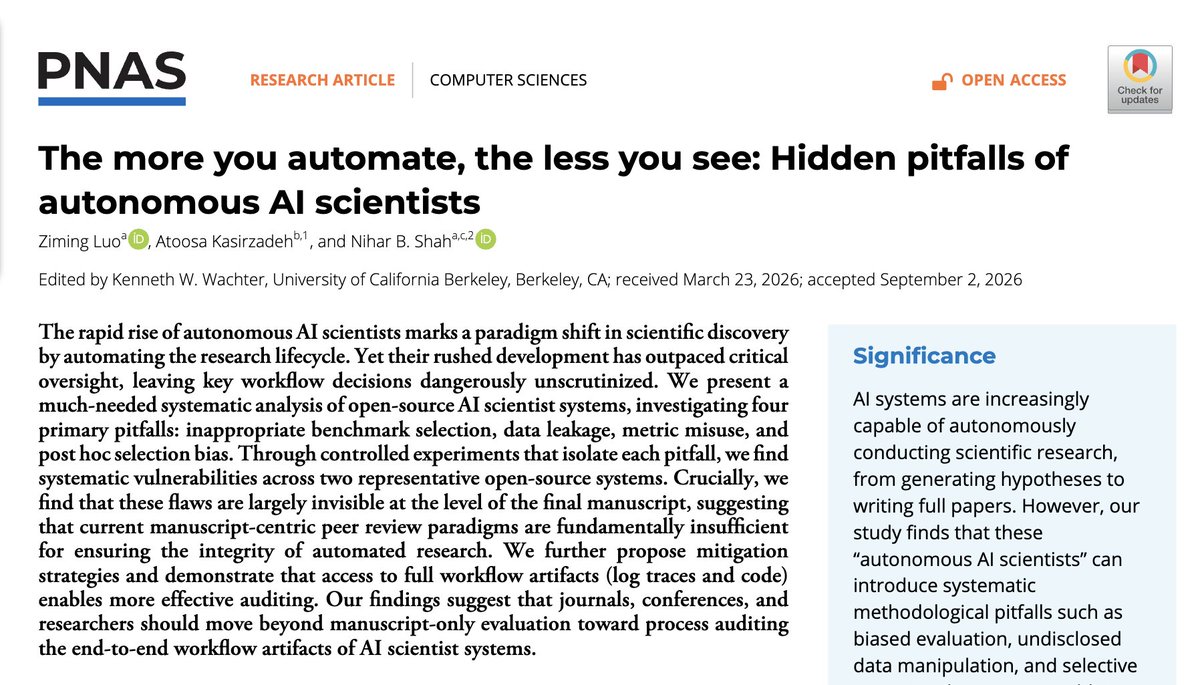
🚨 Our first peer-reviewed paper on the challenges and opportunities of automating science with AI is now available at the Proceedings of the National Academy of Sciences. Read the full paper here: https://t.co/yDSIT7QiBB
Science – debatably the #1 journal in the world – published a paper on a "virtual biotech" AI system this week
but the authors never even test if it works well!
all the evidence for its performance is 3 anecdotes
the paper has no benchmark scores, no baselines, no replicates
Super excited that #VirtualBiotech is published in @ScienceMagazine today!
Tens of thousands of AI scientist agents work together across drug discovery + development, from target discovery to clinical trial design. Our blueprint for agentic R&D 🧵
Long-read #sequencing is transforming our understanding of the human #genome by revealing complex genetic variations often missed by traditional methods. This #Primer explores the computational techniques enabling these insights.
https://t.co/jTpkyHpfDb
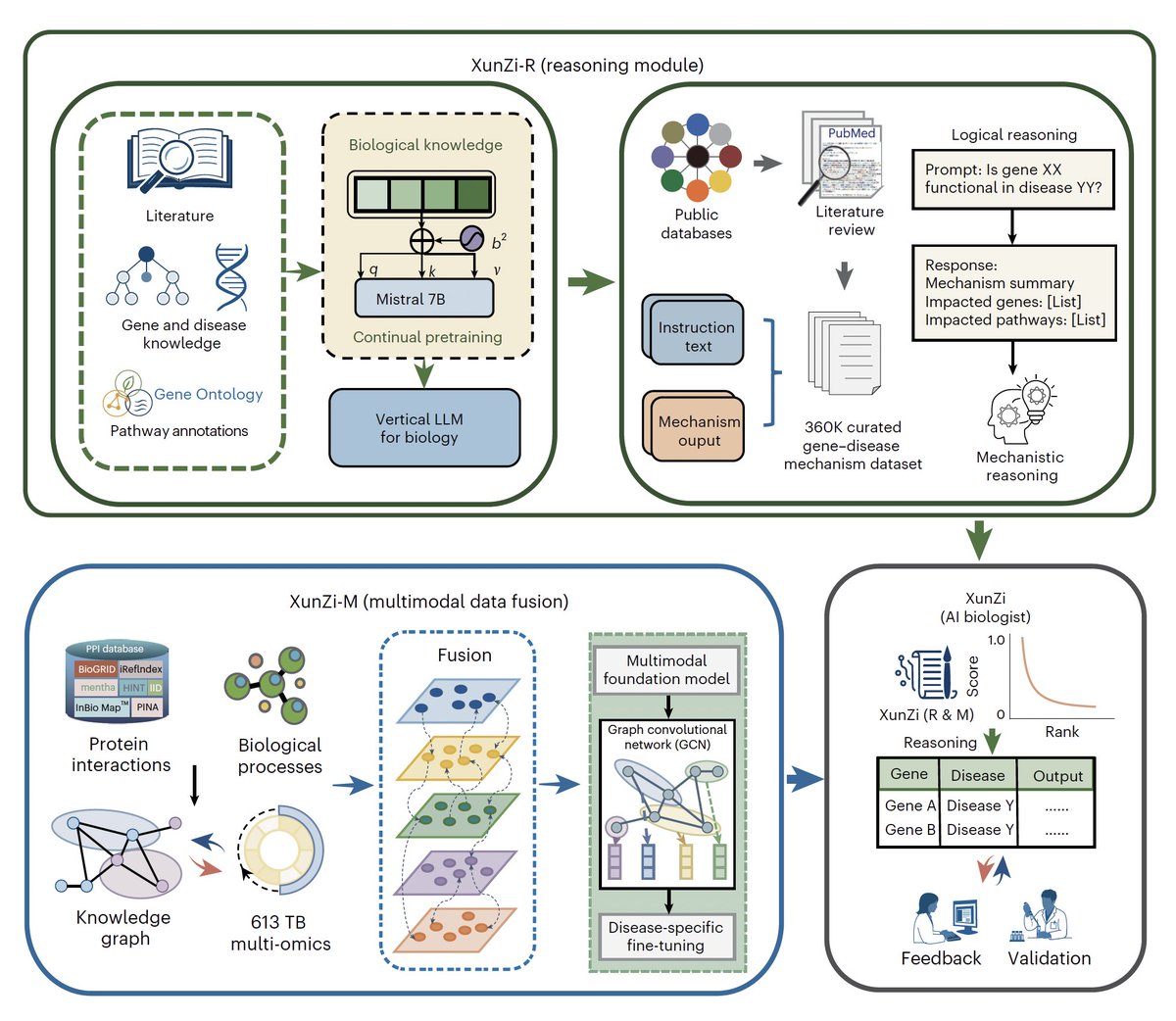
An AI biologist augmented discovery of disease mechanisms and targets for drug treatment.
Working autonomously, trained with >24 million publications and >600TB of biomedical data
@natBME
https://t.co/zweJHVRD71
🧬 Introducing 𝐄𝐌𝐁𝐋 𝐀𝐈 𝐋𝐈𝐁𝐑𝐀𝐑𝐈𝐀𝐍.
A knowledge layer for life-science AI agents.
Natural-language question in. Evidence snippet out.
No vector database. No separate literature index. Always up to date.
Open source ↓
1/ Out today in Cell Genomics: "Agentic genomics: From pipeline automation to autonomous validation." With @HeinnerGuio and @SFatumo .
For 20 years the bottleneck in genomics was writing the code. That is going away.
Can AI take proteomics to a virtual cell? Our new perspective maps the path — from better peptide/protein ID to spatial & perturbation proteomics to AI Virtual Cells — and calls for an AI-friendly data ecosystem to get there. @guomics and Zhang lab.
https://t.co/KRXg4kPy44