In 2013, an astronaut nearly drowned in space. Water filled Luca Parmitano's helmet 250 miles above Earth, until he was blind, his radio dead, feeling his way back to the airlock from memory. Yesterday, NASA named him a pilot on the flight before the next Moon landing.
It happened on a spacewalk. About a liter and a half of water, a soda bottle's worth, leaked from a blocked filter in his cooling system. With no gravity to pull it down, the water did not pool at the bottom of his helmet. It clung to his skin and crept over his eyes and toward his nose, until only his mouth was clear. The suit was built to keep out the vacuum of space. The danger came from inside.
He kept telling the ground he was okay, even as the station passed into Earth's shadow and his radio faded out. He later wrote that he had a plan: if the water won, he would open the helmet and pass out, since drowning was the worse way to die. NASA studied the accident and decided his calm may have saved his life. Engineers later added snorkels to the suits, so a flooded helmet could never trap someone again.
He reached that moment the long way around. He grew up in Sicily dreaming of the Olympics or space. You cannot apply to be an astronaut, so at 15 he aimed at the closest thing he could apply for, fighter pilot. The odds were ugly. His class at the Italian Air Force Academy had 7,000 applicants for 104 spots; fewer than 40 finished as pilots. He flew attack jets, then trained as a test pilot, the ones who fly aircraft still being figured out.
When Europe finally opened applications for new astronauts, he almost skipped it. He felt too young and green next to the senior pilots in his squadron, who were all applying too. His commander told him he had nothing to lose, so he applied. 8,413 people did the same. Six were chosen. When the call came that he was one of them, he broke down and cried.
Then he went back up. He has spent 366 days in space across two missions and became the first Italian to run the International Space Station. His second launch lifted off in July 2019, fifty years to the day after Apollo 11 first put humans on the Moon.
Now comes the hard part. Artemis III flies in 2027, a dress rehearsal: the crew circles Earth and practices docking spacecraft together, proving the gear works before anyone bets a life on it near the Moon. Parmitano is the first European ever placed on an Artemis crew, chosen, ESA said, for how steady he stays when things go wrong. The man who once found his way home blind, in the dark, with no radio, will help fly the mission that opens the road back to the Moon.
A PhD's success depends more on the fit between the student, the advisor, and the lab than on the specific topic being studied (it barely matters at all).
Similarly, a lab's success depends more on how excited (or miserable) its researchers are than on the precise project they are working on (it could be virtually anything).
This information isn't in papers or in grant proposals, you have to ask the researchers.
Sci-hub, libgen, zlib etc have kept Indian academia alive (whatever that's left) . Take these away, and Indian academia will crumble. Forget academia, what subscriptions do these judges have??
I had to learn early on that scientists aren’t more moral than anyone else - they’re just people, with the same egos, insecurities, and ambitions as everyone else.
Once I accepted that, it was easier to look past the BS, and keep going.
Trying to hold space for all the things happening near and far in the world and continuing to move forward in a rigorous program/career that demands so much of my physical and mental energy is a *task*. There is really no such thing as just focusing on the science.
Students COOKING in the lab
Here's a time-resolved Mach 7 turbulent boundary layer visualized in our wind tunnel using CO2 planar laser scattering!
(quick explainer of the technique in a comment below)
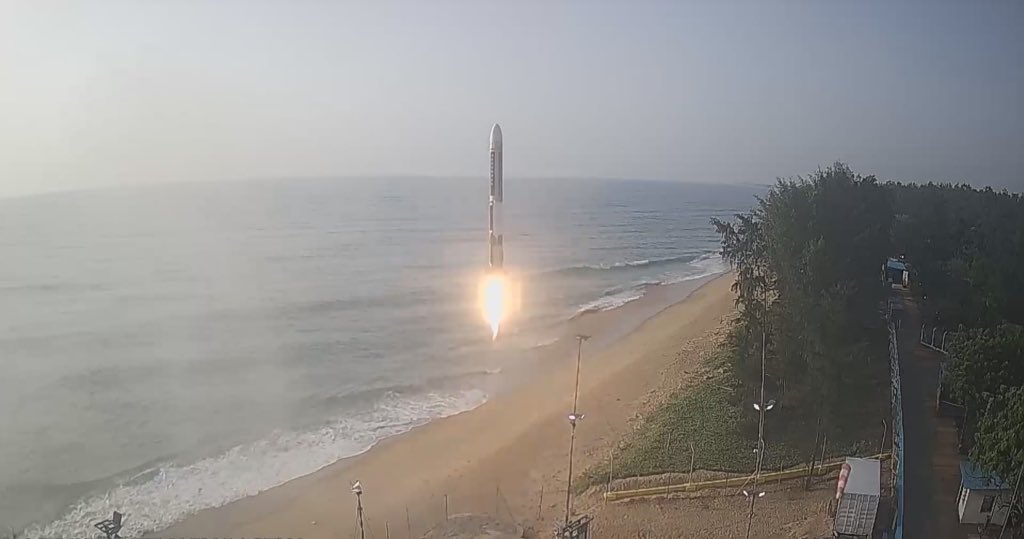
Humbled to announce the successful completion of our first flight - Mission 01 of Agnibaan SOrTeD - from our own and India’s first & only private Launchpad within SDSC-SHAR at Sriharikota. All the mission objectives of this controlled vertical ascent flight were met and performance was nominal. The vehicle was completely designed in-house and was powered by the world’s first single piece 3d printed engine and also happens to be India’s first flight with a semi cryo engine. Our greatest thanks to @INSPACeIND@isro@iitmadras & our incredibly committed team in helping us prove that a private player can design and fly original space tech hardware in India. #madeInIndiaForTheWorld
Development of hypersonic aircraft is hindered by the technical difficulties due to the extreme temperatures and pressures at high speeds. See how Photron high-speed cameras are being used to aid in this research.
https://t.co/eeSLwbZaVI
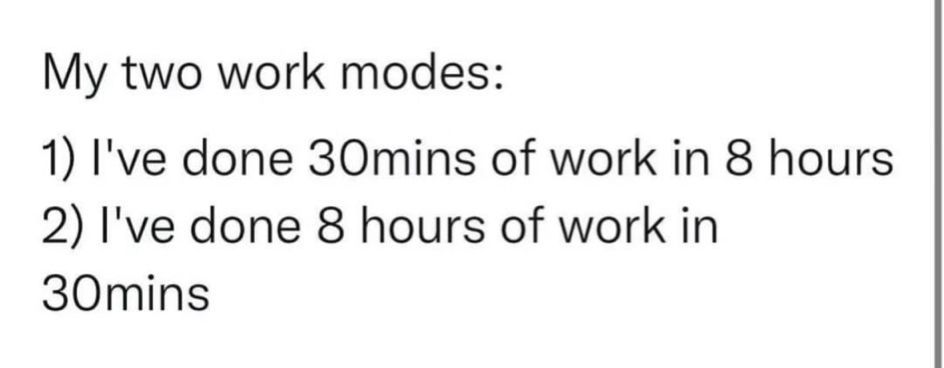
Academia is either:
- Do you have capacity in the next 40 minutes to review this book?
OR
- Apologies for the late response but the past decade has been hectic, still keen to chat?