در این ویدیو هرچه گفته شده، با صدای خود رضا پهلوی ثبت شده
ساعتبهساعت
نه تحلیل، نه تفسیر
فقط حرفهای خودش.
نتیجه چه بود؟مردم در خیابان،و کشتار رژیم
وقتی فراخوان بر اساس اطلاعات غلط داده می شود
هزینهاش را مردم با جانشان میدهند.
#رضا_پهلوی باید درباره این تناقضها پاسخ داده و دادگاهی شود، همزمان با رژیم جانی
#پهلوی_شیاد
#پهلوی_نماینده_من_نیست
@_aliabbasi_@NiohBerg@PahlaviReza Dude, Pahlavi is most likely a Mossad stooge, so as this influencer. There is no point arguing with this crowd or ask why didn't he do this or that.
I went back to some old collision code I had, and rewrote it for the Junkyard. It's designed for top-down games. It's a mixture of 2D/3D techniques. Does the basic stuff that I need. Collision detection, ray casting and shape intersections (triggers, render queries, etc)
TIME’s new cover: After thousands of protestors were killed in the streets of Tehran, five leading Iranian writers reflect on the state of the country they long to return to https://t.co/PCes5wYbQr
Nice! With the new improved Vulkan backend, separate transfer queue and batch upload submission, the performance of this drastically improved. Now for 1.4GB of unbaked asset data, it takes 1.5 secs.
For baked assets, it takes 270ms (5.2 GB/s). Very close to my SSD drive speed.
Asset manager test. First working implementation. It loads stuff in chunks. so here, each chunk is around 60MB of data (texture+model). It's pretty much a snap (~30-40ms for each chunk).
In total, 1.4 GB of asset data loads in 700 ms. baking all data takes 2.2 secs (512 assets).
@ahmadierfan999 Thanks! I'll ask for sure, most likely in PM/discord/etc. Actually I just read your blog post on GPU texture uploading in Nabla now :) got some interesting tips from it, like staging buffer mem loc and alignment. 🙏
After 6-7 yrs of wanting to learn a modern graphics API, I finally managed to put enough time into learning Vulkan. I think I finally got comfortable with it so that validation errors don't freak me out and I usually have a good idea what's going on. (1/5)
But one major drawback of having such control and power is that it's so easy to over-engineer, over-abstract and come up with generalized abstraction API designs that could make your backend perform worse than D3d11 drivers. (5/5)
It's obviously not perfect at all, although it took me about 4~5kloc to do basic imgui rendering, but the control freak in me is satisfied with how much control you have over memory, queues and multi-threaded rendering. (4/5)
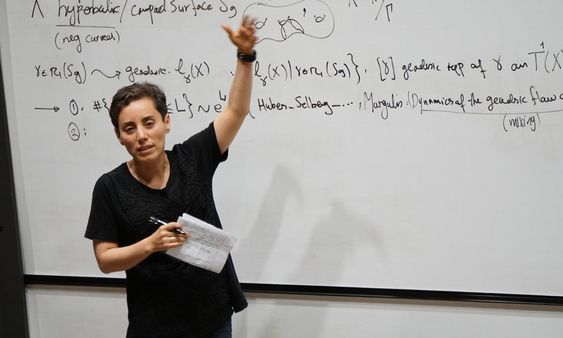
There are times when I feel like I'm in a big forest and don't know where I'm going. But then somehow I come to the top of a hill and can see everything more clearly. When that happens, it's really exciting.
- Maryam Mirzakhani
Asset manager test. First working implementation. It loads stuff in chunks. so here, each chunk is around 60MB of data (texture+model). It's pretty much a snap (~30-40ms for each chunk).
In total, 1.4 GB of asset data loads in 700 ms. baking all data takes 2.2 secs (512 assets).
@Zorkimer other reason is that is also simplified multi-threaded code by a lot. by dividing the world into groups of assets and load only one group at a time, I could create a scratch mem, use fork-and-join without the need to put locks everywhere
Asset manager test. First working implementation. It loads stuff in chunks. so here, each chunk is around 60MB of data (texture+model). It's pretty much a snap (~30-40ms for each chunk).
In total, 1.4 GB of asset data loads in 700 ms. baking all data takes 2.2 secs (512 assets).
@Zorkimer nope. that would be too wasteful. they are loaded in groups, so that they can use batch operations for some stuff. but in the end, they are placed individually in the asset db.