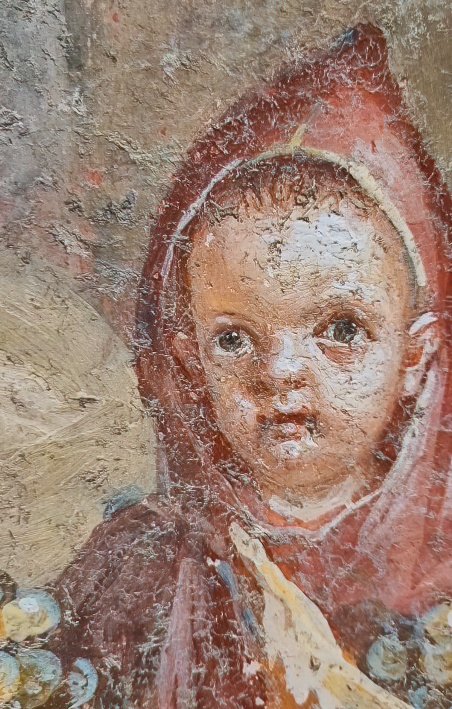
This is not a Pre-Raphaelite painting, but a seismic new Roman fresco discovery from Pompeii. The wall fresco uncovered in the 'House of the Painters at Work' shows a cherubic young child wearing a hooded cloak, sat among bounteous bunches of grapes and accompanied by their protective pet dog or cat. The remarkable naturalism with which the face of the toddler has been rendered has quickly led to the theory that it may depict a living or deceased child of the house owners...
Struggle to find good cartoons for your kids? Tons of indecent & inappropriate stuff out there! Burst+ is a free cartoons app, filled w/ classic fairy tales, and fun stories about friendship and kindness. Kids will actually get better from watching this!
https://t.co/5WgMX4v80f
AI VIDEO is insanely taking over in 2024.
OpenAI just announced Sora , their first text-to-video model.
Here are 12 wild examples you can't afford to miss out on: 🧵
It's only been 5 hours since Open AI announced Sora, and people are going crazy over it.
Here are 10 wild examples you don't want to miss:
1. Snow dogs
2024 is the year for AI video 😎
Pretty cute! I quite liked the wind and the rain in this, especially as reflected with the neon.
This is from FinalFrame AI v 2.0, using an image from Midjourney v6 with the following prompt:
two people are holding an umbrella during rain storm, in the style of synthwave, hyper-realistic portraiture, , close-up, matte photo, glamorous kitsch, love and romance --ar 16:9 --stylize 1000 --v 6
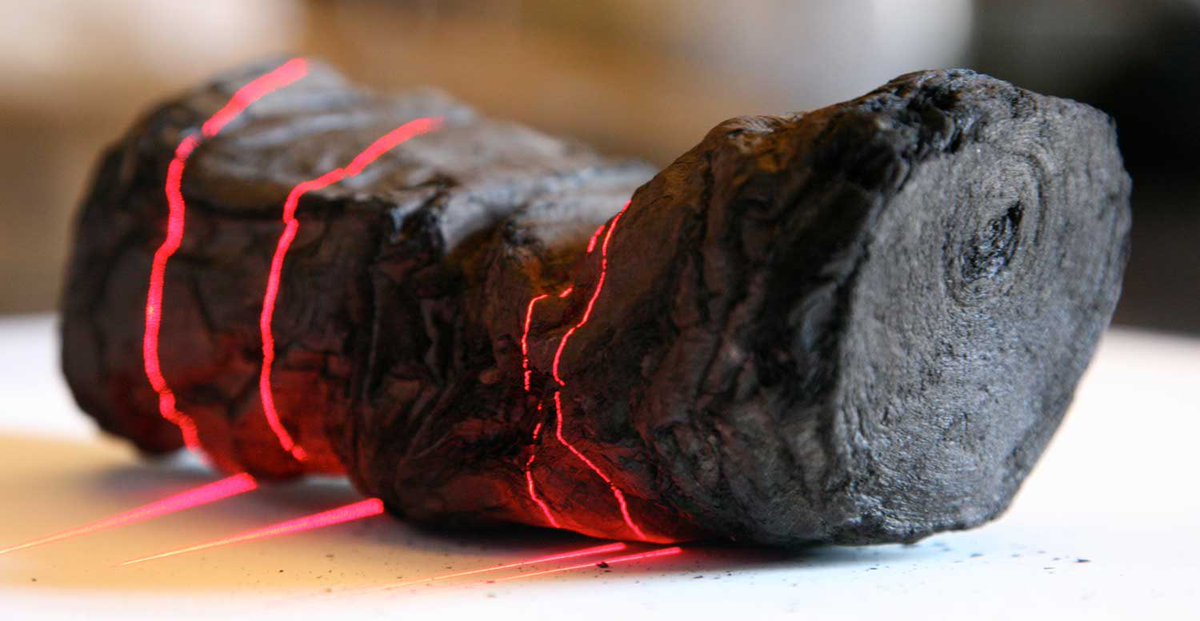
Ten months ago, we launched the Vesuvius Challenge to solve the ancient problem of the Herculaneum Papyri, a library of scrolls that were flash-fried by the eruption of Mount Vesuvius in 79 AD.
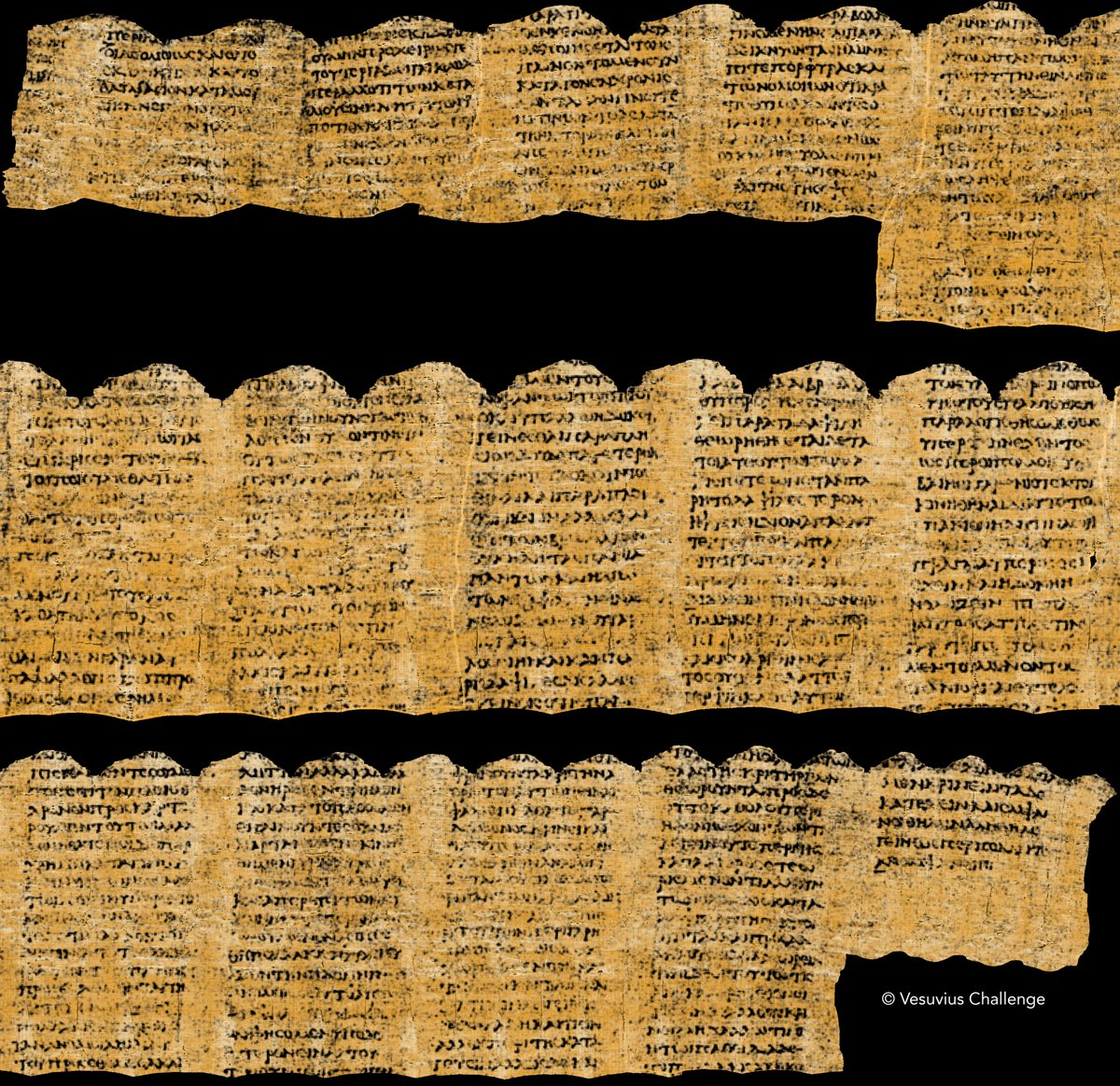
Today we are overjoyed to announce that our crazy project has succeeded. After 2000 years, we can finally read the scrolls:
This image was produced by @Youssef_M_Nader, @LukeFarritor, and @JuliSchillij, who have now won the Vesuvius Challenge Grand Prize of $700,000. Congratulations!!
These fifteen columns come from the very end of the first scroll we have been able to read and contain new text from the ancient world that has never been seen before. The author – probably Epicurean philosopher Philodemus – writes here about music, food, and how to enjoy life's pleasures. In the closing section, he throws shade at unnamed ideological adversaries – perhaps the stoics? – who "have nothing to say about pleasure, either in general or in particular."
This year, the Vesuvius Challenge continues. The text that we revealed so far represents just 5% of one scroll.
In 2024, our goal is to from reading a few passages of text to entire scrolls, and we're announcing a new $100,000 grand prize for the first team that is able to read at least 90% of all four scrolls that we have scanned.
The scrolls stored in Naples that remain to be read represent more than 16 megabytes of ancient text. But the villa where the scrolls were found was only partially excavated, and scholars tell us that there may be thousands more scrolls underground. Our hope is that the success of the Vesuvius Challenge catalyzes the excavation of the villa, that the main library is discovered, and that whatever we find there rewrites history and inspires all of us.
It's been a great joy to work on this strange and amazing project. Thanks to Brent Seales for laying the foundation for this work over so many years, thanks to the friends and Twitter users whose donations powered our effort, and thanks to the many contestants whose contributions have made the Vesuvius Challenge successful!
Read more in our announcement: https://t.co/rUlrdGXBMs
"Thinking about this almost incredible episode does tell one something about the nature of civilisation. It shows that however complex and solid it seems, it is actually quite fragile. It can be destroyed."
- Sir Kenneth Clark, Civilisation
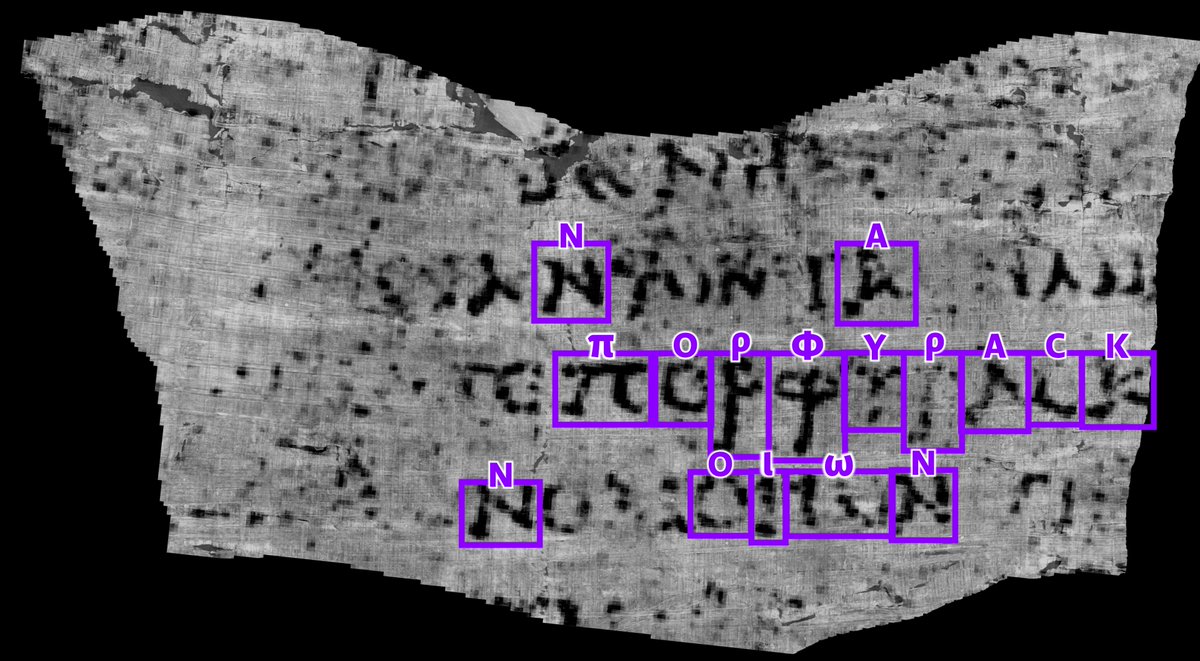
Today we are announcing a major breakthrough in the Vesuvius Challenge: we have read the first word from an unopened Herculaneum scroll.
The word is "πορφυρας" which means "purple dye" or "cloths of purple."
https://t.co/mSbHtzNbAl
Congratulations to 21yo computer science student @LukeFarritor who is the first person to see this handwriting in nearly 2000 years. He has won the $40,000 First Letters prize for this world-historical achievement.
We are also awarding a $10,000 First Ink prize to @CJHandmer who was the first person to see ink and multiple letters within an unopened scroll. His work was the basis of Luke's ML model.
And @Youssef_M_Nader has won a $10,000 second-place First Letters prize for producing the clearest and most comprehensive images from inside a scroll yet.
This has been the dream of many people since the scrolls were first discovered in the 1750s. It is also the result of 20 years of work from Dr. Brent Seales and his team at EduceLab, whose years of dedicated work have made this last mile possible.
The $700,000 Vesuvius Challenge Grand Prize is now in sight. Who will claim it?
A tidal wave of new primary sources from the ancient world could very soon be on its way - enough to keep scholars busy for decades! The first words have being read from digitally ‘unrolled’ carbonised scrolls from a Roman library in Herculaneum! (Image: Nat Friedman)
Great thread on renaissance humanists preserving the ruins of Ancient Rome:
“the ancient buildings and their ruins should be handed down to posterity, as these confer upon the city its most beautiful adornment and its greatest charm; they attest to ancient virtues and encourage us to emulate their glorious example.”
Why were ancient Roman ruins so important for 15th century Italian humanists?
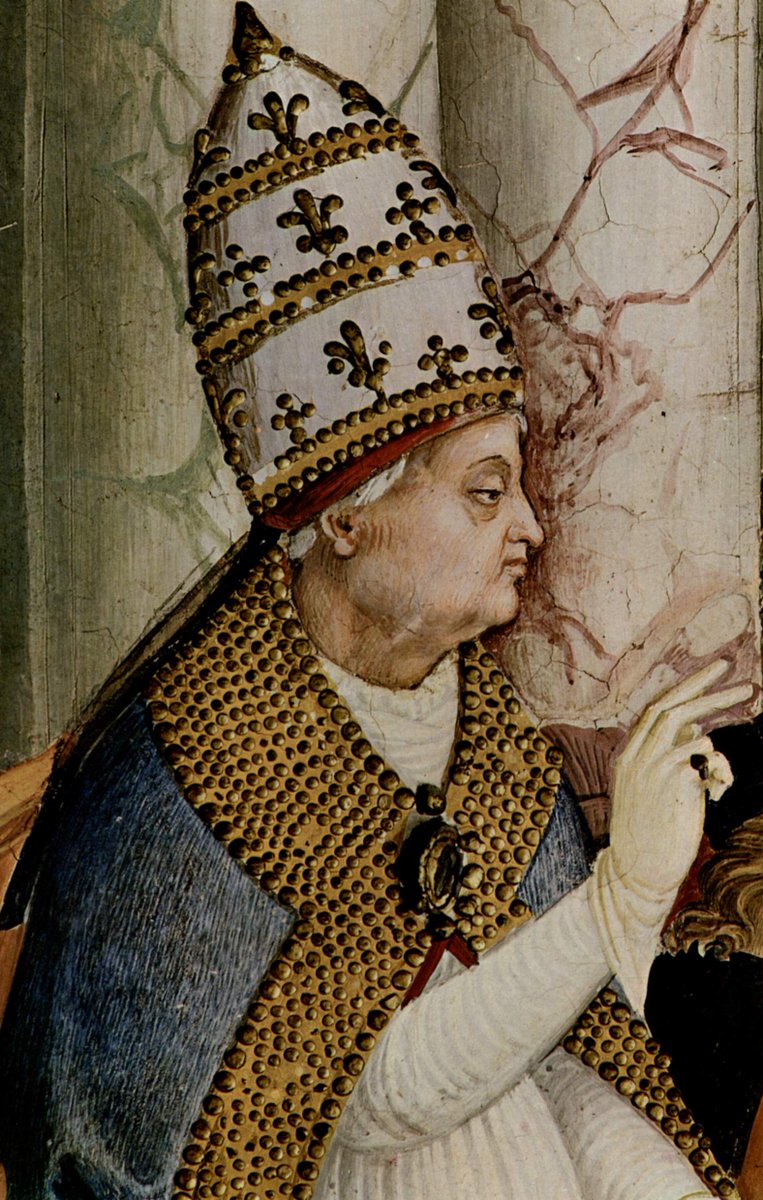
In 1462 Pope Pius II issued a papal bull prohibiting the destruction or removal of the ancient ruins in Rome. His explanation was the following:
"Desirous that our venerable city be preserved in its dignity and splendor, we must attend to its care with the greatest vigilance. Not only the basilicas, churches, and religious sites, in which many relics of the saints reside, but also the ancient buildings and their ruins should be handed down to posterity, as these confer upon the city its most beautiful adornment and its greatest charm; they attest to ancient virtues and encourage us to emulate their glorious example."
Anyone who damaged the ruins would feel the Pope's wrath and would be immediately excommunicated!
Pope Pius II, born Enea Silvio Bartolomeo Piccolomini and elected Pope in 1458, was a typical Renaissance humanist obsessed with ancient Rome and architecture.
He had been concerned about the state of ancient Roman ruins for a long time and even before he became Pope he severely criticized people who burned marble to make lime.
This echoed concerns of other humanists such as Leon Battista Alberti who wrote:
"I call Heaven to witness, that I am often filled with the highest indignation when I see buildings demolished and going to ruin by the carelessness, not to say abominable avarice of the owners, building whose majesty has saved them from the fury of the most barbarous and enraged enemies, and which Time himself, that perverse and obstinate destroyed, seems to have destined to eternity."
Such attitude can be traced way back to the early humanist poet Petrarch who famously cried when he visited Rome in 1337, seeing the state of the fallen walls, ruined temples and palaces. He urged a friend from the powerful Roman aristocratic family, the Annibaldi, to save the remains of the ancients. "It will be an honour for you to have saved these ruins, because they testify to what once was the glory of unviolated Rome."
15th century humanists brought this fascination with ruins to a new level. Poggio Bracciolini wrote a book The Ruins of Rome between 1431 and 1448, which contains a detailed analysis of ruins. Similar books emerged in following years and a sort of proto-archaeological literature developed.
Ruins also became an aesthetic ideal, and painters gradually introduced the motif of partially-collapsed ancient buildings in their works. Landscapes with Roman ruins became common in art.
But this fascination with ruins did not only have an aesthetic and archaeological purpose but also an ideological one. It reflected the change in which the ancient Roman past, and past in general, began to be perceived in the West.
Italian humanists began glorifying classical antiquity, and ancient Roman Empire in particular, as a "golden age", and saw what came afterwards as a "dark age". For them, the ancient Roman ruins were a reminder of a glorious but long-gone past. They were also seen as a lesson and a warning to the present, a symbol of decline of a powerful empire. They saw themselves living in the shadow of these ruins.
This was in contrast to how medieval Europeans used to view history which was seen as progressing in linear way as according to God's plan. In such view, the ancient Roman Empire was seen as merely a transitional phase, and not an age that should be glorified above others. For this reason they did not pay that much attention to Roman ruins.
But the humanists desired a restoration of the glory of the ancient Roman Empire and its ruins played an important part in that as well. Flavio Biondo's book Rome Restored written between 1444 and 1448 argued for return of the city of Rome to its previous heights of grandeur by recreating what Rome used to look like based on the ruins which remained. This work included a systematic and well documented guide to the ruins of Rome.
The idea of restoring ancient glory became a powerful political weapon in Renaissance Italy and important part of rhetoric of various rulers, who wanted to be seen as reviving the virtues of a glorious past. The popes were also on board with this ideology. Pope II recognized the ideological power of ancient ruins and in this context he enacted measures to preserve them.
If one were to ask how many professional Classicists could give serviceable answers to these schoolboy questions in a closed-book timed exam, someone usually makes two breezy comments: What use is it knowing that from memory? How good were their answers? Both miss the point...
I saw this post the other day and went to ask my husband: "How much time would you say you spend each day, if at all, thinking about the Roman Empire?"
His answer?: "Probably 7–8 minutes a day."
😂😂😂
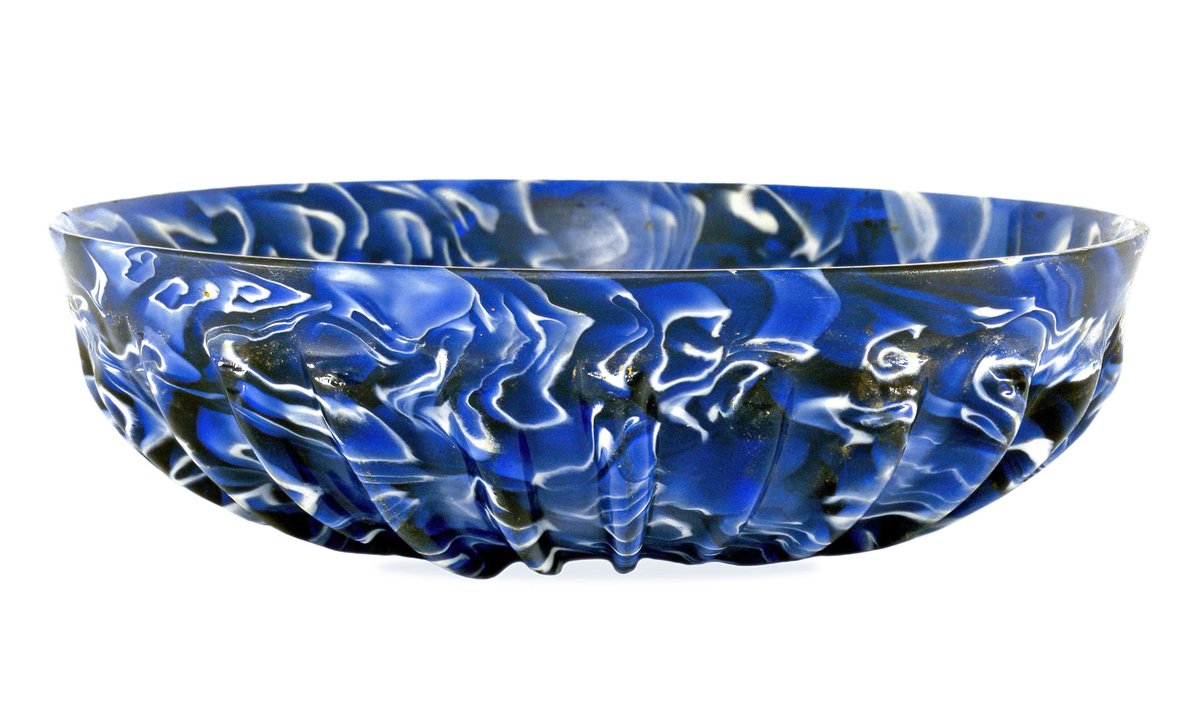
A breathtaking Roman mosaic glass bowl made of fused canes of brilliant blue and opaque white glass, stretched and draped over a mould to form a ribbed bowl. Likely crafted by expert glass artisans in Italy in the first century AD, the bowl travelled all the way to Britannia soon after the Roman invasion – later to be unearthed in the village of Chinnor, near Oxford, in 1923. British Museum
Two Roman marble statues of Venus, unearthed during excavations in the ancient city of Petra, Jordan. Archaeologists from North Carolina State University found the fragmented statues in the remains of an urban villa, where it is thought they were cast aside with other shattered debris after a devastating earthquake in May 363 AD. (Photo: Megan Perry, 2016)