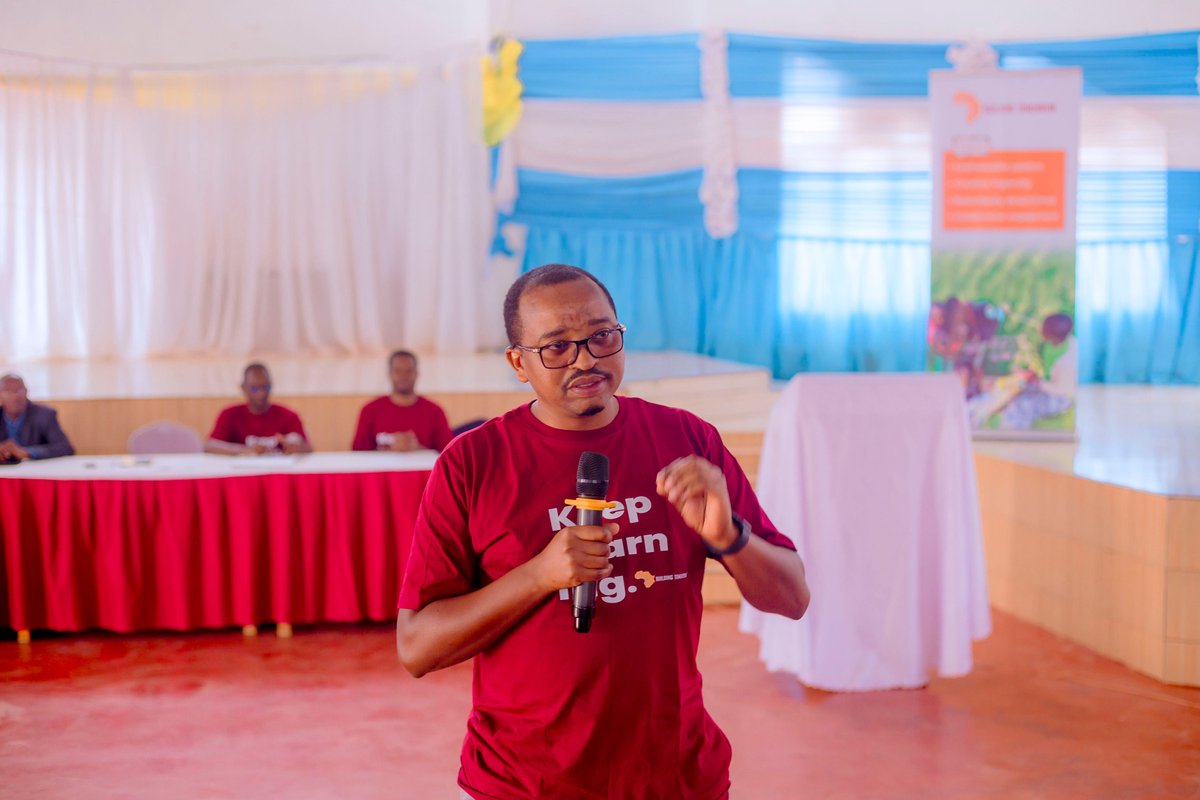
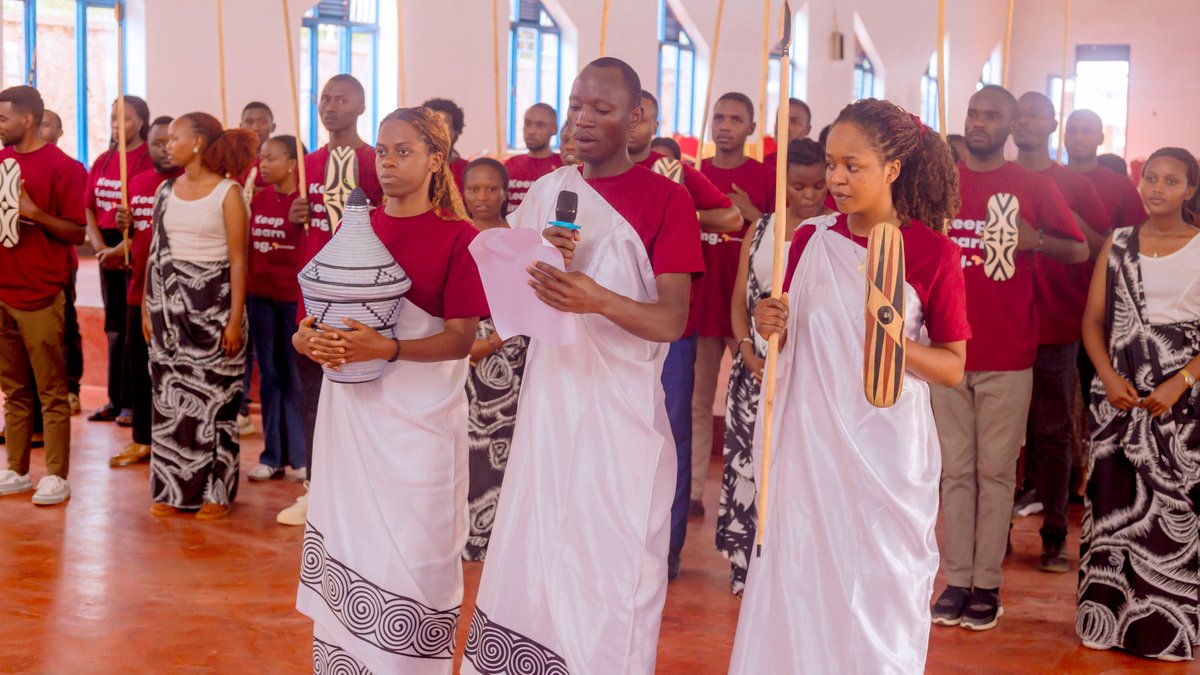
Today, the Head of Teacher Development, Management & Career Guidance and Counselling Department, @NMugenzi, closed the training for 50 Fellows. They will be deployed to 5 districts (Muhanga, Kamonyi, Bugesera, Rwamagana, and Rulindo) at the start of the 2026-2027 academic year.
Drawing inspiration from the Itorero tradition, this programme instilled a deep sense of national identity, civic responsibility, and cultural pride, equipping participants with the character & competencies needed to contribute meaningfully to Rwanda’s development. @BldgTomorrow
I remember April 1994 as if it were yesterday.
This short testimony goes to the youth, but especially to those who dare to speak of a “double genocide.”
I was not hunted.
But I remember how Tutsis were hunted.
I remember conversations with my Tutsi peers.
Fear in their eyes.
Total despair.
Wondering where to hide.
I remember Tutsi neighbours trying to return to their places of origin, hoping to find safety, and never making it.
Some were killed on the way.
Others were killed when they arrived, in places they believed would protect them.
I remember churches becoming places of animosity.
Places of slaughter.
And I remember not understanding how people could suddenly become so cruel.
There was a roadblock near our home.
People were stopped and asked to present their IDs.
If your ID said Tutsi, you were to die.
If you had children, they were to die, no matter their age.
If you were pregnant, the unborn child was to die first.
The unspeakable had become normal.
There was a nearby forest.
Killers had given it a name, CND.
And we would hear them say they had taken people to CND.
That is how death was spoken about.
Casually. As if it meant nothing.
No one questioned it.
Those who could ask were the same ones killing or giving the orders.
At no point during the Genocide against the Tutsi did I hear of Hutus being hunted for being Hutu.
Tutsis were hunted. Systematically. Ruthlessly.
Yes, some Hutus were killed because they were mistaken for Tutsi.
Yes, some Hutus were killed because they refused to kill, or because they chose to hide and protect Tutsis.
Yes, many Hutus died on the way to exile, mostly from cholera.
But they were never hunted to death for being Hutu.
Let us not distort history.
Let us not equalise what was never equal.
To the youth, Rwanda was once dead.
What you see today did not exist.
And yet, we rose.
We rebuilt.
We chose unity over division.
Today, Rwanda stands strong, among the fast-developing nations, guided by visionary leadership under H.E. Paul Kagame.
Under Inkotanyi, who stopped the genocide when the international community failed to act.
Our dignity was restored.
Today, amahanga aratwubaha.
This is not something we can ever take for granted.
We must stand together to protect our country and our leadership.
We must stand together to fight any harm against Rwanda.
We must stand together against any form of genocide ideology.
We must stand together against denial, so that “Never Again” becomes a reality.
Today and forever.
As our President said, Rwanda cannot die twice.
#Kwibuka32
𝗥𝗨𝗧𝗘𝗡𝗗𝗢 𝗠𝗔𝗧𝗜𝗡𝗬𝗔𝗥𝗔𝗥𝗘 𝗗𝗢𝗖𝗨𝗠𝗘𝗡𝗧𝗔𝗥𝗬 𝗢𝗡 𝗖𝗢𝗡𝗚𝗢 𝗖𝗢𝗡𝗙𝗟𝗜𝗖𝗧 𝗣𝗥𝗘𝗠𝗜𝗘𝗥𝗘𝗦 𝗧𝗢𝗗𝗔𝗬 𝗔𝗧 𝟭𝟴:𝟬𝟬 𝗛𝗢𝗨𝗥’𝗦.
Watch the premiere of a documentary on the DRC conflict and the 2025 Battle for Goma that gives some valid insights into the conflict from perspectives that are missing from mainstream media on https://t.co/dJiLrHllR4
“RWANDA 🇷🇼—Not just a country, but a legacy of strength,resilience,and unity. This song is for the culture,for the truth,and for everyone who carries Rwanda in their heart. Let’s stand together and let the world hear our voice! ✊🏾🔥 #HoraRwanda#ProudlyRwandan |out on 13th March
Niba ukunda Dr Dash byanyabyo ngiye kugusaba ikintu kimwe.
Ibi biganiro by’uyu Mario Nawfal nkuko nari narabiguteguje, mureke tujye tubisangiza Isi. Ndavuga ibi ari kumwe na His Excellence Paul Kagame.
Mubisakaze ahantu hose 🙏🏾
Niwo musanzu nagusabye.
We are the media now kandi ntimunteguhe.
Isi yose igomba kumenya ukuri kuko bamwe bari gusakaza ibinyoma byinshi.
Ndabizeye ✊🏿
#DRC#Rubaya#M23
"Are #M23 and Rwanda 'plundering #coltan' in Rubaya?"
A report.
My main findings:
- There are NO #M23 soldiers near the mines.
- #M23 does not participate in any aspect of the coltan mining business.
- There is NO Rwandan presence in Rubaya.
- Rubaya is NOT a "blood mineral" mine.
- Rubaya does not supply the world electronics industry.
➡️ According to public statements, witness testimony, and field observation, a certain number of actions have been implemented by #M23 leadership :
1) Wazalendo & armed militias that were responsible for the violence in Rubaya for decades, have been neutralized. Security has been put in place.
2) NO weapons, NO children, NO pregnant women allowed, anywhere near the mine.
3) Daily rate increase from $3 to $5 (#M23 has imposed this minimum wage to the mine operators to be paid to the workers as a daily base rate. This is before what the miners earn per quantity of coltan extracted).
➡️In addition, our findings indicate that:
- Rubaya is a town of more than 100,000 residents with their families. It is not a mine. The coltan mine is 30 minutes away (by motorbike) and between 1 to 2 hours by foot. No car can access the mine.
- The principal economic mode of sustenance of Rubaya residents is coltan mining. Like other regions where families and communities depend on cattle herding, agriculture, or specific industries, the survival of Rubaya residents depends on coltan mining. This is the equivalent of entire towns in France where every family cultivates and harvests grapes for the wine industry of that region. Rubaya families extract, process, and sell coltan. Coltan is currently sold between $30 and $40/kg on the world market. This is after processing it, and profit will depend on the mineral content quality. This is to say that this artisanal mine requires tones and tones of raw coltan to be extracted and processed manually in order to achieve the quality of coltan sold on the market. Unlike the wine producers in France who have access to high tech industrial equipment for their wine industry, the Rubaya coltan mine extraction and processing are exclusively done manually.
- Thus, the artisanal nature of this mine, where every aspect of the extraction and processing of coltan is manual, and the absence of a road between Rubaya and Goma where the coltan is sold on the market, makes it impossible for this mine to be considered as the number 1 supply of the world electronics industry.
➡️This argument, used by the #DRC government, human rights organization like @HRW, the United Nations represented by @MONUSCO and @UN_BintouKeita, government officials in Europe, and the mainstream and social media, constitutes a fallacy which seeks to blame the neighboring Rwanda, Congolese Rwandophones in North Kivu, and the Banyamulenge in South Kivu, as well as #M23.
➡️It diverts attention from the #DRC failed state led by Felix Tshisekedi, who has been incapable, like his predecessors or the last 30 years, to provide security, economic, and financial stability to its people.
➡️The vast majority of people living in Rubaya are native Congolese Kinyarwanda speakers. This is the result of the colonial borders that were drawn during the Berlin Conference in 1884-5 by European countries including Germany, Belgium, the United Kingdom, and France. Those borders separated Rwandophone speakers accros several countries. Thus, Rubaya residents are Congolese, who speak Kinyarwanda, which is their mother tongue.
➡️The current "sanctions" campaign against Rwanda, accused of "stealing strategic minerals from Rubaya" and "destabilizing DRC" is led by the same countries who drew those colonial borders in the Great Lakes region in 1884-5, which is the root cause of the DRC conflict.
➡️ The UK, Belgium, and Germany should instead seek to pacify the region by putting all their efforts and means to fight against tribalism and ethnic divisionism which their countries have created, and which is the mode of governance of the DRC regime that they are protecting today, at the expense of Rwandan Tutsi who were at the verge of total annihilation in 1994, and Congolese Tutsi victim of systemic killings and persecution in DRC since 1994.
➡️ Rubaya residents have openly and eagerly expressed to us that their security is finally guaranteed by #M23 today and that they are hopeful that a new era where peace prevails has began.
(Photo and video credit to @TEDDYMAZINA)
9. Transport et ravitaillement de Goma
Le matin, la route vers le nord est envahie de motos surchargées transportant vivres et charbon. Beaucoup finissent renversées, et des enfants monnayent leur aide pour les redresser. Avant la prise de la ville, ces conducteurs subissaient de multiples extorsions. Aujourd’hui, motos et camions - autrefois interdits par les FARDC car venant des zones M23 circulent plus librement, facilitant l'approvisionnement de Goma.
Ces observations de terrain seront suivies d'autres analyses, plus politiques, sous #Kivu2025
Demain, je posterai un traduction en anglais.