Senior Fellow with @TheGoodISIS, covering Iran, North Korea, illicit trade, and nuclear weapons in general. Institute for Science and International Security
According to a release from U.S. Central Command, in the most recent wave of U.S. strikes against Iran in response to the Iranian targeting of commercial shipping, 90 military targets, including military logistics infrastructure, missile and drone storage sites, air defense systems, coastal defense surveillance installations, and unspecified naval targets, were struck.
At the direction of the Commander in Chief, U.S. Central Command forces have started conducting additional strikes against Iran to further degrade their ability to threaten freedom of navigation in the Strait of Hormuz. The United States is holding Iran accountable for recent unjustified aggression against commercial shipping and civilian crews freely navigating a vital international waterway.
Nizhnekamsk Oil Refinery is only 26km away from the Alabuga Special Economic Zone, the main production site where Russia builds the Shahed 136/Geran 2 drones (originally an Iranian drone)… The Geran is used nearly everyday to terrorize and kill Ukrainian soldiers and civilians and destroy civilian and military facilities. Thousands of these drones have been deployed against Ukraine.
GeoConfirmed conflictmap UKR.
Vid 01, Point of view - Different fires at the oil refinery of Nizhnekamsk after Ukrainian drone attacks, reportedly with FP-1.
55.64489, 51.84683
9H7HJRVW+XP Nizhnekamsk, Republic of Tatarstan, Russia
GeoLocated by @blinzka
Geolocation:
https://t.co/ngJVt2HdTF
Location:
https://t.co/YkSb1cOEPI
Sources:
https://t.co/LXs0TYwutA
Visit our map: https://t.co/g9OP1aPTwn
Speaking to reporters, U.S. President Donald J. Trump has said that the U.S. will likely strike Iran again tonight, but provide them with a “little warning.” This comes following last night’s wave of reciprocal U.S.-Iran strikes, after Iran targeted three tankers in and around the Strait of Hormuz for not using Iran’s proposed Persian Gulf Strait Authority (PGSA) transit lanes.
Trump just said he will grant Ukraine a license to produce their own Patriot missile systems: “This way [Zelensky] can’t complain we’re not giving them enough. I said, ‘Make them yourself.’ We haven’t informed the company of that yet. But that will work out alright. I’m sure they will be thrilled.”
U.S. Central Command forces have begun launching a series of powerful strikes against Iran to impose heavy costs for targeting and attacking commercial shipping crewed by innocent civilians in an international waterway. The U.S. strikes are in response to Iranian attacks on three commercial vessels that were transiting the Strait of Hormuz. Iran’s demonstrated aggression was unwarranted, dangerous, and a clear violation of the ceasefire.
NEW: U.S. forces are currently striking southwestern Iran in response to IRGC attacks on three commercial vessels that were transiting the Strait of Hormuz.
According to a report from the United Kingdom Maritime Trade Operations (UKMTO) Centre, a vessel 8nm east of Limah, Oman was struck by an unknown projectile as it traveled southbound away from the Strait of Hormuz. No casualties have been reported at this time. @_MartinKelly_ reported earlier that the vessel, a Nakilat Shipping Qatar Limited tanker, which was loaded, reported being struck in the engine room.
Based on position of the strike, it’s fair to assess that the vessel was traveling in the proposed Oman-International Maritime Organization (IMO) transit lanes and not the lanes proposed by Iran’s Persian Gulf Strait Authority (PGSA). This may have induced an Iranian strike, as Iran continues to maintain that their PGSA transit routes are the only viable option for commercial maritime traffic.
Is the regime in Iran already hedging against its MOU with the US?
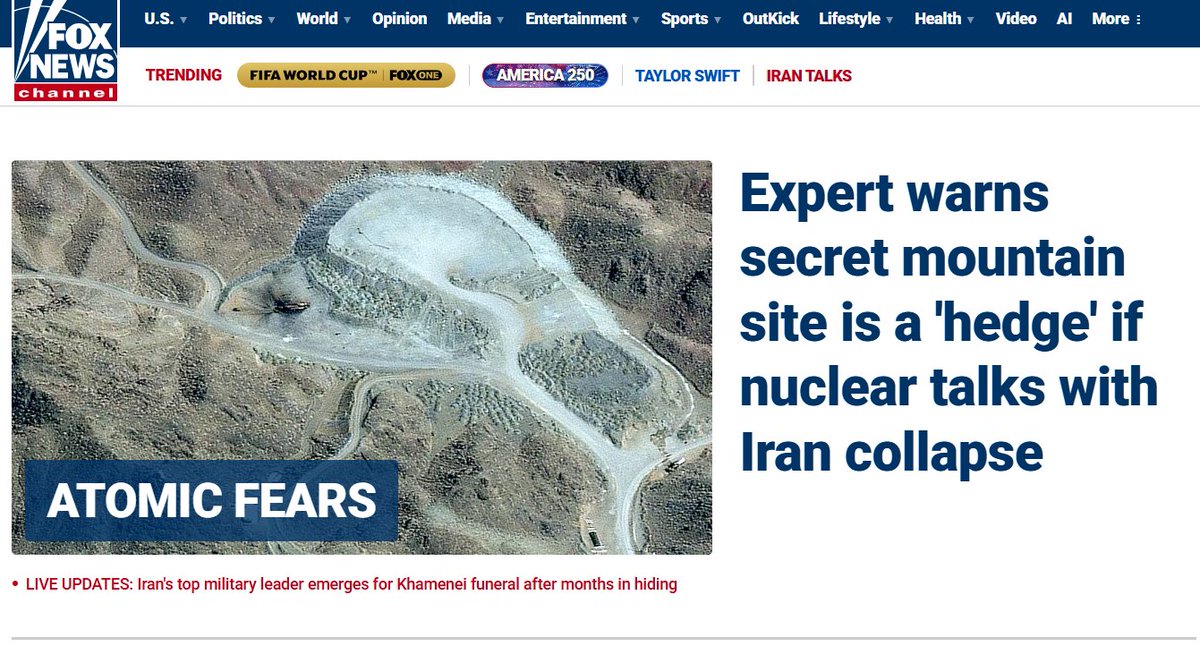
Experts from the Washington-based Institute for Science and International Security argue that halting work at Pickaxe Mountain and allowing IAEA inspectors access would be a key good-faith measure to test whether Iran is prepared to abandon its pattern of deception.
Spencer Faragasso, a senior fellow at the institute, warned: "The ongoing work at Pickaxe Mountain is deeply concerning. This work has continued steadily since at least 2020. In my view, this is a hedge by Iran in case negotiations fail — they will then have a nuclear facility in a late stage of construction. We assessed that Pickaxe is likely large enough to hold an enrichment plant."
https://t.co/V8aoh49x5w
Experts say ‘deeply’ concerned over Iran’s work at underground nuclear site.
'If Iran is serious about negotiating, it should halt construction at Pickaxe Mountain as a token of good faith,' researcher @SFnuclear@TheGoodISIS says.
My latest @FoxNews@FNCGlobalNews
https://t.co/jheeMLTD23
Russia is planning an armed “provocation” on Polish soil to test Nato’s resolve, the United States has warned.
Polish critical infrastructure could be targeted by missiles and drones or Russian soldiers could cross the border into Nato territory.
🔗: https://t.co/T8CNYztoaw
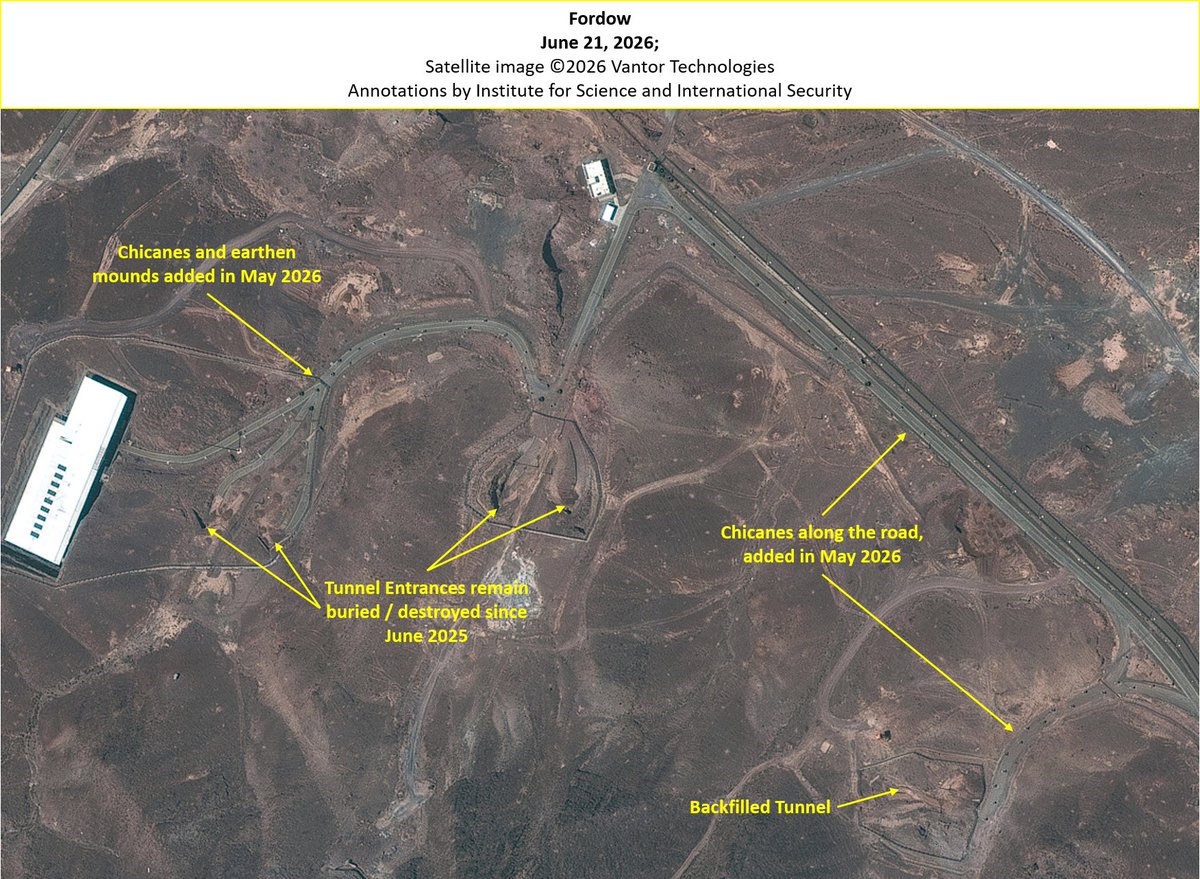
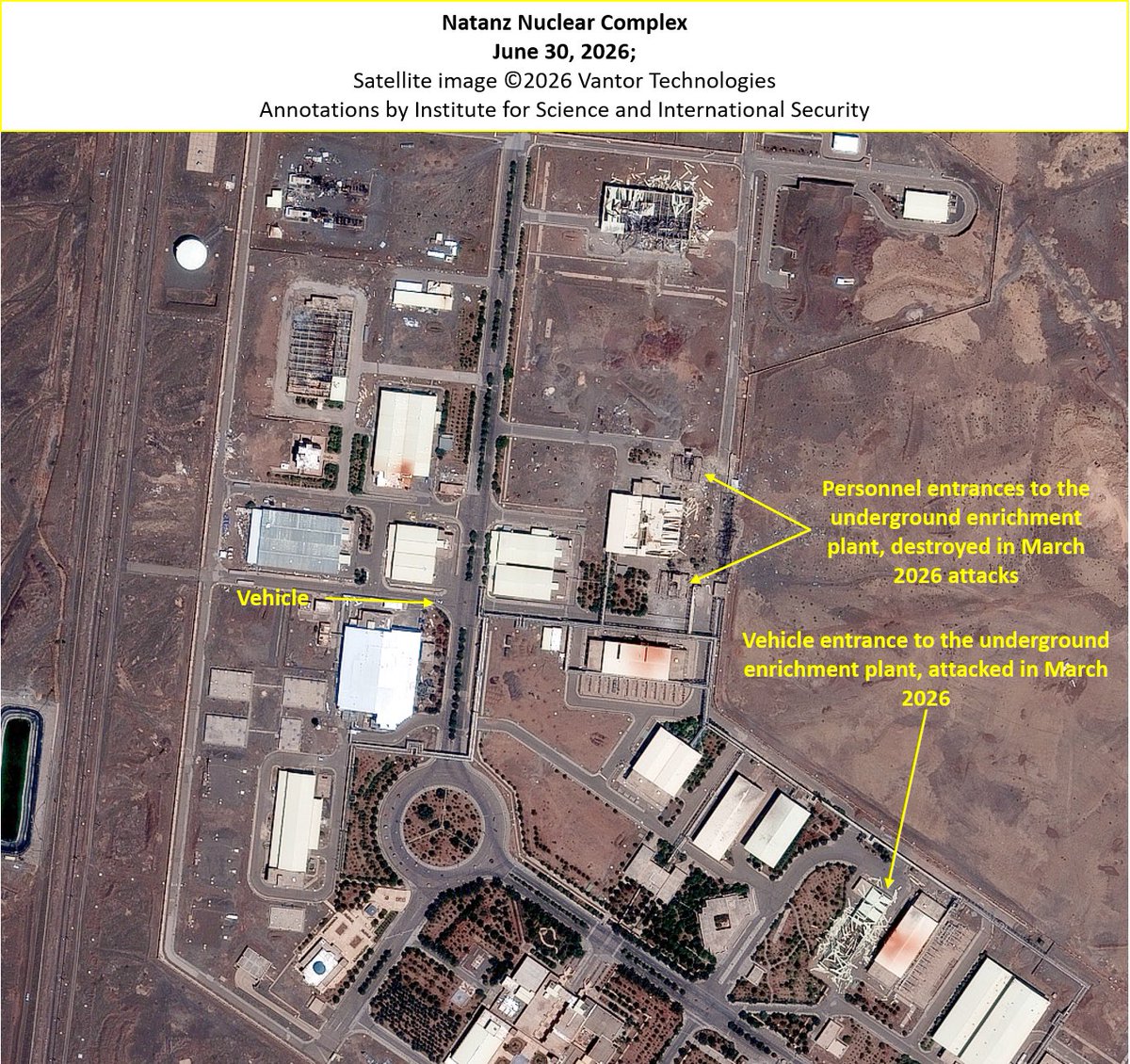
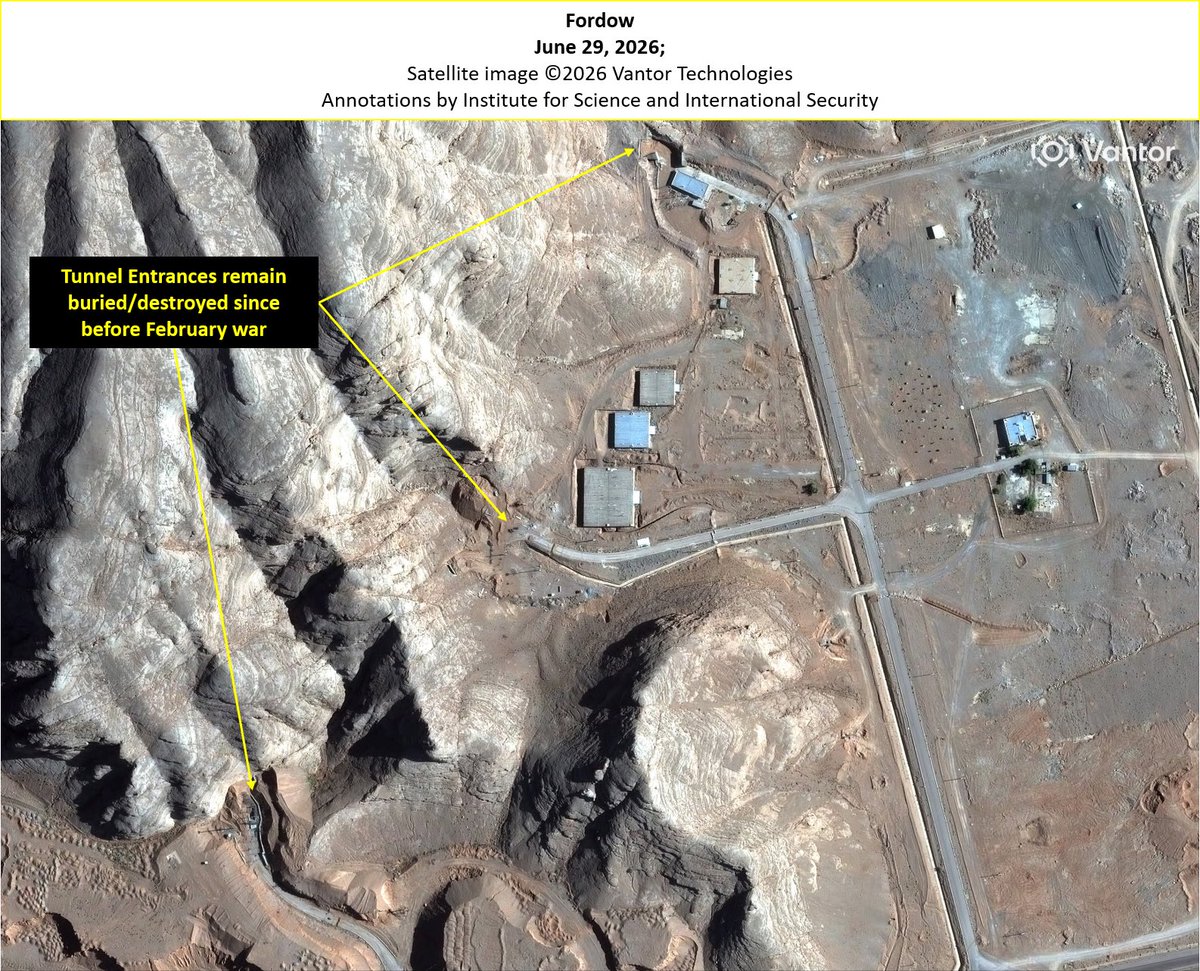
Recent satellite imagery from late June 2026, of the Natanz Nuclear Complex and the nearby Pickaxe Mountain facility, Fordow, and Esfahan, were provided to the Institute by @vantortech.
At Natanz, little activity can be seen. The access points to the below ground enrichment halls have not been repaired. The personnel entrances remain destroyed and vehicle entrances remain severely damaged. A single vehicle can be seen on the road outside of the Pilot Fuel Enrichment Plant (PFEP), which was destroyed in June 2025, but was covered by Iran after. The HVAC chillers remain displaced throughout the complex and the primary and backup power systems remain destroyed.
At Pickaxe Mountain, vehicle activity can be seen on the roads leading to the open set of Western tunnel portals, indicating that construction inside the tunnel complex, as well hardening of the tunnel entrance, are ongoing. The MOU signed between the United States and Iran requires that Iran maintain the status quo which should prohibit construction at any nuclear related facility, including Pickaxe Mountain. As first reported by the Institute in early May (see: https://t.co/nTs0oIiUYY ), the Eastern set of tunnel portals remain partially backfilled with dirt, making them inaccessible to ground vehicles. This was likely done to prevent rapid ingress and egress to the tunnel entrances.
At Fordow, as earlier reported by the Institute, between May 10 and May 18th, Iran added passive defensive measures in the form of earthen/rocky mounds and other objects on the roads leading to the tunnel entrances. The alternate placings of the piles/objects are very precise, which creates a series of chicanes, indicating they are not intended as obstructions, but rather to prevent rapid ingress and egress by any vehicle towards the tunnels. The June 21 Vantor image shows that the objects along the road remain there. The tunnel portals also remain backfilled with dirt.
As of June 29, 2026, there is no observed activity at Esfahan. The tunnel portals remain backfilled with dirt.
The Institute will continue to monitor these sites for any developments.
Read more about the recent activity at the sites here: https://t.co/1oer7whmPu, and here: https://t.co/33GqYDyXBd
Analysis by @DAVIDHALBRIGHT1, @SarahBurkhard, and @SFnuclear
NATO’s floating drone base 🛳️
Climb aboard the Anadolu, flagship of the Turkish Navy 🇹🇷, and see how this amphibious assault ship is doubling as a floating drone base - giving NATO a new technological edge at sea 🌊
#NATOsummit
🚨🚨🚨בימים האחרונים גורם כלשהו (להערכתי גורם איראני) מתחזה אלי ושולח הודעות ווטסאפ לגורמים שונים בישראל ממספר אמריקני (ראו בתמונה המצורפת). זה לא המספר שלי. המטרה היא לגרום לכם ללחוץ על לינקים שיתנו גישה לטלפון שלכם. אל תלחצו על הלינקים. אל תענו להודעות האלה. חיסמו. דווחו
To be more clear on 3, I think the more likely outcomes are a collapse of the MoU and return to war, or basically an enshrinement of the current status quo (which has a lot of downsides), perhaps with some small/minimal nuclear deal that allows Trump to claim victory but doesn’t address the fundamental problem.