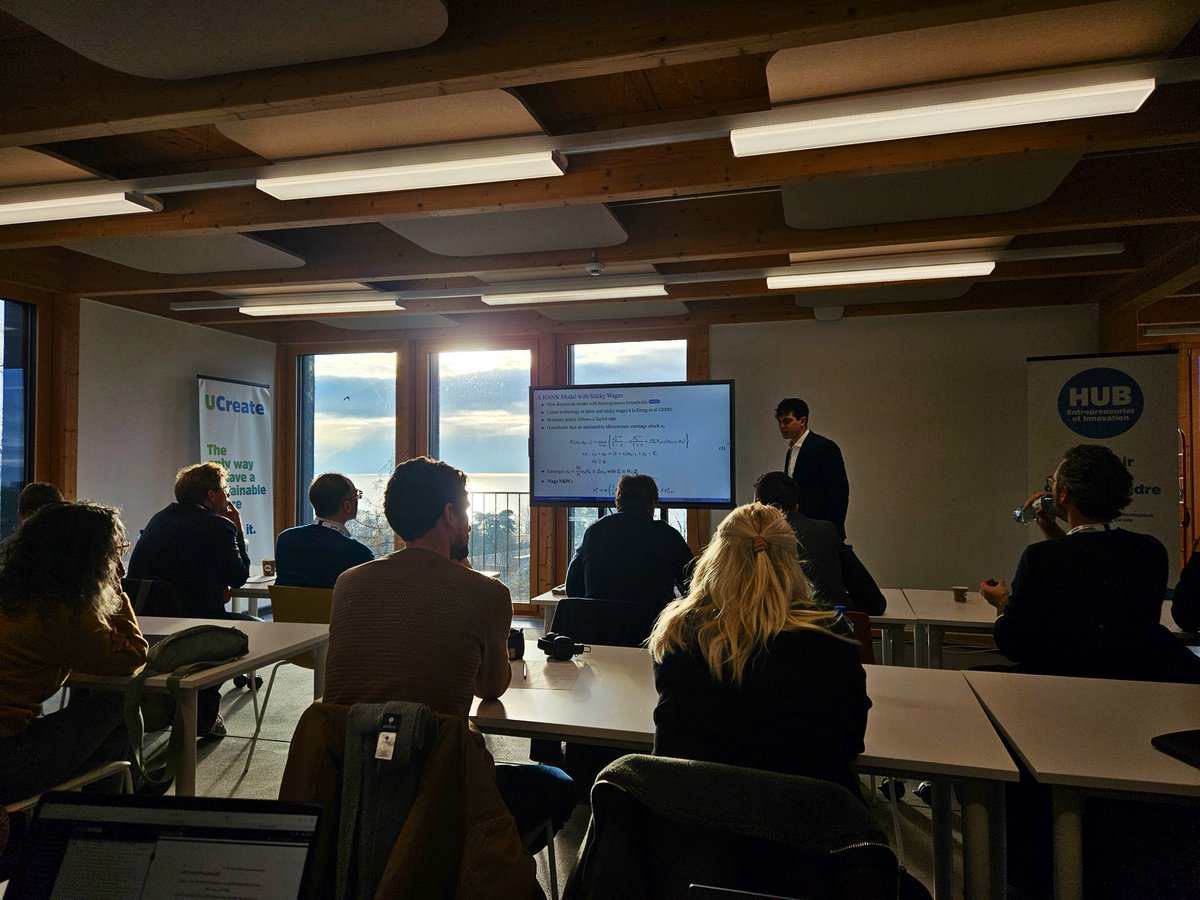
👉 Policy takeaway: in recessions, well-designed unemployment insurance—possibly combined with targeted transfers—can provide stronger stabilization than broad untargeted support.
Link to the paper: https://t.co/wK1o1nmZ7p
Very happy to share our new paper 🎉📄
“Welfare Analysis of Income-Stabilization Policies in a HANK Model with Unemployment Risk”
with Marcos Poplawski-Ribeiro and Danila Smirnov 🙌
We study which income-stabilization policies work best in recessions in a HANK-SAM model
Why does UI come out on top? 🤔
Because it combines cash-flow support + insurance.
It helps unemployed households directly 💸
but it also reassures employed households that job loss would be less painful, so they cut precautionary saving by less.
🚨 Fatih Guvenen, Luigi Pistaferri and I are hiring a pre-doc to work as a project manager for the GRID Project which is rapidly expanding thanks to a generous NSF grant.
More countries, more statistics, new website, and new visualization tool coming soon!
Ideal candidate has Econ & Stats background, interest in research, and excellent coding skills.
✅Appointment for 1 year, competitive salary
🔜Start date, mid April
🎓Great fit for students considering a Ph.D.
Link to apply in tweet below and in thread
AI is a game changer for economic research. We will look back and think: before and after.
The junior job market used to place enormous value on technical skills — and rightly so. We wanted to pass on the latest research methods to new PhD students. But the cost of mastering frontier solution techniques has dropped dramatically. I now find myself replicating papers and experimenting with frontier methods in an evening or a few days using Claude Code. That would have taken weeks before — which in practice meant I wouldn’t have done it at all.
So what does the new equilibrium look like? Some are pessimistic: ChatGPT can write PhD dissertations, they say. Maybe. But those dissertations won’t push the frontier or generate excitement.
I take the other side of that bet. We are in the business of figuring out how the world works and generating new knowledge. There is plenty we don’t understand, and no shortage of questions to answer. AI just accelerates the process.
The returns on conceptual thinking and original ideas are now relatively higher compared to the technical grunt work of debugging code and cleaning datasets. I think this is a great development.
My guess is it will also erode the monopoly that top US schools — and a handful of others — have long enjoyed. Part of that monopoly rested on access to knowledge that didn’t travel easily. Person-to-person transmission has always been far more efficient than learning from books or published papers — which are outdated by the time they appear, given publication lags.
Now knowledge transmission is nearly instantaneous. I find myself using techniques I understood in principle but could never justify the time to implement, because other methods were simply faster. That’s no longer true. The same goes for big data work.
One question keeps nagging me though: how should this change how we teach?
The 1st PhD Macroeconomics Conference at the University of Lausanne has been amazing!
Great discussions and a fantastic group of people. Thanks @CarcellerMario, @Julian_mrcx and Viktor for organising, and to @DanieleSiena_ for discussing my paper!
🚀I am on the academic job market! 🚀
Excited to share my JMP, “Structural Transformation and the Transmission of Monetary Policy,” which shows how changing consumption patterns affect monetary policy. 🛒💸💰
Check out my JMP and portfolio: https://t.co/cEjT7vTu1r
In the past year, I’ve had the incredible opportunity to work at both the @ecb and the @IMFNews .
Two unforgettable experiences — learning, growing, and meeting inspiring people along the way. 🌍📊 Grateful to all the colleagues and mentors who made these journeys so meaningful!
BREAKING NEWS
The Royal Swedish Academy of Sciences has decided to award the 2025 Sveriges Riksbank Prize in Economic Sciences in Memory of Alfred Nobel to Joel Mokyr, Philippe Aghion and Peter Howitt “for having explained innovation-driven economic growth” with one half to Mokyr “for having identified the prerequisites for sustained growth through technological progress” and the other half jointly to Aghion and Howitt “for the theory of sustained growth through creative destruction.”
#NobelPrize
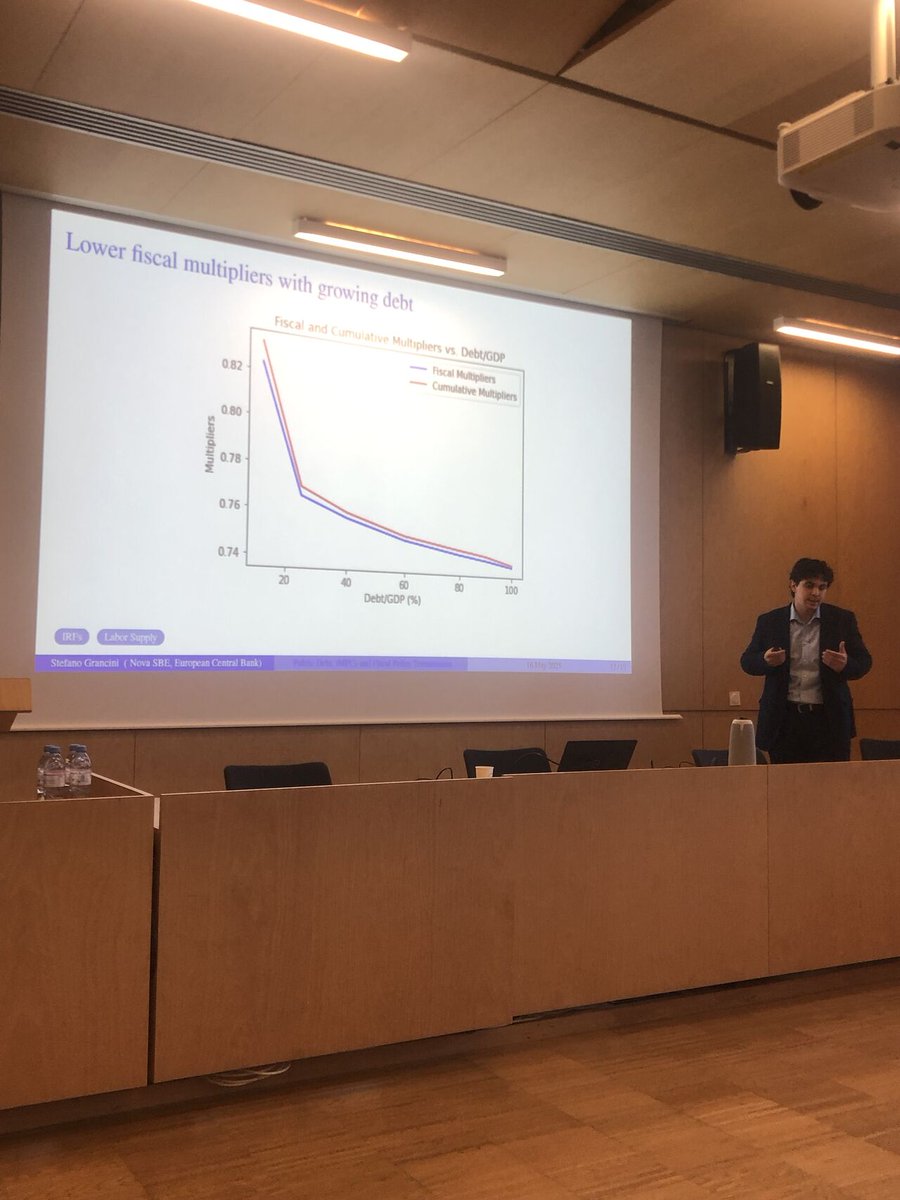
In the last few weeks I had the privilege to present in Stockholm and in Paris my paper on public debt and fiscal policy transmission - I received valuable feedback - thank you to the organizers and everyone involved 😀 #economix#sverigesriksbank#sse#cemof
We are very excited to host the annual meeting of the Portuguese Economic Journal at Nova SBE this year on 4-6 July!
It's a wonderful meeting and typically well attended.
The deadline to submit is March 16! Please submit!
See you in Lisbon!
https://t.co/bYZS4QatrH