Of 102 agency sites running tracking, 12 had a tag installed and sending nothing.
We build tools for quiet, costly mistakes like that. This account was TagZ. It's now ShabSand Tools.
TagZ · SiteQuiet · HoursLeft · WinPacket
Links in bio.
19 July 2024: 8.5M Windows devices went down over the number 21.
The checker expected 21 inputs. The computers only sent 20.
(CrowdStrike's own root-cause report; device count: Microsoft)
A check that reads the plan isn't a check that runs it. https://t.co/tgkPVdB9tO
@fromadstoassets One way to tell pixel update from real volatility: compare Ads Manager purchases with Shopify orders day by day since the 12th. If the ratio shifted and orders didn't, it's reporting, not traffic. Also worth a test order in Events Manager > Test Events: one order, one Purchase.
@Peter_Quadrel Point 2 only works if the pixel Purchase event is actually arriving. Worth a test order before BF: Events Manager > Test Events, confirm exactly one Purchase with value + currency. A Purchase that quietly stopped after a theme update means every repeat buyer is counted as new.
The bank reviewing your chargeback will never click your tracking link.
Stripe's dispute docs: banks "won't review any external content", and you submit once. Put the carrier's record on the page.
WinPacket builds the packet: https://t.co/uMl6A9OpZ3
A 20-hour retainer. The client used 11. At most 5 roll over. At midnight on the 31st, the other 4 expire: $600 of time they paid for. (Example numbers.)
Keep the $600, or roll all 9 over?
Check your terms, no account: https://t.co/KaZ4rUJzP7
The warning came 30 days early. Nobody acted on it.
On 1 July, alerts quietly stopped getting through. On 27 July the certificate expired. (Lucidworks published this on their own status page.)
Free certificate and uptime check: https://t.co/rX366gUgNB
I hadn't clicked Accept or Reject. My visit had already left.
We opened 102 agency and freelancer homepages and waited 10 seconds before answering the cookie banner. On 11 of them, tags had already sent data.
Check yours free, no signup: https://t.co/tgkPVdB9tO
@dileshumale Probably an undercount. Cited links carry a ChatGPT utm_source, but many people read the answer, then search your brand or type the URL, which lands as branded search or direct. A 'how did you hear about us' question at checkout often shows a bigger ChatGPT share.
@benradack One catch: Meta decides who's 'existing' from your customer list and pixel purchase history. If the list is stale or purchase events went missing, past buyers count as new and new-customer CPA looks better than it is. Refresh the list before trusting the split.
Installed is not the same as firing. A source-code checker says "present". Only the network request says "sent".
Free 20-second scan of any URL, no signup (we built it): https://t.co/ctXuu6k5mJ
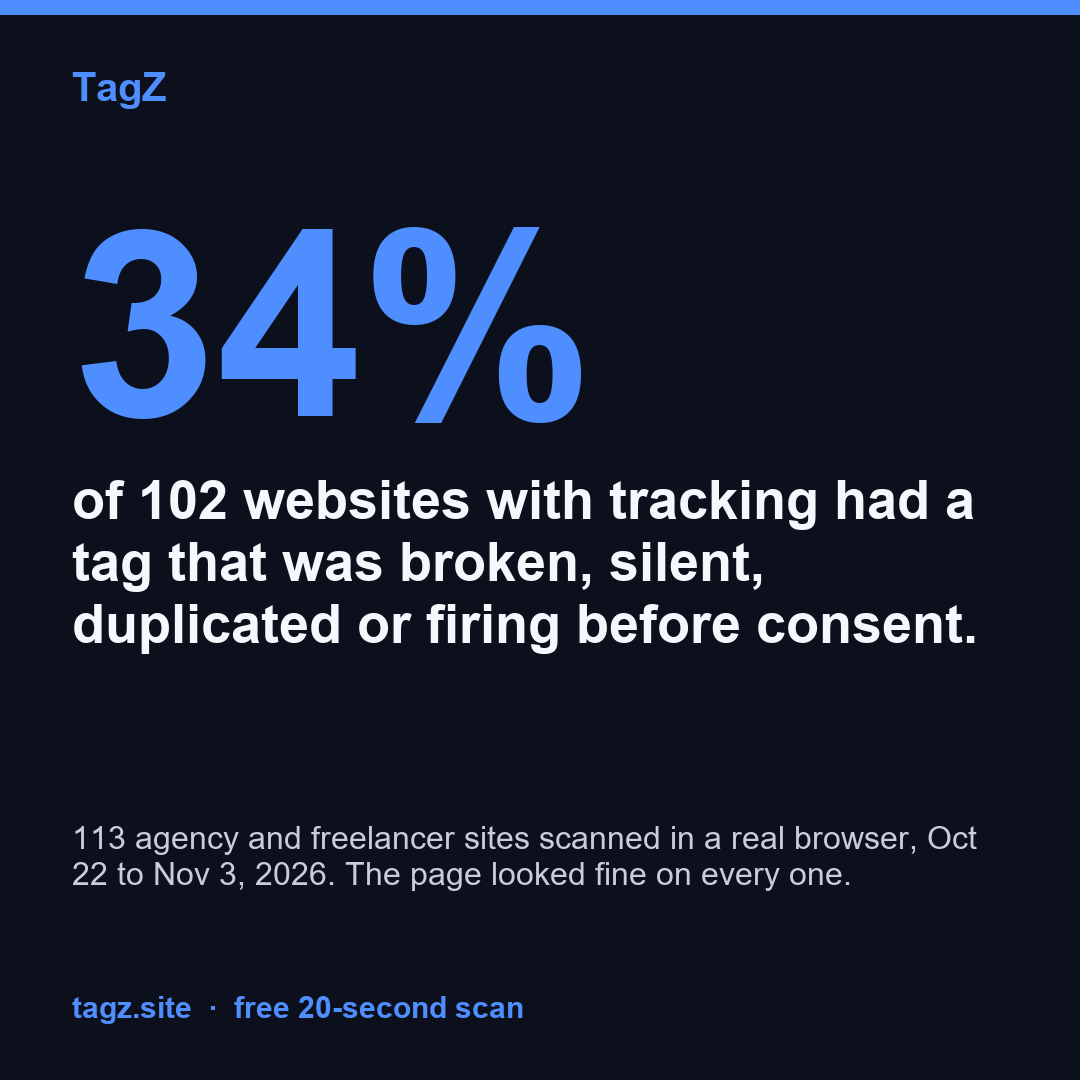
We scanned 113 agency and freelancer websites for broken marketing tags. Not the source code: a real browser, watching which requests actually leave the page.
34% of the sites with tracking (35 of 102) had at least one problem. What was wrong:
@korzhov_dm What makes step 4 work: a server event sent 4 hours later has no browser session, so store _fbp and _fbc at signup and send them with the hashed email. Without fbc Meta often can't tie the event to the click at all. Events Manager > event > Event Match Quality shows if it lands.
@TaylorSicard If your ROAS doesn't move after Nov 12, that's a signal too: the recovery matches on the email your Purchase event sends. DevTools > Network, filter "tr", open the Purchase request, look for ud[em]. No hashed email = nothing to recover. Orders stay the honest denominator.
@benschreiber_ Part of that gap is mechanical: Google reports by click date inside its own window, Triple Whale by order date, and Demand Gen/YouTube count engaged views. Quick check: add the "Conversions (by conv. time)" column next to Conversions and see how far apart they already are.
@anumness 95% cancels from Meta vs low churn from Search often means Meta is optimizing for the wrong event: it finds people who start trials. Sending the trial-to-paid conversion back as its own event (with value) lets it learn who actually stays, once there's some volume.