🔵 What if the greatest advances in healthcare don't come from the next breakthrough drug or cutting-edge surgical procedure?
What if they come from something much simpler: what we choose to put on our plates every day?
That idea still sounds radical to many people, but it shouldn't. The evidence has been accumulating for decades that nutrition and lifestyle are not just tools for preventing disease, they are among the most powerful therapies we have for treating many of the chronic illnesses that dominate modern healthcare.
Yet our healthcare system continues to focus overwhelmingly on managing symptoms rather than addressing their causes.
When most people visit their doctor, they receive a diagnosis followed by a prescription.
If that prescription doesn't work, another medication is added.
Eventually, surgery may be recommended.
At every stage, the conversation centers on controlling disease instead of asking a much more important question:
Why did the disease develop in the first place?
This approach has become so normal that many people never stop to question it.
They assume that high blood pressure, diabetes, heart disease, arthritis, autoimmune disorders, and digestive diseases are simply conditions to be managed for life.
But what if they aren't?
For many chronic diseases, food is not simply part of the conversation. it may be the most IMPORTANT part.
A whole-food, plant-based diet has repeatedly been shown to improve risk factors associated with heart disease, type 2 diabetes, obesity, hypertension, and many inflammatory conditions. ✅
In many cases, people are able to reduce medications under medical supervision as their health improves.
Rather than merely suppressing symptoms, dietary change helps address many of the underlying processes driving disease.
Unfortunately, this option is often treated as an afterthought.
Patients may hear, "Try to lose some weight," or "Eat a little healthier," but those vague recommendations are hardly a treatment plan.
Very few people are TAUGHT exactly what to eat, how to prepare meals, or how nutrition influences the biology of disease.
Instead, medications become the default solution.
The problem is that informed consent isn't always as informed as we imagine.
Patients deserve to understand not only the potential benefits of medications and procedures, but also their limitations, possible side effects, and the effectiveness of lifestyle interventions that may produce equal, or even better, long-term outcomes.
TRUE informed decision-making means understanding all of the available options.
This isn't about rejecting modern medicine.
Emergency care, trauma surgery, antibiotics, and many medical advances have saved countless lives.
The issue is that chronic disease is fundamentally different.
Conditions that develop over years of poor diet and lifestyle often require a different solution than another prescription.
One of the most encouraging developments over the past two decades is that more healthcare professionals are beginning to recognize this reality. 👍🏼
Cardiologists, family physicians, endocrinologists, nurses, dietitians, and other practitioners are increasingly incorporating nutrition into patient care.
Many now work collaboratively with patients who want to improve their diets, reduce medications where appropriate, and take a more active role in their own health.
That represents a remarkable shift.
Not long ago, recommending dietary therapy as a primary treatment was often dismissed.
Today, it's becoming part of mainstream medicine.
The growing acceptance reflects what patients themselves have been discovering.
People are tired of feeling like passive participants in their healthcare. They want to understand why they're sick, what they can do about it, and whether lasting improvement is actually possible.
For many, the answer is yes.
Stories of dramatic recoveries continue to emerge. Individuals with severe inflammatory bowel disease achieving long-term remission.
People with rheumatoid arthritis regaining their mobility.
Those with advanced metabolic disease reclaiming their health.
Others avoiding major surgeries after making comprehensive lifestyle changes.
While every case is unique and no single diet is a cure-all, these stories point toward a larger truth: the human body often possesses an extraordinary capacity to heal when the conditions are right. 💪🏼
THOUSANDS of scientific papers have explored the relationship between diet and chronic disease. The research exists across numerous conditions, it simply isn't always organized into simple treatment protocols or incorporated into everyday clinical practice.
Medicine advances because curious people continue asking better questions.
Rather than accepting "this is how we've always done it," they examine the evidence, challenge assumptions, and search for better solutions. Progress has always depended on individuals willing to rethink established ideas.
The SAME principle applies to nutrition.
One persistent myth is that healthy eating is expensive or only accessible to affluent families. Yet throughout history, populations around the world have thrived on diets centered around grains, legumes, vegetables, fruits, and other minimally processed plant foods. 🫘 🥔🌾🍌🍅
Whole foods like oats, beans, lentils, potatoes, rice, and seasonal produce remain among the most affordable foods available.
The perception that plant-based eating is expensive often comes from replacing processed foods with different processed foods: vegan cookies, specialty snacks, meat substitutes, and packaged convenience products.
Those items can quickly inflate grocery bills while offering little nutritional advantage.
A whole-food, plant-based lifestyle is built on simple foods, not expensive ones.
This reality has been demonstrated in community programs serving economically disadvantaged populations.
When people receive practical education, cooking skills, and ongoing support, they are just as capable of adopting healthier eating patterns as anyone else.
Health is not reserved for the wealthy; knowledge and access make the difference.
Fortunately, the world is changing.
Finding plant-based meals has never been easier.
Grocery stores now stock foods that were nearly impossible to find a generation ago.
Restaurants increasingly offer plant-based options, and public awareness continues to grow.
More importantly, the conversation has shifted.
Choosing a whole-food, plant-based lifestyle is no longer viewed as an unusual fringe idea. It has become an evidence-based approach supported by an expanding body of scientific research and embraced by a growing number of healthcare professionals.
Perhaps that is the most hopeful sign of all. 👍🏼
Healthcare doesn't have to revolve around managing decline. It can focus on restoring health, preventing disease, and empowering people with the knowledge to care for themselves.
Food is not the only answer, but it is one of the most powerful tools we possess.
Every meal becomes an opportunity to influence our future health.
Not through miracle cures or quick fixes, but through consistent daily choices that allow the body to function as it was designed.
The future of healthcare may not begin in the operating room or the pharmacy.
It may begin in the kitchen. 🙂
#PlantBased #WFPB #LifestyleMed
🔵 Many people believe our ancestors thrived on meat. The evidence tells a different story.
While animal foods became part of the human diet later in the Paleolithic era, plant foods remained the foundation of nutrition.
Estimates suggest our ancestors consumed 70–150 grams of fiber every day - far more than the average person today and even more than many modern vegans.
They also consumed exceptionally high amounts of vitamin C and potassium, nutrients found primarily in fruits, vegetables, legumes, and other plant foods.
The reality is simple: you don't get that much fiber from meat. You get it from plants. 🌱
There's another important point that's often overlooked.
The foods available today are not the same as those our ancestors ate. Wild game was much leaner than modern domesticated meat, and wild plants were richer in fiber and many protective nutrients.
Trying to recreate a Paleolithic diet with today's supermarket foods isn't the same thing. 🤷🏻♂️
If we truly want to learn from our ancestors, the lesson isn't to eat more meat, it's to eat far more whole PLANT foods.
Fruits, vegetables, legumes, and whole grains provide the fiber, vitamins, minerals, and thousands of beneficial phytochemicals that support heart health, gut health, longevity, and protection against chronic disease.
The real takeaway from human history isn't "eat like a caveman."
It's fill your plate with plants. 🙂
#PlantBased #WFPB #LifestyleMed
🔵 We've become remarkably good at treating disease.
We can replace joints, bypass arteries, implant stents, prescribe powerful medications, and perform surgeries that would have seemed miraculous just a few generations ago.
But here's a question that deserves more attention.
What if we've become so focused on treating disease that we've forgotten to ask WHY it developed in the first place?
For decades, heart disease has been viewed as an unavoidable consequence of aging. 🫀
It's something we expect to happen eventually, and when it does, we manage it with medication, procedures, and surgery.
But what if that's the wrong way to think about it?
Around the world, there are populations where cardiovascular disease has historically been RARE.
The same is true for several other chronic illnesses that have become commonplace in Western countries.
Even more revealing is what happens when people from those cultures adopt a Western diet. 🥓🥩🍟🧀🍕🥯
Within a generation or two, their rates of heart disease, diabetes, and certain cancers begin to resemble those seen throughout North America.
That should make us pause.
If changing what people eat can dramatically increase their risk of disease, doesn't it make sense that changing what they eat could also reduce that risk? 🤷🏻♂️
This isn't about finding another miracle cure.
It's about understanding the role food plays in either damaging or protecting the body over a lifetime.
The challenge, of course, is that meaningful dietary change isn't easy.
Many people dismiss a whole-food, plant-based lifestyle as too restrictive or too extreme.
Yet it's worth asking another question.
Which is actually more extreme?
Changing the way we eat... or accepting soaring rates of heart disease, diabetes, obesity, hypertension, strokes, and countless other chronic illnesses as "normal"? 🤷🏻♂️
From a global perspective, diets built primarily around whole plant foods have nourished civilizations for centuries. 🍠🍲🍎🥗
It's our modern eating habits that are the historical outlier.
Perhaps we've become so accustomed to processed food that healthy eating now feels unusual.
One of the biggest obstacles to change isn't a lack of information. It's a lack of understanding.
Too often, people are handed a list of foods to avoid without ever learning why those changes matter.
Knowledge creates motivation.
When people understand how their arteries become damaged, how inflammation develops, and how nutrition influences those processes, something remarkable happens.
They stop feeling powerless.
Instead of believing their future depends entirely on prescriptions or procedures, they begin to realize they have influence over their own health.
That's an incredibly hopeful message.
It doesn't suggest that medicine isn't valuable.
Modern medicine saves lives every single day, and there will always be situations where drugs and surgery are essential.
But PREVENTION deserves to stand alongside treatment.
Imagine if our healthcare system invested as much effort into helping people avoid disease as it does into managing it after it appears.
Imagine if nutrition education became as routine as learning about medications.
Imagine if conversations about food weren't driven by marketing but by science.
We're beginning to move in that direction.
More physicians are studying lifestyle medicine.
More medical schools are recognizing the importance of nutrition. More documentaries, books, and public conversations are encouraging people to reconsider long-held assumptions about what belongs on their plate.
Change rarely happens overnight.
It begins with curiosity.
It begins with asking better questions.
Could my daily habits be shaping my future health more than I realize?
What would happen if I filled my plate with foods that came from the ground instead of a factory?
How different might I feel a year from now?
The answers won't come from another fad diet or another quick fix.
They'll come from small, consistent decisions repeated every day.
Because the most POWERFUL form of healthcare isn't always what happens after disease appears.
Sometimes it's what we choose to do long before it ever has the chance. 🙂
#Plantbased #WFPB #LifestyleMed
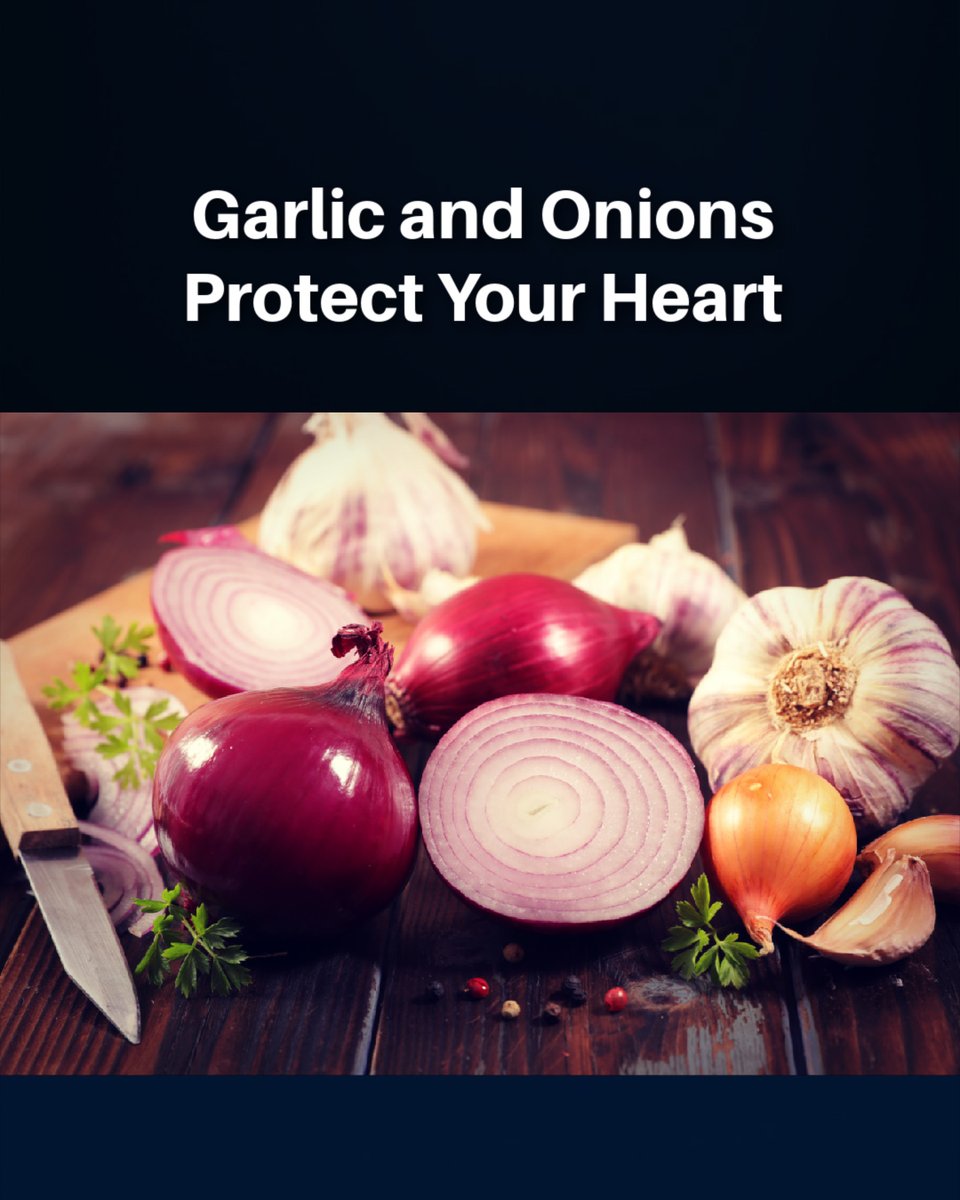
🔵 Garlic and onions do far more than add flavor to your meals, they are among nature's most powerful allies for protecting your heart and supporting long-term health.
As members of the Allium family, these humble vegetables are rich in sulfur-containing compounds and antioxidant flavonoids that work together to reduce inflammation, improve blood vessel function, and help protect against cardiovascular disease.
When garlic is chopped or crushed, it produces a remarkable compound called allicin, which is quickly converted into other beneficial sulfur compounds with potent antioxidant and anti-inflammatory properties.
Research suggests that allowing chopped garlic to sit for about 10 minutes before cooking helps maximize the formation of these health-promoting compounds. 🧄
Onions are particularly rich in quercetin, a powerful flavonoid, while red onions also provide anthocyanins - plant pigments known for their antioxidant benefits.
Interestingly, the highest concentration of these protective compounds is found in the outer layers and near the root end of the onion.
A growing body of research shows that garlic and onions can help improve several important markers of cardiovascular health.
Clinical trials and meta-analyses have found that garlic may help lower total cholesterol and LDL ("bad") cholesterol by reducing cholesterol production in the body.
Studies have also shown that onion peel extract and regular consumption of raw red onions can improve cholesterol levels, particularly in individuals with metabolic disorders. 🧅
These remarkable vegetables also support healthy blood pressure. Garlic appears to enhance the production of nitric oxide, improve the flexibility of blood vessels, and inhibit angiotensin-converting enzyme (ACE), a key target of many blood pressure medications.
Quercetin from onions further contributes by promoting healthy blood vessel function, reducing oxidative stress, and helping regulate fluid balance.
Several randomized controlled trials have demonstrated meaningful improvements in blood pressure and vascular function among individuals consuming garlic or onion extracts.
The benefits extend beyond the cardiovascular system.
Garlic has been shown to help lower fasting blood glucose and improve long-term blood sugar control, while studies involving onions have demonstrated improvements in insulin sensitivity and reductions in fasting glucose.
These effects make Allium vegetables valuable additions to a whole-food, plant-based diet aimed at preventing or managing metabolic disease. 🧅
Another fascinating benefit is their natural ability to reduce platelet aggregation, making the blood less likely to form unwanted clots.
This mild antiplatelet effect may contribute to a lower risk of heart attack and stroke while complementing the many other heart-protective actions of these foods. 🧄
The beauty of garlic and onions is that they are inexpensive, widely available, and easy to incorporate into everyday meals.
Whether added to soups, stews, salads, stir-fries, roasted vegetables, grain bowls, or homemade sauces, they provide both exceptional flavor and a remarkable array of disease-fighting phytochemicals.
Small, consistent dietary choices like these can have a profound impact on cardiovascular health over time.
References:
Wan Q, Li N, Du L, et al. Allium vegetable consumption and health: An umbrella review of meta-analyses of multiple health outcomes. Food Science & Nutrition. 2019;7:2451-2470.
Wang HP, Yang J, Qin LQ, Yang XJ. Effect of garlic on blood pressure: A meta-analysis. Journal of Clinical Hypertension. 2015;17(3):223-231.
Shabani E, Sayemiri K, Mohammadpour M. The effect of garlic on lipid profile and glucose parameters in diabetic patients: A systematic review and meta-analysis. Primary Care Diabetes. 2019;13(1):28-42.
Nicastro HL, Ross SA, Milner JA. Garlic and onions: Their cancer prevention properties. Cancer Prevention Research. 2015;8(3):181-189.
Marrelli M, Amodeo V, Statti G, Conforti F. Biological Properties and Bioactive Components of Allium cepa L.: Focus on Potential Benefits in the Treatment of Obesity and Related Comorbidities. Molecules. 2018;24(1):119.
🔵 A whole food, plant-based diet isn't about perfection, it's about progress.
Research consistently shows that eating more fruits, vegetables, legumes, whole grains, nuts, and seeds can support heart health, improve blood sugar control, lower blood pressure, help maintain a healthy weight, and reduce the risk of many chronic diseases.
Every plant-rich meal is an investment in your future health. ✅
You don't have to change everything overnight. Start with one meal, one day, one choice at a time. Those small steps add up.
Your body is always listening to what you feed it. Give it something worth celebrating. 🙂
#PlantBased #WholefoodPlantBased #PlantPowered #WFPB
🔵 Atherosclerosis and heart disease aren't inevitable parts of aging.
What WE eat daily, & feed our kids - are the most critical modifiable risk factors.
Heart disease doesn't strike suddenly; it develops gradually over a lifetime due to lifestyle choices.
Eat your VEGGIES! 🙂👍🏼
By age 10, most kids on a standard American diet already show fatty streaks in their arteries, the first sign of atherosclerosis - the leading cause of death in the U.S.
We need to eat healthier to PREVENT heart disease, & reverse the heart disease many of us likely already have.
🔵 Plant foods are downright tasty and bursting with flavors! 😋
I love a warm crispy falafel wrap with zesty tahini, or a hearty bowl of roasted sweet potatoes and kale with a lemony kick.
Or a smoky lentil chili.
These dishes are not just GOOD for you - they hit the spot! 🙂
🔵 High blood pressure, stroke, atherosclerosis, and heart attack are causing suffering to MILLIONS of families globally.
The good news is that MOST heart disease can be prevented, and even reversed, when you make the right diet and lifestyle choices.
#lifestylemedicine#wfpb