Very soon, the blocker to using AI to accelerate science is not going to be the ability of AI, but rather the systems of science itself, as creaky as they are.
The scientific process is already breaking under a flood of human-created knowledge. How do we incorporate AI usefully?
Malleable Overview-Detail Interfaces at #CHI2025
How do we design malleable interfaces in the age of GenAI? How can we pull information instead of navigating to find it? How can we create our own abstractions of information?
Check out our preprint: https://t.co/Gwm6XzH0yY
This is interesting as a first large diffusion-based LLM.
Most of the LLMs you've been seeing are ~clones as far as the core modeling approach goes. They're all trained "autoregressively", i.e. predicting tokens from left to right. Diffusion is different - it doesn't go left to right, but all at once. You start with noise and gradually denoise into a token stream.
Most of the image / video generation AI tools actually work this way and use Diffusion, not Autoregression. It's only text (and sometimes audio!) that have resisted. So it's been a bit of a mystery to me and many others why, for some reason, text prefers Autoregression, but images/videos prefer Diffusion. This turns out to be a fairly deep rabbit hole that has to do with the distribution of information and noise and our own perception of them, in these domains. If you look close enough, a lot of interesting connections emerge between the two as well.
All that to say that this model has the potential to be different, and possibly showcase new, unique psychology, or new strengths and weaknesses. I encourage people to try it out!
Introducing Vector Feathering — a new way to create vector glow and shadow effects. Vector Feathering is a technique we invented at Rive that can soften the edge of vector paths without the typical performance impact of traditional blur effects. (Audio on 🔊)
Best breakdown on the DeepSeek R1 mayhem:
“The future of AI may not just belong to those with the biggest GPU clusters, but to those who can most effectively combine domain expertise with clever training techniques.” - Jon Turow
https://t.co/39Lb3bJCYU
One of our @AsteraInstitute open science fellows @shaobsh is looking to develop an AI-powered knowledge graph tool for organizing scientific ideas. If you're a researcher interested in trying out the tool and helping to make it more useful, sign up here! https://t.co/jphsOjZeRF
@jamescham This really resonates with me. Vision, focus, and discernment really ease that anxiety. One needs to build the delta of the delta. Second derivative style.
Writing software is writing out your mental model of how some process works in painstaking detail; running software is poking holes in that model anywhere it's flawed.
Highlight @ the Generative AI meet up in Brooklyn hosted by @HelloPaperspace co-founder Dillon Erb speaking about the upper limit in the web’s semanto-statistical significance extractable by LLM’s
#Config2023 launches bridge the gap between design and development, all in Figma.
→ Dev Mode, a new space for developers
→ Variables
→ Advanced prototyping
→ Auto layout updates
→ Font picker
→ File browser redesign
Plus, we previewed the future of Figma with AI and announced the acquisition of @diagram. https://t.co/RB3qHFSSPz
Creative ideation blooms in the vast garden of non-linear thinking, where the narrative is not a straight line but a dance of spatiality, a swirling constellation of ideas. #fylo
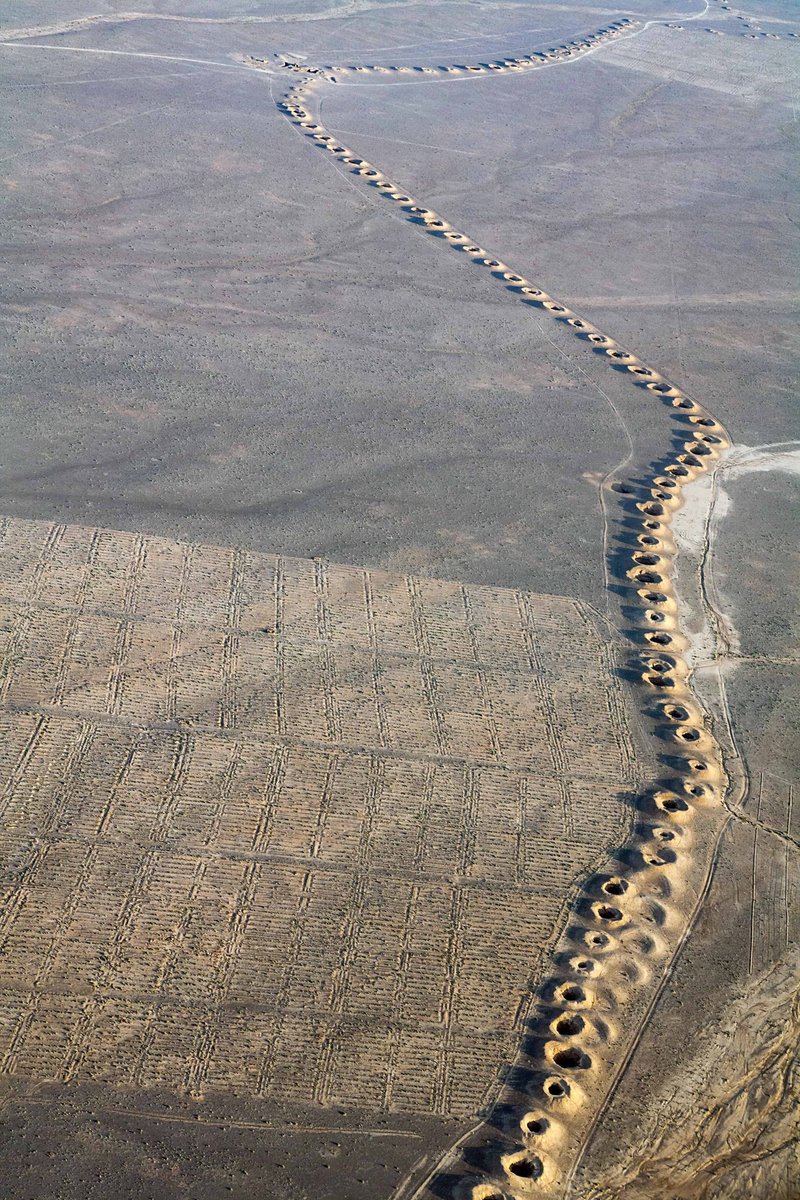
3000 BC in what is now Iran, a type of underground aqueduct called a qanat was engineered to transport water over long distances to farms and villages that couldn’t exist without it in the hot dry climates
The holes supplied oxygen to workers who dug the aqueduct by hand over many miles
📸Alireza Teimoury