Mr. Putin ने Valdai Club में 3 घंटे तक दुनिया के बदलते ढांचे पर बात की, लेकिन Western media ने बस परमाणु हथियारों वाली लाइनें उठाकर सुर्खियां बना लीं।
असली सवाल कहीं और छिपा है, क्या सच में खत्म हो रहा है पश्चिमी दबदबा? और अगर हां, तो ...
https://t.co/LJEaLupeB9
#Putin, #India
Starlink is licensed in over 165 countries and has spent five years complying with every single law and requirement of the government of India, so why still no license?
Is Ambani the real boss of India?
नाना पाटेकर नहीं रहे । स्क्रीन पर उनको देखकर कभी नहीं लगा वो अभिनय कर रहे है । वो अपने हर करेक्टर को इतना जीवंत कर देते थे कि लगता था ये किसी स्क्रिप्ट में बँधा कोई किरदार नहीं बल्कि हमारे बीच का ही कोई व्यक्ति है । नाना पाटेकर जी को श्रद्धांजलि 🙏
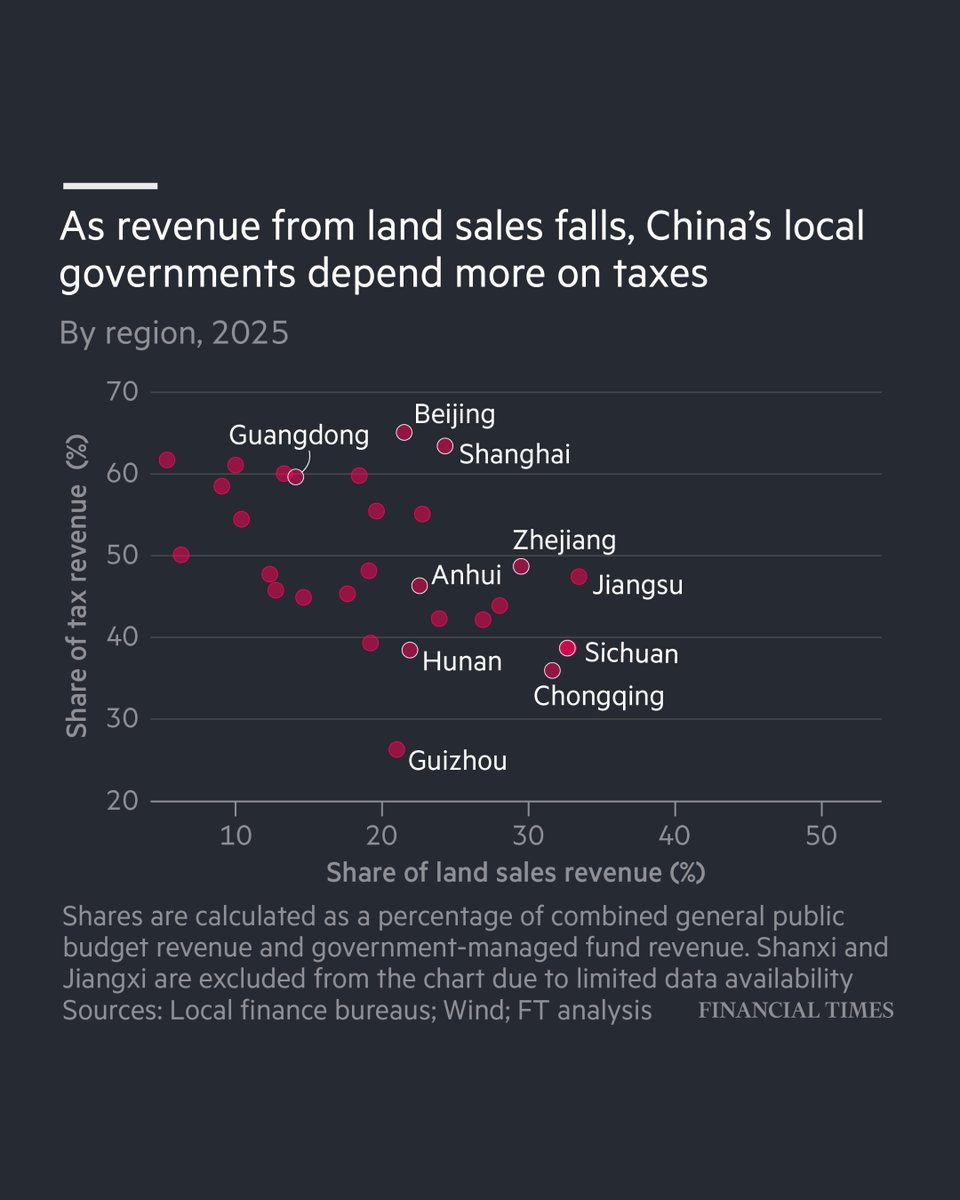
China boasts the world’s second-biggest economy, with more than 5mn millionaires. Now leader Xi Jinping wants those who benefited the most from China’s economic ascent to increase their contributions back to the state. https://t.co/EHCIAEbZDh
The US grid plans to add 86 gigawatts this year. Here's where it's coming from:
- Solar: 43.4 GW
- Batteries: 24.3 GW
- Wind: 11.8 GW
- Gas: 6.3 GW
- New nuclear: 0 GW
The AI labs are planning for hundreds of gigawatts. Solar is the one source already produced at that scale, and most of it is made in China.
"Scaling firm power that isn't gas is much more complicated. Uprates and restarts can squeeze a little more from the existing nuclear fleet, but the real upside is new reactors."
a16z's @rmcentush on how America powers the next wave of growth: https://t.co/TobsqsZJq9
Unfortunately, we are being blocked by certain oligarchs in order to maintain their monopolistic chokehold on the Indian people. You can guess who they are …
This is a crime against the people of India!
नई दिल्ली में आज ‘एक राष्ट्र, एक चुनाव’ संयुक्त संसदीय समिति की दो महत्वपूर्ण बैठकों की अध्यक्षता की।
प्रथम बैठक में देश की प्रमुख मीडिया हस्तियों तथा द्वितीय बैठक में देश के प्रमुख अर्थशास्त्रियों के साथ ‘एक राष्ट्र, एक चुनाव’ के विभिन्न
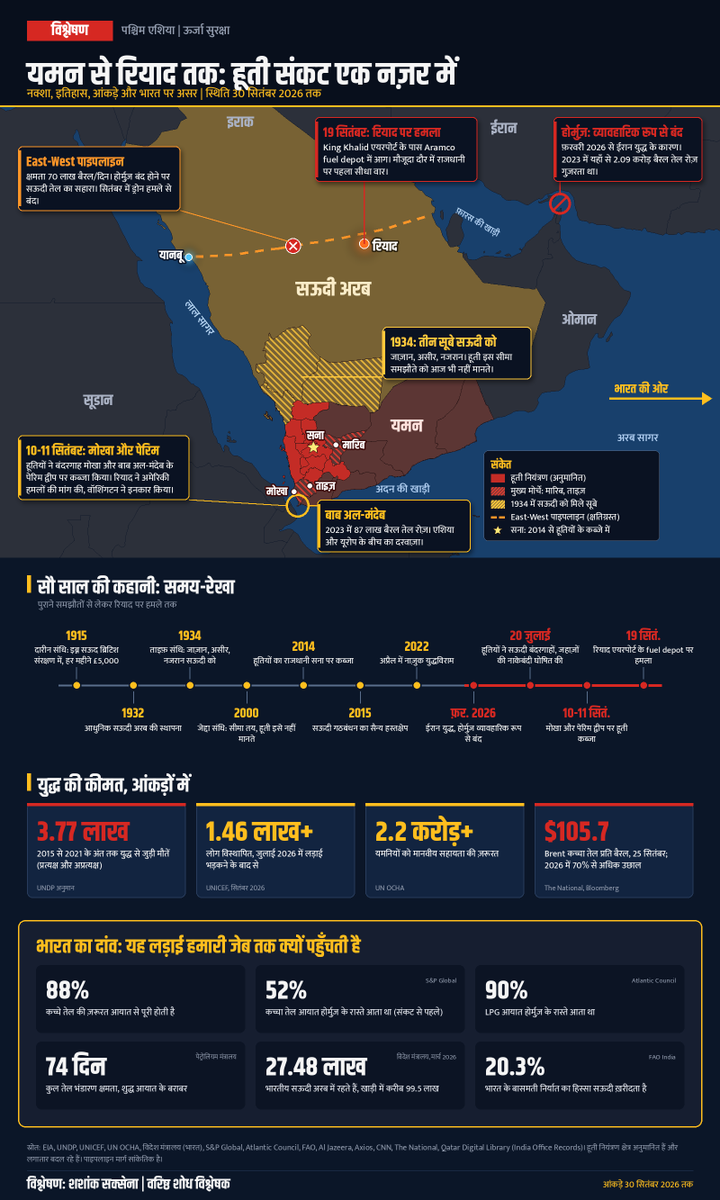
#Riyadh is burning.
For the first time in this war, #Houthi strikes have reached #SaudiArabia's capital, and the fallout could hit your petrol price next.
My deep-dive: the 100-year history, the oil math, and the #India angle. 👇
https://t.co/dCM4VlERfJ
34 years back today, Zee was launched with just 5 people.
That single step sparked an entire industry and resulted in employment for over 30 million people across India.
A humble beginning that shaped an era,and the future promises to be even bigger.
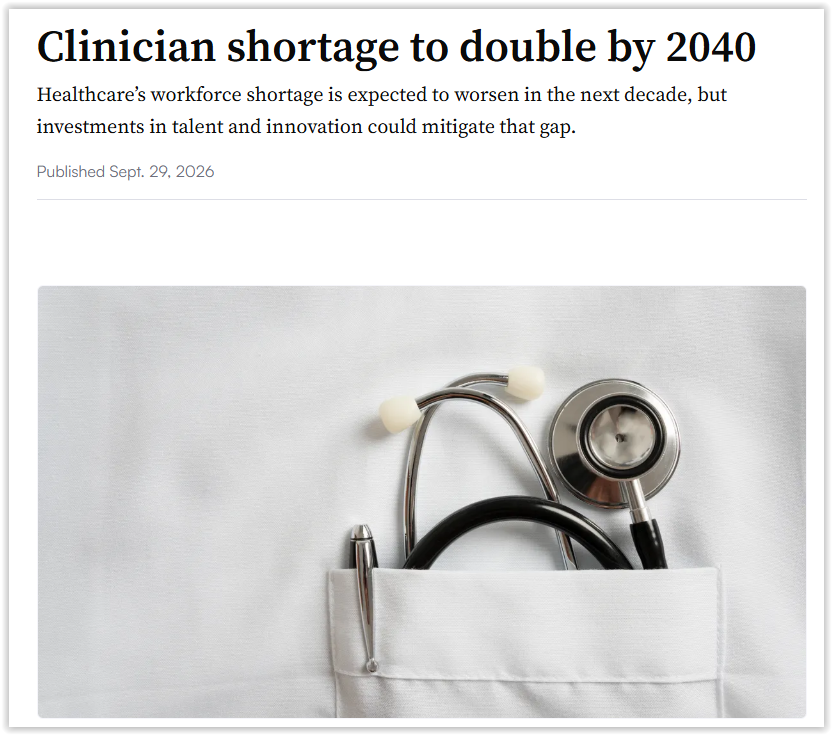
6 million healthcare professionals are missing today, and over 11 million will be missing by 2030 - WHO data.
A new report paints an even worse picture and further proves the point that using AI in healthcare is not a choice but a must.
1) Over 108 million people reside in primary care provider shortage areas.
2) AI tools that automate and streamline administrative work could close up to 37% of the projected clinician shortage.
3) Closing the projected healthcare workforce shortage could support better outcomes, including a 20% reduction in wait times for specialist care.
4) Solving the nursing shortage could save nearly 100,000 lives by 2040, and closing the physician gap could add more than 6 months to the average life expectancy.
Source: https://t.co/YbUcCTxoE9
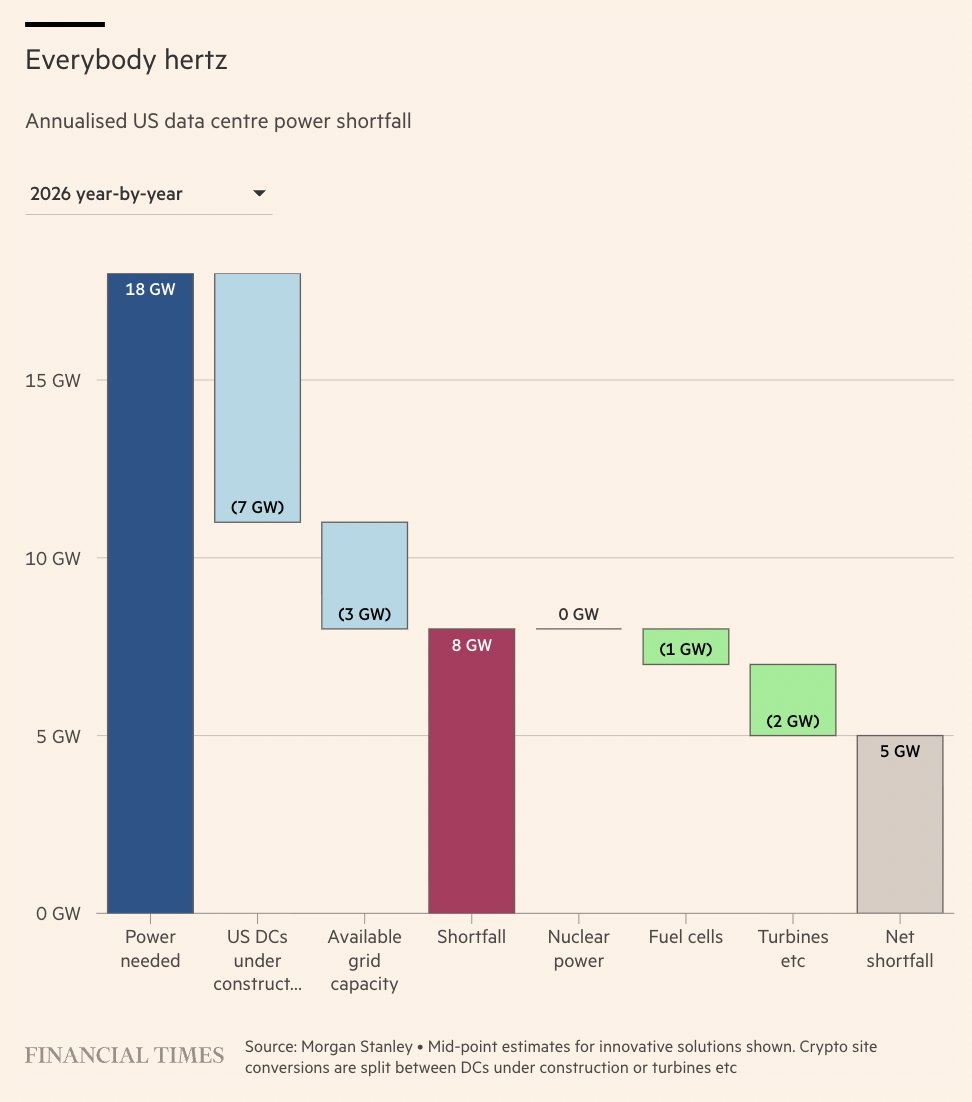
FT: "Morgan Stanley now estimates, based on a total data-centre power requirement of 257GW by 2028, a gap of between 30 and 40% between US capacity and sales projections. Or to put it in layperson’s terms: 'NYC demands 5.5-6 GW of baseload power: we are short power by six New York Cities.'"
I believe the market continues to underestimate the intractability of the data center electricity challenge. As I dissect in my recent report on "The AI Trade" (https://t.co/wQQNniS2kj):
Even if data center builders are able to find the labor they need, that does not mean they can find the power they need. States are increasingly requiring data center projects to secure adequate power supply prior to breaking ground, whether from legacy grids or by supplying their own power. As we’ve highlighted in our reports previously, from the mid-2000s to the early 2020s, the US saw almost no electricity demand growth. In 2025, electricity generated grew by 2.8%, with data centers accounting for 55% of that growth, according to the EIA. Annual growth between 2% and 3% is expected through the end of the decade, with data center electricity demand more than doubling from 31 GW in 2025 to 66 GW in 2027.
Undoubtedly, data center providers are making best efforts to head off that challenge, working to shore up energy supply chains and build on-site power generation and battery storage capabilities. However, gains from those efforts are likely to still prove inadequate relative to the seismic electricity needs of data centers. For one, gas turbines are reportedly sold out through 2030, with prices spiking 195% since 2019. For another, delivery lead times for high-voltage transformers have ballooned from about a year in 2020 to upwards of two to four years.
In the months and years to come, we expect states to only tighten data center power supply requirements, leading to more delays in data center approvals. This is especially true given the effect data center electricity demand is having on electricity prices. As the Dallas Fed concluded in a March report: “Existing data centers have already increased wholesale prices by 2 to 6% on average nationwide, with substantially larger effects in regions hosting major data center corridors. Extending the model through 2028, we show that if proposed construction proceeds under high-utilization scenarios, wholesale prices could rise dramatically (50%).” The more Americans connect their affordability challenges to the AI buildout and exert their political influence, the more data center projects we expect to be delayed."
For my next report, I'm planning a dedicated deep-dive on "Global Electricity Undersupply". The challenge obviously goes well beyond data centers in a global economy electrifying across many fronts, from manufacturing to transportation to businesses and homes. Far more to come!
FT link: https://t.co/w2zue9FoFU
WSJ: "The AI build-out is on track to become the biggest economic bet in US history, dwarfing investments made to fund other huge US infrastructure projects such as the railroads, the highway system and the plumbing for the internet. Investment in data centers and related AI infrastructure is projected to total $10.3t from 2025 to 2032, according to new estimates by economist Stijn van Nieuwerburgh. That is a staggering 3.6% of GDP a year, on average. Never before has the US economy been so dependent on the build-out of a single industry."
Deeply concerning given how deeply AI spending is now woven into the US and global economy and how many threats remain that could derail expectations of AI ROI on any reasonable timeline. For just a snapshot overview of the AI vulnerability, here are some stats from my report on "The AI Trade" (https://t.co/wQQNniS2kj):
"To put some numerical context to AI bubble warnings, in our December report on “GenAI & Productivity”, we cited a calculation by former IMF Chief Economist Gita Gopinath: “A market correction of the same magnitude as the dotcom crash could wipe out over $20t in wealth for American households, equivalent to ~70% of American GDP in 2024.” She also calculated that foreign investors would lose ~$15t. She made those calculations in late 2025 and given how AI-trade concentration has increased since, undoubtedly those numbers are now greater.
AI investment now accounts for 25% of US GDP growth and 8% of total GDP, exceeding the dotcom-bubble’s peak of 6.5% of GDP. The value of AI-linked firms has climbed ~$27t in the past three years, equivalent to 36% of the value of the entire US stock market. As a result, the five biggest companies in the S&P 500 now account for ~30% of the indexes’ total market cap, up seven percentage points versus five years ago. And AI-driven concentration is not just a US equity phenomenon—the top 10 firms in the MSCI Emerging Markets Index account for 41% of its total market cap, with just three semiconductor manufacturers making up 29%. Then there’s the debt picture: roughly a quarter of US gross investment-grade debt issuance this year has come from AI-related companies. And the venture capital picture: over the past 12 months, AI companies have received roughly two-thirds of all US venture capital dollars."
History does not lend confidence about AI's path forward. As the FT wrote in late June, recapping findings of a BIS study: “Historical episodes of investment booms provide ‘instructive parallels’—among them the expansion of canals in the 1830s, railways in Britain in the 1840s and the dotcom boom of the late 1990s. These all had one key feature in common, a genuine technological breakthrough that attracted capital in excess of what commercial returns could ultimately justify.”
WSJ link: https://t.co/TvoHqVcY4U
Two-thirds of energy trade passes through a maritime chokepoint.
Hormuz is only one. Malacca, Bab el-Mandeb, Suez and other routes are also critical arteries.
Energy security depends not just on what countries import, but how it gets there. https://t.co/71m7ZfJVF2
100 वर्ष केवल समय का पड़ाव नहीं, अनगिनत फैसलों, चुनौतियों और आगे बढ़ते रहने की कहानी हैं।
Essel@100 - एक सदी की यात्रा, और आगे बढ़ने का वही संकल्प।
चरैवेति, चरैवेति।
BREAKING: Global central banks purchased +23 tonnes of gold in July, marking their 4th consecutive monthly purchase.
This follows +51 tonnes in June, their 2nd-largest monthly purchase since November 2024.
In July, demand was led by China at +20 tonnes, bringing its year-to-date purchases to +60 tonnes.
Poland followed with +8 tonnes, lifting its total 2026 purchases to +90 tonnes.
Year-to-date, central banks have acquired +130 tonnes of gold, slightly trailing the +160 tonnes purchased over the same period last year.
Meanwhile, the Bank of Korea disclosed on August 13th that it made its first gold investment in 13 years, holding $250 million in the largest US gold-backed ETF, $GLD, as of Q2 2026.
Central bank gold demand remains incredibly strong.
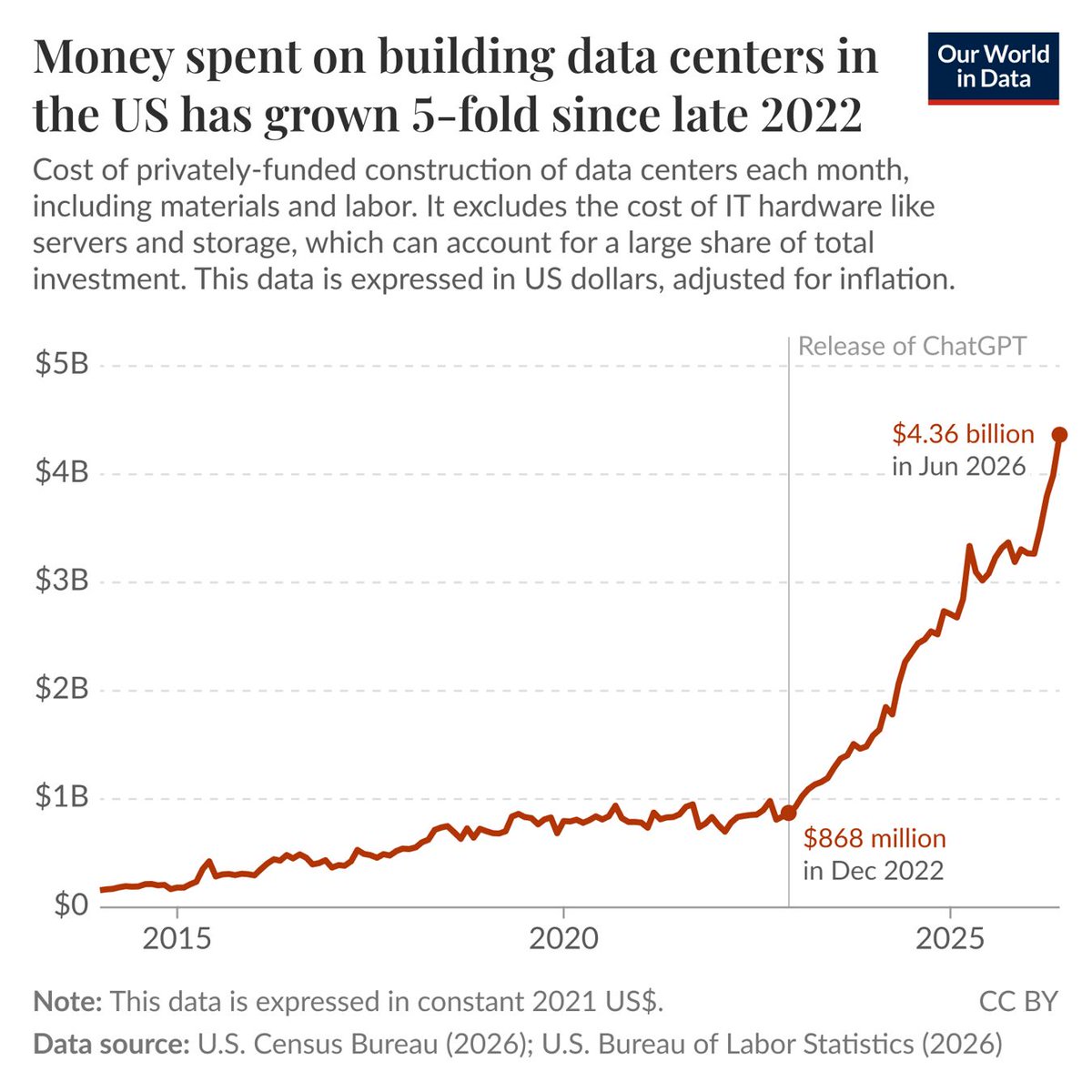
Money spent on building data centers in the US has grown 5-fold since late 2022.
The United States is home to thousands of data centers. They are part of the infrastructure that powers many digital services, including email, gaming, streaming, social media, and, increasingly, artificial intelligence (AI).
As this chart shows, between 2018 and 2022, spending on building data centers in the US hovered between $500 million and $1 billion per month (when adjusted for inflation).
But since late 2022, large investments in AI have led to a rapid growth in data center construction — both by expanding existing facilities and building new, larger ones.
The latest figures released by the US Census Bureau estimate that $4.4 billion was spent in June 2026 alone — a 5-fold increase compared to November 2022, when ChatGPT was released by OpenAI.
These figures cover privately-funded construction and represent only the money spent on building the actual facilities, including materials and construction labor. They don’t include the cost of IT hardware like servers and storage, which can represent a very large share of total investment.
(This Data Insight was written by @redouad.)