I grew up having magical Christmases as a child, and this year, I decided to reclaim that joy after experiencing the loss of my mom a few years ago. We all deserve to experience the magic of life every day.
https://t.co/BGm8eemY2w
"Productivity, I’ve come to see, is not measured only by research papers and grants. It is also sustained by presence, rest, and the relationships that give meaning to the work." #ScienceWorkingLife https://t.co/wdvcDr1qMt
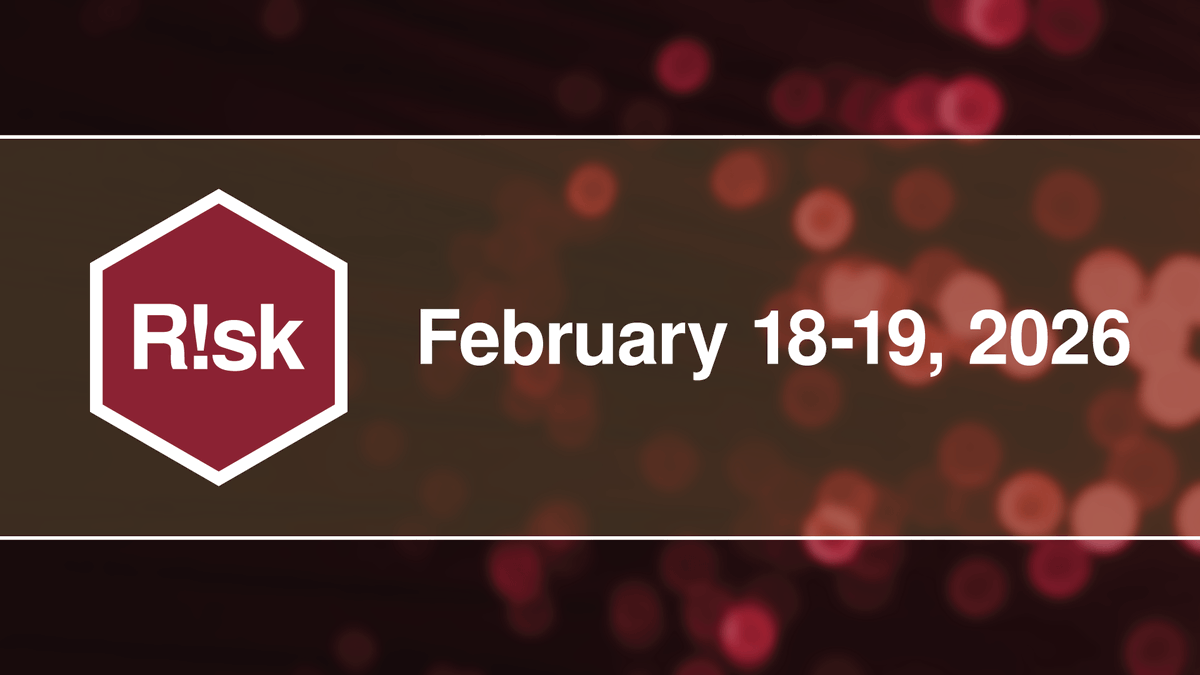
R!sk 2026 CFP is open! 📣
Two weekends left to submit your R talk on risk (finance, insurance, ops, climate, healthcare, more).
Deadline Dec 7, 2025 ➜ https://t.co/l3GnCaVfeT
#Risk2026#rstats#datascience#riskmanagement
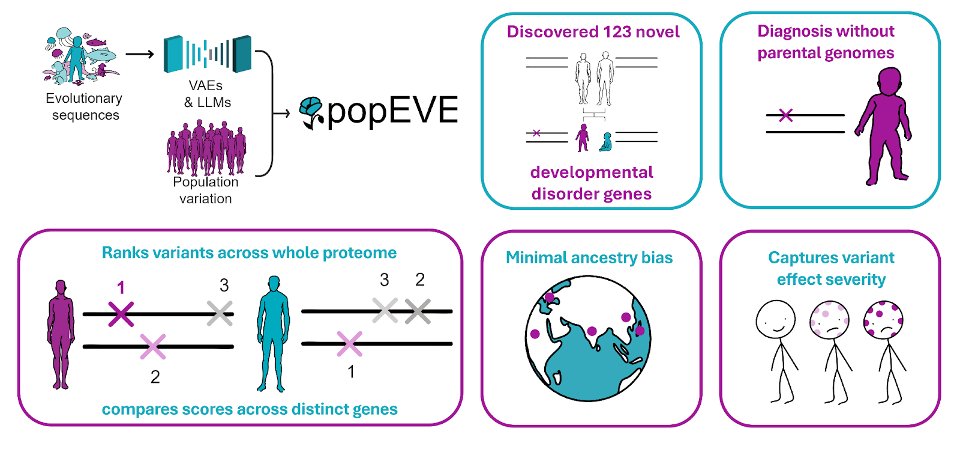
New paper “Proteome-wide model for human disease genetics” is now live at Nature Genetics: https://t.co/3UKcPlepDV
popEVE (https://t.co/HuxeGfe0g0) finds the needles in the haystacks of human genetic variation:
I think when I finish my PhD that I need to spend a year doing absolutely nothing. I need time to heal and breathe. I also just don't think I can stay in academia. I think the best route is for me to work for myself. The world is just increasingly more hostile. #AcademicTwitter
The culture at @GoogleLabs is unreal.
I pitched an idea. Coworker: "Cool, let's build it." <immediately opens laptop>. We were testing it in under an hour.
This bias for action is everything.
“So why get a phd??”
Because I want to use the knowledge I’ve gained to help others. To make their lives better or easier.
I don’t know what that will look like in a job. Maybe I will have to work for myself.
I don’t know about science anymore. I love it, but I don’t think I’m built for it. There are rules you are supposed to know that no one tells you. On top of that, most people only care about status, money, or fame.
I don’t want to spend the next 20 years fighting that every day.
TOMORROW! R+AI 2025 goes live!
Highlights:
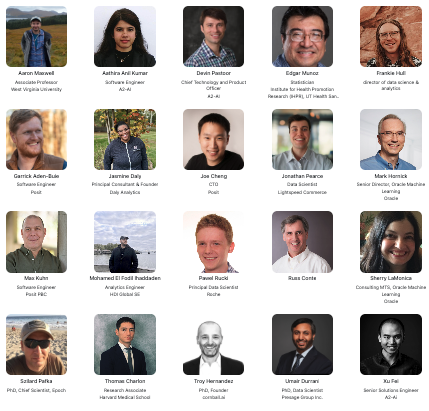
• Joe Cheng (Posit): Keeping LLMs in Their Lane
• Oracle ML: RAG from your DB (Hornick & LaMonica)
• Troy Hernandez: Stable Diffusion in R
• More!
Nov 12–13. See the full program and register: https://t.co/lYdFEHWQmK
#rstats#AI
Interested in learning materials to prepare undergraduate students for working with pathogens and pathogen data? I’m hosting a small curriculum development sprint/workshop. Industry/clinical and educators needed.
Please share. Apply by November 28, 2025
https://t.co/zy90GuzMNz
My ears perk up when I hear about hypothesis generation and LLMs. To me, this is the most interesting and still somewhat under explored area of how LLMs can be used in science. Love this work!
Recruiting PhDs & postdocs for:
🤖 agents "taking over" science (https://t.co/lF1eKxyarG and 📌)
🧪 Real scientists ➡️AI (e.g., materials, chem, physics)
📜 Theory + incentives for H-AI collab & credit (e.g., formalizing tacit knowledge)
new adventures for me, 🔄 if you can! 🙌
Pressure to publish jumps. And researchers have no time to do science.
(New survey from Elsevier)
Survey of 3200 researchers:
1. Only 45% of scientists have sufficient time for actual research.
2. For 68%, the pressure to publish today is greater than 2-3 years ago.
3. 29% of researchers are considering relocating to another country (for better funding, work‐life balance, or greater research freedom).
4. 58% of researchers use AI tools in their work.
5. Reported benefits from AI: saving time (58%), helping with literature summaries (61%), literature reviews (51%), data analysis (38%), drafting proposals (41%), and drafting papers (38%).
Globally, life in academia is getting worse.
For students & postdocs - it’s especially hard to decide on an academic career.
❗️ A few days ago, I gave a lecture on this topic.
“PhD: Dreams, Reality and Consequences”
Watch it here: https://t.co/5IFhcVFwIL
(I’ll appreciate if you ‘like’ this video - you will GREATLY help it reach more students.)
Your wish is our command (within reason...)
PDFs and Sheets can now be imported as sources from @googledrive!
DocX support is coming very, very soon. What other source formats do we need to add next? Let us know below!
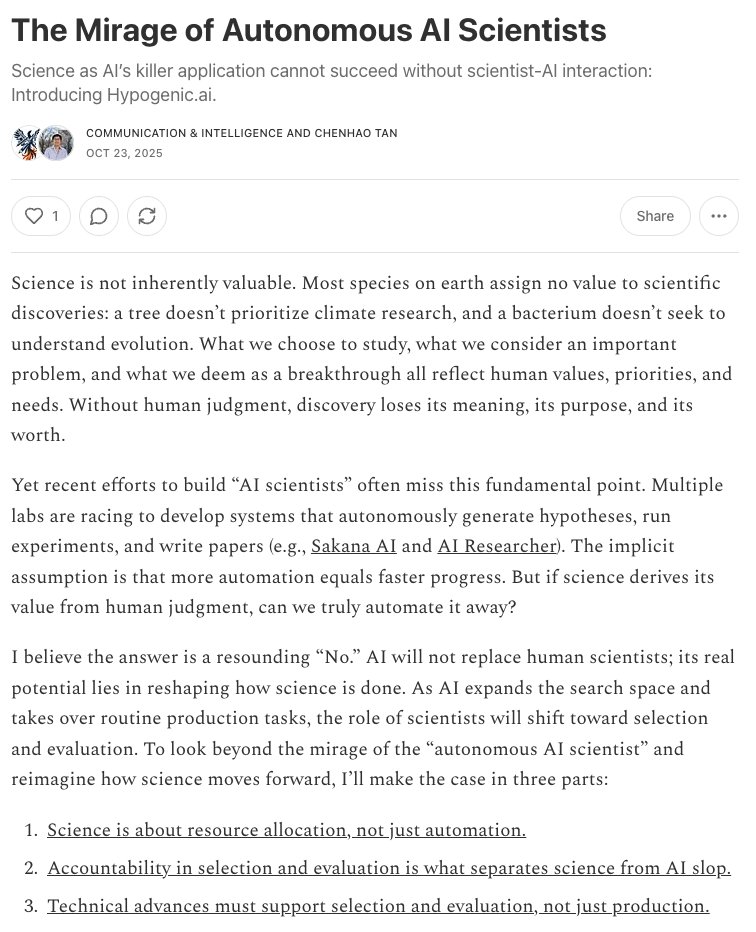
AI can accelerate scientific discovery, but only if we get the scientist–AI interaction right.
The dream of “autonomous AI scientists” is tempting: machines that generate hypotheses, run experiments, and write papers. But science isn’t just an automation problem — it’s also a resource allocation problem: deciding what matters, which hypotheses to test, and which results to trust.
As AI expands the search space and eases knowledge production, human scientists will increasingly act as selectors and evaluators. Supporting these roles effectively is critical for meaningful progress.
To help enable this shift, we’re introducing https://t.co/5VbQUQYrdI, a platform for idea selection and evaluation.
💡 IdeaHub: collective rating and discussion of research ideas.
🧠 Ideation Assistant: AI-driven research ideation.
Science will move faster only when we pair automation with effective scientist–AI interaction.
Read the full piece here 👉
https://t.co/HZhvH9kxVQ