For decades, biology textbooks have enshrined a simple rule: DNA is made by copying a template. After one enzyme unzips a DNA double helix into separate strands, another called a polymerase builds a complementary sequence, base by base, for each strand. Presto: two copies of the original DNA.
But new research into how bacteria defend themselves from viruses now shows this synthesis rule isn’t absolute.
Now, a team describes a bacterial enzyme that synthesizes DNA without a nucleic acid template, using its own structure as a guide.
Learn more: https://t.co/TeUWvyO0OD @NewsfromScience
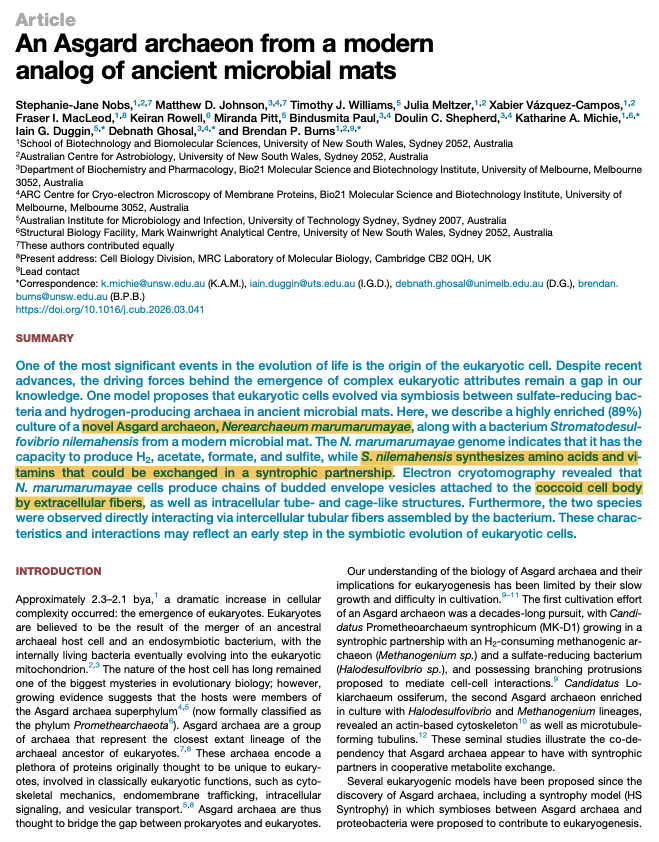
New Asgard paper dropped yesterday. This is only the third Asgard archaeon to be cultured in the laboratory (the first took 10+ years of work.)
Many microbiologists think that the Asgard archaea are the closest living relatives of the ancestor that gave rise to eukaryotic cells. They have cellular features that "bridge" bacterial and eukaryotic cells. And this new Asgard species, found off the coast of Western Australia, is interesting for a couple reasons:
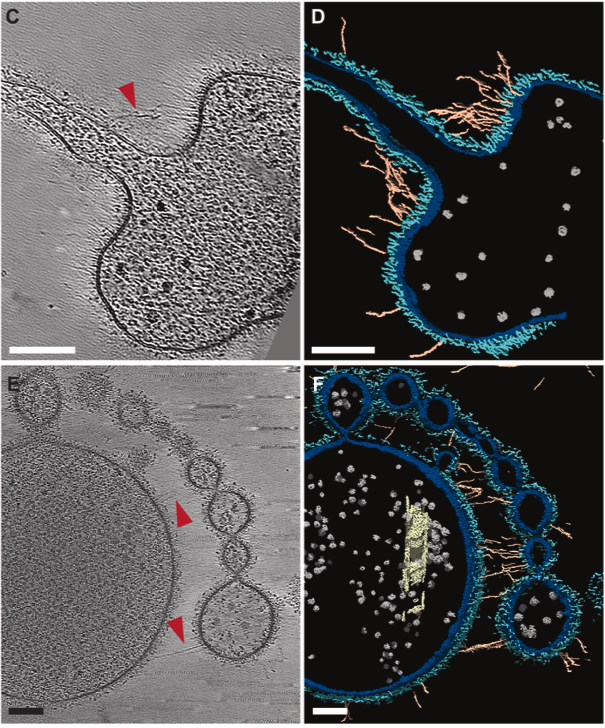
1. The Asgard buds off extracellular vesicles, like many other organisms. But these vesicles remain "tethered" to the main cell via a thin fiber. You can see this clearly in the cryotomography images below. I've never seen other examples of this (but maybe microbiologists on Twitter have.)
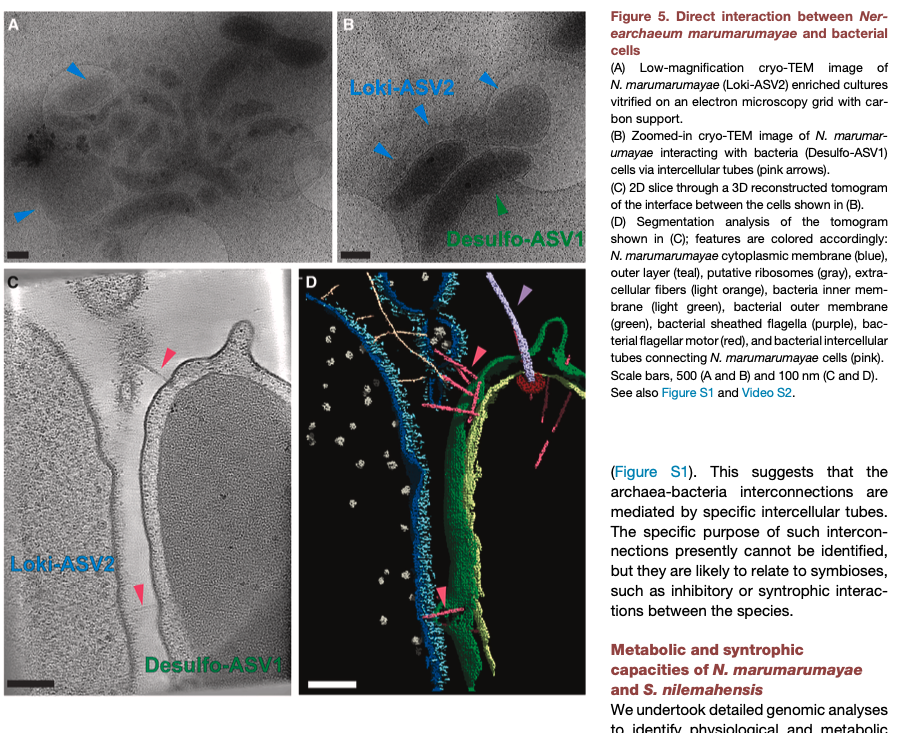
2. Asgards cannot be cultured on their own. All of the species cultured thus far can only be grown in the presence of a syntroph. This Asgard can only be cultured with a microbe, called S. nilemahensis. The Asgard makes acetate, formate, and lactate for the bacterium; the bacterium, in exchange, makes amino acids and vitamins for the Asgard. (The archaeon seems to entirely lack metabolic pathways for arginine, proline, phenylalanine, and tryptophan.) These nutrients are exchanged via hollow tubes that physically context the Asgard --> bacterium. (See the images below.)
New Perspective: "The future of genome editing in plants" https://t.co/nk5bemARGO
Genome editing will mimic the natural evolutionary processes that shape genomes; will be used to reshape genomes in a manner that could have happened naturally, but more precisely and more rapidly.
A French scientist traveling to a Houston conference was denied entry to the US after a search of his phone & computer revealed messages critical of Trump's science cuts.
No one should travel to the US & also how will conferences navigate this?
https://t.co/5xzOlL0KR9
US President confuses transgenic and transgender. The bar for moronic statements from politicians about science is set very high these days, but he hurdled it with ease... https://t.co/BtESuGdzzv
In an unprecedented move, the US National Institutes of Health has begun mass terminations of research grants that fund active scientific projects because they no longer meet “agency priorities”.
https://t.co/ALQlFtfuVd
Censure sans précédent aux USA.
Plus de 10 000 livres interdits car "inappropriés" ou capable de "pervertir la jeunesse'". Dont les redoutables "Maus" ou "Le Meilleur des Mondes".
Mince, Ça me rappelle un pays Européen en 1933 ça...
https://t.co/gosPbavXMX
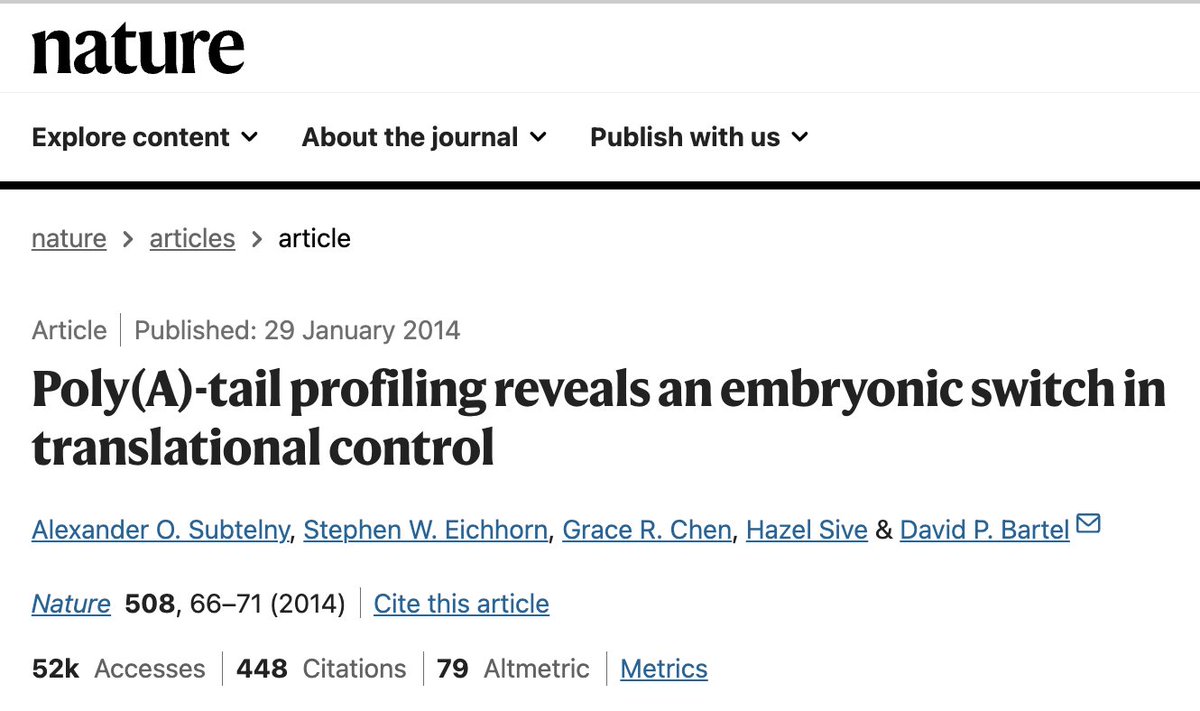
Poly(A) tails enhance the stability & translation of eukaryotic mRNAs.
The tail length is positively correlated to ribosome density in embryos, but the correlation is lost in non-embryonic cells.
=> Developmental stage dependent regulation.
📢 Make your work FASTER and EASIER!
Use AlphaBridge to analyze your AlphaFold results and receive a clear, easy-to-understand output—even for non-experts.
➡️ Let AlphaBridge help you accelerate your work!
🌐Try it: https://t.co/w4fqySX3Zx
👀Read more: https://t.co/wfEK74sSpo
Remember RNA degradation.
Exosomes are 3' --> 5' ribonucleases mediating maturation, quality control, and turnover of diverse RNAs in eukaryotic cells.
Happy #DNA day. The structure of DNA was first published #OnThisDay in 1953. The famous X-ray diffraction pattern imaged by Rosalind Franklin's PhD student Raymond Gosling is nicknamed Photo 51
https://t.co/9p6W2WwVEw
📷: Raymond Gosling/King's College London