2025 Annual Letter is live: https://t.co/l5KJR9gXUa
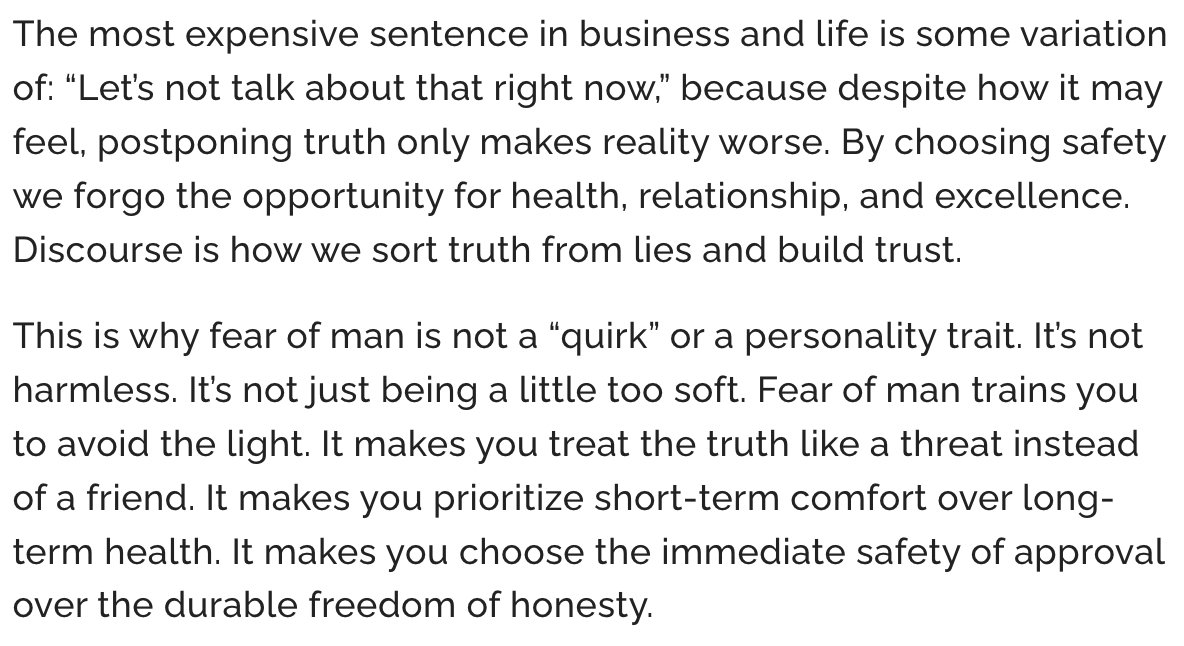
1) Fear of Man
2) Role of CEOs and board members
3) Hard look at AI, PE fees, and selling
4) Health update
5) Experiments in generosity
How crazy is America’s health insurance system?
Imagine if gas stations did not publish their prices, our gas was paid for by our auto insurance, and the government used our tax dollars to subsidize our auto insurance premiums. What would happen to gas prices?
To fix this craziness in our health insurance, the DOGE team can enforce current law that requires hospitals to publish their prices, but which hospitals have been ignoring by paying nominal fines. That price data would enable American companies to force their health insurers to negotiate prices with hospitals that are not 2-3x the prices in other countries. See how crazy our prices are in the chart below.
And that negotiation would free up dollars American companies now spend on employee health insurance premiums that instead could be paid to workers as higher salaries.
This is a huge opportunity for DOGE to deliver savings to Americans.
This AI boom has set off an existential crisis in me.
Some background: I’ve been teaching writing for the past six years. In that time, I developed frameworks for how to write well and a reputation as a good teacher to learn from. Partially because of the AI wave, I decided to stop teaching. It has only been four months since I shut down my business, but I can no longer imagine teaching writing in a way that resembles anything close to the way I taught in the past.
The reason is simple: The world of non-fiction writing has fundamentally changed, and many of the skills I've developed and built my career on are becoming increasingly irrelevant.
The amount of expertise required to out-do an LLM is rising fast. For example, the quality of a well-prompted, ChatGPT Deep Research report is already higher than what I can produce in a day's worth of work on almost any subject.
The question is: What kinds of non-fiction writing will continue to last? Here’s a heuristic: The more a piece of writing comes from personal experience, the less it’s likely to be overtaken by AI. Personal writing, like biographies and memoirs, aren’t going away anytime soon. That's because people have data about their lives that LLMs don’t have.
Having a unique perspective helps too. This is Peter Thiel's famous interview question: "What very important truth do few people agree with you on?” If you have an idiosyncratic way of looking at the world, you don't have much to worry about.
The common thread here is humanity. People are also interested in people. Their stories, their struggles, their emotions, their drama, their unique insights into how the world works.
Want proof? Scroll back to the beginning of this piece. You'll notice that I pulled you in by talking about a battle I’m fighting. If you’ve read this far, it’s because you’re interested in my personal crisis. I haven't thrown any data at you. All I've shared is personal experience.
The point is that human interest stories aren't going away. It’s like how computers are already better at playing chess than people, but nobody watches live streams of computers playing chess and Magnus Carlsen is still a huge name. Writing will be the same.
So I'm not saying that all writers are screwed. Nor am I saying that we shouldn't teach writing anymore. What I am saying is that the number of people who can gain an audience for their writing and outperform AI has fallen considerably — and will continue to do so.
AI will be tougher on writers than it is on readers. Sure readers will have to endure some AI slop, but you can pretty easily avoid it if you're halfway intentional about what you consume. The challenge for non-fiction writers is that every piece of non-fiction writing now competes with the output of ever-improving LLMs and Deep Research reports. I'd say that half of what I read is now LLM-generated (and since time is finite, that means less of my attention is going to human-generated writing).
Given everything I’ve said above would I tell my writing students if today was the first day of class?
I'd start by saying that the bar has been raised. You aren’t just competing against other humans anymore. You're competing against ever-improving LLMs. Fortunately, those same LLMs can help you write better. They’ll instantly give you 80th percentile feedback on your writing, and you can talk through your ideas with them whenever you’re stuck. That's just the beginning, and only a fool would ignore these advancements. I'd also be willing to bet that major changes are coming for the fiction world, but I don't have the first-hand experience to speak about them intelligently.
When it comes to discovering ideas, I've also found that jamming with an LLM is more productive than doing it with most people I know (save for a few genius-level conversationalists). And I’m not the only one. Microsoft CEO Satya Nadella says: “The new workflow for me is I think with AI and work with my colleagues.”
There are things to love. There are things to hate. There are things to be excited about and things to be dejected about. I’m neither hopeless nor pollyannish. But my job as your teacher is to point you towards the truth of what’s happening, so you can see it clearly and make a game plan, no matter how uncomfortable it makes you feel.
Know this: What it means to be a journalist, researcher, academic, and full-time author is being rewritten.
You might be thinking: “So David, where are you taking your career?” I’m investing more into personal audio and video. I have a clearer sense for how to build a sustainable competitive advantage in those domains, especially because AI can’t produce high-level video interview content. And whatever writing I do will be more personal and opinionated.
(And yes, I used AI to write this post).
🚨🚨Emerging manager opportunity🚨🚨
This spring's Emerging Manager Roundtable event hosted by MITIMCo will be expanded and improved.
Like last year:
✅we will invite ~6 emerging manager stockpickers to spend a day at MIT to collaborate, help each other, and form a community
✅we will invite one of MITIMCo's longstanding managers (this year it will be the first emerging manager we ever hired, in 2012, who has now successfully scaled and compounded) to join the event to share learnings from their journey and answer questions
✅you will get to spend time with the MITIMCo team and we will provide what help we can
New this year to increase learning opportunities (and fun)
🆕we are adding a second day and inviting more of MIT's current investment manager partners
🆕we will have additional speakers, potentially including an exceptional public company CEO, an investment manager who has been in business for 30 years, and (hopefully) some researchers from MIT
Emerging manager spots are limited to about 6, with maybe a little room to expand.
Please share!
My prediction is that 2025 will be the year that the increase in the costs of homeownership via interest rates, insurance, maintenance, and property taxes translates into broadly lower home prices.
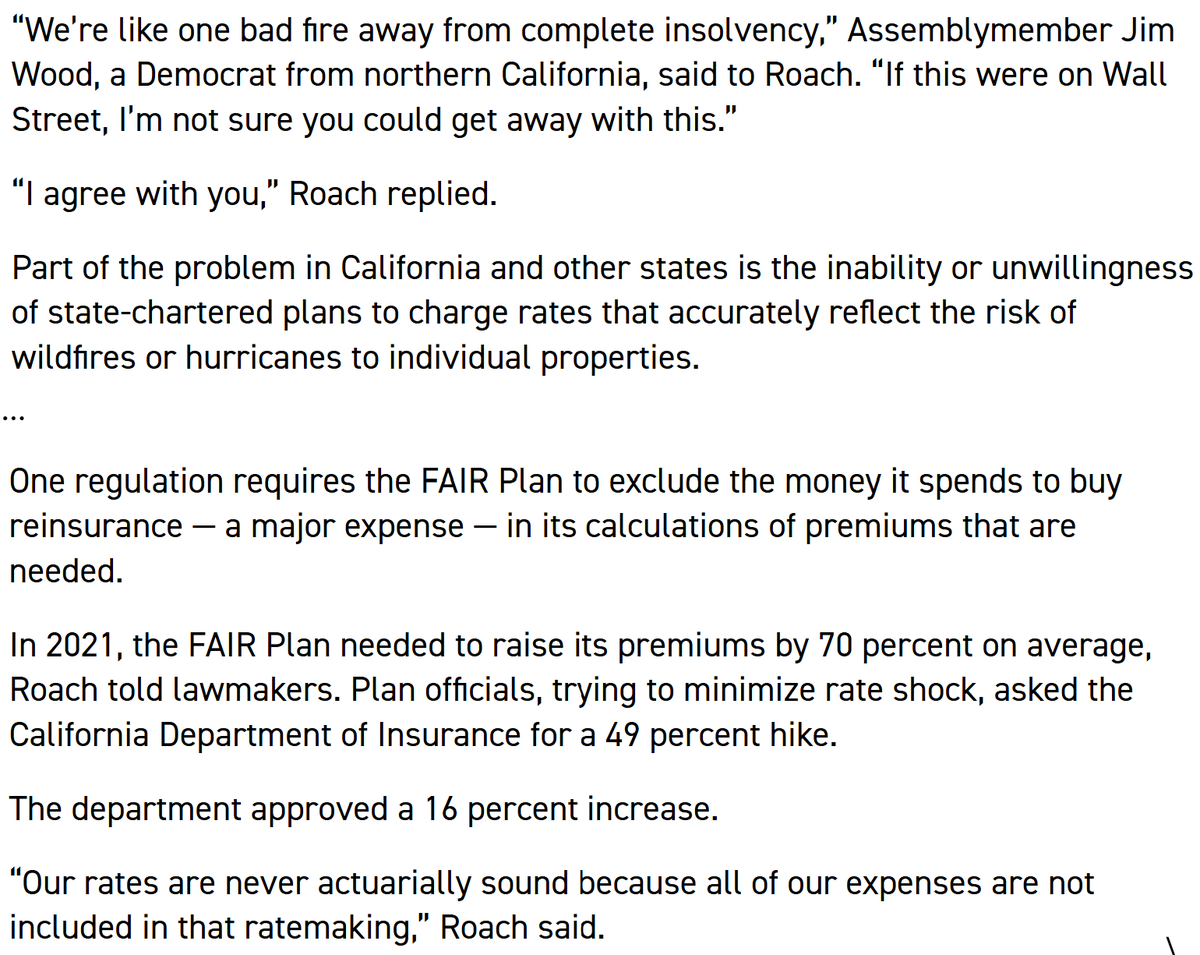
CA politicians wanted to keep the cost of homeownership from rising so they limited property insurance rate increases, driving private insurers out of the market and homeowners to the state's insurer of last resort, which itself was not allowed to charge actuarially sound rates.
Earlier this year my kid brother, Rich, took his own life. Rich loved this country and devoted his adult life to its defense, first as a combat infantry officer in the Army, during which time he fought in Iraq, then as part of the US Intelligence Community, where he served in a covert capacity until his suicide. He will be missed by his three kids who brought light to his dark inner world, by their mom who tried tirelessly to help him, and by the warfighters and intelligence officers who operated steadfastly alongside him.
I don’t pretend to understand the range of factors that produced this tragic result. What’s clear, though, is that combat exacted a heavy toll on Rich’s mental health and changed him in profound ways. He hid his anguish behind smiles and jokes and hid it well. Most were never aware of his struggle. But those closest to Rich observed that, over the years, he was increasingly haunted by flashbacks, became ever more hypervigilant and detached, and sunk deeper into negative thoughts about the world and his place in it.
For many of us, war is distilled into words and images that we consume on social media. We remark upon it with concern, but have the luxury of setting the unpleasantness aside. The horrors touch them, way over there. Those on the front lines have an entirely different experience. They don’t forget the sight of men they’ve come to consider brothers, torn apart; the smell of burning flesh in an exploded car; the sound of grenades, hurled at them, detonating nearby. We can’t expect our warfighters to snap back to their former selves after being steeped in such brutal violence. Too often they don’t. My brother was just one of a significant minority of combat vets from the Iraq and Afghanistan wars who carried the hell of war back home.
To honor Rich, I’ve set up a gofundme for The Boulder Crest Foundation (@BoulderCrestPTG). Since 2013, this charity has helped more than 100,000 veterans, active servicemembers, and first responders transform their struggle with trauma into strength. Their Warrior PATHH training includes a 7-day in-person retreat, followed by 90 days of support and accountability. It is offered to participants at no cost. I wish my brother had the opportunity to be part of this program.
If you can, please join me in supporting the brave men and women who have made enormous sacrifices on our behalf. I will match all contributions up to $10,000. Thank you for taking the time to consider this cause, it means a great deal to me.
https://t.co/qsqn9YLlch
Eliminating the FDIC is so out there, not sure it needs response. FDIC has a perfect record of protecting insured deposits for over 90 years. Strong consumer confidence in the brand, providing stability during crises. During the GFC, money was running INTO banks. https://t.co/I8RUxtbH3P via @WSJ
Rory wins the DP World Tour Championship for the 3rd time and clinches his 6th Race to Dubai title (3rd in a row), tying Seve Ballesteros’ record. Said he wants to finish as the best European ever and this is another step. Lot of heartbreak in 2024 but he keeps coming back.
Own High Potential Companies
We want to discover and own high-potential businesses that can generate high returns on the owner’s capital. Why do we aspire to find such companies? We believe that businesses that produce above-average returns on capital with long reinvestment runways can compound our capital at high absolute rates. These businesses provide the prospect for outperformance. Many investors who also focus on buying higher-return businesses wait for the company to produce years’ worth of demonstrable proof. They want the comfort of past financial results.
We take a different approach. We prefer to invest earlier in a company’s evolution or in a business that is undergoing change, where above-average returns on equity are not yet obvious. We find that investing in a business before it shows quantitative excellence can be quite profitable. This is why our research process leans heavily on qualitative research that drives insights and understanding in business models and competitive advantages. Our qualitative research process allows us to find the hidden gems before they are obvious.
We admit that this approach is not easy. We relish the quest! As a reminder, we strive to Be Different, and to be Different, you must act with independence and be willing to follow an unconventional investment approach that produces a unique portfolio.
As a reminder, submissions for our co-invest competition are due November 15th. See the attached flyer for details.
This is a great piece on how a nonprofit hospital system, Parkview, amassed 69% market share in Fort Wayne, IN through acquisitions and now abuses that power at the expense of the community. It details many of the worst practices of the industry and is worthy of a thread. 1/12
Today, we will dive into our direct field research strategy and process - detailing the how and why we conduct “hands-on” research. Before we dive into this topic, we need to set the table. We still conduct in office research; copious amounts of it. We find that reading drives crucial base level learnings. We read and analyze source material from financial filings, company materials, industry research, interviews and many other scrappy ways to enhance our fundamental understanding of a business and industry. Upon completing a thorough base level of research, this is when we find it valuable to “hit the streets”.
The Why:
We want to uncover and eventually own businesses with qualitative differentiation. Understandable differentiation gives us conviction to invest. When we understand the deeper truths about a business, how it works and out competes peers, we are more likely to be correct in our business assessments. Qualitative “nuggets” of information and learning generated through a direct research process is the best way we’ve found to determine what is actually happening inside a company. It allows us to appreciate the nuances of how a business actually works. This is the key WHY behind our direct research process. We must “tease out” business model understandings and differentiations to build conviction. Another benefit of sourcing qualitative insights is that they can often be leveraged long-term. We are after finding deeper wells to drill where once we find a less than obvious truth, we can mine it for years to come! We want to find and own great businesses that are not yet appreciated by investors for their unique advantages. These advantages provide the potential for a business to post above-average returns on capital for longer than investors appreciate – thus providing kindling for outperformance. The best way we know how to find these differentiated businesses is by marrying in office work with intentional, thoughtful and directed field research.
Windancer is building a Different kind of investment firm. Our firm is an expression of our industry learnings and strongly held beliefs. We are rooted by our investment philosophy, process and team. Simply stated, we aim to Be Different. We invest in businesses across the public and private markets. We are Opportunistic. We also selectively partner with passionate fund managers pursuing differentiated strategies.
Windancer Holdings Investment Philosophy:
*We are Qualitative Investors
*We Discern Business Model Quality
*We Own High Potential, yet Undervalued Companies
*We Partner with Talented, High-Integrity and Aligned Operators
*We Invest Long-Term
*We Concentrate
Stay Tuned! Over the next several weeks we will detail and expand upon aspects of our investment approach.
Don’t forget to get your ideas in for Windancer’s First Ever Co-Invest Stock Pitch Competition.
*Ideas are due by November 15th*