Another G2 report. Another reminder that the market for business content is changing fast.
In G2’s Summer 2026 Report, RELAYTO AI (@relayter) was recognized across 16 categories and earned 14 badges, with Leader positions in:
🏆 Proposal
🏆 Content Experience Platform
🏆 Content Distribution
🏆 Flipbook
🏆 Digital Sales Room
🏆 CMS Tools
🏆 Content Curation
🏆 Presentation Management
The line between presentations, microsites, sales rooms, resource centers, and proposals keeps disappearing.
Everything is becoming a living content experience.
Proud of the RELAYTO AI team for building toward that future and grateful to the customers pushing us there with their ideas, feedback, and ambition. 🚀
In the age of AI, everyone has access to the same raw materials. Code is becoming a commodity. Software moats are evaporating. So, what’s left?
I recently sat down with Dave Hersh (@djhersh), the founding CEO of @JiveSoftware and former venture partner at Andreessen Horowitz (@a16z), to discuss the "last frontier" of business: Human Intimacy.
Dave has spent his career decoding why some companies flourish while others get "stuck." He has distilled these lessons into two essential books that every modern leader should have on their shelf:
📚 REIGNITION: Dave’s first book is the definitive guide to the "stuck" startup. It explores why only 10% of companies succeed and dives deep into the psychological patterns (the "Founder's Shadow") that lead to premature scaling and organizational rot.
📚 THE EROS ADVANTAGE: His upcoming work (and the core of our conversation) looks toward the future. It argues that in a world of rampant sameness, "aliveness" and deep relational connection are the only ways to build a generational company that is truly uncopyable.
3 game-changing takeaways from our conversation:
1️⃣ If your advantage is purely technical, you’re on a treadmill. The only thing AI can’t copy-paste is the depth of your relationships. In 2026, the companies that win will be those that become "black belts" in human connection.
2️⃣ Most founders run on "ego fuel", a finite, dirty energy source driven by the need to prove worth. Dave introduces the Eros Advantage: leading from a place of "aliveness" and calling. It’s the difference between burning coal and using a fusion reactor.
3️⃣ Product-Market Fit is just the baseline. To build a world people never want to leave, you have to achieve Emotional Market Fit. You must serve as the bridge between who your customer is today and the person they are desperate to become.
Dave also pulls back the curtain on the "Inner Board Meeting," a psychological framework to help leaders manage the internal voices (the Warrior, the Child, the Hero) that often sabotage the biggest business decisions.
🎧 Listen to the full episode here: https://t.co/6mqlX7ICyy
Big news for the RELAYTO AI team 🎉
G2 named us one of the top content curation software platforms for 2026, recognized for interactive content hubs and curated storytelling.
As content operations become more complex, teams are looking for better ways to organize, present, and reuse content without relying on static files and disconnected workflows.
We’re proud to see @relayter recognized for helping teams:
• Turn PDFs and presentations into interactive experiences
• Create curated content hubs that stay reusable over time
• Deliver multimedia-rich storytelling experiences
• Track engagement with deeper analytics and visibility
• Publish SEO-friendly content designed for discovery
Most importantly, this recognition reflects feedback from real users and teams building modern content experiences every day.
Thank you to everyone who has trusted RELAYTO AI as part of their workflow. We’re grateful to be building alongside you.
And congratulations to the other platforms recognized alongside us for helping content teams work smarter in a rapidly growing space!
New episode drop 🎙️ And this one hits at the core of how we build, grow, and lead companies that actually last.
I had the privilege of sitting down with @ericries, the mind behind The Lean Startup and Incorruptible, and one of the few voices willing to challenge how business really operates today.
Here’s the business takeaway:
Too many companies still run on opinions that “sound good.”
But as Eric puts it:
👉 “’Sounds good’ are the two most dangerous words in entrepreneurship.”
This problem shows up in enterprise strategy, product bets, marketing narratives, and even boardroom decisions.
So what does better look like?
In our conversation, we break it down:
• Why evidence beats plausibility and how to build systems that force truth to surface
• How AI is speeding up building, but not learning (and why that gap matters more than ever)
• Why many organizations drift into value extraction instead of value creation
• And what it really takes to build a company that can survive not just the next quarter… but the next 100 years
One point that stuck with me:
👉 “Trust is by far the most underrated asset in all of business.”
Yet most companies don’t treat it that way.
They overpromise, optimize for short-term metrics, structure themselves in ways that make keeping promises almost impossible.
And that’s where things break: with customers, employees, and the market.
At @relayter , we see this every day in how companies communicate. If your message doesn’t match reality, your audience knows. If your experience doesn’t deliver value, no amount of storytelling will fix it.
The shift is simple (but not easy):
Build organizations that are:
• Structured to learn
• Designed to keep promises
• Grounded in real customer experience
Or, as Eric says:
👉 “Ethos is character. Integrity is structural strength.”
That’s the foundation of companies that endure.
If you’re building, leading, or rethinking how your company operates, this episode is worth your time.
Listen here 👉 https://t.co/Bq2D2UVkXs
What if 30–50% of your team’s work… just disappeared tomorrow? That’s the question AI is forcing.
In our latest episode of Experience-focused Leaders, I sat down with @GregShove, CEO of @section_school, and a six-time CEO who has seen multiple tech waves up close.
This conversation cuts through the noise.
Here’s the business reality Greg lays out:
→ AI is already changing productivity curves
Early adopters are quietly finishing their workweeks faster. Not because they’re working less. They’ve changed how work gets done.
→ Most “knowledge work” has more waste than we want to admit
AI is exposing it. The question is: what do you do with that insight?
→ Top-down AI rollouts don’t work
Real transformation starts with your people. If your frontline teams aren’t using AI, your strategy is just a slide deck.
→ Upskilling is now a leadership responsibility
Not optional. Not delegated. If leaders don’t drive it, they slow the company down.
→ The bar has changed
“AI proficiency” is not enough. Greg’s push is clear: build AI maximalists, people who actively create leverage with tools, not just use them.
One line that stuck with me:
👉 “We need human judgment to decide what work the AIs do and what work is good enough.”
That’s the real shift.
Listen to the full episode here: https://t.co/oVgl4iVUgp
What does it actually take to build trust in a regulated industry and turn that into a scalable business?
In our latest episode of Experience-focused Leaders, I sat down with Brian Liu, co-founder of @LegalZoom, to unpack exactly that.
It’s a playbook for anyone building in complex, high-friction markets.
A few takeaways that stood out:
➡️ Access creates markets
“We never went out to replace lawyers… it was about creating additional access.”
The biggest opportunities are often about unlocking demand that was never served.
➡️ Early adopters aren’t who you think
Small business owners took the risk first because saving time and money mattered more than tradition.
➡️ Great companies are built by teams, not ideas
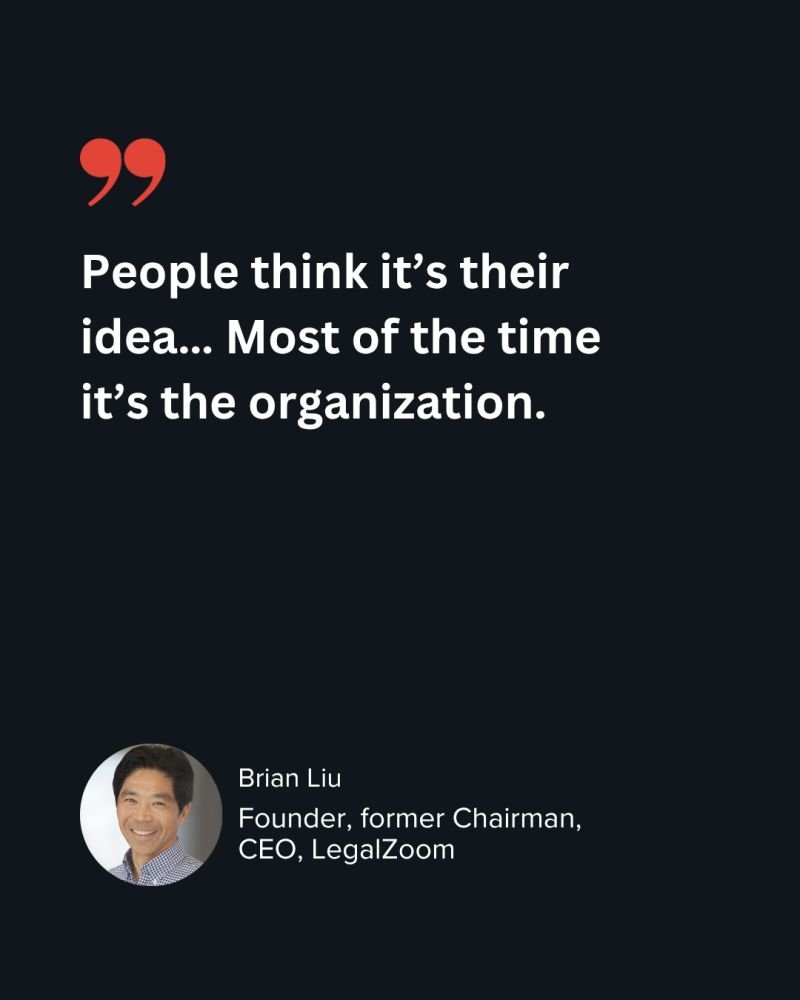
“People think it’s their idea… most of the time it’s the organization.”
Execution, alignment, and trust inside the team compound faster than any single insight.
➡️ Winning ≠ being right
“Winning the argument is not necessarily going to help the relationship.”
If you’re building something long-term, relationships are the real asset.
➡️ Trust is human, not algorithmic
“Humans can feel authenticity… it’s intuition.”
In a world obsessed with AI, this might be the most important reminder.
🎧 Listen here: https://t.co/XVQG9h3fPy
Curious: where are you seeing the biggest gap today between what companies promise and what customers actually experience?
Most GTM conversations still sound like this:
More tools. More dashboards. More noise.
But in large enterprises, none of that matters if it doesn’t drive commercial execution.
Just dropped a new episode of Experience-focused Leaders with Amit Pande (VP & GM of Commercial AI Applications at @C3_AI), and it cuts straight to what’s changing (and what’s breaking) in modern GTM.
Here’s the shift he’s seeing inside Fortune 500 companies:
👉 GTM is no longer sales vs. marketing
👉 It’s becoming one unified system focused on execution
Or as Amit puts it:
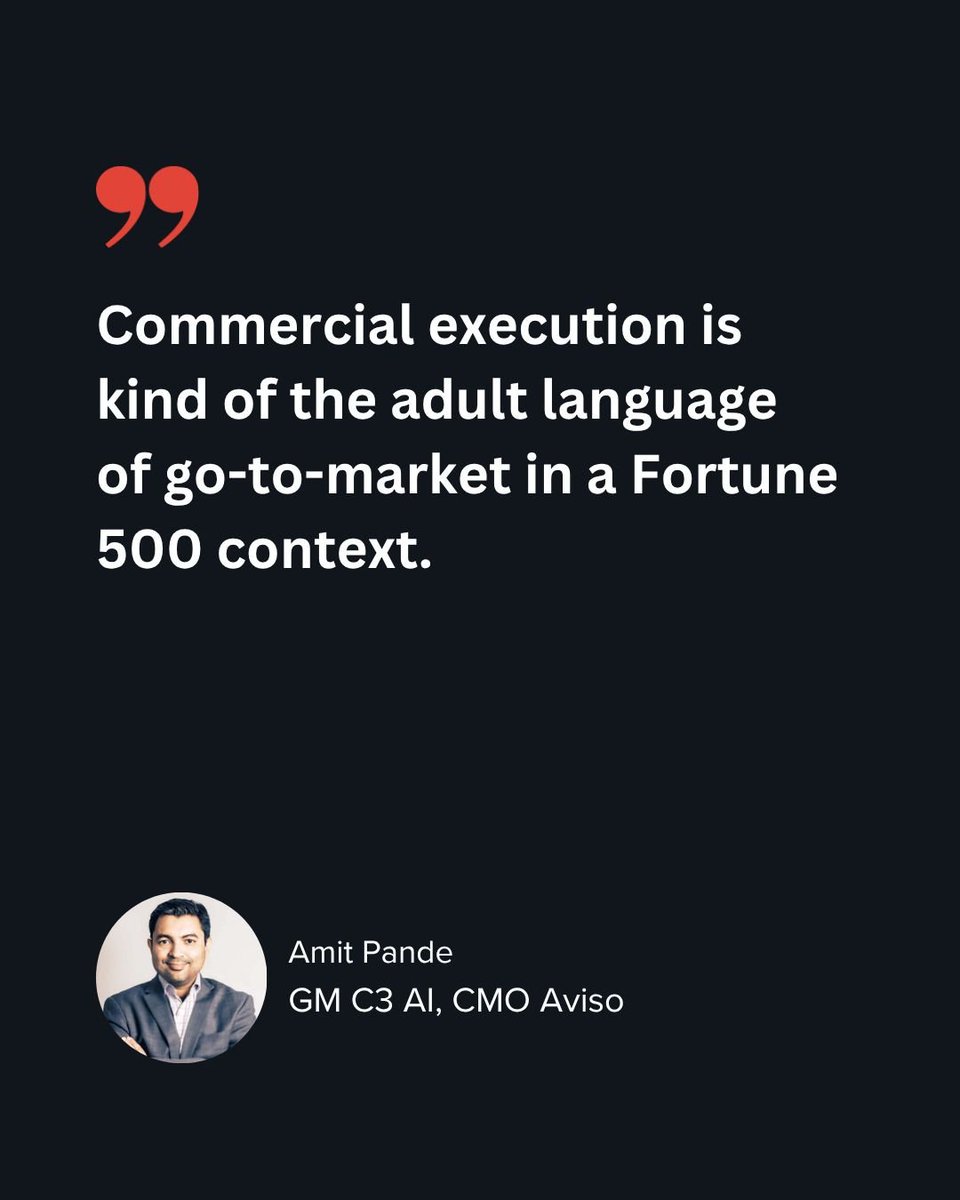
“Commercial execution is kind of the adult language of go-to-market in a Fortune 500 context.”
A few takeaways that stuck with me:
→ Most of your stack is noise
If you stripped your apps down to what people actually use… it’s probably ~1%.
→ AI is collapsing layers
The “systems of orchestration” are replacing bloated systems of record.
→ Your biggest AI blocker isn’t tech
It’s data anxiety.
“Everyone has guilt and shame about their data.”
→ B2B experiences are still… boring
And that’s a choice.
We’ve trained buyers to expect low-energy, generic interactions.
→ The future team looks different
Not bigger, just sharper:
1. Creative producer (AI-powered storytelling)
2. GTM engineer (connects the stack)
3. Someone who knows how to create real moments (yes… even “throw a great party”)
The bigger idea:
We’re moving from systems of record → systems of action → systems of experience
And the companies that win will be the ones that make buying feel less like work.
If you're rethinking your GTM model, your content, or your AI strategy, this one is worth your time.
🎧 Listen to the full episode here: https://t.co/EMu3E2YlMr
New episode of Experience-focused Leaders is live — Part 2 with Scott Britton (@britton).
And this one goes deeper.
Scott is an entrepreneur (exit to Salesforce), Princeton grad, Forbes 30 Under 30, and now focused on the intersection of performance and consciousness.
At first glance, this may sound “personal.”
It’s not.
It’s business.
Because the gap most teams are dealing with today is how leaders show up.
👉 Reactive decisions
👉 Misaligned teams
👉 Culture that looks good on slides… but breaks under pressure
Scott breaks it down in a very practical way:
“Anytime you're reactive, that’s the work.”
“If you’re judging others, you’re judging yourself.”
“Growth is an oscillation, inward reflection → outward execution → repeat.”
It’s operating leverage.
The leaders who get this right:
✔ Build stronger teams (less projection, more trust)
✔ Move faster (less internal friction)
✔ Make better calls under pressure
One insight that stayed with me:
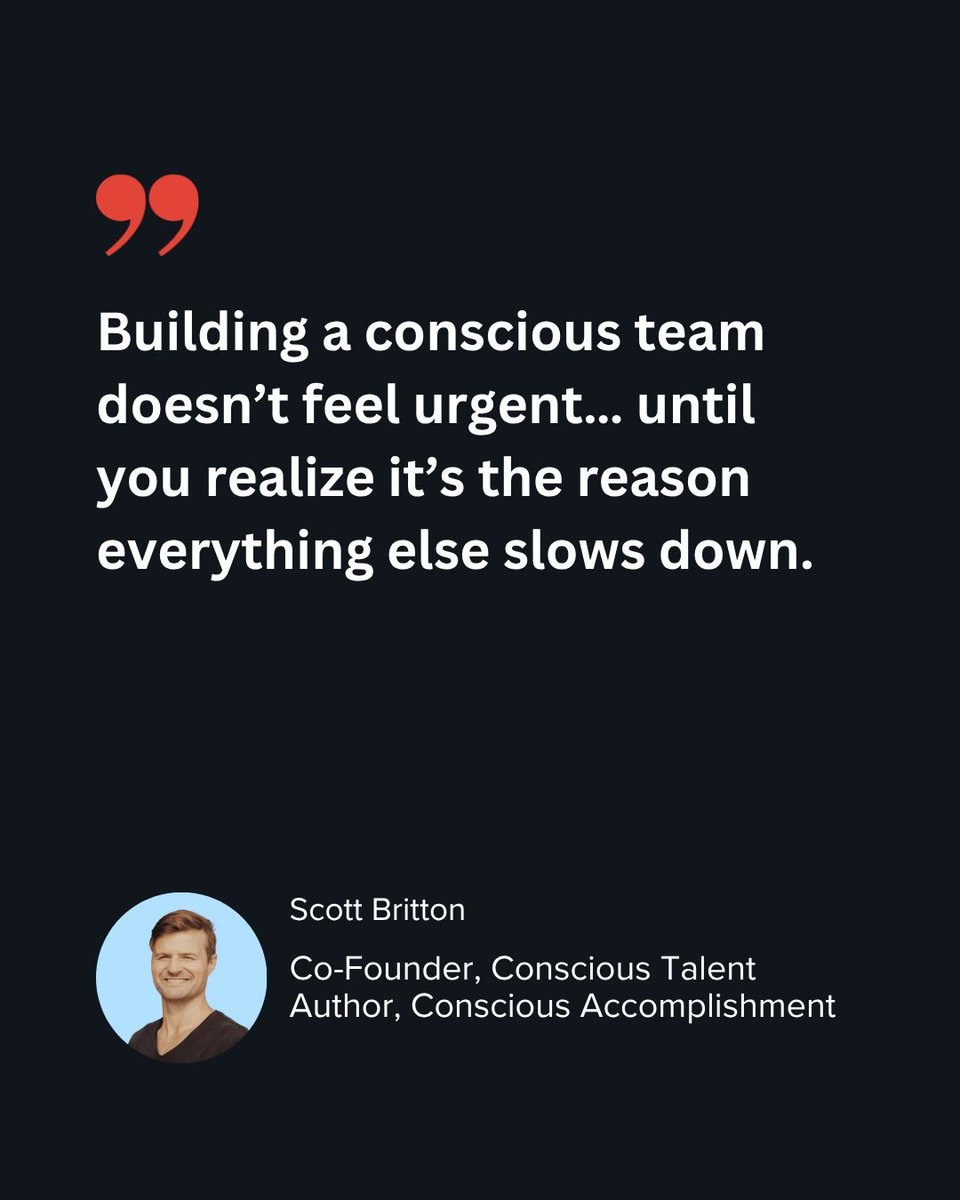
Building a conscious team doesn’t feel urgent… until you realize it’s the reason everything else slows down.
That’s the hidden tax inside many organizations.
And the upside? When leaders do the inner work, culture, execution, and results start compounding.
If you care about performance, not just optics… this episode is worth your time.
🎧 Listen here: https://t.co/LFGE3ksb9V
You can build a $1B company… and still be building something that doesn’t last.
On Experience-focused Leaders, I sat down with @JeffreyChernick (3x founder, investor, operator behind $200B+ in founder stories) and Alix Gitter (co-author, storyteller, and the human lens behind High Five Energy).
We talked about what drives growth and what quietly destroys it.
Here’s the business reality most leaders don’t want to admit:
👉 You can hit the numbers… and still be building on the wrong fuel
👉 You can have a massive exit… and still feel like it’s not enough
👉 You can scale a company… while slowly breaking the people inside it
Jeffrey shared something that stuck with me:
“Success stories hide the truth. Behind every ‘overnight win’ are multiple pivots and moments where founders almost quit.”
Alix brought the missing piece:
If your motivation is fear, validation, or chasing the next milestone… the goalpost will keep moving.
So what actually creates durable companies and leaders?
Awareness over ego, relationships over transactions, purpose over pressure.
And yes, the ability to say “relax” when everything feels urgent.
In the long run, most things are not as existential as they feel in the moment.
One more insight I loved:
Everything in business comes back to how we relate to each other: as teammates, partners, customers, and humans.
That’s the foundation.
If you’re building, scaling, or just trying to stay sane in the process, this episode is worth your time.
🎧 Listen now: https://t.co/NG4MjH75pK
You know that moment when someone starts talking and you immediately tune out? That’s most business communication.
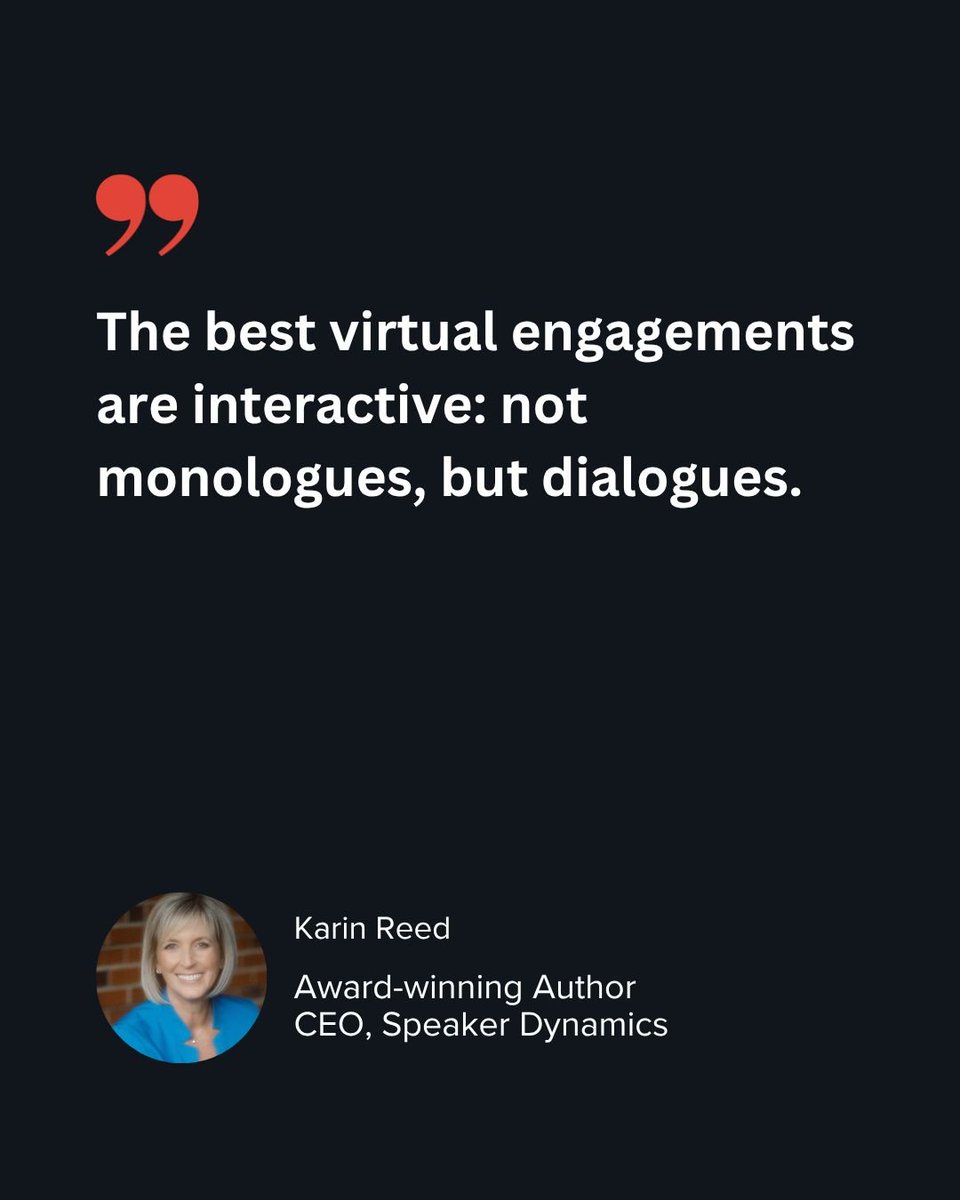
In the latest episode of Experience-focused Leaders, I sat down with @karin_reed, Emmy Award-winning journalist turned executive coach and CEO of Speaker Dynamics. We broke down what actually drives connection (and results) in modern leadership communication.
Karin has coached leaders at companies like Lenovo, Eli Lilly, and McKinsey & Company, helping turn subject matter experts into communicators people actually want to listen to.
Here’s the business impact in plain terms:
👉 If your message doesn’t land, your strategy doesn’t matter
👉 If your audience disengages, your pipeline slows down
👉 If your team sounds scripted, trust erodes
Her core message is simple and hard to execute:
• Authenticity beats perfection. Every time.
• A few takeaways that stuck with me:
• Most people “flatten” when they read. Meaning gets lost → so does impact
• Pauses aren’t awkward, they’re where understanding happens
• Over-preparation kills connection
• If you sound like you’re reading… your audience is already gone
• Slides should guide you, not become your script
• Even on a call with 100 people, it’s still an audience of one
And one insight every leader should internalize:
“Don’t tell them what you want to say, give them what they need to hear.”
If you care about:
• Better executive presence
• Stronger customer conversations
• Higher engagement in every meeting
This episode is worth your time.
🎧 Listen now and rethink how you show up on camera and beyond: https://t.co/Hxj4APWT1w
🎉 @relayter has been awarded “Best for Customer Satisfaction” in the Best Sales Enablement Software Report by @SoftwareAdvice.
And honestly, this is one of my favorite kinds of recognition.
Because it comes from real users. Real feedback. Real experiences.
Software Advice gives this distinction only to products that keep a very high bar of positive reviews (75%+) over the last 24 months.
Thank you for the reviews, the feedback, and the push to keep improving!
🎥 Watch the episode on YouTube: https://t.co/VGkgK4pBQz
🎧 Listen on Spotify: https://t.co/Z5X9d0pdl0
Apple Podcasts: https://t.co/DqFLV5fsHQ
iHeart: https://t.co/GgRz1CfnBs
Most innovation teams focus on the product.
Features. Technology. Performance.
But what if the real driver of adoption is something else entirely: how the experience changes the user’s perception of themselves?
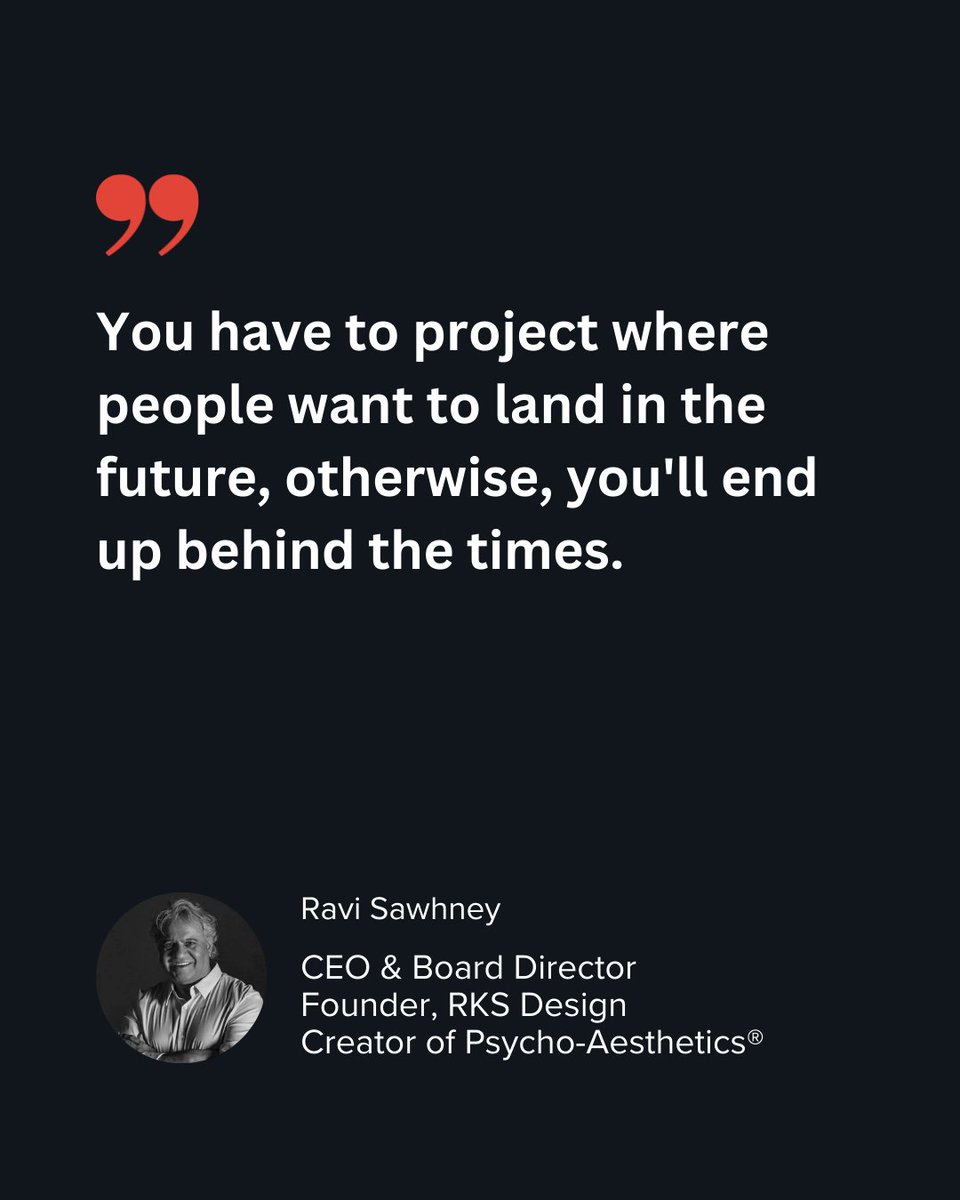
In the latest episode of Experience-focused Leaders, I sat down with Ravi Sawhney, founder & CEO of @rks and creator of the Psychoesthetics™ methodology.
Ravi has spent more than five decades helping global brands design products people don’t just use… but connect with. His work spans companies like Lego, Intel, and Samsung. He helped drive a $10B increase in enterprise value through the redesign of Life Technologies’ DNA sequencing platform.
The core idea behind his work is simple but powerful.
“It’s not how you feel about a design or an experience, it’s how it makes you feel about yourself.”
That insight reframes how we think about innovation.
People adopt products because the experience helps them feel more capable, more confident, more accomplished.
Ravi’s team maps this dynamic using two variables: self-actualization and interactivity.
Every product or service falls somewhere on that spectrum and understanding that positioning can help predict success.
In our conversation, we explore:
• Why many innovations fail due to misalignment with the people who decide adoption
• How great products create a “call to adventure” that draws users in
• Why emotional signals like empowerment or fear of failure shape decisions more than we admit
• How human insight combined with AI can help teams forecast where experiences need to go next
• Why the goal of design should be simple: help people feel like a hero in their own story
🎧 Listen to the latest episode of Experience-focused Leaders: https://t.co/2W06jMb1bm
Watch the episode on YouTube: https://t.co/UQ8EgFka2M
Listen on Spotify: https://t.co/VsRrannStQ
Apple Podcasts: https://t.co/4Sc56HOAzf
iHeart: https://t.co/skcWJG95Hl
Most leaders are trained to focus on strategy, execution, and results.
But what if one of the biggest levers of performance sits under the surface?
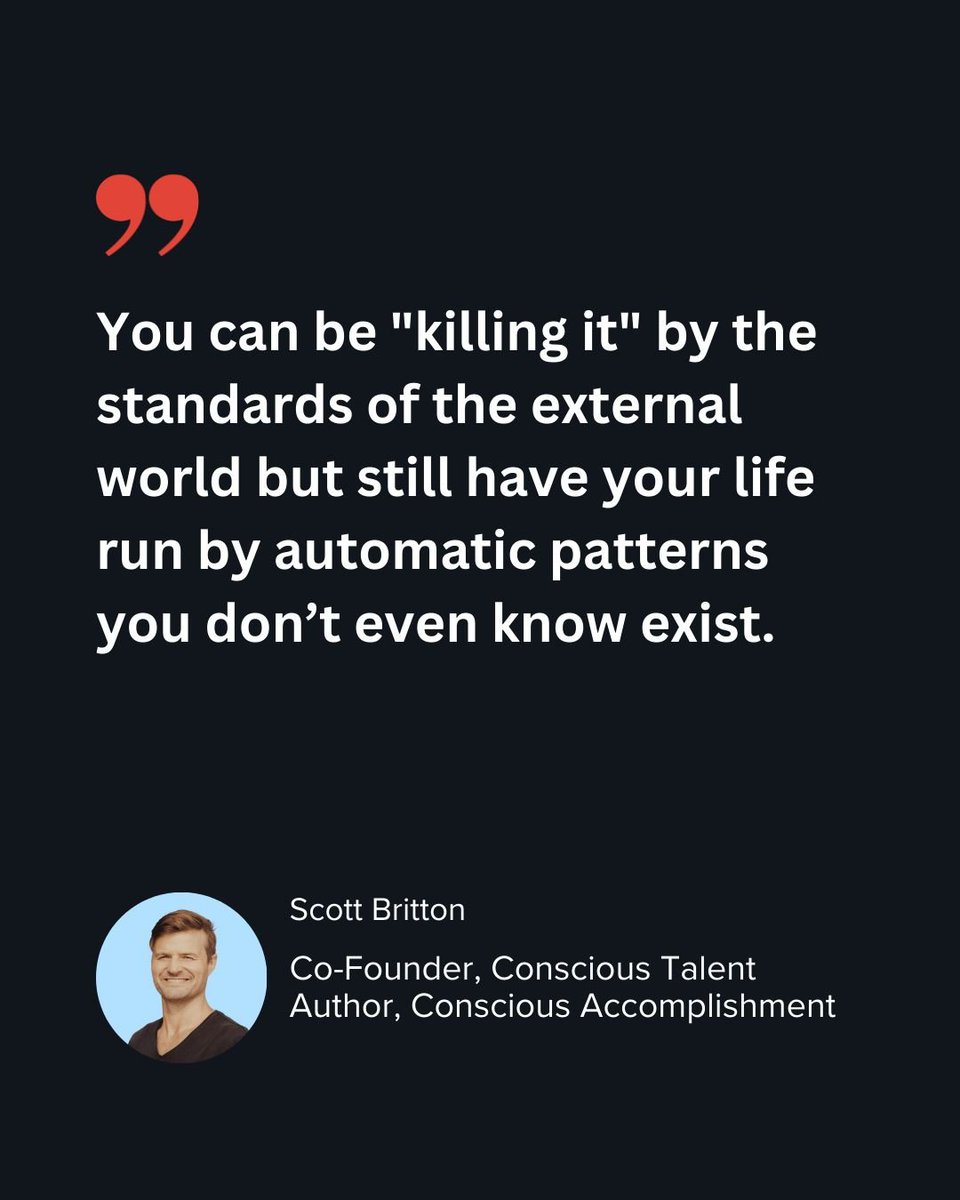
In the latest episode of Experience-focused Leaders, I sat down with Scott Britton (@britton) , entrepreneur, former co-founder of Troops (acquired by @salesforce), and author of Conscious Accomplishment. We talked about a topic most business conversations skip: consciousness and leadership.
It may sound abstract. The business impact is anything but.
One idea from Scott that stuck with me:
“You can be killing it by the standards of the external world but still have your life run by automatic patterns you don’t even know exist.”
As leaders, many of our reactions are automatic.
A tense meeting.
A missed target.
A difficult employee conversation.
We think we’re choosing how to respond.
Often… we’re not.
Scott describes consciousness like a database of past experiences. Over time, we build “if this happens → respond like this” programs that run in the background.
Those programs quietly shape how we lead teams, make decisions, and handle pressure.
The good news: awareness changes the equation.
As Scott put it:
“What you actually want is to feel a certain way—joy, vitality, trust, presence. That’s an inside job.”
Ironically, leaders who invest in that inner layer often become better at navigating the external world. Clearer thinking, calmer decisions, stronger relationships.
In this conversation we cover:
• Why high achievers often tie self-worth to productivity
• How automatic reactions shape leadership behavior
• Why personal growth is non-linear (even for experienced founders)
• How awareness strengthens decision-making and resilience
For founders, executives, and operators under constant pressure, this is a different kind of leadership conversation — and an important one.
🎧 Listen to the episode with Scott Britton on Experience-focused Leaders: https://t.co/OaJE0cxHGg
And I’m curious:
Have you noticed automatic patterns showing up in your leadership?
🎥 Watch the episode on YouTube: https://t.co/7jvmelqxqv
🎧 Listen on Spotify: https://t.co/eRHQ3efFh9
Apple Podcasts: https://t.co/9LFu95d79G
iHeart: https://t.co/FKROhrXCAs
What happens when the world’s leading authority on pricing says:
“Value = Price.”
In our latest episode of Experience-focused Leaders, I had the privilege of sitting down with @HermannSimon, founder of @simonkucher, the firm that shaped modern pricing strategy, and the thinker behind the concept of Hidden Champions.
He has advised global market leaders for 50 years. He has written 40+ books. He’s the only German in the Thinkers50 Hall of Fame.
But what struck me most was how practical and urgent his advice is for today’s leaders.
Here are a few takeaways every CEO, CMO, founder, and product leader should reflect on:
1️⃣ Price is not a number. It’s a signal of value.
If customers don’t pay, they don’t believe. Many AI companies today struggle not because the tech isn’t good but because perceived value isn’t high enough.
2️⃣ More data ≠ more value.
“We have more data now. But data as such has no value.”
Only when you translate data into real understanding and action does it drive growth.
3️⃣ Innovation fails when complexity wins.
His advice to startups:
Align your offering with the customer’s ability to handle complexity.
A “technical super-product” that overwhelms buyers will struggle, no matter how brilliant it is.
4️⃣ AI in B2B is necessary but not magical.
“B2B is so complex that we need AI to interpret it.”
Yet AI must improve quality and efficiency, not just create noise.
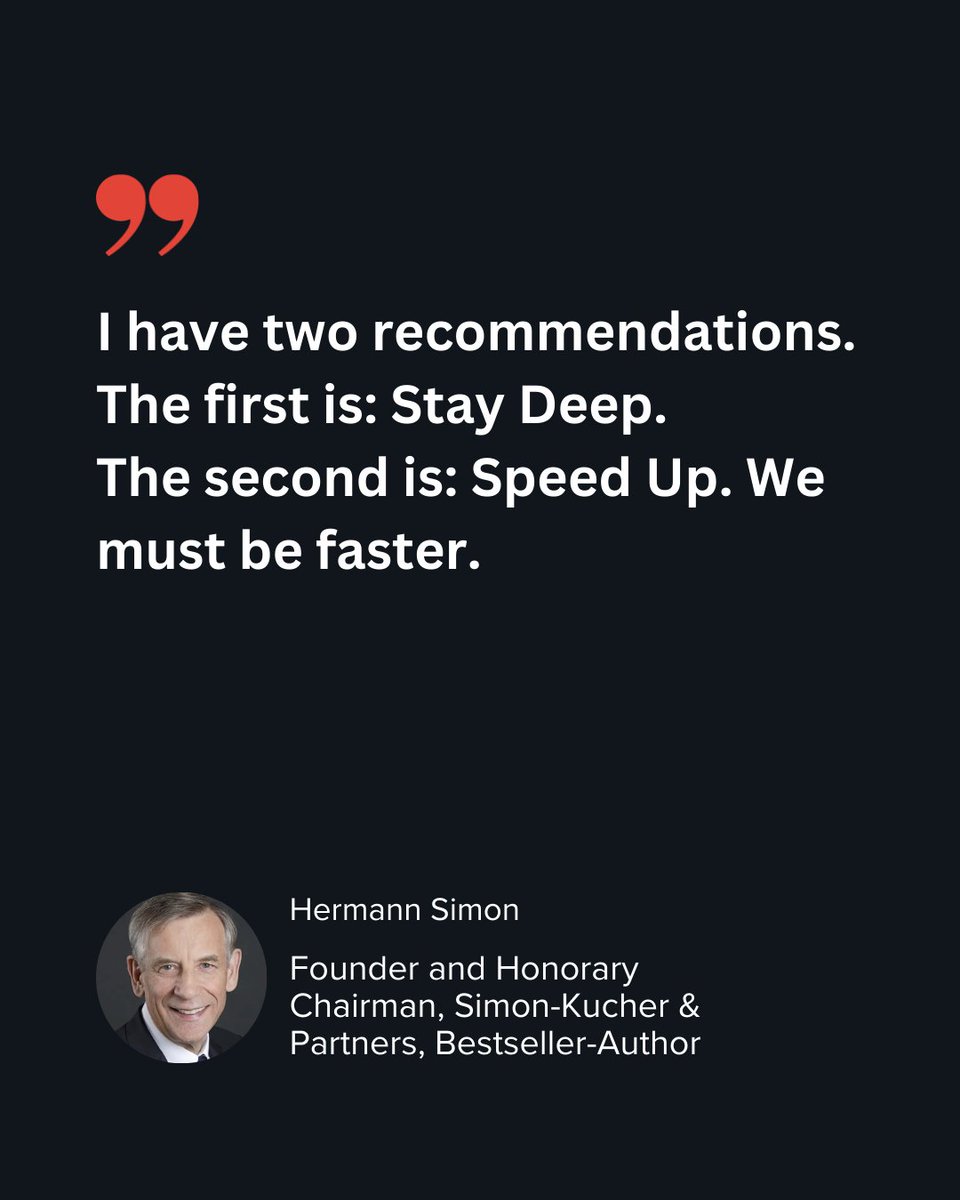
5️⃣ His two recommendations for leaders:
Stay Deep.
Speed Up.
Depth without speed loses momentum.
Speed without depth loses meaning.
We must stay deep, but we must be faster.
If you care about pricing power, innovation, AI monetization, and building enduring companies, this conversation will challenge your thinking.
Listen to the full episode of Experience-focused Leaders with Hermann Simon: https://t.co/GBAx7JCaJb