I can't reply because @JEChalmers blocked me like a coward.
Consider this, Labor thieves.
If you're worried people will withdraw from Super if it becomes voluntary - THAT MEANS YOU ARE TAKING PEOPLE'S MONEY AGAINST THEIR WILL so your union mates can enrich themselves.
The truth is - a shit load of Green and Renewable projects use the $4 trillion of super money to prop themselves up when people would NEVER invest in them willingly.
Labor are terrified their house of cards will come tumbling down the second people have a choice about what to do with their money.
By all means, send my tweet to Chalmers.
PRIVATE BANKS ARE STILL SCREWING AUSTRALIANS.
This is why Australia needs a Public Bank and it’s why People First is the only political party pushing for one. (One Nations proposal is a taxpayer funded finance facility, not a bank - they don’t understand banking.)
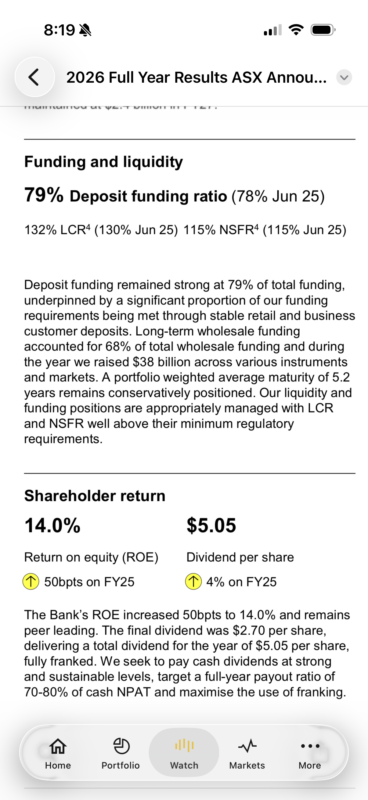
CBA (30% foreign owned) today just posted an $11 billion dollar profit, an increase on 7% on the prior year.
Has household disposable income increased by 7% in the last 12 months? Absolutely not.
So let’s look at some key metrics.
1) Return on Equity is 14%. This is an exceptional figure when you consider that the Bank is underwritten by the Australian taxpayer. As we saw in the GFC and Covid the Australian government went out of its way to protect the big banks. The big banks are the closest thing to a risk free investment. Given the RBA cash rate is 4.35%, it’s not unreasonable to think that the ROE on a bank underwritten by the taxpayer should not be much higher than the RBA rate, rather than three times that amount.
2) Tier 1 Capital is 12% compared to its international peers of 18.3%. You have to ask why Australian Banks are required to hold much less equity than international banks given Australia has the highest level of household debt in the world and the slowest growth amongst developed countries.
3) Deposits make up 79% of total funding, making CBA far and away the leader amongst Australian banks when it comes to relying on foreign capital the least. The reason for this is because of CBAs prior history as a public bank and its extensive branch network. It’s an insult to Australians that the CBA continues to close branches when its strength is just that.
4) Average maturity of deposits is 5.2 years. There is a desperate need for deposit products that offer a longer maturity if home loan maturities are to be extended. Claims of offering fixed home loans for 30 years can’t occur until that happens.
People First intends to start a public bank that will keep branches open and shave private banks ROE into alignment with their risk profile.
Future generations can’t afford to be ripped off by private banks any longer.
Sign up today at https://t.co/PeAaJW2pjF
Not only does the RBA ignore exploding land prices, it adopts credit policies in line with Basel III guidelines which make house mortgages the most profitable sector and reduces private banks incentive to create credit for small business and badly needed national infrastructure.
When questioned by Senator Gerard Rennick, Michelle Bullock made it clear that the RBA (created by OUR government) will not share correspondence it has with the BIS and other Central Banks.
The new Australian Peoples Party will bring back a national bank (government owned like the former CBA for most of its life) and an infrastructure development bank.
Public credit should be used for the public good, not the creation of $40 b in profits, most of which goes offshore.
🚨 Australia isn’t “struggling with housing.”
We’re being systematically looted by our own central bank.
The RBA’s accounting rules don’t just ignore exploding land prices, they legally reward them.
$315.6 billion in fresh credit last year went to flipping existing houses.
Only $98.3 billion went to building real industry.
That’s not an independent central bank protecting our future.
That’s the RBA conferring a death sentence on the real economy through policy.
Under RBA stewardship, the Financial Ledger feasts while the Material Ledger dies.that’s its design .
The RBA channels Australian wages straight to related-party banks by weaponising the very asset inflation those banks create through debt.
They’ve convinced themselves, and us , that asset inflation + mass immigration is a viable national business model.
It isn’t.
A consumption-only economy is mathematically unsustainable. You cannot pay for imports, fund defence, or support an ageing population with nothing but rising house prices and more migrants bidding them up.
Eventually the demographic cliff arrives, the pool of new borrowers shrinks, the debt bubble stops inflating, and the entire illusion collapses. No productive industry = no real income = no sovereign resilience. You end up a vassal state living on borrowed time and borrowed money.
We are in a period of denial where the vast majority haven’t woken up to the fact this can’t be sustained . Folks simply look within their own circumstances and don’t question the broader issue of the economic fragility of asset inflation.
And every single mainstream Australian economist supports the asset inflation cults belief system .
It's called the "wealth effect" - people felt richer because their house valued soared so they spent more - but it papered over the deep problems in the economy we must finally address.
The solution? Bring back a manufacturing economy, so more workers produce real wealth.
🇨🇳China tests missile in Pacific.
🇦🇺Australia melts down.
🇺🇸US does the same tests routinely — zero outrage.
Double standards exposed with Prof. Warwick Powell @baoshaoshan
Watch now 👇
Last year, over $500 million was lost by investors in the failed First Guardian fund. 👇
It's a bit rich for superannuation advocates to argue that people aren't responsible enough to save for their own retirement, yet say nothing when the paid "experts" blow up close to a billion dollars.
I've spoken to people who have lost their life savings in that fund. They were advised to invest their superannuation money into First Guardian by financial planners. Yet when they sought to hold the advisors accountable no one was, despite charging fees for their bad advice.
As one lady explained to me she would have preferred to pay off her home loan and not invest in paper assets that she did not understand.
Yet under superannuation laws, she was forced to give up 12% of her wages by the government. Despite this government refuses to capital guarantee these wages, and instead allows shonky financial institutions to gamble their wages with no accountability and no oversight.
There is a legitimate argument that superannuation laws breach S51(xxxi) of the constitution requiring the government acquire property on just terms.
That's the reason the government got private funds to manage superannuation. Had the government managed it they would have been bound to protect workers capital under the Constitution.
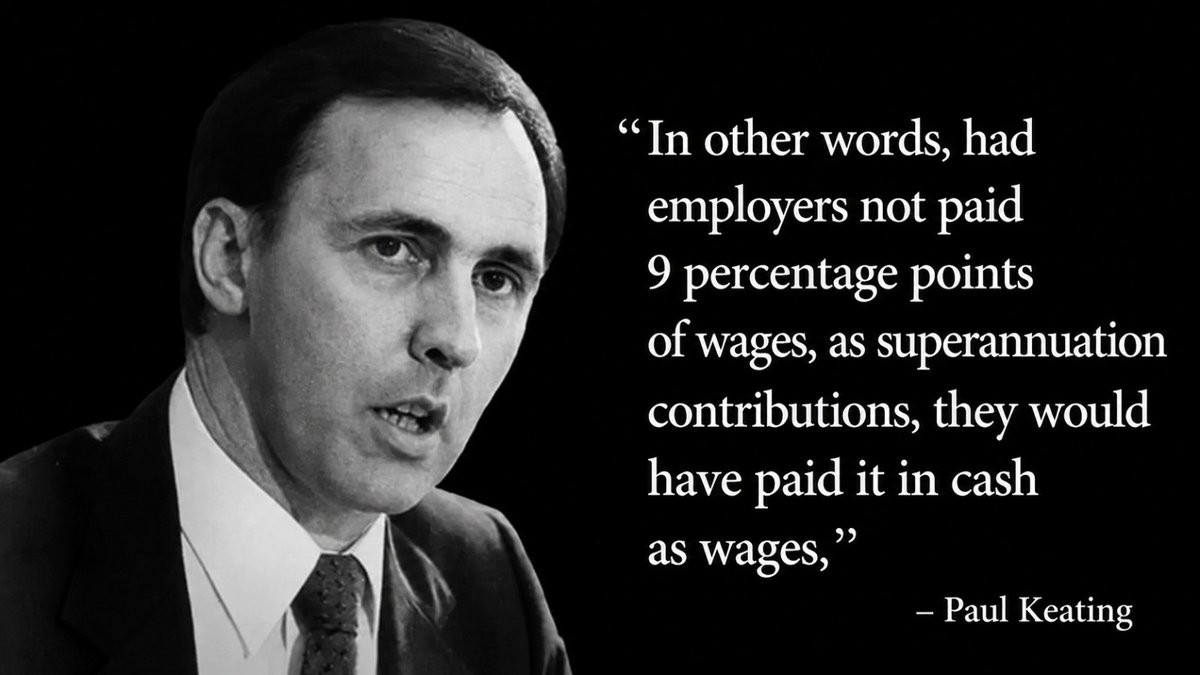
Keating, the architect of superannuation admits it came of the workers pockets so why isn't the government underwriting contributions?
People First will let workers keep their superannuation. We want to empower people to take responsibility for their hard earned savings rather than steal it from them.
If you agree, sign up today at https://t.co/PeAaJW2pjF
••••••••••••••••
"First Guardian investors have been dealt a fresh blow as liquidators look to settle one of the failed fund's investments for cents in the dollar.
The fund never reopened and was put into liquidation a year later, with an estimated $500m of investor money feared lost."
If you want to see just how much control the Israel lobby has over Australia's mainstream media then the MSM's complete silence in regard to comments made by Gina Rinehart about giving free land and tax breaks to foreign entities is a perfect case in point.
Despite the uproar on social media, the silence on the mainstream media is deafening.
When Australia's richest person and largest political donar publicly suggests giving our country away for free, you would think it would make headlines wouldn't you!
Especially since Rineharts connection to One Nation has been in the news on a such a regular basis and the viewpoint is the anthesis of what One Nation stands for.
Yet all we get is crickets, with the one exception of another billionaire sellout in Rupert Murdoch, who also supports the idea via his sock puppets on Sky News.
To be clear the Australian People's Party opposes foreign investment of Australias infrastructure, farmland and residential land. We will build, own and operate our own infrastructure and develop technology without giving away our own sovereignty.
Furthermore Australia doesn’t spend $17 billion a year on Tertiary education just to import foreign technology.
We once built Lucas Heights in the 1950’s and exported nuclear medicine to world. Why can’t we develop our own technology now?
What is One Nations position on Rineharts views - Australians deserve transparency on this issue.
To be fair you can't accuse Rinehart of being a shapeshifter.
Her CEO of Agriculture is Adam Giles. He was the Northern Territory Chief Minister that sold the Darwin port to the Chinese.
She also outbid Australian farming families to buy the Kidman properties in a 66/33 joint venture with the Chinese.
She first rose to notoriety when she was the first willing user of the Enterprise Migration Agreement introduced by Chris Bowen that would import workers to work on her mines.
This is not a person who should be influencing Australian politicians.
Distress & Distortion in the Australian Property Market
Finance analyst Martin North reports distress & distortion in the Australian property market for the roughly two-thirds of Australians who own property outright or with a mortgage and one-third of Australians who are renting.
Key Points:
● 53% of mortgage owners (an all-time high) have cash flow pressures,
● rental stress rose to 74.4% of those renting (just below all-time highs),
● continued stress from higher inflation and the three rate rises
● borrowing power available to investors of existing property down by up to 30%
● reduced capacity to owner occupiers due to higher interest rates
● preliminary May 30 auction clearance rate of 54.5% and an estimated nationwide clearance rate of 39.3% is a record low,
● recent RBA bulletin reveals that:
―― the share of housing investors aged over 60 has surged over the past 20 years (from ~12% to ~28%)
―― the share of housing investors aged under 30 has retreated (from ~9% to ~4%)
● the most likely base case is that house prices will drop around 10% in three years
● 200,000 recent first home buyers may slide into negative equity
This distress in the property market is the first indication that the housing bubble promoted by the banks over the last few decades and turbo-charged by the Howard/Costello 50% capital gains tax reduction for property investors, is facing headwinds.
The figures show that incentivisation of investors to compete with owner occupied first home buyers for existing housing stock is being reduced.
The above figures do not include information about the growing number of homeless Australians who have no prospect of renting, let alone buying their own home.
The changes to capital gains tax are only half the solution to Australia's housing shortage. We also need to increase supply.
There was a time when both Labor and Liberal governments were building almost a quarter of annual housing supply (24% from 1949-61 and 23% from 1961-76). They did this using the CBA, which use to be our publicly owned national bank, to lend to state housing commissions.
Have a look at https://t.co/berHeW7NS5 and https://t.co/TuTh5B3BTV , the only parties fighting for policies which will make this possible, including:
● The re-establishment of a public national bank (see Winston Peters May 17 announcement to buy back the Bank of NZ)
● The establishment of an infrastructure development bank
● A military apprenticeship scheme
https://t.co/tthZhcd4GO
I don't mean to alarm anyone, but I have strong cause to believe that property investors played a major role in pushing up housing prices in Perth, Adelaide and SE Queensland....
I’ve been in Odesa, Ukraine for the Black Sea Security Forum. The Ukrainian people are resilient and they’re not giving up, even in the face of attacks on civilian infrastructure. We have to continue standing with Ukraine in their fight against Vladimir Putin and Russia.
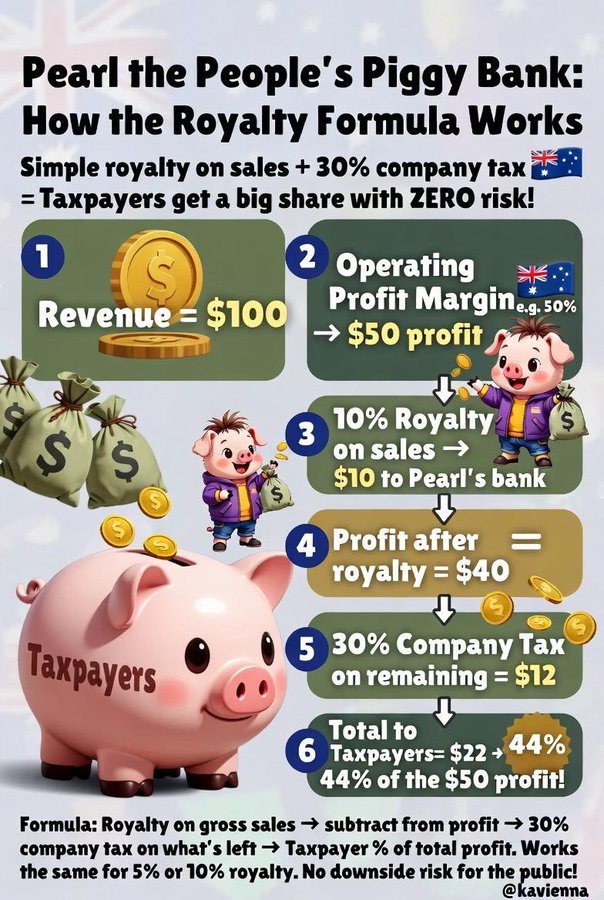
Yes, Labor is desperate to protect the gas industries profit margins. Forcing a stop to offshoring profits and this PeopleFirst proposal for gas industry taxation are the solution.
We also need to stop taxpayers from getting slugged for unquantifiable perks to foreign investors and the use of taxpayer money to underwrite the risks of private industry.
Support the People’s Piggy Bank
Albanese’s ‘Treasury Laws Amendment Bill 2026: Strengthening the foreign resident CGT regime’ will make taxpayers pick up the bill for foreign investors disposing of renewable energy infrastructure assets. Budget Papers stated that:
“[it is] estimated to decrease receipts by AUD 425 million over five years from 2025–26 and was accounted for in a prior Budget process” (Budget 2026-27, p15).
The draft version of the bill also shows that the scope of Taxable Australian Real Property (TARP) has been expanded to specifically include water entitlements (and related water rights) as well as options or rights to acquire such TARP assets.
A hint that the potential cost to the taxpayer might be substantial is the requirement that:
“foreign residents disposing of shares and other [TARP related] membership interests exceeding $50 million in value to notify the ATO, prior to the transaction being executed.”
The amount of foreign investment in Australia’s TARP is not small. At the end of 2025, foreign economies had a total gross foreign investment liability in Australia of approximately A$5.12 trillion (A$5,116.3 billion).
Australian taxpayers are also funding the Capacity Investment Scheme (CIS), an Australian Government revenue underwriting scheme to accelerate investment in renewable (wind and solar) energy generation and dispatchable (battery) capacity.
Under the CIS, if the actual revenue earned by a project is below the agreed revenue floor, the Australian government (taxpayer) will pay the project operator 90 per cent of the revenue shortfall up to the agreed annual cap for 15 yrs.
The Labor government classifies the costs of the CIS as a contingent liability (alongside the Snowy 2.0 hydro electric scheme, which has already blown out in costs by billions) and states that:
"The Australian government's maximum liability and estimated payments under these (CIS) agreements are not for publication due to commercial sensitivities". (Budget Paper No. 1)
Also included in the budget’s ‘contingent liabilities’ is the cost of the administration of Australia’s commercial energy market. Here again, we see that the taxpayer underwrites the profitability of privately owned power generation.
The Labor government will grant “whatever it takes” subsidies to ensure “renewable” energy is a part of the energy grid, no matter the cost to the taxpayer.
What hubris allows the Australian government to commit the Australian taxpayer to unquantifiable perks to foreign investors and risk taxpayer money to underwrite the risks of private industry?
The Australian taxpayer deserves a guaranteed share of oil & gas profits with ZERO exploration risk.
http://Peoplefirstparty.auis up for the fight.
https://t.co/CdAVm6yEJr
I’m getting feedback that seems to justify multinationals shifting profits offshore because our taxes are too high here in Australia.
Government waste aside, our taxes are too high because of profit shifting. If multinationals paid more tax here, Australians would pay less.
Furthermore this issue has only gotten worse as foreign investors have been allowed to buy our Infrastructure, farmland and housing.
https://t.co/PeAaJW2pjF policy is to level the playing field by shifting the tax burden onto companies that shift profits offshore.
Transfer pricing is difficult to monitor given the millions of transaction that occur on a daily basis. The easiest way to stop profit shifting is to lift the rate of tax on profits sent offshore to fund a CUT IN THE TAX RATE HERE IN AUSTRALIA.
This is the very essence of putting the Australia People First.
An easy way to tell if multinationals are shifting their profits offshore is to compare the operating profit ratio of their operations in Australia verses their worldwide operating profit.
Pfizer for example had an operating profit ratio of just 7% in Australia verse 35% for its worldwide income.
This was on $1.4 billion in sales of which a billion was transferred to Ireland.
Australia withholds only 10% on royalties paid to Ireland, despite Ireland having a company tax rate of 12.5%.
A total tax burden of 22.5% which is 7.5% less than the 30% applied to company tax in Australia. Sending profits to Ireland saves Pfizer 7.5% of a billion dollars or $75 million.
It is therefore clearly obvious that any company will shift profits to Ireland (and numerous other countries with that Australia applies low withholding rates too.)
https://t.co/PeAaJW2pjF is the only party that has the knowledge to crack down on profit shifting to fund a cut in taxes here in Australia.
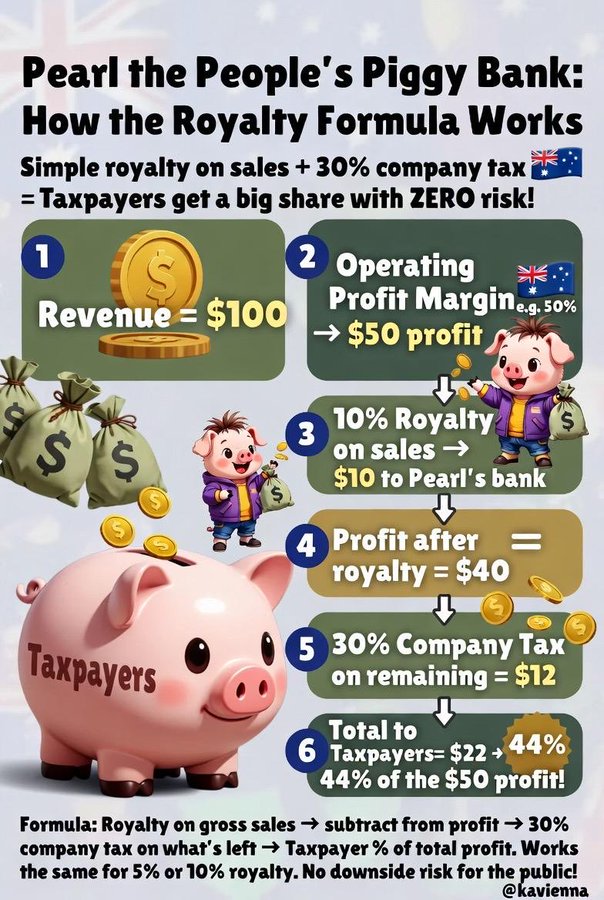
Yes, Labor is desperate to protect the gas industries profit margins. Forcing a stop to offshoring profits and this PeopleFirst proposal for gas industry taxation are the solution.
We also need to stop taxpayers from getting slugged for unquantifiable perks to foreign investors and the use of taxpayer money to underwrite the risks of private industry.
Support the People’s Piggy Bank
Albanese’s ‘Treasury Laws Amendment Bill 2026: Strengthening the foreign resident CGT regime’ will make taxpayers pick up the bill for foreign investors disposing of renewable energy infrastructure assets. Budget Papers stated that:
“[it is] estimated to decrease receipts by AUD 425 million over five years from 2025–26 and was accounted for in a prior Budget process” (Budget 2026-27, p15).
The draft version of the bill also shows that the scope of Taxable Australian Real Property (TARP) has been expanded to specifically include water entitlements (and related water rights) as well as options or rights to acquire such TARP assets.
A hint that the potential cost to the taxpayer might be substantial is the requirement that:
“foreign residents disposing of shares and other [TARP related] membership interests exceeding $50 million in value to notify the ATO, prior to the transaction being executed.”
The amount of foreign investment in Australia’s TARP is not small. At the end of 2025, foreign economies had a total gross foreign investment liability in Australia of approximately A$5.12 trillion (A$5,116.3 billion).
Australian taxpayers are also funding the Capacity Investment Scheme (CIS), an Australian Government revenue underwriting scheme to accelerate investment in renewable (wind and solar) energy generation and dispatchable (battery) capacity.
Under the CIS, if the actual revenue earned by a project is below the agreed revenue floor, the Australian government (taxpayer) will pay the project operator 90 per cent of the revenue shortfall up to the agreed annual cap for 15 yrs.
The Labor government classifies the costs of the CIS as a contingent liability (alongside the Snowy 2.0 hydro electric scheme, which has already blown out in costs by billions) and states that:
"The Australian government's maximum liability and estimated payments under these (CIS) agreements are not for publication due to commercial sensitivities". (Budget Paper No. 1)
Also included in the budget’s ‘contingent liabilities’ is the cost of the administration of Australia’s commercial energy market. Here again, we see that the taxpayer underwrites the profitability of privately owned power generation.
The Labor government will grant “whatever it takes” subsidies to ensure “renewable” energy is a part of the energy grid, no matter the cost to the taxpayer.
What hubris allows the Australian government to commit the Australian taxpayer to unquantifiable perks to foreign investors and risk taxpayer money to underwrite the risks of private industry?
The Australian taxpayer deserves a guaranteed share of oil & gas profits with ZERO exploration risk.
http://Peoplefirstparty.auis up for the fight.
https://t.co/CdAVm6y6TT
I’m getting feedback that seems to justify multinationals shifting profits offshore because our taxes are too high here in Australia.
Government waste aside, our taxes are too high because of profit shifting. If multinationals paid more tax here, Australians would pay less.
Furthermore this issue has only gotten worse as foreign investors have been allowed to buy our Infrastructure, farmland and housing.
https://t.co/PeAaJW2pjF policy is to level the playing field by shifting the tax burden onto companies that shift profits offshore.
Transfer pricing is difficult to monitor given the millions of transaction that occur on a daily basis. The easiest way to stop profit shifting is to lift the rate of tax on profits sent offshore to fund a CUT IN THE TAX RATE HERE IN AUSTRALIA.
This is the very essence of putting the Australia People First.
An easy way to tell if multinationals are shifting their profits offshore is to compare the operating profit ratio of their operations in Australia verses their worldwide operating profit.
Pfizer for example had an operating profit ratio of just 7% in Australia verse 35% for its worldwide income.
This was on $1.4 billion in sales of which a billion was transferred to Ireland.
Australia withholds only 10% on royalties paid to Ireland, despite Ireland having a company tax rate of 12.5%.
A total tax burden of 22.5% which is 7.5% less than the 30% applied to company tax in Australia. Sending profits to Ireland saves Pfizer 7.5% of a billion dollars or $75 million.
It is therefore clearly obvious that any company will shift profits to Ireland (and numerous other countries with that Australia applies low withholding rates too.)
https://t.co/PeAaJW2pjF is the only party that has the knowledge to crack down on profit shifting to fund a cut in taxes here in Australia.
Yes, Labor is desperate to protect the gas industries profit margins. Forcing a stop to offshoring profits and this PeopleFirst proposal for gas industry taxation are the solution.
We also need to stop taxpayers from getting slugged for unquantifiable perks to foreign investors and the use of taxpayer money to underwrite the risks of private industry.
Support the People’s Piggy Bank
Albanese’s ‘Treasury Laws Amendment Bill 2026: Strengthening the foreign resident CGT regime’ will make taxpayers pick up the bill for foreign investors disposing of renewable energy infrastructure assets. Budget Papers stated that:
“[it is] estimated to decrease receipts by AUD 425 million over five years from 2025–26 and was accounted for in a prior Budget process” (Budget 2026-27, p15).
The draft version of the bill also shows that the scope of Taxable Australian Real Property (TARP) has been expanded to specifically include water entitlements (and related water rights) as well as options or rights to acquire such TARP assets.
A hint that the potential cost to the taxpayer might be substantial is the requirement that:
“foreign residents disposing of shares and other [TARP related] membership interests exceeding $50 million in value to notify the ATO, prior to the transaction being executed.”
The amount of foreign investment in Australia’s TARP is not small. At the end of 2025, foreign economies had a total gross foreign investment liability in Australia of approximately A$5.12 trillion (A$5,116.3 billion).
Australian taxpayers are also funding the Capacity Investment Scheme (CIS), an Australian Government revenue underwriting scheme to accelerate investment in renewable (wind and solar) energy generation and dispatchable (battery) capacity.
Under the CIS, if the actual revenue earned by a project is below the agreed revenue floor, the Australian government (taxpayer) will pay the project operator 90 per cent of the revenue shortfall up to the agreed annual cap for 15 yrs.
The Labor government classifies the costs of the CIS as a contingent liability (alongside the Snowy 2.0 hydro electric scheme, which has already blown out in costs by billions) and states that:
"The Australian government's maximum liability and estimated payments under these (CIS) agreements are not for publication due to commercial sensitivities". (Budget Paper No. 1)
Also included in the budget’s ‘contingent liabilities’ is the cost of the administration of Australia’s commercial energy market. Here again, we see that the taxpayer underwrites the profitability of privately owned power generation.
The Labor government will grant “whatever it takes” subsidies to ensure “renewable” energy is a part of the energy grid, no matter the cost to the taxpayer.
What hubris allows the Australian government to commit the Australian taxpayer to unquantifiable perks to foreign investors and risk taxpayer money to underwrite the risks of private industry?
The Australian taxpayer deserves a guaranteed share of oil & gas profits with ZERO exploration risk.
http://Peoplefirstparty.auis up for the fight.
https://t.co/CdAVm6yEJr
I’m getting feedback that seems to justify multinationals shifting profits offshore because our taxes are too high here in Australia.
Government waste aside, our taxes are too high because of profit shifting. If multinationals paid more tax here, Australians would pay less.
Furthermore this issue has only gotten worse as foreign investors have been allowed to buy our Infrastructure, farmland and housing.
https://t.co/PeAaJW2pjF policy is to level the playing field by shifting the tax burden onto companies that shift profits offshore.
Transfer pricing is difficult to monitor given the millions of transaction that occur on a daily basis. The easiest way to stop profit shifting is to lift the rate of tax on profits sent offshore to fund a CUT IN THE TAX RATE HERE IN AUSTRALIA.
This is the very essence of putting the Australia People First.
An easy way to tell if multinationals are shifting their profits offshore is to compare the operating profit ratio of their operations in Australia verses their worldwide operating profit.
Pfizer for example had an operating profit ratio of just 7% in Australia verse 35% for its worldwide income.
This was on $1.4 billion in sales of which a billion was transferred to Ireland.
Australia withholds only 10% on royalties paid to Ireland, despite Ireland having a company tax rate of 12.5%.
A total tax burden of 22.5% which is 7.5% less than the 30% applied to company tax in Australia. Sending profits to Ireland saves Pfizer 7.5% of a billion dollars or $75 million.
It is therefore clearly obvious that any company will shift profits to Ireland (and numerous other countries with that Australia applies low withholding rates too.)
https://t.co/PeAaJW2pjF is the only party that has the knowledge to crack down on profit shifting to fund a cut in taxes here in Australia.
Yes, Labor is desperate to protect the gas industries profit margins. Forcing a stop to offshoring profits and this PeopleFirst proposal for gas industry taxation are the solution.
We also need to stop taxpayers from getting slugged for unquantifiable perks to foreign investors and the use of taxpayer money to underwrite the risks of private industry.
Support the People’s Piggy Bank
Albanese’s ‘Treasury Laws Amendment Bill 2026: Strengthening the foreign resident CGT regime’ will make taxpayers pick up the bill for foreign investors disposing of renewable energy infrastructure assets. Budget Papers stated that:
“[it is] estimated to decrease receipts by AUD 425 million over five years from 2025–26 and was accounted for in a prior Budget process” (Budget 2026-27, p15).
The draft version of the bill also shows that the scope of Taxable Australian Real Property (TARP) has been expanded to specifically include water entitlements (and related water rights) as well as options or rights to acquire such TARP assets.
A hint that the potential cost to the taxpayer might be substantial is the requirement that:
“foreign residents disposing of shares and other [TARP related] membership interests exceeding $50 million in value to notify the ATO, prior to the transaction being executed.”
The amount of foreign investment in Australia’s TARP is not small. At the end of 2025, foreign economies had a total gross foreign investment liability in Australia of approximately A$5.12 trillion (A$5,116.3 billion).
Australian taxpayers are also funding the Capacity Investment Scheme (CIS), an Australian Government revenue underwriting scheme to accelerate investment in renewable (wind and solar) energy generation and dispatchable (battery) capacity.
Under the CIS, if the actual revenue earned by a project is below the agreed revenue floor, the Australian government (taxpayer) will pay the project operator 90 per cent of the revenue shortfall up to the agreed annual cap for 15 yrs.
The Labor government classifies the costs of the CIS as a contingent liability (alongside the Snowy 2.0 hydro electric scheme, which has already blown out in costs by billions) and states that:
"The Australian government's maximum liability and estimated payments under these (CIS) agreements are not for publication due to commercial sensitivities". (Budget Paper No. 1)
Also included in the budget’s ‘contingent liabilities’ is the cost of the administration of Australia’s commercial energy market. Here again, we see that the taxpayer underwrites the profitability of privately owned power generation.
The Labor government will grant “whatever it takes” subsidies to ensure “renewable” energy is a part of the energy grid, no matter the cost to the taxpayer.
What hubris allows the Australian government to commit the Australian taxpayer to unquantifiable perks to foreign investors and risk taxpayer money to underwrite the risks of private industry?
The Australian taxpayer deserves a guaranteed share of oil & gas profits with ZERO exploration risk.
http://Peoplefirstparty.auis up for the fight.
https://t.co/CdAVm6yEJr
I’m getting feedback that seems to justify multinationals shifting profits offshore because our taxes are too high here in Australia.
Government waste aside, our taxes are too high because of profit shifting. If multinationals paid more tax here, Australians would pay less.
Furthermore this issue has only gotten worse as foreign investors have been allowed to buy our Infrastructure, farmland and housing.
https://t.co/PeAaJW2pjF policy is to level the playing field by shifting the tax burden onto companies that shift profits offshore.
Transfer pricing is difficult to monitor given the millions of transaction that occur on a daily basis. The easiest way to stop profit shifting is to lift the rate of tax on profits sent offshore to fund a CUT IN THE TAX RATE HERE IN AUSTRALIA.
This is the very essence of putting the Australia People First.
An easy way to tell if multinationals are shifting their profits offshore is to compare the operating profit ratio of their operations in Australia verses their worldwide operating profit.
Pfizer for example had an operating profit ratio of just 7% in Australia verse 35% for its worldwide income.
This was on $1.4 billion in sales of which a billion was transferred to Ireland.
Australia withholds only 10% on royalties paid to Ireland, despite Ireland having a company tax rate of 12.5%.
A total tax burden of 22.5% which is 7.5% less than the 30% applied to company tax in Australia. Sending profits to Ireland saves Pfizer 7.5% of a billion dollars or $75 million.
It is therefore clearly obvious that any company will shift profits to Ireland (and numerous other countries with that Australia applies low withholding rates too.)
https://t.co/PeAaJW2pjF is the only party that has the knowledge to crack down on profit shifting to fund a cut in taxes here in Australia.