A father takes his son on an incredible journey inside the human digestive system. What an extraordinary look at the complexity of the human body.
Watching this reminds us of the greatness and wisdom of Allah ﷻ. Every organ, every process and every detail works with perfect precision. Truly, in the creation of man are signs for those who reflect.
SubhanAllah. 🤲🏽❤️
The U.S. does not have a human rights policy.
It has a human rights vocabulary.
It says "genocide" when an enemy kills.
It says "security" when an ally kills.
It says "terrorism" when the poor fight back.
It says "unfortunate" when a drone hits a family.
Everyone has seen this pattern.
The only people who still buy the story are those who need the story more than they need the truth.
Look how well he explained the Afghan-Soviet War and its aftermath. But didn’t he repeat himself the same mistakes in the US-Afghan War? We’ve come full circle.
📍Musharraf, Rawalpindi —2007 🇵🇰
कैंसर की वजह सिर्फ सिगरेट, तंबाकू या शराब नहीं है. भारत में 1.9 लाख लोगों को वायरस और बैक्टीरिया से होने वाले इंफेक्शन से कैंसर हुआ है. पूरा मामला जानने के लिए देखिए ये वीडियो.
#indianexpresshindi#cancer#health
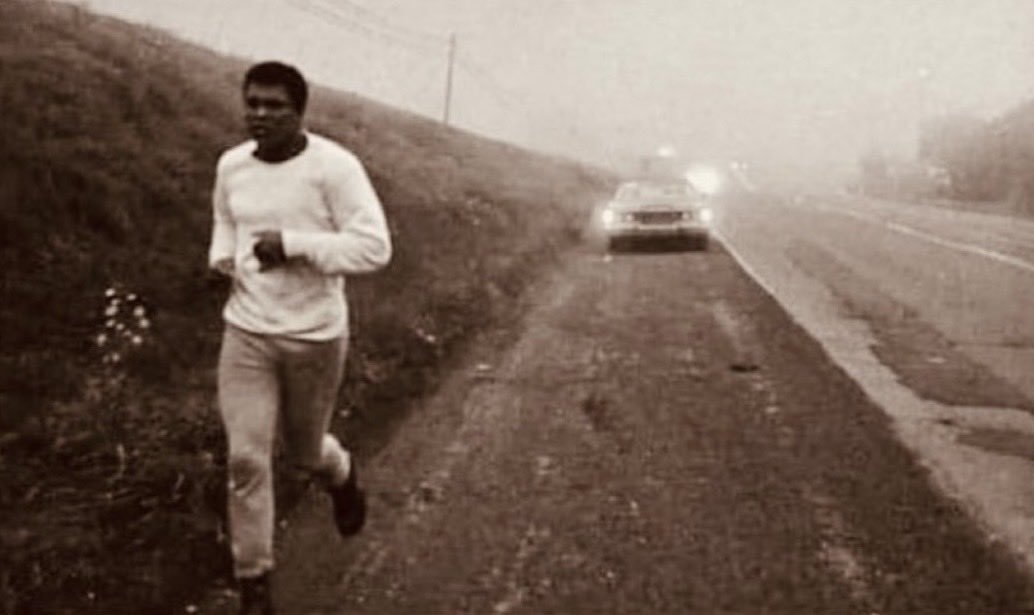
“People run in packs because they don't feel safe alone. I run alone because I don't feel safe in packs”
- Muhammad Ali
Muhammad Ali faced intense public criticism in 1967 after refusing induction into the U.S. military during the Vietnam War. He was arrested, convicted of violating draft laws, and sentenced to five years in federal prison, though he remained free on bail while appealing the conviction.
Following his refusal, boxing authorities stripped Ali of his heavyweight championship and suspended his boxing licenses. The decision kept him out of professional boxing for more than three years, from roughly age 25 to 28—a significant period in the prime of a heavyweight fighter’s career.
As the Vietnam War continued, American public opinion toward the conflict changed considerably. Ali’s legal fight eventually reached the Supreme Court in Clay v. United States. In June 1971, the Court unanimously reversed his conviction, ending the years-long legal battle surrounding his refusal to serve.
Ali eventually reclaimed his place at the top of boxing. In 1974, he defeated the heavily favored George Foreman by an eighth-round knockout in the historic heavyweight championship fight known as the “Rumble in the Jungle.”
Ali remained committed to the convictions that had cost him years of his career. Over time, his reputation changed dramatically, and he became an internationally celebrated figure whose influence extended far beyond boxing.
His story became a powerful example of remaining faithful to one’s principles, even when doing so comes at a tremendous personal cost.