Code is the right action interface for spatial reasoning agents.
New from NVIDIA Research: SpatialClaw, a training-free agent that uses code as its action interface for complex visual tasks.
Instead of calling a fixed set of pre-defined tools, the agent writes Python inside a persistent kernel, so it can compose perception modules, inspect intermediate results, and revise its strategy across steps. Perception outputs become ordinary variables it can reuse and combine with libraries like NumPy and SciPy.
With no benchmark-specific or model-specific tuning, it beats a recent prior agent by 11.2 points across 20 benchmarks and holds up consistently across six different model backbones.
You can check out SpatialClaw here: https://t.co/xfZBw5il0i
Today, we expand zero-shot drug design beyond binding to the design of multifunctional medicines, the intracellular proteome, and state-of-the-art atomic precision with our model, JAM-2.
In a new report (below), we show:
1. The first drug-grade, fully computationally designed multispecific antibodies against five peptide-MHCs: Routine picomolar T-cell activation/cell-killing EC50s, >100-fold selectivity, and drug-like developability
2. The first fully generatively designed, drug-grade dual-variant KRAS G12 multispecifics: They recruit primary T-cells from human donors to kill G12V and G12C presenting cells at pM to single-digit-nM potency, completely sparing wild-type.
3. Atomic accuracy, from sequence alone: Angstrom-level agreement between Cryo-EM and JAM-2 de novo designs, requiring only target sequences (not structure) as input.
4. Unrivaled speed with an AI-native in-house wet lab: Designed, built, and tested five programs in one parallelized campaign, end-to-end in-house in ~6 weeks.
5. A higher validation bar for AI-generated drug candidates: In a field increasingly rife with hype and uneven standards of proof, we provide the highest quality public wet-lab validation of AI-designed antibodies to date. We share experimental methods in full, and invite folks to adopt and build on these standards.
Truly individualized therapies will be the most important contribution of AI in drug design. These advances help accelerate this future.
Biological neuron compared to the artificial neuron used in neural networks.
- The top shows a biologic neuron: dendrites receive signals, the cell body processes them, the axon transmits the signal, and terminals pass it onward.
- The bottom shows an artificial neuron: inputs x₁ to xₙ are weighted by w₁ to wₙ, summed with bias B, then passed through activation function f to produce output. This model is the basis for artificial neural networks.
It drives applications such as image classification in social media and voice recognition in virtual assistants.
Now let's do some ML!
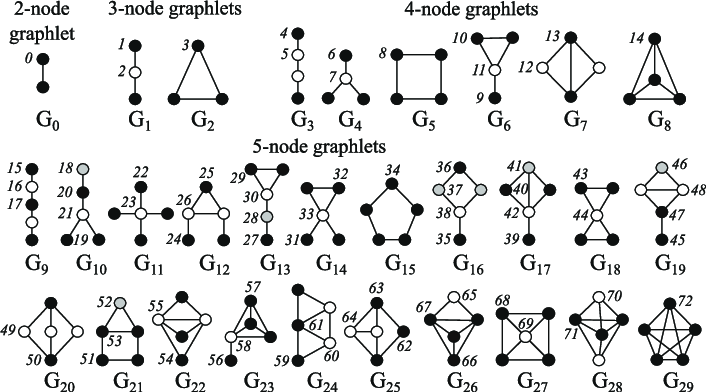
Before neural networks, engineered features were commonly used (e.g., centrality, degree, clustering coefficient, graphlets degree vector, etc). Nowadays, they are used for data augmentation and semi-supervised learning
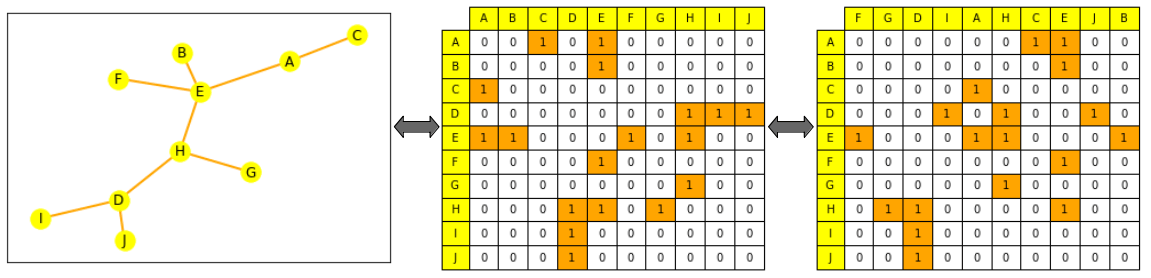
If you've taken a data structures class, you might know graphs can be represented differently with different pros and cons. Adjacency matrix and adjacency list are the most common representations.
Compared to other data structures used in ML, graphs are not trivial to split
Graphs are **everywhere**, from social media and knowledge systems to molecules and meshes! 🧑🏫
Want to learn about Machine Learning for Graphs? Check out this thread! 🧵
A team of researchers, led by Dr. Ryotaro Hashizume from Mie University in Japan, has achieved a significant breakthrough by using CRISPR-Cas9 gene editing to successfully eliminate the extra copy of chromosome 21—the genetic cause of Down syndrome (trisomy 21)—in human cells grown in the laboratory.
In this proof-of-concept study, the scientists developed an allele-specific approach that targets and cleaves the surplus chromosome while preserving the normal pair, restoring typical cellular functions such as gene expression patterns, proliferation rates, and antioxidant capacity in a substantial portion of the treated cells (with success rates reported up to around 30-37% in optimized conditions).
This marks the first time an entire extra chromosome has been precisely removed from human trisomy 21 cells, representing a major advancement in addressing the root genetic cause of the condition's associated cognitive and developmental effects, rather than targeting individual genes.
The work remains at an early, preclinical stage, conducted solely in lab-based cell lines (including induced pluripotent stem cells and fibroblasts), and is not yet applicable to living patients. Translating this technique into safe, effective therapies for individuals with Down syndrome will require years of further research, refinement to minimize off-target effects, and thorough ethical discussions regarding potential applications.
Nonetheless, this innovative demonstration of chromosome-level editing opens promising avenues for future precision medicine approaches to chromosomal disorders.
[Hashizume, R., Wakita, S., Sawada, H., Takebayashi, S., Kitabatake, Y., Miyagawa, Y., Hirokawa, Y. S., Imai, H., & Kurahashi, H. (2025). Trisomic rescue via allele-specific multiple chromosome cleavage using CRISPR-Cas9 in trisomy 21 cells. PNAS Nexus, 4(2), pgaf022. DOI: 10.1093/pnasnexus/pgaf022]
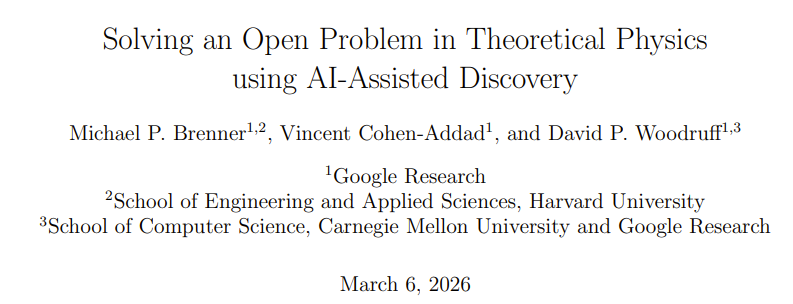
Google just solved a theoretical physics problem using Gemini!
Google, Harvard, and CMU built a neuro-symbolic system using the Gemini Deep Think model and a tree-search framework to autonomously discover complex mathematical proofs.
The agent functions like a digital scientist, testing different analytical paths and using numerical feedback to refine its logic until it finds a perfect solution.
This approach successfully solved a major open problem regarding gravitational radiation from cosmic strings, outperforming previous AI attempts by delivering full analytical solutions where others only found partial approximations.
At the University of Minnesota, a human heart beats outside the body, without a pacemaker, connected to machines that keep it oxygenated. It has its own internal electrical system. It’s not a simulation: it’s a real organ beating outside the chest.
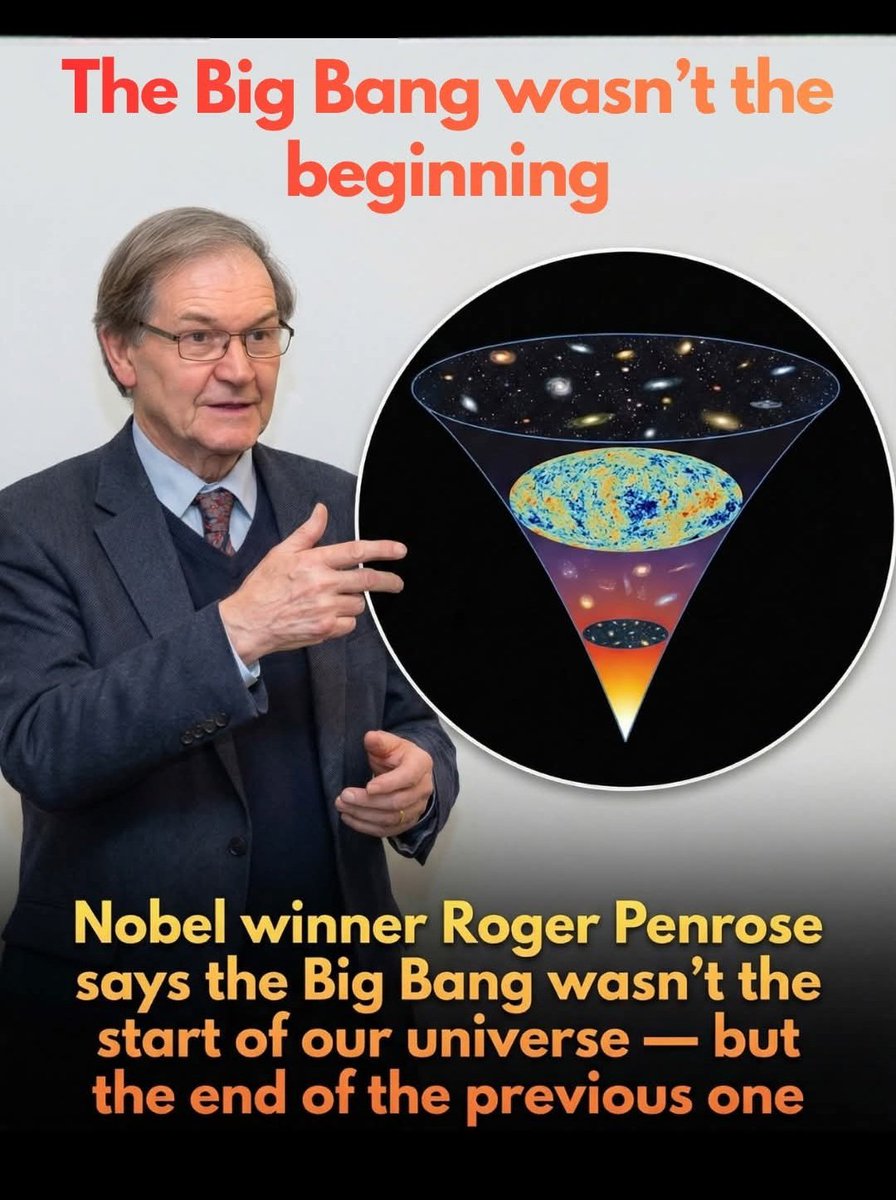
🚨 Nobel laureate Roger Penrose says the Big Bang wasn’t the start of our universe.
Sir Roger Penrose's Conformal Cyclic Cosmology (CCC) states that the Big Bang not as a singular beginning, but as a transition point between infinite, successive universes called eons.
This theory seeks to solve one of physics' greatest puzzles: why our early universe began in such an incredibly ordered, low-entropy state.
Penrose argues that as a universe expands into a cold, empty void where all matter and black holes have eventually decayed, the lack of mass causes the conventional flow of time to effectively cease. This vast, empty future then conformally transforms, mapping its structure onto the hot, dense starting point of a new expanding eon.
The most provocative aspect of this model is the search for physical evidence from a time before our universe existed. Penrose suggests that massive black hole evaporations from previous eons leave behind "Hawking Points"—detectable circular signatures in the Cosmic Microwave Background that persist through the cosmic transition. While mainstream cosmology remains in deep debate over these findings, the CCC model offers a radical departure from the idea of a universe emerging from nothing. Instead, it provides a mathematical vision of a cosmos that is truly eternal, endlessly renewing itself through a sequence of infinite cycles.
Source: Penrose, R. (2010). Cycles of Time: An Extraordinary New View of the Universe. Bodley Head.
"Elon Musk is working on the most important areas of A.I. xAI is working on foundation cognitive intelligence A.I., Tesla is working on autonomous vehicles. Optimus is for humanoid robotics. He is very optimistic about the future of A.I."




![Rainmaker1973's tweet photo. A team of researchers, led by Dr. Ryotaro Hashizume from Mie University in Japan, has achieved a significant breakthrough by using CRISPR-Cas9 gene editing to successfully eliminate the extra copy of chromosome 21—the genetic cause of Down syndrome (trisomy 21)—in human cells grown in the laboratory.
In this proof-of-concept study, the scientists developed an allele-specific approach that targets and cleaves the surplus chromosome while preserving the normal pair, restoring typical cellular functions such as gene expression patterns, proliferation rates, and antioxidant capacity in a substantial portion of the treated cells (with success rates reported up to around 30-37% in optimized conditions).
This marks the first time an entire extra chromosome has been precisely removed from human trisomy 21 cells, representing a major advancement in addressing the root genetic cause of the condition's associated cognitive and developmental effects, rather than targeting individual genes.
The work remains at an early, preclinical stage, conducted solely in lab-based cell lines (including induced pluripotent stem cells and fibroblasts), and is not yet applicable to living patients. Translating this technique into safe, effective therapies for individuals with Down syndrome will require years of further research, refinement to minimize off-target effects, and thorough ethical discussions regarding potential applications.
Nonetheless, this innovative demonstration of chromosome-level editing opens promising avenues for future precision medicine approaches to chromosomal disorders.
[Hashizume, R., Wakita, S., Sawada, H., Takebayashi, S., Kitabatake, Y., Miyagawa, Y., Hirokawa, Y. S., Imai, H., & Kurahashi, H. (2025). Trisomic rescue via allele-specific multiple chromosome cleavage using CRISPR-Cas9 in trisomy 21 cells. PNAS Nexus, 4(2), pgaf022. DOI: 10.1093/pnasnexus/pgaf022]](https://pbs.twimg.com/media/HDxx9VMW8AAESA1.png)