Turn Claude into the best creative agent in the world!
Our users generate over 1 billion images and videos every year.
Now Claude can too.
RT and comment "Pixa" for free access!
Turn Claude into the best creative agent in the world!
Our users generate over 1 billion images and videos every year.
Now Claude can too.
RT and comment "Pixa" for free access!
Some thoughts on destruction of oil and gas infrastructure in the Gulf.
It is not exactly a new insight that modern economies operate on oil. Oil access, synthesis, and interdiction was a major theater of WW2. 100 years ago oil-poor nations spent heavily and participated in terrible wars over oil. See, for example, the Combined Bombing Offensive, Operation Tidal Wave, and the destruction of the Leuna synthetic fuel plants, not to mention the effectiveness of the submarine war in the waters around Japan.
In 2022, energy producer Russia invaded Ukraine, instantly throwing into stark relief the idiocy of European energy policy, where an unholy alliance of heavily regulated energy contractors and astroturfed "green" activists managed to get Germany to shut down their nuclear industry. Even as solar panel production, largely initially developed and funded in the West, grew to overwhelming proportions, Europe insisted on sending roughly $1b *per day* to Russia for access to their oil and gas.
If Europe had adjusted course in early 2022, then they would be able to support their power grids and probably some synthetic fuel production by now. The US built nuclear weapons from scratch in 2.5 years in the 1940s in competition with other national priorities at the same time. It's been more than four years since Ukraine's invasion.
But no, they did sweet fuck all about ensuring energy sovereignty. Indeed, they even went in the other direction. Britain concentrated government resources on cracking down on free speech and stopped drilling for oil. The continent continued their ill-informed blanket ban on fracking, and working age people continued to pay the price, in the form of ever higher costs, ever higher taxes, ever poorer public services, ever dropping fertility.
What about the rest of the oil importing developed world? France and Japan maintained their nuclear industry, their navies, their shipping industries and the fungibility of their supply - to an extent - even as they continued to actively burn up their economies in other more insidious ways.
New Zealand shut down their last refinery. Australia exports a lot of crude and gas but mostly lacks the ability to close their supply chain in their own borders, and fuel prices have almost doubled. California continued to ban new drilling and continues to wage open regulatory warfare against their oil refineries, perversely increasing oil-related air pollution in the state from foreign oil tanker imports and pushing gasoline prices ever higher.
More of the world has attempted to switch to natural gas supply, with investments exceeding $1t on gas import and export terminals, as though it's some fundamental law of nature that hydrocarbons must cross an ocean before they're used. As though the US fracking boom will last forever, or Asian demand growth won't see European prices continue to increase, further crushing their economic dynamism.
I have been in the room with various Asian and European energy ministers and have asked them point blank: What's your plan? I have never gotten a better answer than a shrug, as though they'll muddle through and soon it'll be someone else's problem.
The best time to get serious about domestic energy supply chains was four years ago. The second best time is today. The pain will ease just as soon as you say the magic words: I must increase my own energy supply!
And yes, it is totally possible to produce synthetic oil and gas pretty much anywhere that people live with a solar-based process we've spent four years developing at @TerraformIndies, it is future proof, it is strategically robust, it is price-linked to solar manufacturing cost, which continues to fall like a rock. It's not entirely trivial to do but, given that Europe spends about 100,000x more on Russian oil and gas imports than they do on (privately funded) synthetic fuel development, I am on safe ground when I accuse Europe's leaders of committing gross capital misallocation. Imagine what the synthetic fuel industry could achieve with $1b/day!
If you are an energy minister, now is a good time to reflect on fates worse than losing an election. Get back to work!
Why are warm countries poorer?
Heat is an underdiscussed factor
Colonization an overweighed one
But there's one factor nobody's ever mentioned: mountains
https://t.co/QLBtm7vzye
No one collects data like @Aella_Girl and now we can explore her survey results in a fully interactive UI created by @austeane ! Give it a try and see how you compare.
Explore connections between kinks, build and compare demographic profiles, and ask your AI agent about the data using our MCP:
I've built a fully interactive explorer on top of Aella's dataset!
It just seems implausible this is what we are made of, essentially, nanotechnology about a billion years beyond anything we can design or make ourselves.
@Falliblemusings It's not pessimistic at all to accept that our collective fantasies are just that. It opens the door to using those fantasies to build the kind of reality you want. The collective imagination makes them real enough for all practical purposes.
@mhartl@slatestarcodex@jeremykauffman The kid could have used bargaining or humor, maybe? Say, "I'll pick it up if you agree to take a bite from it - but I'm gonna pick it up with my foot." Parents are often better at thinking of these options and turning showdowns into games though.
@jackclarkSF Nothing I do with AI works. Except some images, and basic conversations. I do try but I'm not a programmer and I've struggled to get it to do even basic tasks at work. I must be living in some between state, where I'm aware of the capability but unable to harness it.
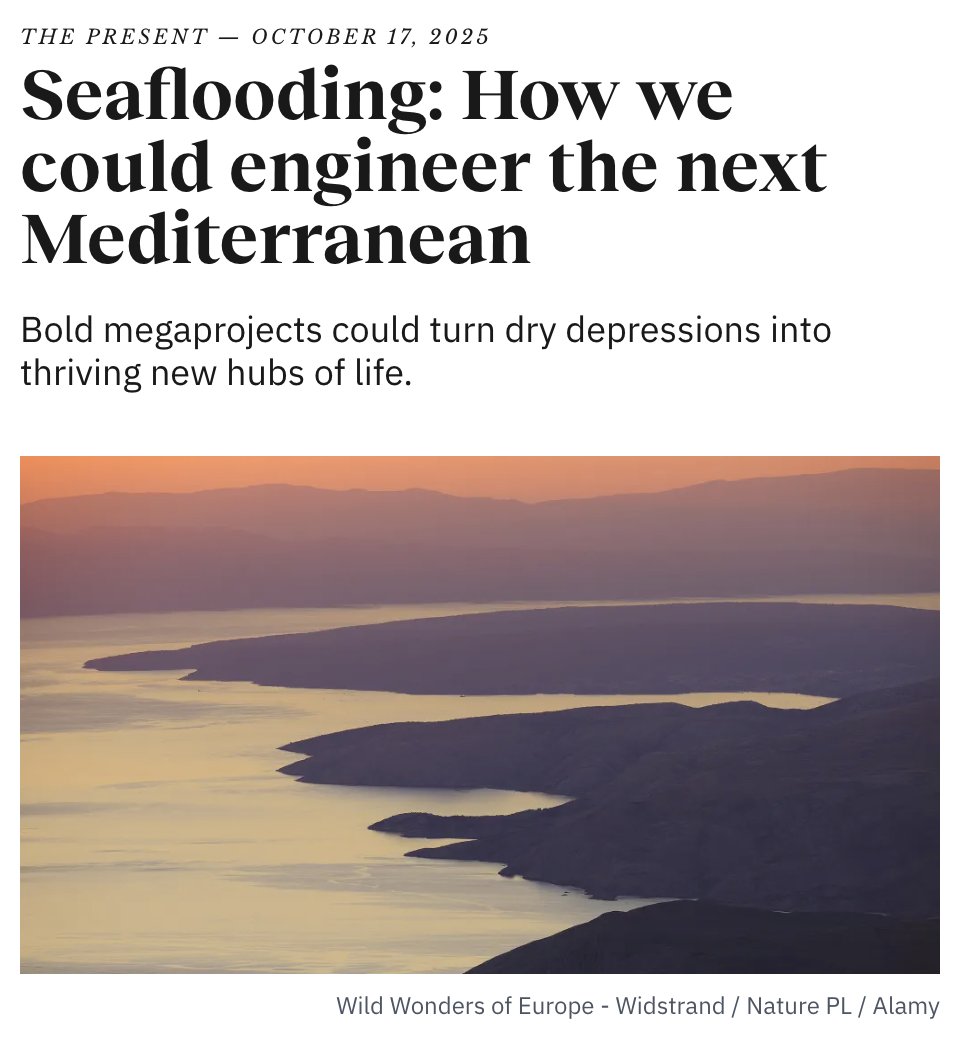
What if we could engineer the next Meditarranean Sea?
According to Tomas Pueyo, we already have the engineering tools to intentionally flood inland depressions. The challenge is choosing where, when, and how to act responsibly.
Read the full article here: https://t.co/IEggGIzBXa
@TomasPueyo
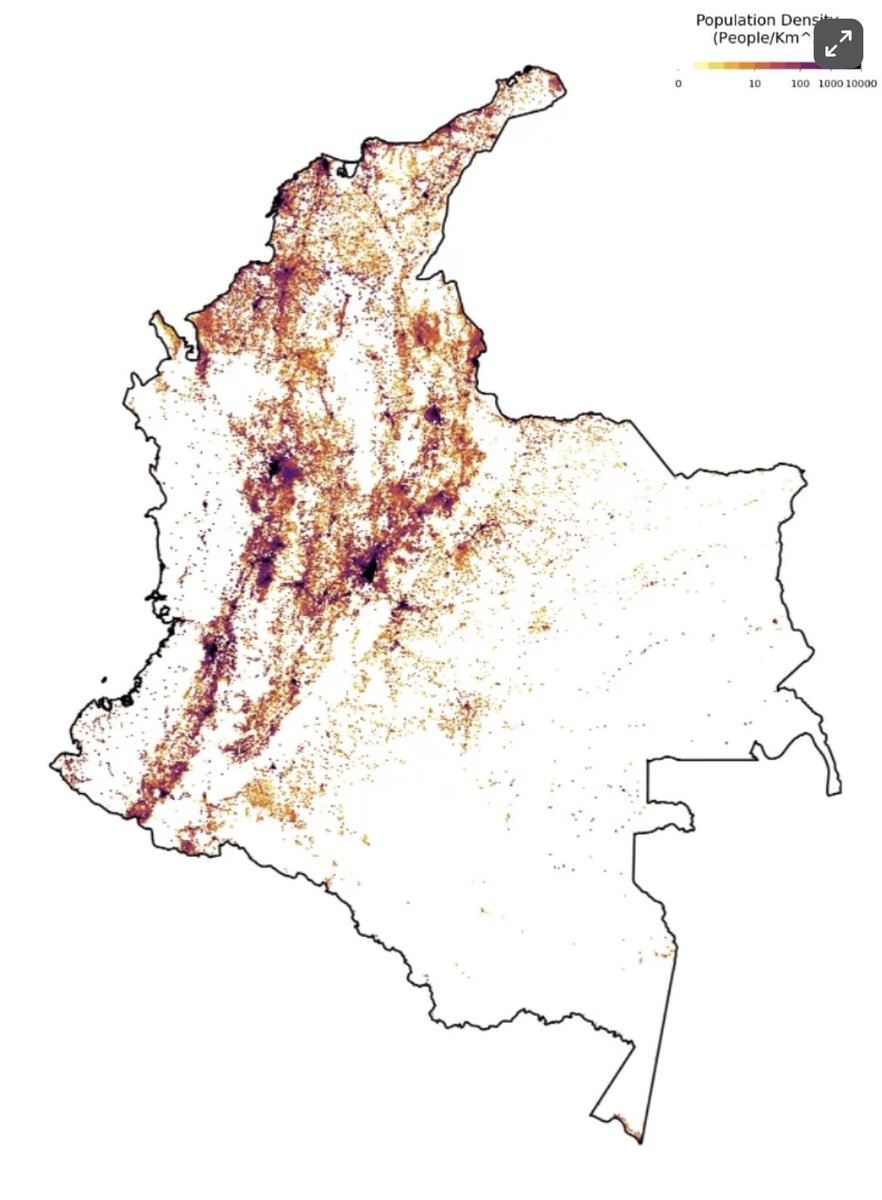
.@tomaspueyo makes a compelling argument that warmer countries are poorer because the heat makes people move to the mountains where higher transportation costs lead to less trade (and other issues).
This sounds very right. It struck me when I was in Colombia a couple weeks ago that technology like flying cars (and airships) will have a disproportionately positive impact on the country. A highway they're building from Medellin to coastal ports through the mountains via tunnel is going to cut the trip's time from ~14 hours to ~4 hours and will reshape trade patterns. What happens when you can just go right over them?