I left India after my Masters.
I have been in Germany since, and people here don’t really know of, or at least in 2016 didn’t know of, any of the Indian undergrad colleges. NIT, IIT, Goa University: here it is all the same.
Also, when I came here, there were not many Indians, and at some point my undergrad became a blur. I slowly lost contact with my batchmates as well because they moved to the US, while I was the only one to come to Europe.
In addition, I had switched from engineering to pure science, and most other Indian PhDs I met were from state universities (DU), IISERs, etc., and not from the typical Tier-1 engineering colleges.
I had almost forgotten that the JEE was a big deal.
And for most of the last 10 years, what mattered was the stature of your grad school, invited talks, which conferences you spoke at, publications, etc. I had gotten used to completely different status metrics.
I visited India (specifically Bangalore) in a professional context recently, and I was pretty surprised to find that people still bring up their JEE rank or subtly try to figure out which college you went to.
I find this somewhat surprising. It is very impressive indeed to get a solid JEE rank.
And I am not judging here: to get ahead in this world, you have to highlight that you are special in some way. I do it as well because, well, it is your job to tell the world why you deserve a shot.
But I am genuinely curious: why are we fixated so much on an exam taken during adolescence?
I don’t see why it should not matter, say in the first five years of your career.
But why are 40-year-olds bringing up the JEE?
And these are very impressive 40-year-olds even without the JEE, so it is definitely not some insecurity thing.
I wonder if it is the regret of a missed childhood that still haunts them.
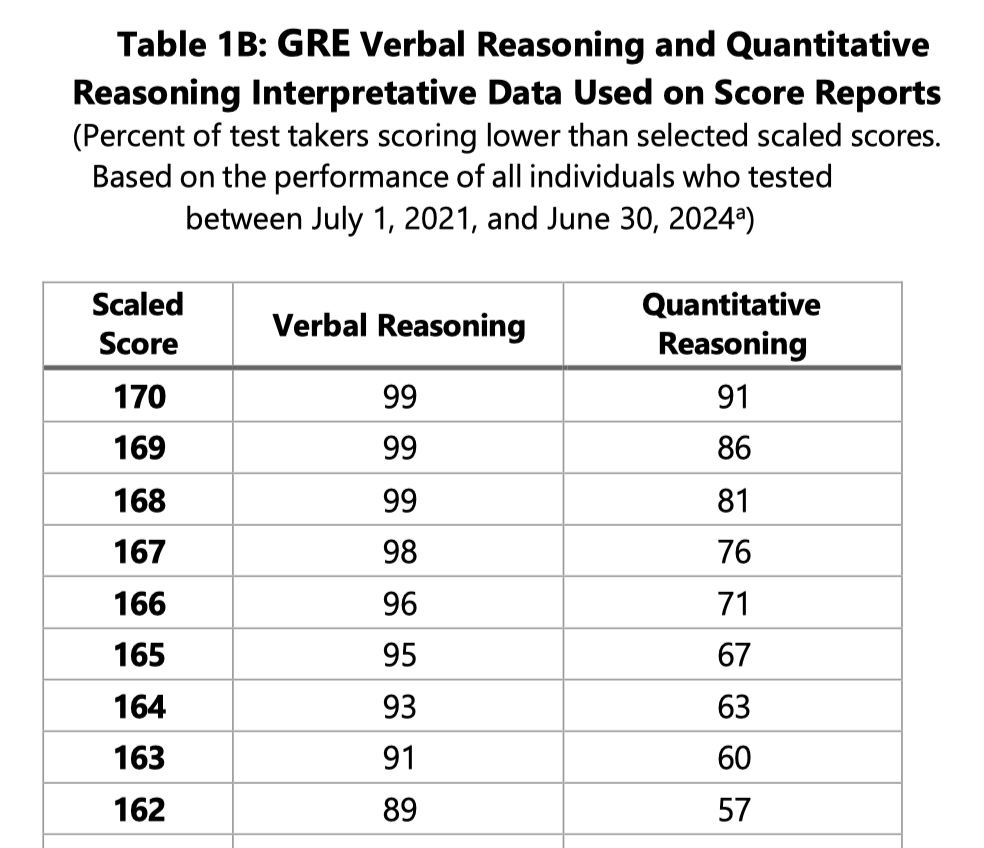
If you get 100% on the Math GRE, you're at the 91st percentile.
The test measures grind and attention, not capability. It tests whether you can go 2 hours with no slipups.
It's interesting that grad programs don't want to know the full ability distribution of their applicants.
What's the point of toughness of the exam when the ultimate objective of both the institutions remains unfulfilled?
IITs haven't brought us technological independence
UPSC hasn't given us good governance delivery
This is such an irresponsible clickbait post on Instagram by Economic Times knowing fully well that no one will go to their LINK IN BIO and read the full article.
The article says the reasons for hip disorders (avascular necrosis) are 'misuse of anabolic steroids' and 'unregulated supplements found to be tainted with banned performance-enhancing steroids' The clickbait post says 'Protein powders AND steroids' not 'protein powders WITH steroids' adding to the existing fear of having whey protein or plant protein powders.
Whey protein does not cause Avascular Necrosis of the femoral head (hip disorder) as it does not interfere with blood supply to bones or cause bone tissue death.
It is ONLY the counterfeit varieties with banned substances or steroids that pose this risk.
So if you are having a trusted source of whey or plant protein, please do not worry.
🚨New paper alert🚨
My paper with @marcelortizv on "Better Understanding Triple Differences Estimators" is finally out.
📰 https://t.co/3eJRn7m5JU
Main msg: Nuances in DDD designs challenge the practice of generally viewing DDD as the diff btw two DiDs. We can do better!
1/
OK, I think ChatGPT 4o just changed grant proposal writing forever.
Our problem, because of a tech and email mistake, we received notice that a huge proposal was due with less than a week notice, on a week when most of my Colombia team is on Easter holiday. 🧵
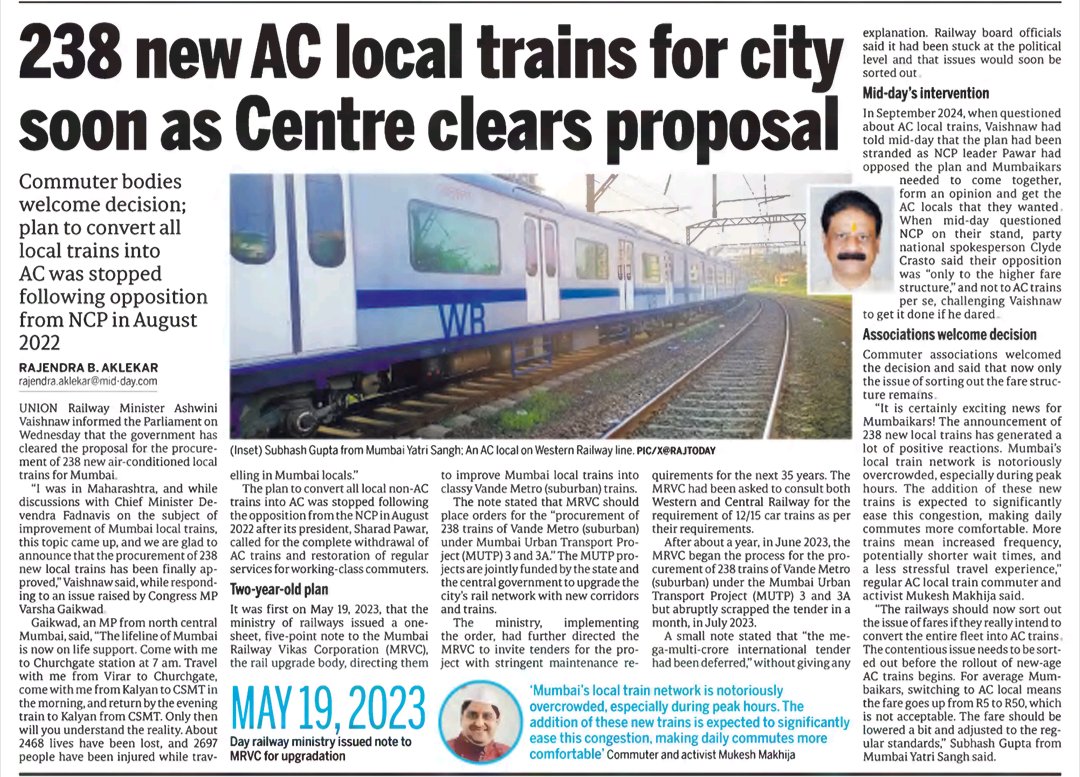
Finally Mumbal local trains will be converted to AC. About time. Money was never the problem; this should have happened years ago but every upgrade in India is stalled by someone who will argue that it will adversely impact the poor. Remember when mobile telephony was introduced, same type of people said that we should first fix land-lines, that it would create a "digital divide" and so on. Who will benefit most from local trains being better? The middle class & the poor. The billionaires are cruising in their luxury cars anyway.
If you read the piece you will discover that I call this a theory propounded by Indian bureaucrats. And I say this is garbage. Democracy is our biggest strength.
Give me sustainable Public Transport with good crowd management, no paan peek smell, air conditioning, no auto mafia, well-equipped with Digital India promises, and walkable footpaths, and then ban petrol and diesel cars within 5 years if you want to; I won’t mind.
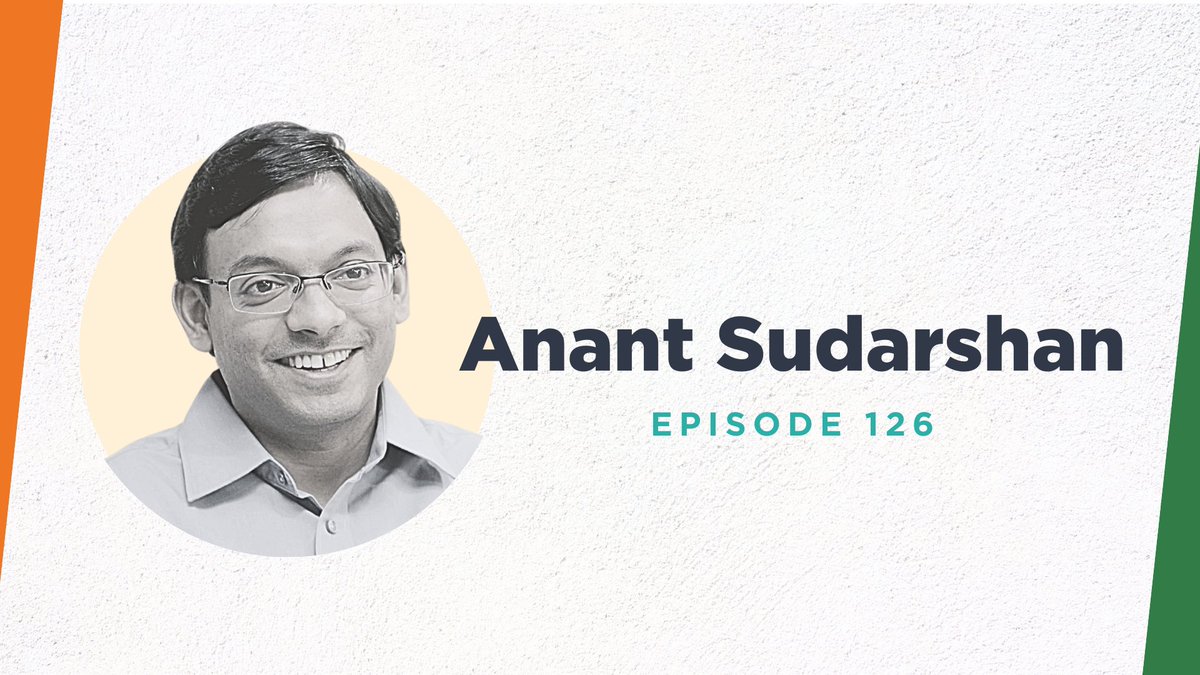
In the latest episode of @IdeasofIndia@mercatus I speak with @anantsudarshan@warwickecon about air pollution, crop burning, cap and trade pollution markets, subsidized electricity and groundwater depletion, keystone species collapse, and much more.
The latest version of Compendium of Datasets and Registries in India 2024 has been released by MoSPI with listing of 257 datasets from 40 Ministries/ Departments of Govt of India.
The Compendium is a directory of data resources of Central Ministries and Departments, presenting a single reference encompassing metadata and other details on various datasets.
Access the Compendium at: https://t.co/6A6t3JrUnW
#InnovationInGovernance #DigitalIndia #DataGovernance #DigitalTransformation #MoSPI
@Rao_InderjitS@_saurabhgarg@PMOIndia@NITIAayog@PIB_India@PibMospi@mygovindia
@adityajakki If anything, India needs an All India Municipal Service with an expedited and shortened entry/application process. Need city bureaucrats that implement best practices. And these would be temp appointments with retainment only guaranteed if the officer meets certain growth metrics
India's key urban problems are:
- Pollution is an epidemic
- Housing is unreasonably expensive
- Public transport is mostly unusable
- Urban "planning" is a joke
Solving these is India's biggest unlock, and today our biggest chain