marginal difference in lifestyle of a life in a metro (blr,bom, del) and a life in a tier1.5-2 ( ex surat, indore, cochin) is at an all time low
a real choice of life in blr over idr is in imo an irrational choice
what else justifies that choice? love, fear..
Most founders believe product-market fit is a question about the product.
It isn't.
It is a question about the customer's priority list - an ranking they carry around in their head, mostly unconsciously, of the things currently bothering them enough to act on. Your product is not competing with other products in your category. It is competing with whatever is ranked number one through six on that list.
If your problem is ranked seventh, you do not have PMF. You have an interesting thing the customer will talk about in a focus group and never pay for.
The test is not whether the problem exists. Almost every imagined problem exists, in some diluted form, somewhere. The test is whether the person has already done something about it. Have they Googled it at midnight? Have they taken a class? Bought a course? Paid for an inferior solution? Complained about it to three friends this month? If the answer is no, the problem is not top-of-mind. It is merely real.
Real problems are cheap. Top-of-mind problems are the only kind anyone will pay to solve.
This is why so many launches fail despite excellent research, brilliant design, and accurate diagnosis of a genuine gap in the market. The gap was real. The gap was not urgent. The customer nodded along in every interview and then, back at their life, continued to ignore it.
The best founders don't test whether their product is good.
They test whether the problem is ranked high enough for anyone to change a behaviour over it.
@aakashgupta Wow, compare this to morning chai in many Indian households today. L-theanine blunts cortisol spikes for calm focus. Ginger boosts serotonin, inhibits MAO-A & raises BDNF. Milk/sugar aid insulin for tryptophan delivery.
People chasing this western habit makes no sense.
@velocitycake@akm1410 I have been calling my friends asking them if they will split share a TMC subscription with me given how honest the reporting is. 30 out of 30 have declined so far. I plan to reach out to atleast 50 others who have not subscribed yet.
@elegantlywasted Most are just awed that an Indian guy got access to 2-2.5 hrs of the richest man in the world..
however easy/though that may be in reality
Never really understood what "India by Indigo" actually means for me as passenger. Feels like a corporate-speak marketing campaign that doesn't translate into a clear, material meaning for anyone.
So much affordance given in flights to something so vague.
@IndiGo6E
High agency is often mistaken for speed. People assume it belongs to the ones who decide quickly and move without hesitation.
That version looks impressive, but it is not what actually drives results. The real marker of high agency is quieter. It appears the moment someone stops protecting their assumptions and puts them in contact with something that can push back.
Most people hesitate because they operate too far from the facts that matter. They think through scenarios, build arguments, weigh options, and wait for a feeling of certainty. They want clarity before they act. They want proof without the discomfort of exposing their thinking. They want to be right before the world has a chance to disagree.
High-agency people do something different. They shorten the time between an idea and its first collision with the real world. They build the smallest version that can reveal a truth. They ask the customer before polishing the story. They test behavior before optimizing the process. They trade speculation for evidence, not because they enjoy being wrong, but because every collision with reality sharpens their understanding of what actually works.
That shift changes their relationship with learning. Mistakes are not signs of incompetence. They are the natural cost of moving forward. The most valuable insights rarely come from perfect planning. They come from constraints, surprising reactions, unexpected metric shifts, and outcomes no one predicted.
This behavior compounds. Every early interaction with reality creates a faster cycle of adjustment. Every adjustment increases clarity. Over time, decisions feel fast because dozens of small signals have already done the work. To an outsider it looks like intuition. In practice, it is earned through repeated exposure to the world.
High agency is trained. It builds through the choices you make when uncertainty shows up. It strengthens every time you expose your thinking to something that can reshape it.
Speed shows up because the environment favors teams that gather evidence quickly and adjust without ceremony. Their focus is on contact with reality. They waste less time debating ideas that have not been tested. They look for the next piece of information that moves the work forward.
Founders who operate this way avoid the trap of endless planning. Product managers avoid the trap of presenting polished ideas that have never touched a user’s world. Engineers avoid the trap of optimizing solutions before validating the problem. Teams shaped by this habit reduce the distance between ideas and truth.
You take an idea, remove the parts that do not matter, and place the remaining piece somewhere it can be disproven. You let the result inform the next version. You let the world reveal the gap between what you believe and what is true.
The discomfort never disappears. It becomes familiar. You learn to recognize the moment when you are delaying the collision because the idea feels fragile. That moment is the signal. High-agency people move toward it. Everyone else moves away.
If you want to raise the agency level of a team, focus on faster confrontations with reality. Encourage smaller tests. Encourage questions that can be answered in days instead of weeks. Encourage conversations with customers before the work becomes precious. Encourage an environment where truth carries more weight than confidence.
You become high agency by removing the distance between what you believe and what the world is willing to teach you.
Yesterday, Rapido's co-founder shared why their driver’s support team kept getting flooded with calls.
"My incentive isn't showing up."
Drivers were clicking the insurance button. The problem? Both words start with "in." and it triggered a confusion. Over time Rapido built a color UI philosophy borrowed from traffic signals. Green = good. Orange = warning. Red = bad.
Indians don't read UIs. They scan them.
--------------
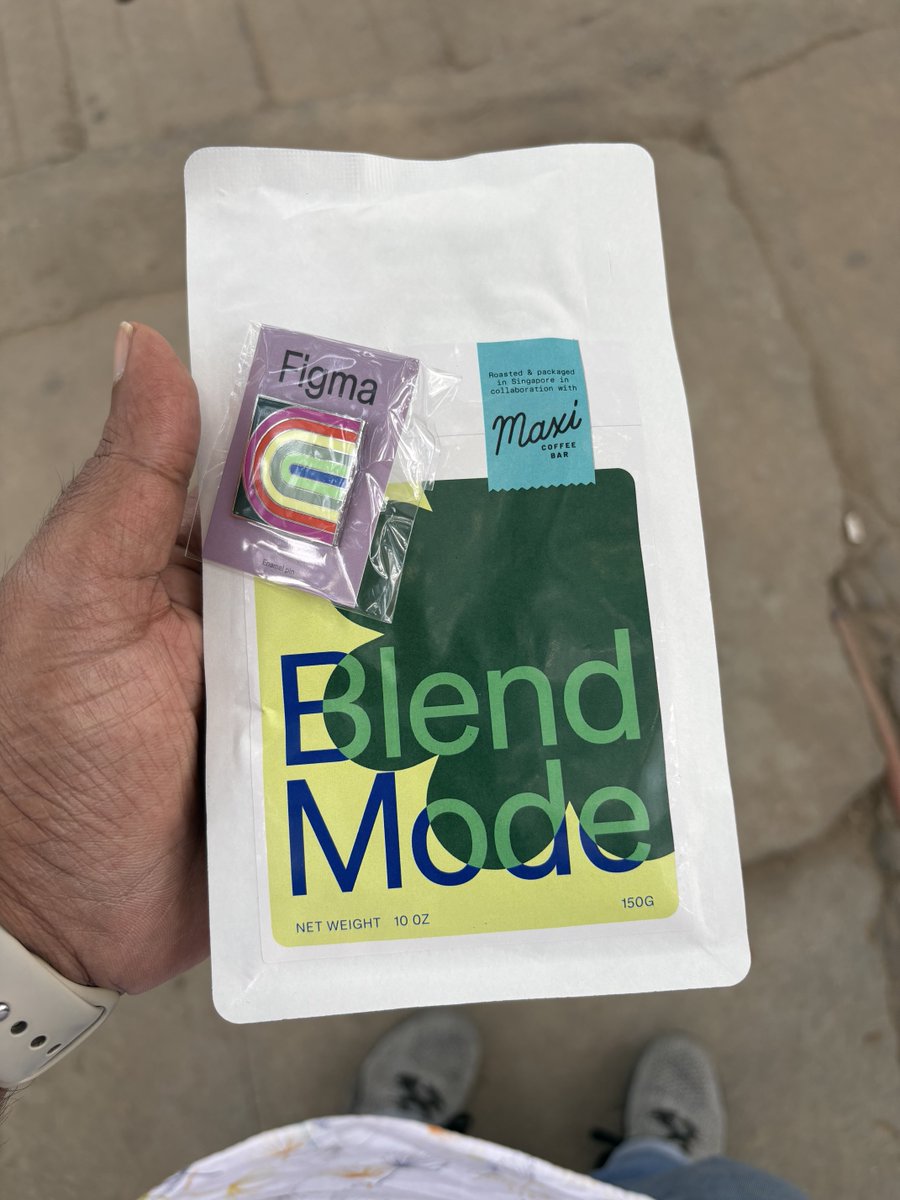
I was at a closed-door founder breakfast hosted by @figma in Bangalore. Panel: Prashant Sanchan (Apps for Bharat) and Rishikesh SR (Rapido).
Context on scale: Rapido does 50 lakh rides/day. Sri Mandir processed 6 lakh chadavas and 1 lakh poojas last month. 25% of Sri Mandir's demand comes from outside India.
Some interesting insights from the discussion:
// AI shrinking feedback loops: //
Rapido's feedback loop used to take 3 months: identify problem → build solution → release. Its now done it 1/5th of that time. Their recent OTA integration (flight bookings) was built in 8 days + 1 week for beta testing.
Apps for Bharat prioritizes AI for process problems, not service delivery. Sri Mandir's chadava feature requires devotees to enter names and gotras. Users typed with spelling mistakes, mixed languages, improper spacing. AI now normalizes the data before sending it to temples.
// Best founders reframe problem statements: //
Every hyperlocal commute app battles cancellations.
Rapido asked a different question: "How do I reduce cancellations?" became "How do I build patience and reduce anxiety?"
The solution: Smart Switch. When a driver is assigned far away, the app tells you it's still searching for nearby drivers and will reassign if it finds someone closer.
--------------
Sometimes fixing psychology would solve the problem.
The companies that win in India don't just understand users. They understand how users think when they're not thinking.
Progress is easy to fake.
You stay busy. You launch things. You talk about traction. Everyone claps because motion looks like momentum. The team feels alive. The investors nod. But the market is silent.
Real progress feels different. It feels like doubt. It feels like rewriting what you thought was true. It feels like deleting work you were proud of yesterday. The real thing leaves a scar.
The illusion is cleaner. It rewards confidence. It fills calendars and slides and updates. You can build a whole company inside that illusion and never notice the ground stopped moving beneath you.
Failure starts the moment momentum becomes memory. When learning turns into storytelling. When speed becomes nostalgia. When everyone starts describing what worked instead of discovering what’s next.
Progress only happens when reality moves with you. When customers change what they do, not what they say. When a product earns a second use without a discount. When a system starts teaching itself what to fix.
The real work is noticing the difference.
Anyone can measure activity. Only a few can measure learning. The rest keep sprinting through fog, mistaking the noise for forward motion.
The illusion never feels wrong until it’s too late. It rewards the surface. It punishes reflection. It tells you to stay busy. It hides the only metric that matters.
How fast the company is getting smarter.