Markov chains are the algorithm of choice for sampling (e.g. independent sets in graphs, assignments to SAT formulas, continuous distributions, etc). But what happens when your Markov chain does not mix in polynomial time? Are the samples it gives still useful?
In recent work with Kuikui Liu, Prasad Raghavendra, Amit Rajaraman & David Wu (@dxwu_), we investigate this phenomenon in the context of recovering low-rank spikes in spiked matrix models.
https://t.co/h5NnA24MtY
Finding Independent sets is hard. Even if graph has a n/3 IS, we can only find a n^{0.75}-IS. So we study prob. (semirandom,..)/deterministic models (expanders,..).
New preprint (inspired again by a Feige paper) with Bafna & Hsieh revisits IS on expanders. Spoiler: plot thickens!
Excited to see if the ideas can lead to constructions of other interesting pseudorandom objects (two-sided lossless expanders? explicit instances for hard problems? Euclidean sections?)
Exciting paper by Louis Golowich, an awesome first-year at Berkeley!
https://t.co/wy1ck44CK2
A super-simple construction and analysis of explicit (one-sided) lossless expanders, i.e., graphs with vertex expansion as good as random graphs.
Capalbo, Reingold, Vadhan, Wigderson explicitly constructed bipartite graphs with any desired "aspect ratio" where every set on the left losslessly expands to the right in 2001.
LouisG's recent paper studies a construction that is a lot simpler to analyze!
It's done. https://t.co/aq7HcvBGsh
P.S. I'm quite proud of the (very topical) chapter epigraphs. Check them out if you're a TCS researcher, or a Swiftie.
The real key to this sets success is Court Change. The ability to swap or get rid of entry hazards in this metagame is important because of one Pokemon, Gholdengo. Gholdengo’s good as gold ability blocks Defog so most hazards that are set up usually stay up. Being a ghost type it
Wait, what? quantum LDPC codes achieving the singleton bound! *Very* cool result by Thiago Bergamaschi, Louis Golowich, Sam Gunn.
https://t.co/itaikkhioY
Today @Stanford & tomorrow @UTAustin I talk of the Kikuchi matrix method (once a trick but twice makes a method :)) for extremal girth theorems on hypergraphs & apps:
Algos for smoothed SAT as good as random
Settling Feige's conj on hypergraph Moore bnd
Cubic LB on 3-query LDCs
📢 Next Wednesday (12/10) at 10am PT, Venkatesan Guruswami from @UCBerkeley will tell us about "A near-cubic lower bound for 3-query locally decodable codes."
More at https://t.co/ypmo51237K
Register (optional) at https://t.co/7vbsczIpP2 for link+reminder
Scoop: Stanford biology professor Hunter Fraser was arrested and charged with domestic violence.
Fraser allegedly threw a woman on the ground and later slammed a door into her, court records show. Fraser pleaded not guilty. @StanfordDaily
https://t.co/W2cRZ8IIYu
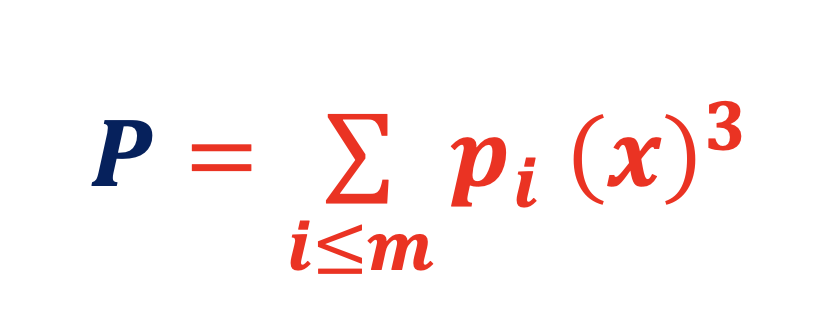
This thread is an invitation to our algo to decompose a polynomial into power-sum with connects to tensor decomps, learning Gaussian mixtures & circuit LBs w. Tim Hsieh & Jeff Xu (@SCSatCMU) & newly minted @harvard PhD (& now CMU postdoc) Mitali Bafna!
https://t.co/PTNvmoK94A
In case you aren't at CCC like me, you mustn't miss @sidzekrom's talk on a really cool paper with two of my amazing @CSDatCMU students Tim Hsieh & Jeff Xu (on a work, I am proud, began in one of "group lunches" during covid).
https://t.co/3NM0fNXcJb