BREAKING: Yemen’s Houthis have struck Saudi Arabia’s Shuqaiq Power Complex in Jizan with ballistic missiles, claiming “direct and precise hits” that caused extensive damage to the 3 GW facility, which also powers a nearby water desalination plant, as reports emerge of power outages in Jizan City, per Houthi military spokesman Yahya Saree and SABA.
The Houthis said the attack was retaliation for Saudi-led coalition strikes on power stations in Saada and Mocha, and an earlier strike on a berth at Hodeidah port. The group warned that any further attacks on Yemeni ports or power facilities would trigger “immediate retaliation” against similar Saudi infrastructure.
BREAKING: US and Israel prepare for new major joint offensive against Iran within the next 2 to 4 days, as soon as the order is given, after all assets needed are now in place, US officials tell CBS News.
The urgent timeframe is driven by Netanyahu's concern that Iran is now rapidly rebuilding its ballistic missile program and moving military and nuclear infrastructure underground, while he risks losing his premiership within weeks, officials say.
Trump will remain at the White House for this entire weekend with no public events, and everything marked closed press.
"I'm going to finish it off," Trump said.
@tolometor@JavierBlas The situation isn’t static - blockade will be tested by next week. Comments are about the chessboard and what will happen next. Not worthwhile to debate you. Godspeed
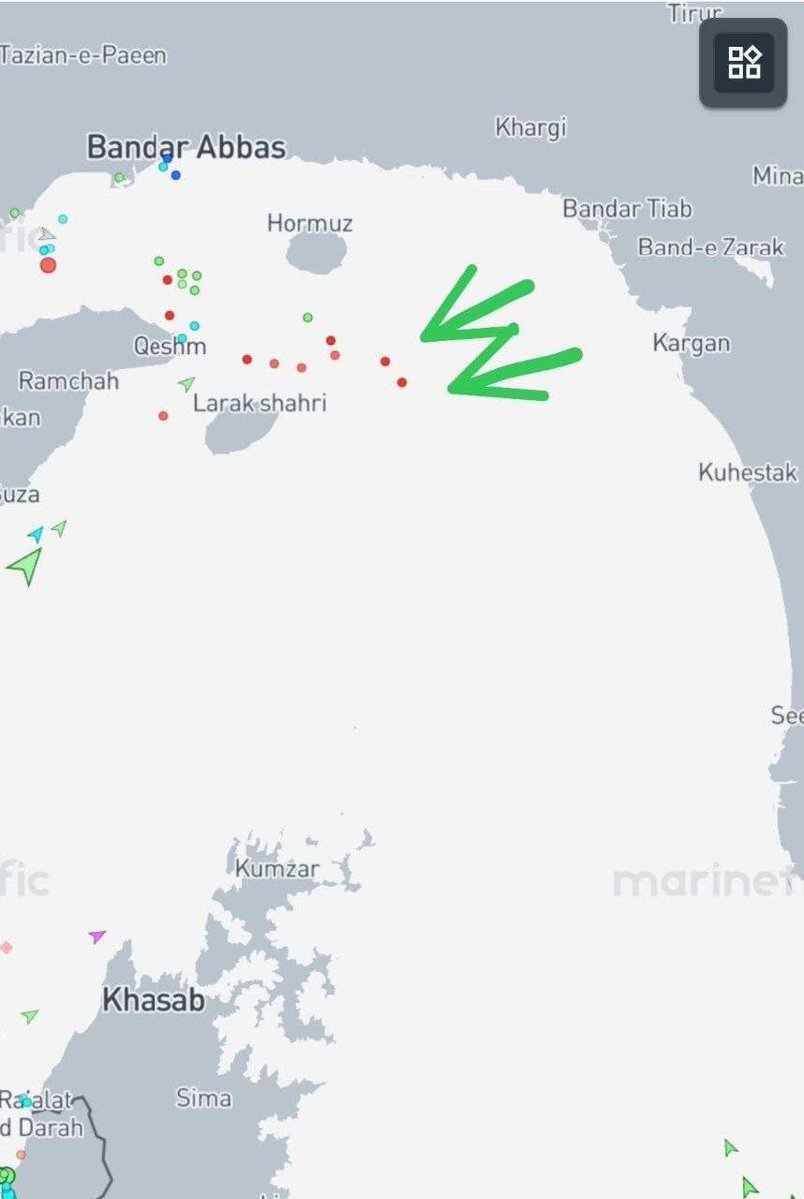
In just a few hours, this ship will approach the Hormuz Strait.
Trump stated yesterday that China and the United States had a mutual interest in the Strait of Hormuz remaining open.
Following the meeting yesterday, Iran immediately started loading a dozen oil tankers to send through the Strait.
CENTCOM has yet to make a statement on the matter even though Iran threatened the entire region if these ships are fired upon.
The question remains, did Trump cut a deal to allow China to buy this Iranian oil in return for renewed negotiations with Iran, or is all hell about to break loose in the Middle East?
Trump is scheduled to address the nation in a few hours with a huge announcement.
You completely misjudge the situation. Iran can withstand massive bombing campaigns. Did you not watch what happened in Feb-May?
There is a reason Trump had to sign a hastily put together surrender at Versailles - hint: we lost.
Escalating more only strengthens their hand. Yes it will damage a lot of infrastructure- they have already had tons of damage and more will not move the needle. China and Russia back them. It’s in China’s interest - Iran’s main crude buyer - to hurt the US or bog it down in an expensive war. They win without ever firing a shot.
Sun Tsu said:
“know yourself and know your enemy”
MBS has massively misjudged his own force and who he is dealing with.
He is scrambling to find a footing and believes that making a big statement will show he is strong. It will not.
The Houthis will absolutely obliterate Yanbu, the East - West pipeline, and other key infrastructure.
Hodeidah port and Sanaa were hit in a coalition operation at dawn.
Coalition: 7 Houthi military targets destroyed, including a main supply depot in Sanaa and 6 workshops assembling drones and ballistic missile launcher structures.
Yemen's Information Minister: Facilities used to move smuggled weapons at Hodeidah port were among the targets.
Al Hadath
My first appearance on @KitcoNewsNOW comes amidst a sell-off on gold and other precious metals.
@JeremySzafron asked me where I stand on gold at the moment and whilst I said I was cautious, it's not because of gold itself, but because of the wider liquidity squeeze that is emerging.
Gold is a hedge against a longer-term solvency crisis, not an immediate liquidity squeeze. When dollars become scarce, investors sell what they can to raise cash, and gold happens to be one of the easiest assets to liquidate.
Remember what I said on @business last week about the two boogeymen of commodities - scarcity and debasement: Scarcity is the fear of running out of the commodity. Debasement is the fear of running out of money.
Pair that with the issuance of debt from costly data centre build-outs, issues with NASDAQ and the equity sell-off, a looming interest rate hike, and you've got a huge demand for dollars at a time when supply is decreasing. It has created the perfect storm to release gold, copper and other hard assets to raise cash.
So, where gold is currently susceptible to dollar liquidity, oil is a different story, and it all comes down to economics of storing inventories.
With industrial metals, storage is relatively cheap. You need a physical location, a chain-link fence and a guard dog. You can stack inventories to the moon if you wanted to - the point is, it much easier to build up stocks and liquidate them when you need to raise cash.
The same doesn't apply to oil: storing large volumes of oil requires expensive infrastructure and carrying costs. You can't store quantities of oil as you would gold on anywhere near the same scale.
The bottom line: Dollar liquidity pressures can drive selling across the market, but oil is far less exposed to liquidity dynamics - and crucially, those dynamics do not make the physical cost of delivering said oil any cheaper.
My interview in full will be release shortly, so stay tuned for that - a great discussion with Jeremy, thank you for having me on.
@DarioCpx OpenAI will be absorbed by Microsoft - scuttled into a shell company to offload toxic compute / GPU contracts - and will keep the talent / IP.
My guess by 2H of 27. No IPO possible next year. That’s the only real exit.
@BrettErickson28 Houthis are not to be trifled with - MBS is gonna end up giving them 50% of Armaco.
Hate to see the war and impact on ordinary citizens but karma is a bitch for MBS. He’s a dirtbag
Here’s a thought on the timing of Iran’s latest escalation.
Why now? The US blockade has been hurting Tehran for months. So what’s changed?
My suspicion is that Iran smells blood in the water. Tehran has watched the equity sell-off, the AI/ANT IPO-related market anxiety and growing political pressure on Trump. Perhaps it calculates that Washington’s appetite for military escalation diminishes as financial markets unravel.
And the Houthis are raising the stakes.
Yesterday’s strike damaged Saudi Arabia’s PIF Tower in Riyadh’s financial district. Beyond the physical damage, consider the symbolism: striking the headquarters of the sovereign wealth fund at the heart of Saudi Arabia’s economic transformation.
Now the Houthis are threatening Saudi Red Sea ports. With Yanbu increasingly critical to bypassing Hormuz, and Houthi territorial gains near Bab el-Mandeb, could pressure on Saudi export infrastructure and Red Sea shipping be the next rung on the escalation ladder?
The implications extend well beyond Saudi Arabia. Disrupting the Red Sea alternative while Hormuz remains constrained would threaten one of the few remaining relief valves for global oil and refined products flows.
My hypothesis: Tehran may believe market weakness gives it leverage. Escalate now, force Washington to choose between restraint and a military response that could trigger another oil spike and deepen the financial sell-off.
Perhaps Iran isn’t escalating despite the market turmoil, but because of it.
A dangerous calculation if they’ve misread Trump’s willingness to respond. But one worth considering before interpreting every diplomatic headline as evidence of de-escalation.