Dont forget the centuries of wool trade between Castile and the Low countries! Historical ties are deep indeed, as a Spaniard I admire Dutch industriousness, transparency and openness, once we pass through the apparent Dutch roughness and directness we can see a similar "cachondeo"
As a Dutchman, Spain occupies a strange and wonderful place in our history.
We fought an Eighty Years' War against the Spanish Crown, built part of our national identity around that struggle, and still teach names like William of Orange, Philip II and the Duke of Alba in school. You would think that might make Spain the historical villain in the Dutch family story.
Instead, I feel an enormous affection for the country.
Spain is one of Europe's great civilisations. Romans and Visigoths, centuries of Islamic rule, the Christian kingdoms and the Reconquista all left their marks there. Then came the Spain of Columbus, Magellan's expedition, conquistadors and an empire that connected Europe with the Americas and Asia on an extraordinary scale.
Spanish influence is still visible across much of the world. Hundreds of millions speak the language. Cities thousands of kilometres from Madrid carry Spanish names. Spanish architecture, religion, law, food and customs crossed oceans and became woven into entirely new cultures.
And then there is Spain itself.
Old plazas that come alive in the evening. Churches and cathedrals standing where generations before us worshipped. Families taking their time over food. Tiny bars where several plates somehow become dinner. Football treated with the seriousness of a minor religion, local festivals that can involve anything from solemn processions to people being chased through streets, and villages that still seem intensely proud of being that particular village.
I admire that.
The Dutch and Spanish have a particularly interesting relationship because our histories are tied together through both conflict and exchange. The Habsburg Netherlands were ruled by the same monarchy that ruled Spain, and our revolt against Philip II eventually became the long struggle from which the independent Dutch Republic emerged.
There was terrible violence on both sides. Spanish troops sacked cities in the Netherlands, while the Dutch revolt produced its own brutality. Our ancestors weren't especially talented at conducting polite disagreements.
Yet the story didn't end in 1648 when Spain finally recognised Dutch independence.
Over the centuries that followed, Dutch and Spanish merchants continued doing business, diplomats maintained relations and our countries gradually went from old enemies to European neighbours, partners and friends. Today thousands of Dutch people travel south every year, while Spaniards live, work and study here. What was once a relationship shaped by armies and dynasties is now so ordinary that most of us barely think about how remarkable that transformation is.
I also think our differences make the relationship more enjoyable.
The Dutch schedule dinner. The Spanish appear to regard our dinner time as a late lunch.
We like directness, planning and knowing approximately when something will end. Spain has taught generations of Dutch holidaymakers that an evening can simply continue until everybody decides it has finished.
But underneath those differences I recognise something familiar: attachment to family, region, local traditions and a strong sense that culture belongs to the people who inherited it.
That is why I want Spain to remain unmistakably Spanish.
I want Andalucía to feel different from Galicia, Catalonia different from Castilla, and a Spanish town to offer something that could never be recreated perfectly in Amsterdam. Europe becomes poorer when those differences disappear.
Our ancestors spent eighty years fighting over who would rule the Netherlands.
More than four centuries later, I can look south and feel no need to diminish Spain to celebrate Dutch independence. In fact, understanding what a formidable civilisation our ancestors were fighting makes our own history more interesting.
Spain helped shape us partly through friendship, partly through exchange and, admittedly, for quite a long time by trying to prevent us from leaving.
Families can be complicated like that.
But after centuries of shared European history, Spain doesn't feel distant to me.
It feels like one of those relatives with whom we once had an absolutely spectacular argument, eventually made peace, and somehow never stopped being connected.
@AmericaFirstCon anybody that quotes velocity for Hypersonic missiles as a proxy for level of threat is clueless, it is not velocity but the trajectory and manoeuvrability which makes them dangerous, any IRBM is hypersonic, and for the ASBM target detection, tracking and guidance is the challenge
@AmericaFirstCon It seems like the US Navy passed the test? I don't see any news of carriers burning, those missiles are for the time being untested, and far from being defenceless, investigate the kill chain and layered defences and you will see why the chance of hitting a CVN is very low
@citrinowicz Iranian escalation harmed China, which is Iran's lifeline, furthermore the point was to trigger a GCC route and the opposite happened they started bombing Iran, even worse closing Hormuz is saving US LNG sector and making billions for Lockheed and Raytheon, brilliant strategy
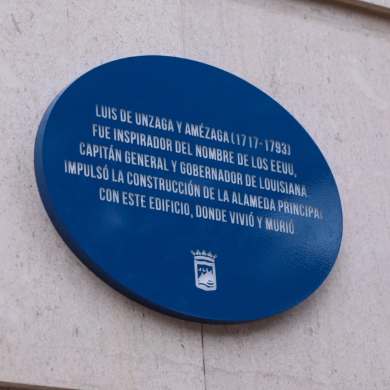
En 1776, el malagueño Luis de Unzaga, gobernador de la Luisiana española, escribió una carta dirigida al “General de los Estados Unidos de América". Aquella carta, leída por George Washington, fue la primera vez en que una autoridad europea reconocía a la nueva nación. 🇺🇸🤝🇪🇸
Siglos después, los historiadores Frank Cazorla y Rosa García Baena, de la Universidad de Málaga, redescubrieron este episodio tras sus investigaciones en su obra El gobernador Luis de Unzaga. Precursor en el nacimiento de los Estados Unidos y en el liberalismo, destacando su visión conciliadora, su defensa de la educación bilingüe y su apoyo a la independencia estadounidense.
En el marco del 250º aniversario de los Estados Unidos, celebramos a quienes tendieron los primeros puentes entre España y EE.UU.
#Freedom250 #LuisDeUnzaga #GeorgeWashington
Disney’s new CEO Josh D’Amaro eliminates gender neutral language, brings back “Ladies and Gentlemen” and fires 1,000 employees in an effort to restore “common sense culture”.
Le vrai "modèle" danois:
- 10 points de dépenses publiques de moins que la France. Pour aligner les dépenses publiques françaises sur le Danemark, il faudrait couper 300 milliards d'euros.
- budget public en excédent de 2.9%
- Dette publique sous contrôle (29% du PIB contre 115% pour la France)
- Pas de SMIC ou de code du travail étatique. Tout est négocié par branche et toutes les entreprises ne rejoignent pas les conventions collectives.
- Licenciement sur simple lettre de l'employeur
- Retraite financée à moitié par la capitalisation privée
- Age légal de la retraite à 67 ans, 68 ans en 2030
- Contrat ordinaire pour l'immense majorité des employés du service public
- Interdiction du droit de grève pour certains fonctionnaires
- Impôts sur les bénéfices parmi les plus faibles d'Europe
- Classé 7e à l'indice de liberté économique contre 65e pour la France.
- Classé 4e pays de l'OCDE où il est le plus simple de faire des affaires. La France est avant-dernière.
La France est tellement à gauche qu'aligner la France sur le Danemark apparaît comme une lubie libertarienne.
Délirant.
@GavMcCracken Have you read her post? Still missing 3+ million, how can that be a glut? SPR is not releasing that on a daily basis, every reserve now is counting barrels
Mujeres ejecutadas por ser 'brujas':
Alemania - 25,000
Polonia - 10,000
Suiza - 4,000
Francia - 4,000
Inglaterra - 1,500
Austria - 1,000
Italia - 1,000
Hungría - 800
España - 300 (59 por la Inquisición)
FUENTE: Henningsen, Gustav
Adivinar qué país se ha llevado la fama.
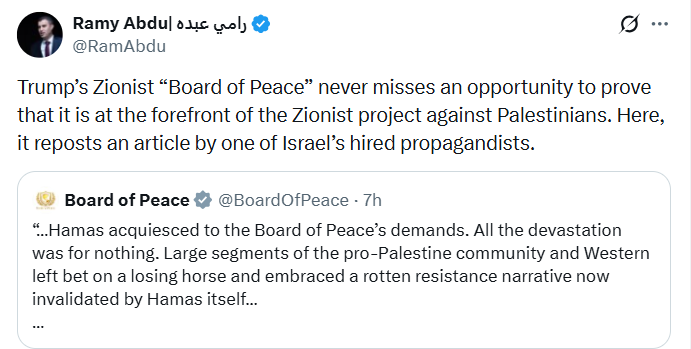
Hamas just dispatched Ramy Abdu, its chief lawyer in Europe, to attack my New York Times op‑ed. He runs “Euro‑Med Human Rights Monitor,” the biggest and most sophisticated front operation Hamas has ever built. It is a fake “rights” group in the heart of Europe designed to launder Hamas narratives and operate through the same networks that produced Abdu from Gaza.
He is doing exactly what his Jihadi handlers expect: flood the zone with emotionalism, repeat “Zionist” and “Genocide” nonstop, bury facts, smear anti‑Hamas Gazans as treasonous puppets of Israel, and enforce discipline among the pro‑Palestine foot soldiers so the focus never shifts from Israel. Major media outlets have unfortunately legitimized him by citing Euro‑Med’s fabricated data, even though the group has been thoroughly exposed as a polished cover for a terrorist organization responsible for severe harm and human rights violations. If you want to understand how Hamas’s propaganda became mainstream, look at “lawyers” like Ramy Abdu in Europe.
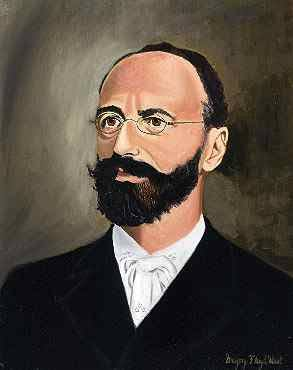
Eugen von Böhm-Bawerk did more damage to socialist economics than any government commission ever managed. Working in Vienna in the 1880s and 1890s, he dismantled the labor theory of value with surgical precision, showing that capital goods derive their worth from future consumer goods, not from the hours workers spent producing them.
His capital theory was the real achievement. Time matters in production. A fisherman with a net catches more fish than one with bare hands because someone sacrificed present consumption to build the tool. Interest is the price of time itself; it compensates the saver for waiting. Governments that suppress interest rates through central banking don't abolish this premium. They hide it, distorting the entire structure of production until the inevitable crash forces you to pay the bill anyway.
Böhm-Bawerk also destroyed Karl Marx personally, publishing his 1896 critique "Karl Marx and the Close of His System" with the quiet confidence of a man who had already won. Marx's three volumes of Capital contained internal contradictions Böhm-Bawerk traced systematically, brick by brick.
He served as Austrian Finance Minister three separate times and resigned each time over deficit spending. Intellectual integrity from a government official: rare then and rarer now.
Desvelé este documento en 2020 en un cara a cara con Marlaska en el Congreso de los Diputados. Marlaska, siendo Magistrado de la Audiencia Nacional, ordenó a la Policía no hablar del “caso Faisán”:
“Abstenerse de informar a superiores”.
Hoy, siendo Ministro del Interior, se queja ante el Poder Judicial de que la Jueza pidiera a la Policía no informarle sobre Ceuta.
"Lakshmi, the ships are moving, why isn’t oil lower?"
Other than the renewed fisticuffs in the Middle East?
Because the other side of the balance showed up too.
ME barrels are coming back into a market that already clawed back ~4 MBPD of demand off the May trough; half seasonal, half sequential.
Warning: Seasonality cuts both ways. Don’t annualize August.
Full split in yesterday's paper: Demand — Recovery or Resuscitation?
🚨🚨Acuerdo de la Sala de Gobierno de la Audiencia Nacional sobre la actuación del Ministro del Interior en relación a la investigación judicial llevada por la Magistrada María Tardon
Van a meter una marcha verde en dos semanas,han visto que las FFAA españolas no usan sus armas reglamentarias ni en su propio territorio invadido en defensa propia ante ataques letales menos aún en la frontera,lo de hace un mes se va a quedar pequeño.
Siento decirle que está muy perdido
1. TODOS los Policías Nacionales son Policía Judicial
2. Un Juez si puede convertir en Policía Judicial a quien quiera, de forma nominal y para una investigación o hecho concreto
3. El CENIF elaboró un aviso el día 28 de julio, y envió un documento el 29 de julio, un día antes de la invasión, advirtiendo a la Secretaría de Estado de Seguridad cómo era su obligación
4. El informe del 31 de agosto, un mes después, no es un informe operativo, es un informe reclamado por el Juez que estaba de guardia el día d ellos hechos en la Audiencia Nacional para investigar, y, por tanto, según la LECrim, ese informe es solo para el, lo triste es que deba incluir en el Auto la obligación de no compartirlo, pues la Ley en sí mismo ya lo indica
Ante la campaña masiva de desinformación de los periodistas más afines a Sánchez, vamos a aclarar:
-El primer informe filtrado a prensa es previo a la invasión, y en él se avisa del "riesgo extremo" por una posible entrada masiva a nado por el Tarajal el día 30. El informe acertó de pleno.
-El segundo informe, de 54 páginas, forma parte de la investigación de la jueza Tardón en la Audiencia Nacional (mucho más amplia y con mas informes).
Este informe, que hace evidente la participación de agentes marroquíes en la invasión, es el que el gobierno no conocía (ahora ya lo conoce y sigue insistiendo en defender a Marruecos).
Por qué no lo conocía?
Porque la jueza ordenó expresamente a los investigadores no comunicar bajo ningún concepto nada relacionado con la investigación a sus mandos. Este informe ya no es de aviso, por eso la jueza lo hace secreto sin que eso tenga ningún impacto en la seguridad, ya que el asalto ya se había producido. Es un informe de análisis operativo sobre lo sucedido los días 30 y 31 en Ceuta.