That water clarity is an engineering decision, and the math behind it is wilder than the video.
Roman aqueducts ran on gravity alone. No pumps, no pressure systems. Engineers carved channels with a gradient so shallow it borders on absurd. The Pont du Gard in southern France drops 2.5 centimeters over 275 meters. That's roughly the thickness of a coin over the length of three football fields. They surveyed that accuracy with plumb lines and wooden leveling instruments.
The clarity you're seeing is a direct product of flow velocity. Too steep and the water erodes the channel walls, picks up sediment, turns brown. Too flat and it stagnates. Roman engineers targeted a slope of about 20 centimeters per kilometer, which kept the water moving fast enough to stay fresh but slow enough to stay clear. Before the water reached the city, it passed through multi-chamber settling tanks where velocity dropped near zero. Suspended particles sank. Clean water flowed out the top into the next chamber. Repeat three or four times.
Pliny specified the minimum slope in writing. Vitruvius published the exact mortar ratio for hydraulic cement: one part lime to two parts volcanic ash for underwater work. The pozzolana from Pozzuoli reacted with water to form a calcium-aluminum-silicate compound that actually gets stronger the longer it sits submerged. Modern concrete degrades in water. Roman concrete bonds with it.
Scale the whole system and it gets harder to process. Eleven aqueducts fed Rome at its peak. Combined output: roughly 1 million cubic meters of water per day. That works out to about 250 gallons per person for a city of one million. Modern New York delivers about 125 gallons per person per day. Ancient Rome had access to double the per capita water supply of the largest city in the United States, running entirely on slope and stone.
The Trevi Fountain in Rome is still fed by one of them. Two thousand years, same source, same gravity, same water.
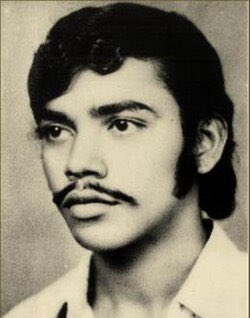
His name was Rajan.
He was a final year engineering student at the Regional Engineering College in Calicut, Kerala. His father, T V Eachara Varier, was a Hindi professor at the Government Arts and Science College in the same city.
On the morning of March 1 1976 the police came to the college campus and took Rajan away.
India was under Emergency. Civil liberties were suspended. Courts had effectively turned away.
His father found out the next day from the college principal.
He went to every police station in the district. No one admitted to having his son.
He met the Home Minister of Kerala, K Karunakaran, directly.
He sent petitions to the Home Secretary of the Government of Kerala three times. Not a single reply or acknowledgement came.
He wrote to the President of India and the Home Minister of the central government, with copies to every Member of Parliament from Kerala.
Nothing.
What Eachara Varier did not know at the time was that his son had been taken to an illegal police interrogation camp at Kakkayam.
He was tortured.
A practice called uruttal was used, where a heavy wooden log is rolled over the body of the victim.
Rajan died from his injuries. His body was disposed of by the police and was never found.
When the Emergency ended in 1977 Eachara Varier filed a habeas corpus petition in the Kerala High Court.
It was the first such petition filed in Kerala after the Emergency.
He did it without legal training, without political backing, without money.
He had spent everything searching for his son.
The court case slowly unravelled the truth.
It forced K Karunakaran to resign as Chief Minister of Kerala in 1978 when the adverse judgment came.
Rajan’s mother became mentally unstable from the grief. She died in 2000 still not knowing where her son was.
Eachara Varier wrote his memoir, Memories of a Father, which won the Kerala Sahitya Akademi Award in 2004.
In its final lines he wrote, “I don’t close the door. Let the rain lash inside and drench me. Let at least my invisible son know that his father never shut the door.”
He died on April 13 2006. He never found his son’s body.
Rajan was picked up from his college campus on a March morning in 1976. He was never seen again.
Repost this. Some stories must not be allowed to disappear.
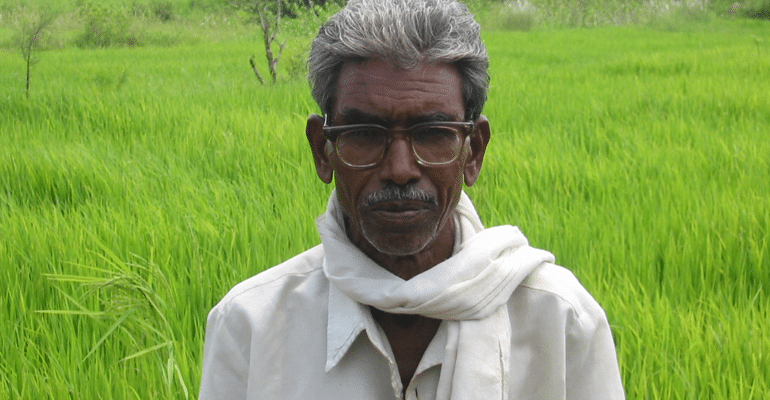
1 man found 3 yellow grains in the mud & spent 5 yrs protecting them from wild pigs. A trader named the result after his favorite watch brand to prove its quality, while a university stole the seeds to claim the credit. He fed millions, but worked as a daily wage laborer on his own soil. Discover the Ghost Farmer behind India's favorite thin rice.
While the world was looking at high-tech labs for the next green revolution, a school dropout named Dadaji Ramaji Khobragade was standing in his small 1.5 acre plot in Nanded, Maharashtra. While harvesting his usual Patel 3 rice, Dadaji noticed 3 yellow-seeded spikes (lomb) that looked different. Most farmers would have ignored them as impurities.
Dadaji picked those 3 spikes & stored them in a simple plastic bag. For the next 5 yrs, he painstakingly bred them in a tiny patch, protecting them from wild pigs with a fence of thorny bushes. He created a variety that was thinner, smelled better, & yielded 80% more than the conventional seeds.
Dadaji did not have a marketing team/a brand name. In 1990, a large landowner bought 150 kg of these seeds & sold the harvest to a local trader. At that time, HMT Watches were the ultimate symbol of Gold Standard & Reliability in India. The trader, who had recently bought a new HMT watch & was obsessed with it, decided to call the rice HMT Rice simply to signal that this rice was as High Quality as the watch.
The name stuck so hard that people today think HMT Rice was developed by the govt corporation (Hindustan Machine Tools), but the company had absolutely nothing to do with it!
In 1994, the Punjabrao Krishi Vidyapeeth (PKV), an agricultural university, approached Dadaji. They took 5 kg of his seeds under the pretext of experimenting. A few yrs later, the university released a new"variety called PKV-HMT. They claimed Dadaji’s original seeds were impure & that they had purified them.
They took the credit, the patents, & the glory. For yrs, the man who actually did the 5 yrs of backbreaking research was left working as a daily wage laborer on other people’s farms just to feed his family.
Dadaji Khobragade lived in poverty for decades while HMT Rice became a multi-crore industry across Maharashtra, Andhra Pradesh, & Chhattisgarh. It was only much later that the National Innovation Foundation (NIF) stepped in. They proved that the university’s new rice was genetically identical to Dadaji’s.
In 2010, Forbes magazine named him 1 of the most powerful Rural Entrepreneurs, & he finally received a National Award. But by then, he had already sold his own land to pay for his son’s medical treatment. Next time you eat a bowl of thin, aromatic HMT rice, remember it is not the product of a sanitized government lab. It is the result of a man who looked at three tiny yellow grains in the mud & saw a future that the PhDs missed.
The HMT in the rice does not stand for Hindustan Machine Tools; it stands for the Honesty of a Marginalized Toiler. Dadaji Khobragade proved that you do not need a degree to be a scientist; you just need an eye that can see the extraordinary in the ordinary.
A trader's love for a wristwatch gave the rice its name, but a farmer’s love for his land gave the rice its soul. 1 became a brand; the other remained a Ghost in his own fields.
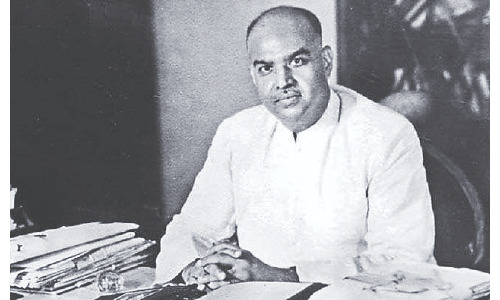
This is the Corporate Mookerjee that history books & even his own party rarely discuss. To understand his work as India’s 1st Minister for Industry & Supply, we have to look at how a Bhadralok scholar became as a COO of a bankrupt startup called "Independent India."
In 1947, India’s railways were a mess of British-made parts. We had the tracks, but we did not have the Heart... the engines. The British believed India would be a repair shop forever. Syama Prasad Mookerjee did not just want to buy trains; he wanted to build them in the very heart of the Bengal-Bihar coal belt. He chose a sleepy village named Mihijam & transformed it.
He named the factory after Deshbandhu Chittaranjan Das, his mentor. On January 26, 1950 (Republic Day), production activity/construction work commenced at the factory. This was a symbolic start on the day India became a Republic. While the British doubted that Indian engineers could master the complex science of high-pressure steam boilers & locomotive design, Mookerjee turned to the best technical talent the country had to offer.
Drawing from the engineering & physics graduates of premier institutions like Calcutta University & other centres of learning, he built a core team of Indian professionals who would prove the skeptics wrong. He was showing the world that India’s universities were not just academic halls, they were the womb of a new industrial nation.
Post-Partition, India was on the verge of mass starvation. The Green Revolution had not happened yet. Mookerjee realized that if India did not produce its own nitrogenous fertilizers, we would be begging the West for bread. He pushed through the Sindri Fertilizer Factory in Bihar. It was not just a factory; it was the largest of its kind in Asia.
This is where Mookerjee’s leadership shone. He did not just build a plant; he built a Miniature City. He insisted on a self-contained township with a hospital, schools, & a distinct Industrial Culture. He believed that an Indian worker should not just be a laborer but a citizen-producer. Sindri became the blueprint for every PSU that followed from Bhilai to Bokaro. He invented the PSU Life before the term even existed.
While Mookerjee was building heavy industry, he did something very unusual for a Modernist. He created the All India Handicrafts Board & the Handloom Board. He realized that heavy industry would take 20 yrs to employ everyone, but Bengal’s weavers & artisans were dying now.
He was the 1st to bridge the gap b/w the Small-Scale & the Large-Scale. He argued that India needed the Locomotive for its muscles, but the Handloom for its soul. He protected the Small Brands of rural India by giving them a seat at the cabinet table.
Long before global IP laws, Mookerjee was obsessed with Standardization. He was the driving force behind the Indian Standards Institution (now Bureau of Indian Standards - BIS). He knew that "Made in India" would only be a global brand if it had a Hallmark. He wanted an Indian Standard that was as rigid as the British BSI. Every time we see an ISI mark today, we are seeing a residue of Mookerjee’s obsession with quality.
Next time we see an Indian train/a sack of fertilizer, remember: the man who founded the 'Right Wing' was actually the 1 who laid the 'Industrial Foundation' of the Indian State. He was a Technocrat in a Saffron Cloak.
A cautionary tale about @urbancompany_uc and how a publicly listed company handles damage claims.
Booked their technician (Sanju Kumar) to install a Luminous inverter at my home in Bangalore. Routine job. Should've been 2 hours.
Invoice no: UCIC260004101947
Complaint no: 69f362690db9530026fe28d7
Instead of a standard install, he opened the main switchboard and worked with MAINS LIVE violating the most basic electrical safety rule. Phase-neutral cross-connection caused a ~280V surge through my home wiring.
Within minutes:
• Geyser circuit dead - Approximation given is around 12,000 to fix
• 55" Smart TV motherboard fried, panel and screen damaged - looking at full loss ( Rs 48,000)
• Apple TV completely destroyed (₹14,900 replacement)
• Home electrical wiring compromised (Assessing currently)
The moment Sanju Kumar realized he'd damaged the geyser, he packed up and LEFT mid-job. Inverter still uninstalled. No fix. No apology. No accountability.
Had to hire a different electrician the next day to fix the wiring he broke out of my own pocket.
Filed formal complaint with UC. Specifically requested a SENIOR technician for independent damage assessment.
UC's response? They sent SANJU KUMAR BACK. The same person who caused the damage. To "take photos" of his own work and walk away.
He showed up, photographed the damage he caused, left without resolution. No claims process opened. No callback.
When we asked UC for a complaint ID, it took multiple follow-ups and a manual download of a tax invoice to extract any documentation. They were not proactive in issuing one almost as if to avoid creating a paper trail.
3 sleepless nights. ₹40,000+ in documented damages. Complete radio silence from UC corporate after that.
@urbancompany_uc@abhirajbhal@raghavchandra@varunkhaitan — your company is publicly listed now. Retail and institutional shareholders are watching how customer grievances are handled.
Is THIS the customer experience model investors signed up for?
1. Technician violates basic electrical safety
2. Damages multiple appliances and home wiring
3. Walks off mid-job when he realizes his mistake
4. Same technician sent back to "investigate" his own damage
5. Customer chases for documentation that should've been auto-generated
6. Then gets ghosted
Listed companies are held to a higher standard of corporate governance, customer protection, and grievance redressal. SEBI compliance and investor disclosures aren't just about quarterly numbers they extend to how the brand treats its customers.
This isn't how a publicly listed company should operate.
Asking for:
1. Independent senior technician (not Sanju Kumar) to assess damage
2. Compensation for documented damages: ₹90,000+
3. Formal acknowledgment of complaint 69f362690db9530026fe28d7
4. Process review — no customer should have to extract their own complaint ID
5. Public clarification on UC's damage claims SOP
Have all invoices, technician's diagnosis report confirming overvoltage cause, photos, timestamps, and WhatsApp records.
please be careful. If a clearly documented case is handled this way, imagine the cases without paper trails.
Consumer forum filing prepared if there's no response in 48 hours.
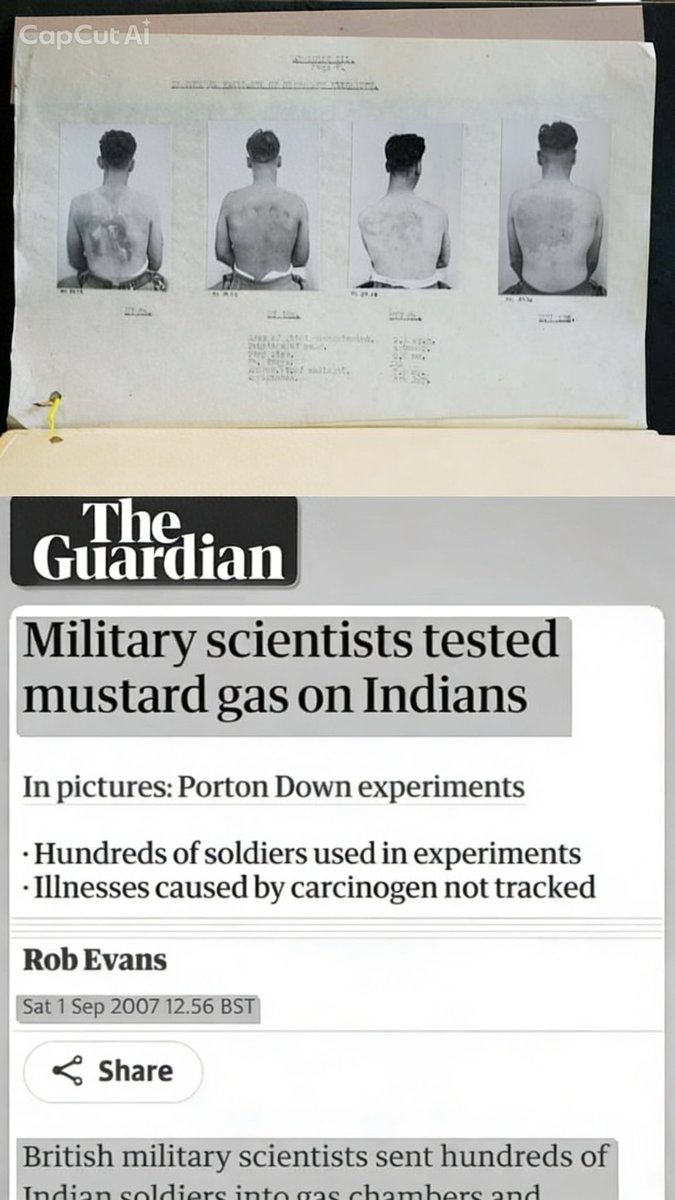
The Indian Holocaust- This must go viral
Hitler did not come to India - Then who put 20000 Indian Army Soldiers in Gas Chambers??
The Britishers did- 1930 British Holocaust on Indians for 10 years suspected to have killed over 20000 soldiers
This story won’t give you goosebumps. 🇮🇳💔
It will leave you in silence.
History often speaks of wars, but stays silent about what happened behind closed doors.
In the 1930s and 1940s, soldiers of the British Indian Army were taken to military testing programs linked to Porton Down.
Inside controlled gas chambers in Rawalpindi, Indian Army soldiers were exposed to mustard gas.
Not in battle.
In experiments.
They were made to stand inside sealed chambers wearing minimal clothing so the effects on skin, eyes, and lungs could be studied.
What they endured was not warfare—it was observation.
Hundreds were exposed.
Many suffered severe burns. Many developed long-term respiratory and eye damage. Some were hospitalized for weeks.
Consent was not truly informed. Within the structure of colonial military authority, refusal was not realistically possible.
For years, this remained hidden from public view.
Later reporting, including by The Guardian, brought fragments of this truth into light.
This was not a battlefield.
This was controlled human experimentation done in the name of research.
And the people inside those chambers were Indian Army soldiers who had no real choice in what they were part of.
Some parts of history are not meant to give chills.
They are meant to leave you with silence.
The Economist magazine is disappointed that India did not celebrate the 500th anniversary of the Mughal conquest of India. Oh, those ungrateful natives who do not celebrate the gift of civilisation. Who knows, they may even refuse to celebrate the Battle of Plassey. Dangerous trend.....
My cousin is 16, and she showed me her skincare shelf last week. Salicylic acid cleanser. Niacinamide serum. Retinol night cream. AHA/BHA exfoliator.
She's 16. Her skin is fine.
She doesn't have acne. She built this routine from reels.
She's using actives meant for 28-year-olds because a 19-year-old on Instagram told her to start early. I asked where she heard about retinol. She showed me a reel by a girl with 400K followers who's been using skincare for 2 years and speaks with the confidence of a dermatologist with 20 years of practice.
This is the part of the Indian beauty boom nobody wants to talk about because everyone's making money from it.
We have lost our pillar, our guide, our world. Papa @balbirpunj lived a life driven by purpose and was fuelled by his love for the nation. He tirelessly worked until his last breath for the cause he had dedicated his life to- of making the country strong, prosperous and powerful. He was one of the pioneers of driving the change in the ecosystem of national politics and was blessed to have lived through a changed India. He lived many lives in the 76 years that he spent with us -as a student activist, a thinker, philosopher, Journalist, strategist, guide, historian, political leader and most importantly a humanitarian. As a true Ram bhakt, he lived his on the principles of Rama where he put his dharma for the nation above all. A true patriot, nationalist, father, husband, son, brother, grandfather, friend. We would like to thank everyone who reached out us in this unimaginable hour of grief 🙏
—-
What made Shreyas Iyer’s catch so special was not just the athleticism, but the awareness behind it.
He had to judge the speed of the ball, the height, where the boundary rope was, how close he was to stepping on it, and get his jump absolutely perfect.
Then, while still in the air, he caught the ball and released it to a teammate before landing, all the while knowing exactly where that fielder was positioned.
To process all of that in a split second takes unbelievable awareness, timing, fitness, and composure.
@ShreyasIyer15 got everything spot on. One of the best catches I’ve ever seen live!
What an ugly ugly video. The models are fugly and malnourished, the outfits are dull and boring. There is Pongal without Pongal, who eats dates on Pongal? Pongal is a HINDU harvest festival. And of course, there is no bindi, no naamam, no kalawa, no sign of Pongal’s Hindu ness at all. #AntiHinduLenskart @peyushbansal@Lenskart_com
I love it when corporate companies try to silence my voice by blocking me on twitter, it only awakens the David
v/s Goliath battle within me, and then I just can’t let go, as @Fabindanews and @TanishqJewelry learnt a long time ago! Now it is the turn of @Lenskart_com.
Former Indian cricketer Anil Kumble and his wife Chethana Kumble are seen promoting the beauty of Sanskrit by speaking it fluently in this video.
It’s inspiring to see a sporting icon use his influence to highlight the richness of one of the world’s oldest languages. Wonderful!
Psyllium Husk is isaphgulla, an ancient Ayurvedic remedy for constipation among other things. The British found it and marketed it as Sat-Isabgol. After 100 years the west is waking up to this like many other Indian Ayurvedic drugs, herbs, and prescribed supplements. But nobody will mention the roots. Just like how Hindu numerals have become Arabic numbers and "decimal system."
@HatekarHarsh@ModifidBhaaarat@ShefVaidya Oh this means you lost points for Hindu symbols. This is the first time I have heard about audit for all these things. Wah @peyushbansal kya baat hai .. Hindu he besharam hai humare desh mein toh doosre religion walon ko kya bole. Hindus just wants to please others only