Discovery of the day: Opus is a much better orchestrator than gpt 5.5
Run a half-day experiment on letting GPT-5.5 orchestrate a team of agents, and then repeat the same with Opus.
Opus is the manager, GPT the worker
@DavidOndrej1 has shared a very useful skills setup. I went back from Conductor to cmux after seeing the workflow David has.
Pi agent is the main orchestrator; it can open new tabs/panes, launch coding sessions to claude, codex, hermes and coordinate them. Impressive
@DavidOndrej1 David, I like your appoarch orchestrating agents between cmux panes with Pi.
If you're working on a project with multiple agents, you create worktree per feature, how do you fork the infrastructure? Runtime and database?
@NathanFlurry How would you advice running development project in virtual os?
The current flow I have on VPS:
1. Starting a new feature by creating for worktree (code fork)
2. Now we need infrastructure fork and database fork. Instead of docker compose I use k3d with namespace per worktree...
Interesting GLM rumor from China sources:
"Apparently https://t.co/mLFb4a6HlS has an internal router behind their coding plan that routes your Claude Code query to GLM or Claude depending on if the classifier thinks it is in distribution or not. If it is OOD and also high value, it will route to Claude and then add the trace to the distillation dataset."
Seems hard to defeat this since these are real user queries and not contrived. The accounts that generate this distillation data can be made to look like ordinary user accounts but with higher concentration of OOD queries.
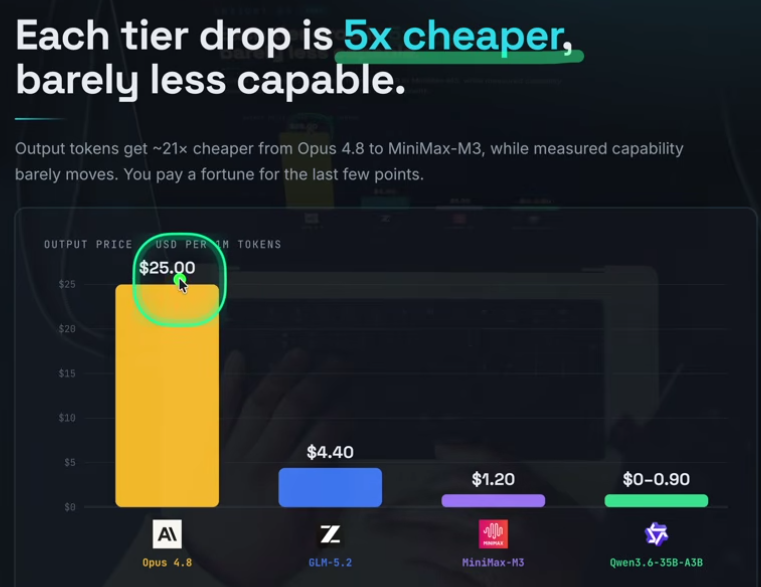
This looks like a fast-follower strategy that will keep a weaker lab in the game at a lower price point per unit of intelligence or per token.