@aksenHQ Yep, for the demo I set the interval to be quite short so that would eat credits pretty quickly. The Claude skill understands this so often prompts you to set the interval back to something more reasonable once you're done developing.
Asked Claude Code to turn an S2 into a weather station. It read both sensor datasheets, wrote the Lua and pushed it over LTE-M, then warned me that logging every 5 s would eat the €10 starter credit in 18 days.
Last year a company called me for help.
A connectivity bug buried in an ancient wireless stack. The only way out: visit each of their end-users' and update the devices by hand 🥲
I'm now helping them to migrate onto our platform which eliminates this from ever happening again.
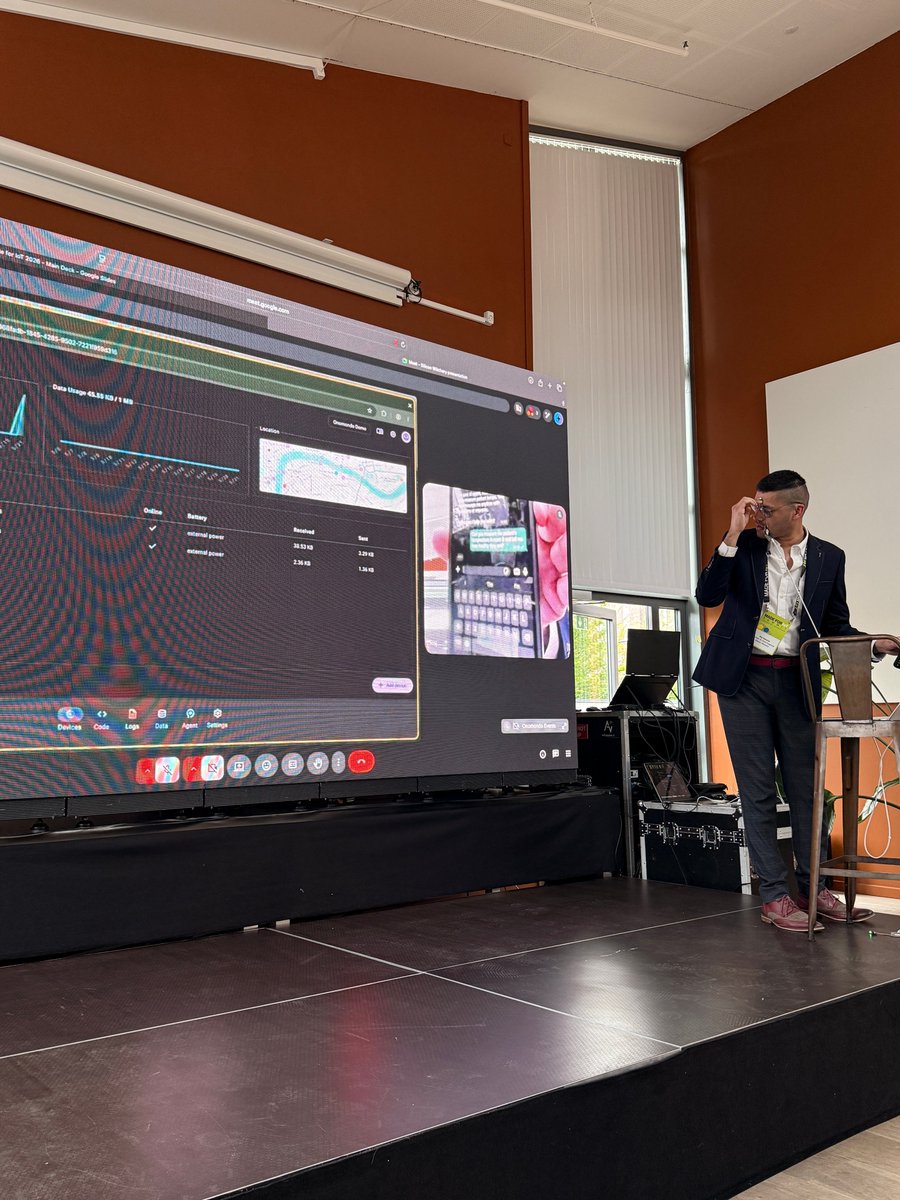
Made for IoT was such a fun event. Great companies, great talks, and of course a great host @onomondo
One thing that stood out to me was how quickly AI is becoming adopted amongst embedded engineers. Not just for coding, but as part of the machinery we build too.
@chrypnotoad Interesting how our brain can still pick out an uncanniness to this if you’ve been an actual Minecraft player. It’s not far off though. I wonder if that uncanny feeling will be surpassed as the technology improves, or if we’ll become used to it and start to ignore it completely
We're teaming up with @brilliantlabsAR to integrate our real-time answers into Frame, their AI-enhanced glasses. You can ask about what you see, instantly — all in your line of sight.
@larianstudios If you're going to do updates separately, at least let users choose if they want to stay on the same version or not. It's as if someone came to a gaming table, and took away one person's character sheet while the others were allowed to keep on playing
Transparent AR will be the best interface for AI. Here's multimodal AI working on @brilliantlabsAR Monocle using LLaVA! And it's all open source (see 🧵👇) (1/)
@karpathy It could also be chaos 😂 but just as people discuss and negotiate to get things done in real life, these devices could do the same. Each finding some way to solve a problem without relying on plain old instructions to do so
@karpathy Devices could also start talking to each other directly. Cameras reaching out to IMUs in the system to get more motion data for image stabilization. All without host involvement, or specific programming/pairing of devices