In this review, we revisit this framework and propose that RAS family members exhibit intrinsic effector preferences, pointing to a more specialized and organized signaling network that reflects a more structured division of labor within the network.
Our new review titled "Revisiting RAS family GTPase signaling: effector selectivity and oncogenic bypass," published today in the @Biochem_Journal Journal, published by the @BiochemSoc Society, and co-authored with @frankpmccormick
https://t.co/x0ygj4oNnx
Historically, the canonical RAS proteins—KRAS, HRAS, and NRAS—have been viewed as the primary drivers of signaling, with their GTP-bound forms assumed to uniformly activate all major downstream effector pathways at the plasma membrane. But is this model too simplistic?
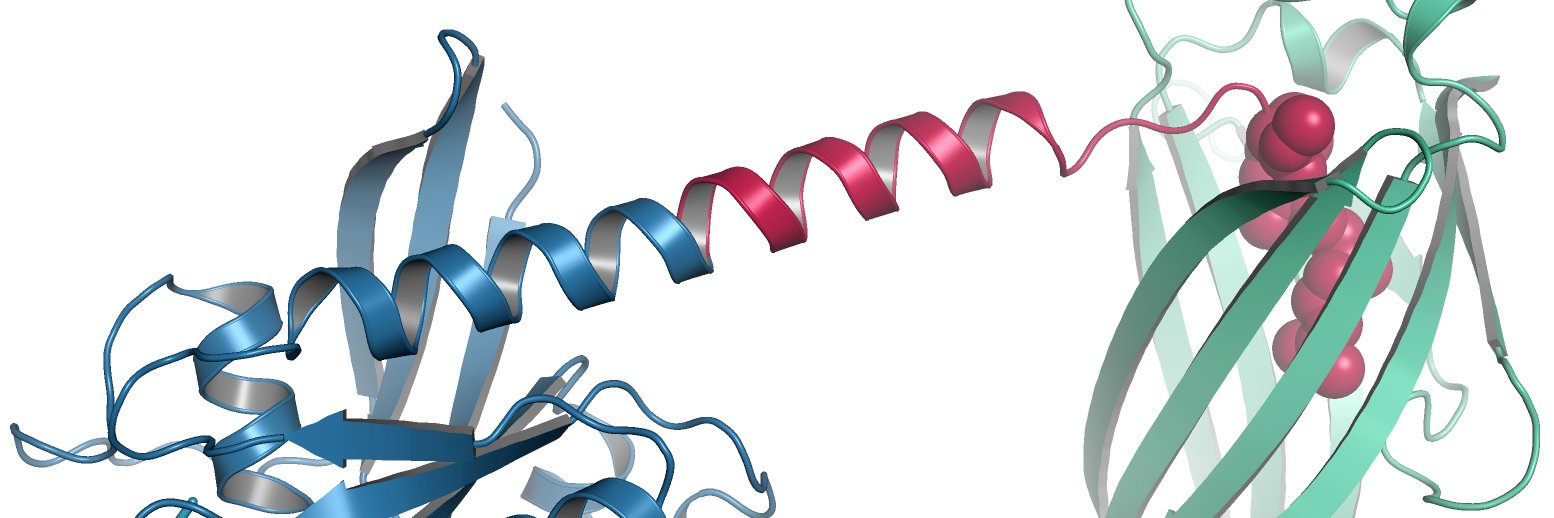
Excited to share our latest work onll LZTR1 just published @ScienceMagazine!! A wonderful multidisciplinary collaboration between @simanshu's lab and our lab that provides structural understanding on RAS substrate and nucleotide specificity, and effect of mutations in LZTR1.
BBO-10203 is currently being evaluated in the Phase 1 BREAKER-101 trial (NCT06625775) in patients with HER2+ and HR+/HER2- breast cancer, KRAS mutant colorectal cancer, and KRAS mutant non-small cell lung cancer.
We are excited to share our collaborative work on the first-in-class RAS:PI3Kα breaker, BBO-10203, which has now been published online in @ScienceMagazine !
🔗 Read the full article here: https://t.co/pUvLXbdXJp
BridgeBio Oncology Therapeutics (BBOT) @FredNatLab @Livermore_Lab
This publication describes how BBO-10203 disrupts the RAS–PI3Kα interaction without impairing insulin signaling, resulting in broad antitumor activity across multiple cancer models. It also shows enhanced efficacy in combination with other targeted agents.
This work was led by Daniel Czyzyk and Wupeng Yan in the laboratory, in collaboration with RAS Initiative colleagues and researchers at Daiichi Sankyo.
Excited to share our latest research, "Structural Insights into Isoform-Specific RAS-PI3Kα Interactions and the Role of RAS in PI3Kα Activation," now published in @NatureComms
📖 Explore the full article here:
https://t.co/iK6G45LDry
@FredNatLab
Our findings reveal key interaction interfaces and isoform-specific differences in RAS-PI3Kα, highlighting its crucial role in activating the PI3K-AKT-mTOR pathway and providing a blueprint for designing isoform-specific inhibitors to target RAS- and PI3K-driven cancers.
Our structural-guided insights contributed to the design of BBO-8520, a first-in-class dual inhibitor targeting both GTP-bound (ON) and GDP-bound (OFF) KRAS G12C.
Excited to see this work now published in @CD_AACR! @FredNatLab @BridgeBioPharma
Now online in @CD_AACR: Discovery of BBO-8520, a First-in-Class Direct & Covalent Dual Inhibitor of GTP-Bound (ON) & GDP-Bound (OFF) KRAS G12C - by Anna Maciag, James Stice, Bin Wang, @frankpmccormick, Pedro Beltran, et al. https://t.co/jzMFwnuRPv @FredNatLab @BridgeBioPharma
Check out our latest review regarding the biology of RAS GTPase effectors!
It was fun to write this with @AmMozzarelli and @simanshu for @MolecularCell.
Bottom line: lots of knowledge on these proteins, but many questions that remain to be answered.
https://t.co/TeJFo27Buq
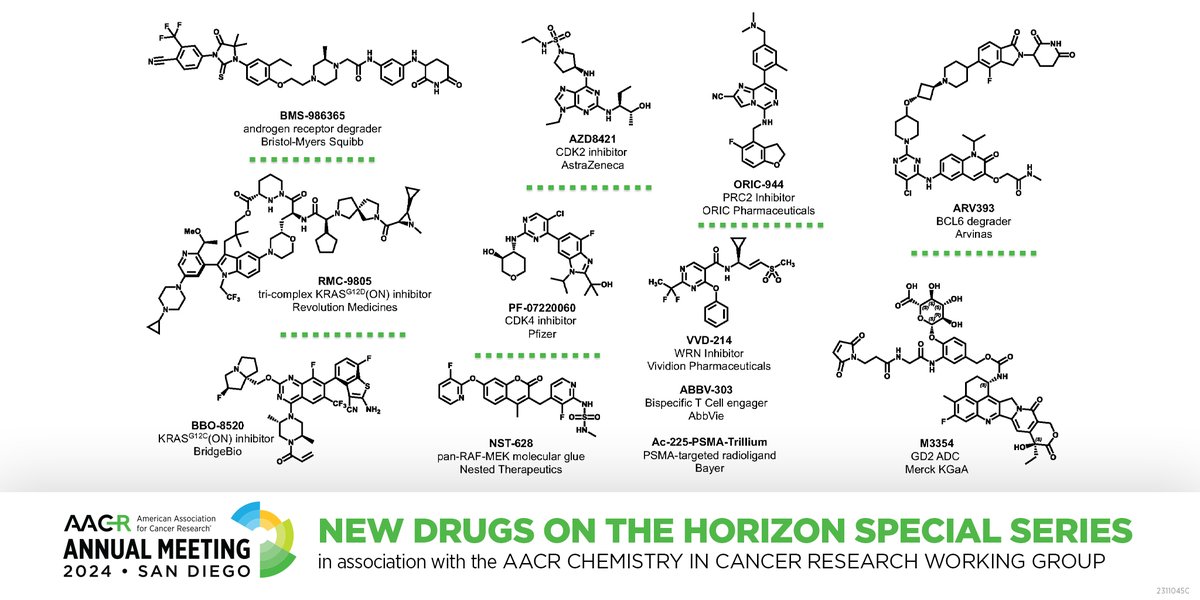
The three-part New Drugs on the Horizon Series at the AACR Annual Meeting 2024 wrapped up this morning. A total of 12 first-time disclosures were presented.
https://t.co/iA1MWHydq2
#AACR24
The collaborative work was led by Lorenzo Finci, Mayukh Chakravarti, Gulcin Gulten, @dailyusbalius, @domespo and other members of the RAS initiative @FredNatLab
Our latest work in @CommsBio describes the cryo-EM structure of the RAF1-HSP90-CDC37 complex. Insights from 1μs simulations and structural analysis reveal key interactions and the role of HSP90 and CDC37 in client folding. https://t.co/4CnCJYhCiH
Our work builds on previous structural studies by many other groups describing structures of HSP90 and CDC37 in complex with RAF1, or in complex with BRAF-V600E, with and without protein phosphatase 5.