This map is a vivid reminder of the magnitude of WWII. Shipwrecks around the world during the Second World War. Many Europeans are unaware of the Pacific theatre. Source: https://t.co/L7N0eOyBN3
There are no passes between Argentina's centre-backs.
Lisandro Martínez and Cuti Romero don't pass the ball to each other. Take a look at Argentina's passing map.
Argentina build with their centre-backs very wide. England were pressing with their wingers from out to in.
A pass between the centre-backs is the perfect trigger for this type of press, giving the wingers time to step up and apply pressure to the centre-backs while the ball is traveling. Specially when your two centre-backs are wide and quite far from each other.
Instead, Argentina either looked to find the third man inside to find the full-backs free, or recycled possession back to the goalkeeper.
They knew that a pass between the centre-backs would trigger England's press.
This is excellent from Argentina and a great detail from Scaloni.
The chase scene in Johnny English Reborn is hilarious. Rowan Atkinson plays every ridiculous moment with complete conviction, which makes it even funnier.
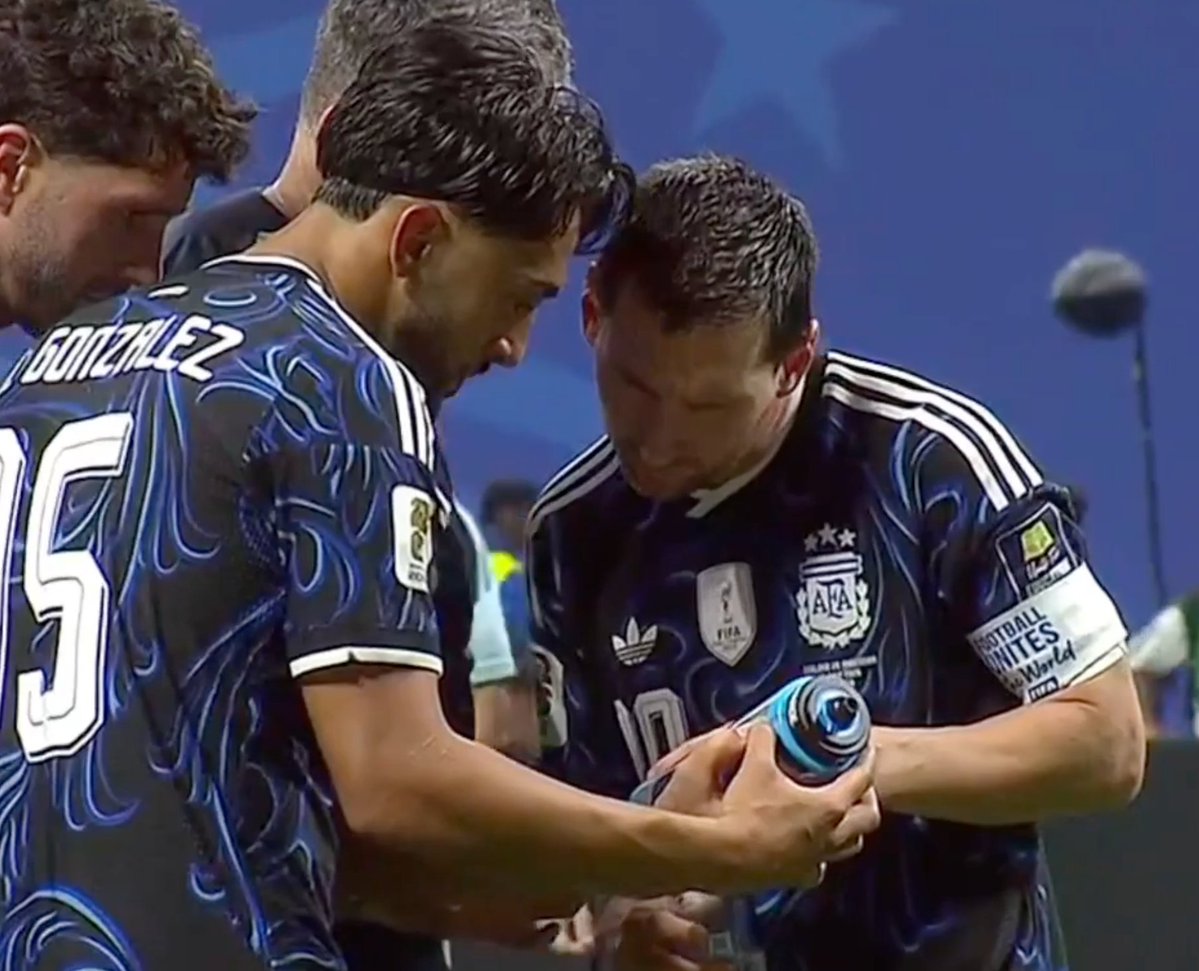
🚨 𝗡𝗘𝗪: Lip readers have deciphered the CONVERSATION between Leo Messi, Nico González, Senesi and a member of Argentina’s staff after they found Jordan Pickford’s water bottle with a penalty taker list ahead of a potential penalty shootout in the World Cup semi-final against England:
🗣️ Nico González: “Look what I found. It has notes on Lautaro, Julián…”
🗣️ Staff member: “Yes, all the players are on there.”
🗣️ Messi: “What?! But what do the notes mean?”
🗣️ Staff member: “Senesi, you read it... You speak English.”
🗣️ Senesi: “It says which way the goalkeeper should dive…”
🗣️ Messi: “Are you talking about the goalkeeper (Pickford)?”
🗣️ Senesi: “Yes. For you, Leo, it says you fake to the left but shoot to the right.”
🗣️ Messi: "The goalkeeper must have studied how I take my penalties then." *looks surprised*
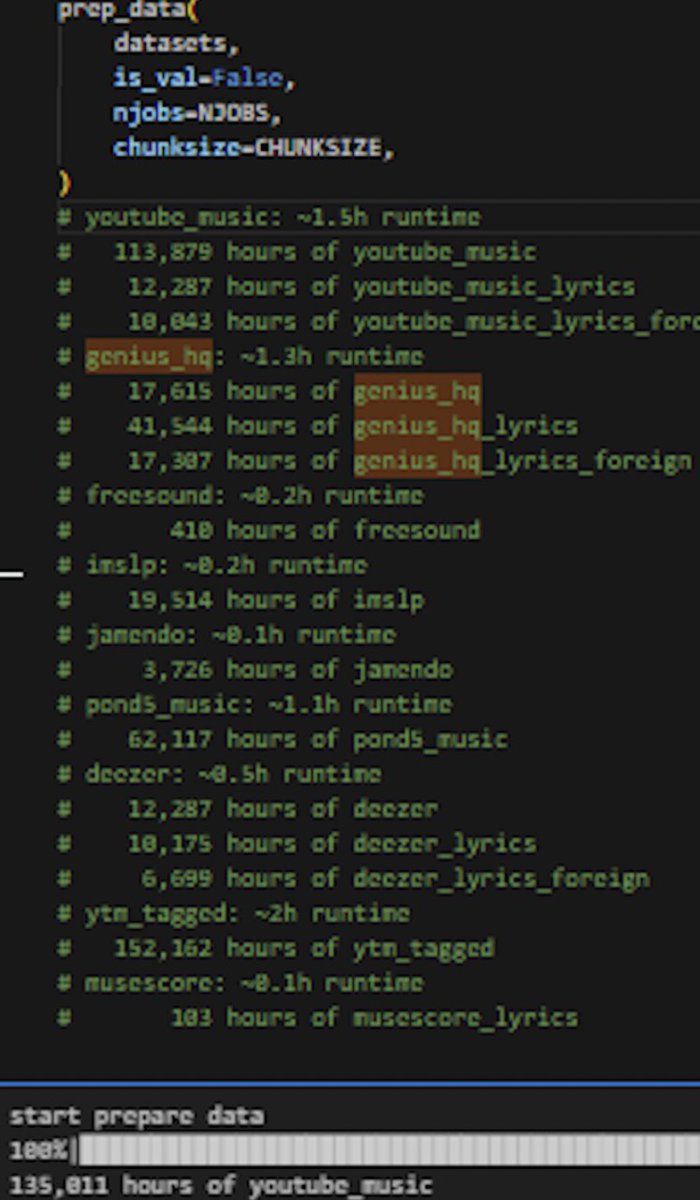
Scoop: The AI music generator Suno was hacked. Hacker shared source code that shows how the tool was made and part of the music and podcasts that were scraped to create it.
Decades worth of music, lyrics, and podcasts from YouTube, Deezer, Genius & more
starting a company is probably the only real attempt at escaping bullshit jobs.
jobs where most of the work is:
• reporting instead of building
• compliance theater instead of solving problems
• dashboards to justify existence
• meetings to coordinate future meetings
• process designed to manage fear, not outcomes
• status hierarchies instead of merit
• managerial control instead of value creation
• liability shields instead of responsibility
none of this produces value.
it just preserves the system.
starting a company forces a different constraint:
• if you don’t create something real, you die.
• no hiding behind slides.
• no pretending impact.
• no abstract contribution.
• you either ship, sell, and survive or you disappear.
it’s not glamorous.
it’s not safe.
but it’s one of the few environments where reality still matters.
.@pmarca's advice to college students: "Gain AI superpowers. I think it's actually very straightforward."
"You have the enormous stroke of luck that you have arrived at the moment in which there is this new capability for augmenting human ability on a thousand fronts at the same time, that's just dropped into our laps, and it's going to get much better from here."
"You are gonna have the opportunity to have this be something that is absolutely key to your skill set and key to everything that you can accomplish as a professional or as a creative for the next 50 years."
"I would just lean in incredibly hard on that. Walk into every job interview with, 'Here's my portfolio, resume, whatever. Here is how I use this technology. Here are the capabilities that I'm bringing to the table.'"
@eriktorenberg@MTSlive
🚨 BREAKTHROUGH: Scientists at the University of Nottingham have developed a new enamel-repairing gel that starts restoring teeth in just 2 WEEKS.
This could replace fillings and change dental treatment worldwide, with use expected around 2026–2027.
Germany has launched one of the world's best open-source AI models.
Soofi S, made by the Soofi consortium, is a 30B parameter model fully trained in Europe and tops the ranking for open-source AI.
Huge moment for Europe, and finally some competition for Chinese open-source AI.
Marvin Minsky creator of AI spent 60 years understanding how the brain thinks - and said one thing before he died
"I spent 10 years creating AI and 50 years learning how to use it"
00:19 - thousands of small agents create an entire system
05:12 - one agent manages thousands of engineers
24:18 - why your brain is 1000x more efficient than the best AI
the creator of AI teaches for free what his colleagues at MIT sell for $90,000/year
he spent 60 years to understand this - you will understand it in 75 minutes before bed
the most beautiful DIY robot build i've ever seen:
this guy turned a robot dog into an off-road wheelchair so his dad could go hiking again
his dad used to run marathons, but 20 years ago multiple sclerosis put him in a wheelchair.
so his son Jake took a Unitree B2-W (an industrial robot with 4 legs and a wheel on each foot) and built a custom seat on top.
on flat ground it rolls just like a normal wheelchair.
but when it reaches rocks, water, or stairs, each leg can lift and adjust on its own, allowing it to step right over them.
getting this to work safely took a while.
> the robot was never designed to carry a person (it tipped over many times during testing)
> so Jake spent 3 years recalibrating it. he tested it on his friends first, then once it was stable enough his dad finally got to try it.
> and after 20 years in a wheelchair, he climbed a hiking trail again.
a chair like this could eventually give wheelchair users access to trails, beaches, broken sidewalks, all the places that are still out of reach today.
and one dude built it in his garage lol
we truly live in a golden age where a single person can create world-changing tech
Şimdi size kan dondurucu bir bilgi vereyim.
İngiltere’nin Arjantin karşısında 66:05 - 84.42 arasındaki 18 dakika 37 saniyedeki isabetli pas sayısı sadece 2.
Bu iki isabetli pas da kaleci Jordan Pickford ile stoper John Stones'un aynı pozisyonda birbirleriyle paslaşması.
30 yıldır bilinçli olarak futbol izliyorum hayatımda ilk defa böyle bir şey gördüm. Mahalle maçında bile olamaz böyle bir şey. Acaba ben mi yanlış bakıyorum diye birkaç farklı siteyi bile inceledim hayatımda ilk defa. İnanılmaz bir şey.
Apple locked AirDrop inside its ecosystem on purpose.
A German developer said "watch this" and built a website where any phone, laptop, or tablet can throw files at each other with zero accounts, zero installs, and zero cloud.
It's called PairDrop.
Works on corporate networks, random coffee-shop Wi-Fi, everything. The AirDrop Apple doesn't want you to have.
Here's how it works.
You don't download anything. You don't touch an app store. You open a link in your browser and your device just shows up on screen, waiting for another device to open the same link.
Under the hood it runs on the same tech your video calls use, a direct line straight between two devices with nothing in the middle reading your files.
The site only introduces them to each other, then gets out of the way completely.
Same WiFi, and your phone and laptop see each other instantly. Drag a file, tap accept, it lands in seconds.
Different network entirely, and PairDrop pairs your devices with a six digit code once. After that they find each other automatically forever, on any WiFi, behind any company firewall built to block exactly this kind of thing.
This is the part that actually beats AirDrop.
AirDrop only works if everyone in the room owns an iPhone.
Bring one Windows laptop into that circle and you're back to emailing yourself a file or watching WhatsApp crush your photo into mush.
PairDrop doesn't check what you're holding. An iPhone talks to a Linux desktop.
A locked-down work laptop talks to someone's Android in the hallway.
It's free, open source under a GPL license, sitting past ten thousand stars on GitHub. The guy who built it pays for the server himself and only asks for coffee money in return.
Apple spent a decade selling you an ecosystem to get this feature. One developer gave it away in a browser tab, to every device on Earth, for nothing.
What do you guys think about this?
(Link is in the comments + how to guide)
Augmented Reality is the natural interface for robotics.
Not only for giving commands, but also to visualise hardware data (like LiDAR) natively in 3D.
@specs AR glasses, @UnitreeRobotics Go2 Lite quadruped, @dimensionalos OS for the robot
One of funnier moments from Speed's World Cup run.
Two people ask for a selfie at Spain vs. France. He thinks randos. It's Ana Botín (Exec Chair of Banco Santander) and Juan Rigo (head of Mercadona, Spain's largest grocery chain).
Botín says "he's the Walmart of Spain and I'm the JPMorgan of Europe."
She pitches him to open a checking account at her US brand OpenBank with a juicy 4% deposit interest ("OpenBank like OpenAI").
Two billionaires and some of the "most important people in Europe" but Speed "has more followers" lol
lol someone already open-sourced Claude Design
it’s called Open Design, already has 78,000+ github stars.
the local app is free and runs on your computer.
you can power its canvas with claude code, codex, cursor, gemini, or 20+ other coding agents.
the biggest advantage = how usage works.
every claude design generation pulls from the same claude allowance shared across chat, claude code, and cowork.
with open design, the usage can come from an agent subscription you already have, your own api key, or a local model.
so you can...
> draft with a cheaper model
> switch to a stronger one for polish
> move to codex when your claude allowance gets tight
> run private work locally without paid tokens.
the project files, skills, templates, and design systems also live on your computer, so the entire workflow is editable and portable.
basically the claude design workflow with control over the model, usage pool, cost, and underlying system.
incredible times in open-source land these days
The World Cup ball has to be plugged in before every match. Inside is a 14-gram chip that reports what the ball is doing 500 times per second, and in 2022 this exact technology took a goal away from Ronaldo.
The chip is an inertial measurement unit, the same class of sensor that tells your phone which way is up. At 500Hz, it captures the vibration signature of every contact. A boot strike, a deflection, a hair grazing the surface all produce different acceleration spikes. The ball knows it was touched before the referee's eyes have processed the frame.
The engineering problem was where to put it. Qatar's ball suspended the sensor in the dead center of the bladder. The 2026 Trionda mounts it inside one of just four panels, then builds counterweights into the other three so the flight stays true. Adidas deliberately unbalanced the ball, then rebalanced it, to protect the data stream.
Portugal vs Uruguay, 2022. Ronaldo wheels away celebrating a headed goal. The sensor shows zero contact spike at the moment his head supposedly met the ball. Goal reassigned to Bruno Fernandes. Ronaldo's career total is one goal lighter because a chip recorded nothing.
The data also feeds semi-automated offside. Cameras track 29 points on every player's body while the ball timestamps the exact millisecond of the pass. The hardest judgment call in football, made 50 times a game for a century on human eyesight, now resolves in seconds.
A 14-gram chip took a goal off Ronaldo. Every striker at this World Cup is playing with a witness sewn into the ball.