To all my friends working in Banking and fintech, I stood up a sort of AI driven RSS feed for the latest on ARTEX. AI's look at headlines and write-ups then make sure whatever winds up on the portal makes sense.
There are a few other layers but MVP is up
https://t.co/kTcG6IRgku
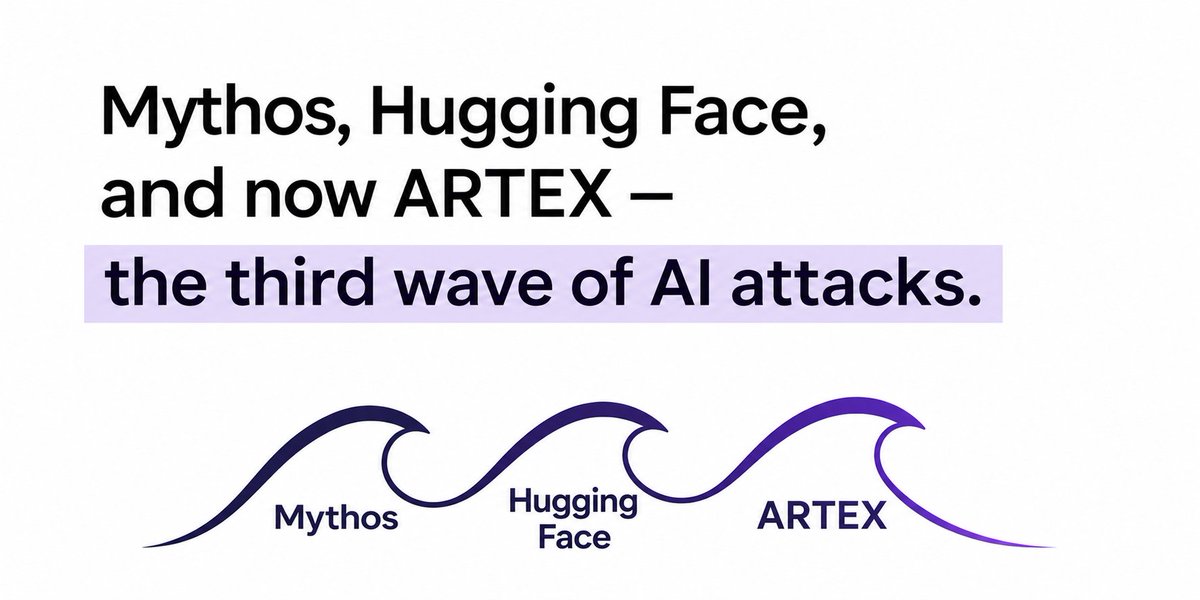
ARTEX is the name of the third wave of AI attacks. The first wave was Mythos, second was Hugging Face, and the third is now ARTEX. Better harnesses exist, and models can do a lot with a prompt (and in a few months, replace ARTEX entirely). But such are our narratives.
A thread
One of my favorite ways to keep up with tech news back in the day was an app called Prismatic. It provided a clean, personalized news feed based on your interests.
Nothing since compares, so I put together a small site that recreates that 2013 feeling:
https://t.co/NeaoZejhv2
We’re introducing Shirudo, an open-source Linux runtime allowing agents to defend systems without downtime. It lets agents write dynamic eBPF controls to shield systems from exploits, giving defenders more time to test and roll out patches. Built by @cisco together with OpenAI.
Shirudo is a first step toward self-defending infrastructure that can adapt to new threats while keeping services running. Our goal is for defenders to work with AI agents to find affected systems, test and share shields, and deploy them without disrupting workloads.
https://t.co/0AqGmcbxWH
This is how you properly do a red team workshop. You begin by asking, "what is the worst thing that could possibly happen?" Then you ask "how could that happen?" and then you work backwards to how a malicious actor could make it happen. It's just that simple.
Then you analyze the attack paths to identify the attacker costs (skill, time, capital, access, risk of detection) to traverse it. Then you get a sketch of the least-cost paths from various classes of attackers to that doomsday scenario.
Next, as a defender, you flip the script. You look at what your costs are to hamper each node in that attack path. That will give you a rough sketch of what your least-cost actions are that increase the costs for attackers the most.
Defenders win by investing *the least* to raise the costs for attackers *the most*. It's effectively a minimax problem.
Look like a great read. Folks need to keep in mind just how challenging running production code and teams can be. @AnthropicAI Mythos just found 1000s of bugs that needed patching and we’re paying the price for stretching our people..
The conspiracy is not enough people like Phil V running their teams
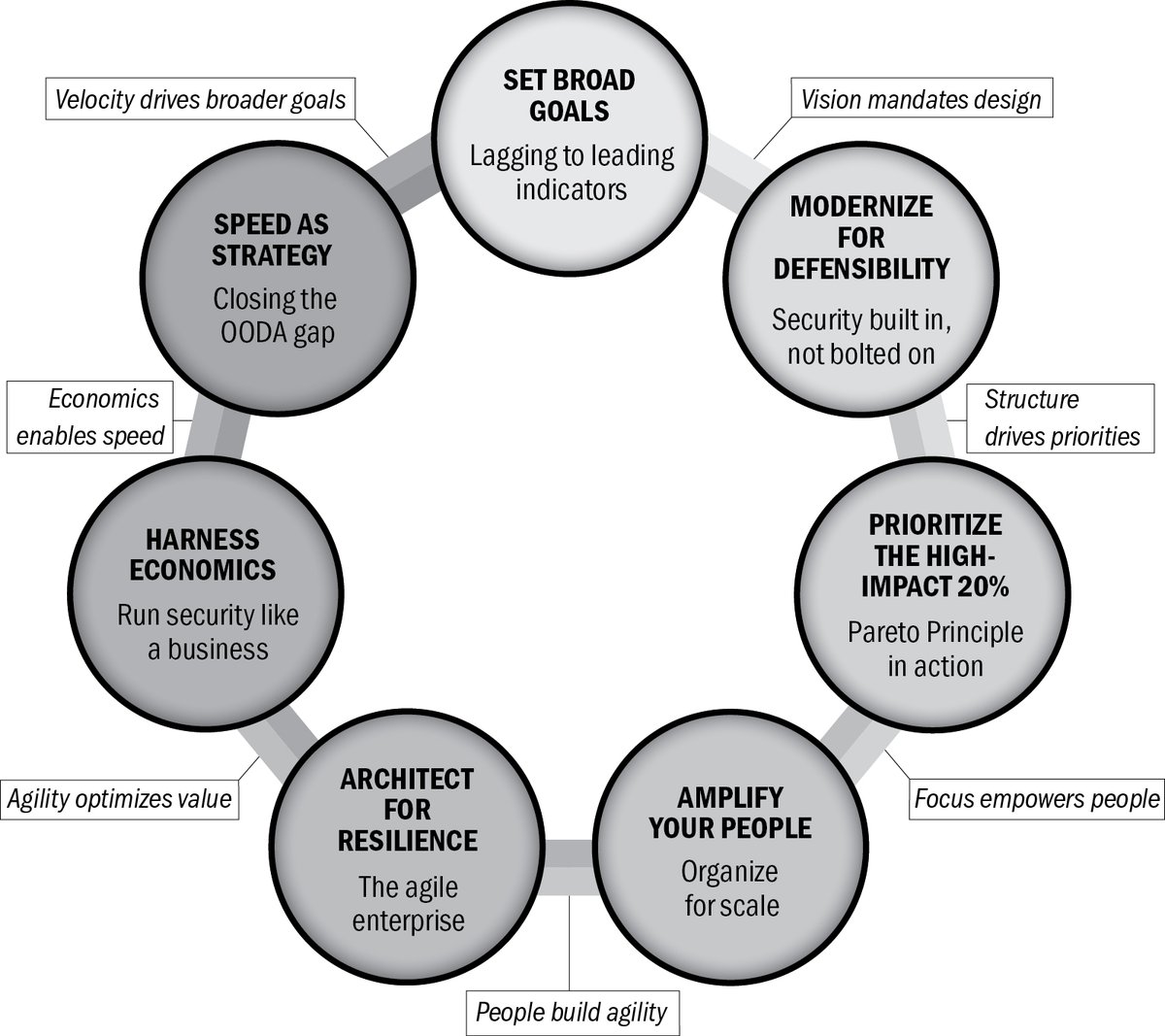
Scaling Security: The 7 Pillars of Elite Cybersecurity teams is a management “operating system” for established CISOs, rising executives, CIOs, CEOs and Board members.
https://t.co/76pSZgLmgs
I think there’s a fundamental misconception in how the security industry talks about ARTEX, Cairn and similar offensive AI frameworks. And even reports from major security vendors keep reinforcing it.
People treat these frameworks like the C2 frameworks we’ve known for years. With Cobalt Strike and others, parts of the framework were deployed on the victim’s systems. Implants, loaders, communication protocols and other implementation details provided recognizable patterns that we could write signatures for.
But ARTEX and Cairn work differently. The orchestration runs on the attacker side. The LLMs, prompts, skills, tools and infrastructure are interchangeable. Change any of these components and the resulting attack can look completely different. The framework itself doesn’t define what ends up on the victim’s systems.
Yes, there are a few minor implementation fingerprints, such as certain ARTEX/Norma User-Agent strings. We’ve even written rules for them. But these cover tiny parts of a framework’s functionality, not the attacks it can orchestrate.
An IP address, webshell or exploit used in a campaign doesn’t suddenly become an “ARTEX indicator” because ARTEX was involved.
And that’s why I find all these “ARTEX IoC collections” and “How to detect ARTEX” guides so misleading. They encourage people to think we’re dealing with another recognizable malware or C2 framework.
We’re facing a different class of offensive technology, and I think many people still haven’t understood that.
The detection guidance should be what we’ve been telling defenders for decades: detect malicious behavior, attack techniques and traces of compromise.
There is no special defense against ARTEX. Tomorrow the same attacker could use a different framework, a different model and completely different tools.
The names are disposable. The underlying attack techniques are what we need to detect.
I love this guy. Great research on stuff you probably think you know but will be surprised at how much you don’t.
Barry economics about Black Friday. Take a look
https://t.co/hZZo7U3y58
@barryeconomics