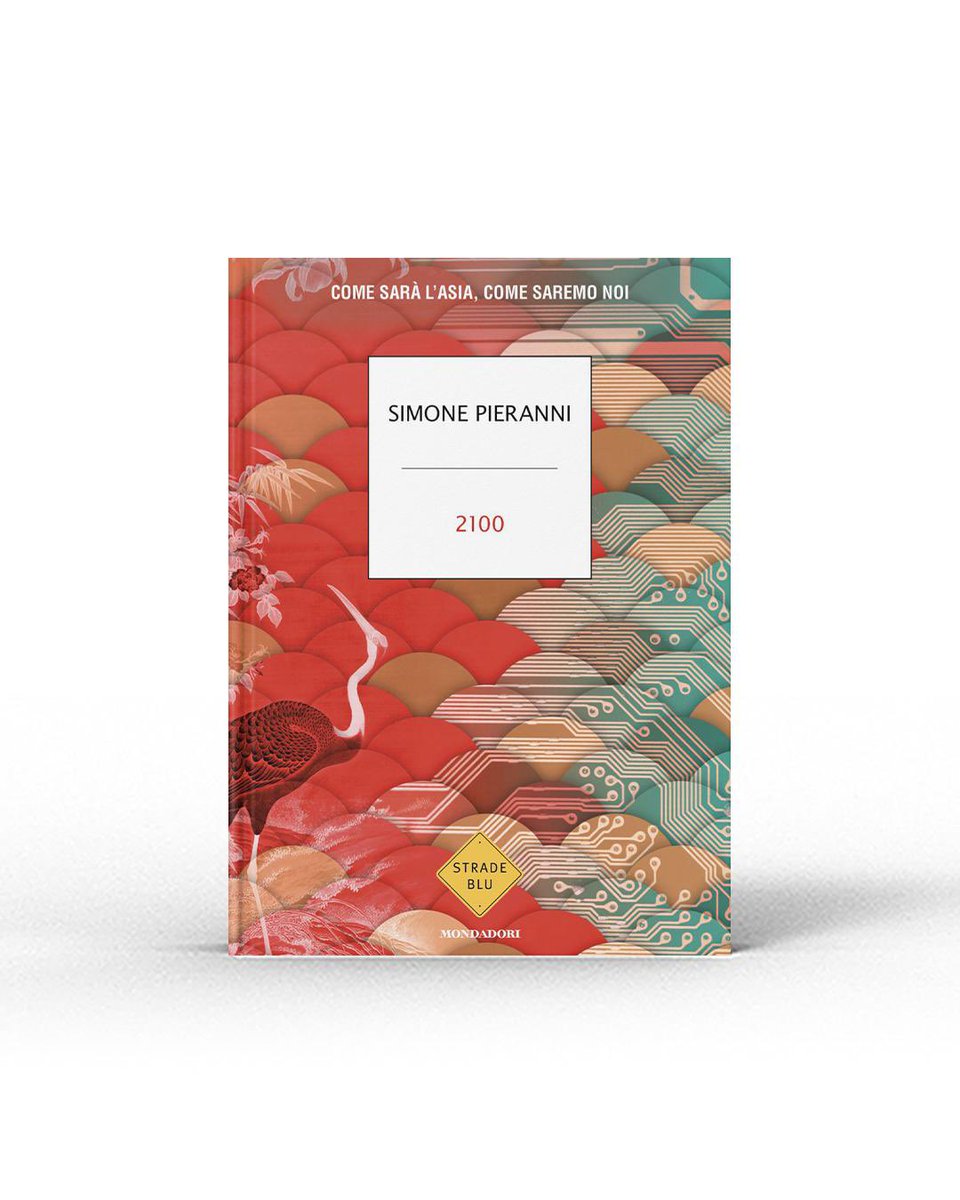
Lavoro a @Chora_Media - co-founder @chinafiles- 📚 Red Mirror, Tecnocina e “2100 - come sarà l’Asia come sarà il mondo” - 🎙️ Altri Orienti - Fuori da Qui
@ChairmanRabbit This is in my book, where I talk about the asymmetry of knowledge and where the Italian public can also find your words regarding this :)
Oh my stars! President Trump has fallen into the evil CCP's "trap" by using the same framing language for the U.S.-China relationship! "Constructive"? Oh my! Strategic stability? Heaven forfend!
At the invitation of President Xi Jinping, President of the United States of America Donald J. Trump will pay a state visit to China from May 13 to 15.
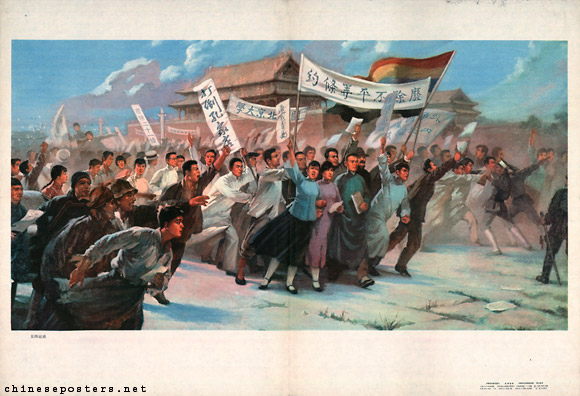
In honor of the May 4th Incident — the pivotal point in modern China's intellectual and political history — new subscribers get 50% off an annual subscription to the Sinica Podcast newsletter. Today only through 11:59 EDT.
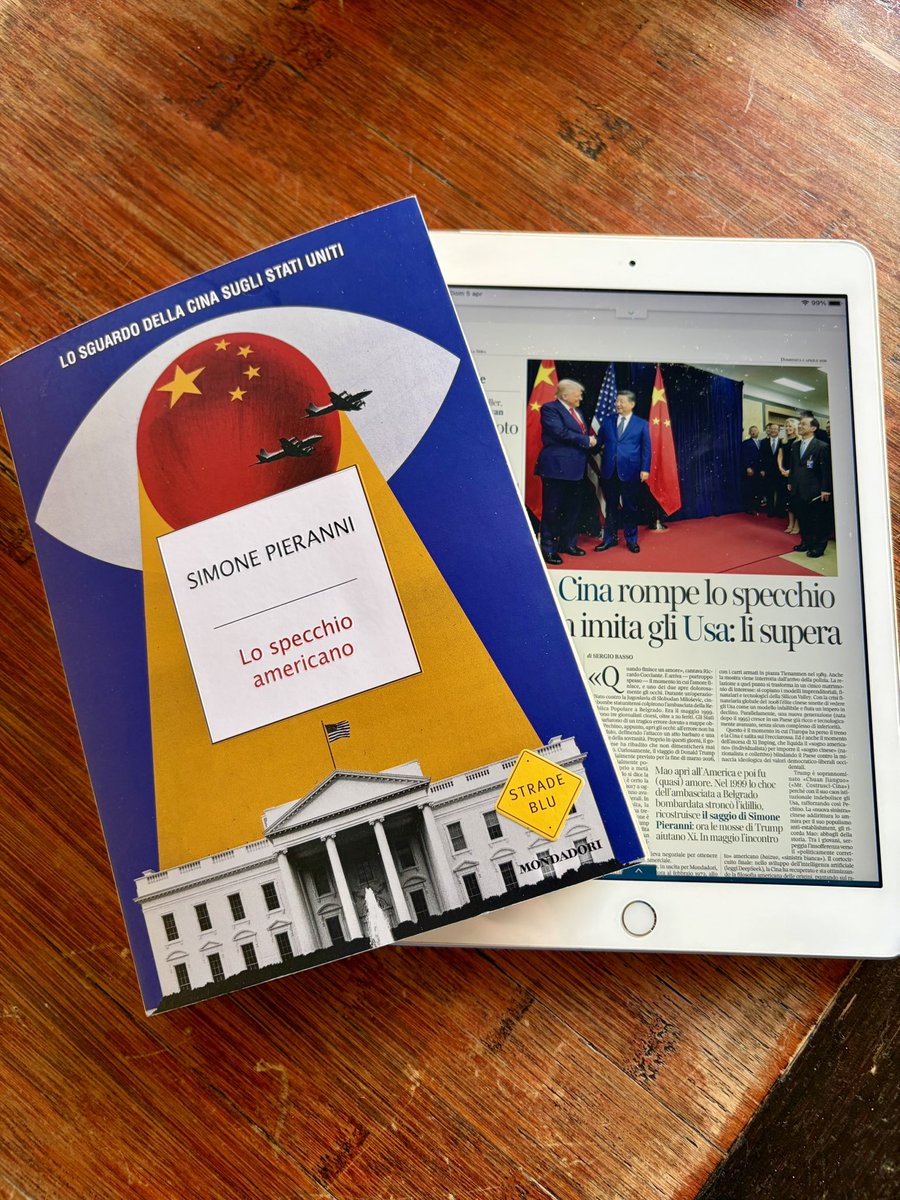
In Lo specchio americano (Mondadori, 2026) Simone Pieranni racconta come intellettuali e scrittori cinesi abbiano prima imitato e poi rifiutato il modello Usa, riflettendo una Cina che non si percepisce più inferiore
Ecco un estratto:
https://t.co/ZXrVMbb7sw
Qui sotto trovate una mia intervista a Vertigine Crime (grazie!): su come crime e “esteri” possano convivere all’interno di una narrazione (sia nei podcast, sia nei libri) e su come, in generale, provare a raccontare gli esteri.
https://t.co/HNCi8HQ6OL
DeepSeek 4 upon Huawei's Ascend chipsis apparently being released in a live event via Bilibili, China's equivalent to Youtube, today at 7pm Beijing Time on April 24.
Il bilancio della visita di Cheng Li-wun🇹🇼: contenuto e segnali dell'incontro con Xi Jinping🇨🇳, le altre tappe, le reazioni a Taipei, le implicazioni per la politica taiwanese e sui rapporti tra Cina e Stati Uniti. Su "Il Partito" di @simopieranni https://t.co/Csvo9FmvCt
Mentre l’Occidente etichettava la Cina, la Cina prendeva appunti sull’America.
Da qui prende le mosse "Lo specchio americano. Lo sguardo della Cina sugli Stati Uniti" @Mondadori di @simopieranni.
La recensione è a cura di @Laurettal88: https://t.co/LR7qQFqM3m
Trump sostiene che Pechino abbia contribuito a convincere Teheran al cessate il fuoco. Per Xi Jinping si tratta di un successo d’immagine, in vista del summit di metà maggio col presidente americano. Ma la Cina non vuole il ruolo di garante della tregua https://t.co/yrwAmFcJIw
@simopieranni ci accompagna nel complesso rapporto fra i due Paesi, ripercorrendo oltre un secolo di relazioni culturali. Ne emerge un sentimento ambivalente di amore e odio, e una lunga fascinazione della Cina nei confronti degli USA, talvolta con effetti paradossali...
Read The Diplomat? Read like The Diplomat's editors. Check out our list of favorites and for a short time get 15% off with code BSO15, valid until April 1 https://t.co/t0GW4uUwUc
Excited to publish a @nytimes guest essay with my @AsiaPolicy colleague Jing Qian arguing that more U.S. officials should visit China.
Seeing the country’s industrial strength up close would sharpen Washington’s sense of just how formidable a competitor it is and, ideally, spur more lawmakers to take restoring American competitiveness at home seriously.
"Washington needs to restore regular travel by American policymakers to China, which dropped sharply in recent years, just as the economic and geopolitical competition between the two countries has intensified.
No American president has set foot in China since Mr. Trump did in 2017, during his first term. That absence highlights a simple but troubling truth: Americans talk incessantly about the need to compete with their country’s greatest rival and how to do it. Yet many U.S. policymakers have never been to China.
U.S. officials are left grappling with an abstraction. This can lead to serious misjudgments, such as the escalating tariffs Mr. Trump imposed last year, expecting they would bring China to its knees. In the end, he retreated after Beijing showed it had the tools and capacity to push back.
Seeing China up close — its manufacturing juggernaut, technological and innovative capacities, state-of-the-art infrastructure and state-fostered industrial ecosystems — would help prevent such miscalculations and hopefully lead to U.S. policy that is less complacent, less theatrical and more focused on what’s actually needed to revitalize American industry.
...
Restoring regular travel to China will be neither simple nor risk-free. But the greater strategic danger lies in American policies that are based on stale assumptions, secondhand impressions and an incomplete understanding of what China is building."