Imagine depositing a yield-bearing stablecoin and getting paid to borrow against it.
In this example on @dTRINITY_DeFi,
it starts with $sfrxUSD:
• You deposit sfrxUSD as collateral, and it keeps earning its own yield (currently around ~3.8% APY in this setup).
On top of that, you borrow dUSD against this collateral:
• The Net Borrow APY on dUSD is currently about 0.31% , so you’re effectively being paid to borrow.
Put together: your $sfrxUSD collateral earns, while your $dUSD debt currently earns as well, both working for you at the same time.
1/ dUSD has reached ~54% utilization in dLEND on Ethereum, with ~$94K left in borrows until optimal utilization is reached.
Current Net Borrow APY is -0.31%. This means users are not incurring any interest on their loans. In fact, they're getting paid 0.31% APY to borrow dUSD!
With ~$55K and counting, this is on track to be our strongest revenue Epoch in the past 10 weeks.
That’s well over a 100% increase from the previous one.
Best part? It’s shared with you. Vote to grab a piece of THE pie.
🔹Step 1
Mint USSD for free using USDC
🔹Step 2
Buy ftUSD with USSD & stake it
🔹Step 3
Get 30% yield for yourself
+ 3.5% yield back to Sonic Ecosystem
No lockup, no que, one click instant minting and redemption
If you are sonic-3:native sonic bull. Use $USSD to mint ftUSD.
30% APY for you & 3.5% APY for Sonic Ecossytem.
For end user, it's the same.
For Sonic, each USSD minted = Stronger Ecosystem
30% APY on Sonic via Staked ftUSD.
Mint ftUSD on @flyingtulip_ using USSD or USDC, then stake it for yield.
No incentives. Just organic stablecoin yield on Sonic Network.
Flying Tulip yield on Sonic is starting to stand out.
Staked ftUSD on Sonic is at 29.36% yield, with no incentives or points.
You can mint ftUSD with USDC or USSD, with no cooldown or exit queue. 🔽
Three steps to unlock liquidity without sacrifice:
– Step 1: Deposit collateral (vault tokens, LSTs/LRTs, bluechips). It keeps earning while locked.
– Step 2: Borrow USDVE at 0% interest under normal conditions. Permissionless minting against verified collateral.
– Step 3: Deploy your USDVE (LP on Hydrex, stake in Stability Pool, use across DeFi).
Result: Your collateral earns. Your borrowed USDVE earns. You accumulate Points on every action.
Capital efficiency on both sides.
The PSM (Peg Stability Module) explained:
The PSM lets anyone swap USDC for USDVE at 1:1 ratio.
Why it matters:
If USDVE trades below $1, users can buy cheap and swap at the PSM for full value. Buying pressure restores the peg automatically.
For users: Quick USDVE access without collateral. Want to LP or deploy? No prerequisites: just swap USDC 1:1 and go.
Borrowing vs PSM: Borrow if you want to keep collateral earning + get Points. Use PSM if you want instant access without setup.
Two paths to liquidity. Same peg stability mechanism.
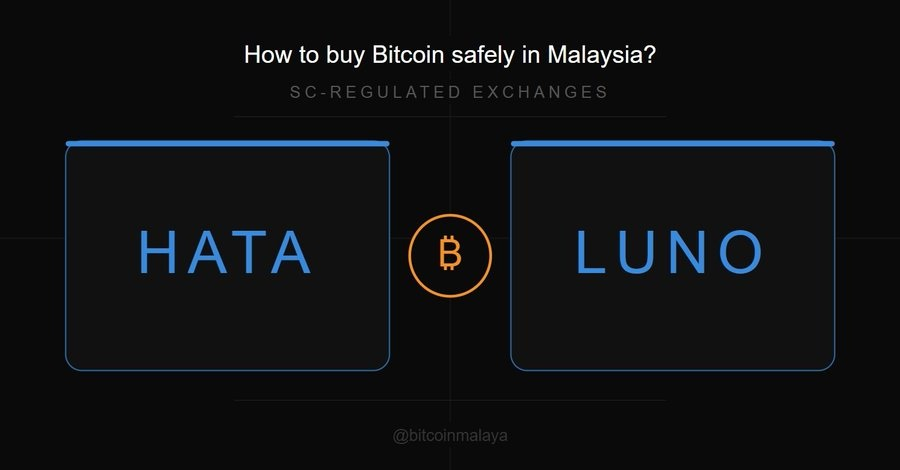
“I want to buy bitcoin but I don't know where should I start"
If you are a beginner in Malaysia, don't overcomplicate this and lose money on shady platforms.
Step-by-step: How to buy your first RM500 worth of Bitcoin safely in Malaysia
🧵
Stablecoin yield on sonic-3:native @SonicLabs
Flying Tulip:
ftUSD via USDC/USSD: 5.37%
Margin Lending USDC deposit: 8.8%
Aave:
USDC deposit: 7.14%
Some of the best pure stablecoin yields on any network, without incentives or leverage.
Yield on @flyingtulip_ is getting more interesting on Sonic Network.
▪️ftUSD is now at 6.55%, mintable via USDC & USSD.
▪️Margin Lending USDC is at 6.57%.
▪️ftUSD has now been added as collateral on Lend.
Gardenia is shutting its Singapore bakery and moving production to Johor Bahru.
141 employees retrenched. Pandan Loop facility closes June 30.
most people read this as jobs leaving Singapore.
and it's not just Gardenia.
exchanges like @Bybit_Official and @okx moved operations from SG to KL.
@NordLockGroup moved their entire SEA HQ from Singapore to KL.
Sakata INX chose Malaysia for their new regional HQ, and saved USD 6-13 million in the process.
31% of Japanese firms have already shifted specific functions to Malaysia and Thailand.
and according to the HSBC Global Connections survey, Malaysia is now the #1 destination for international business expansion in SEA - 1 in 4 global firms planning to expand in the region are looking at MY.
why KL specifically?
a regional employee in Singapore can easily cost 2-3x more once you factor in salaries, office rent, housing, and operating costs.
I visited Infinity8 Reserve recently, a solid coworking space in TRX, KL charging around RM700-1,500/head.
the equivalent in SG? easily 3-4x.
and KL sits in a genuinely rare sweet spot.
English-speaking workforce with a neutral accent. Mandarin - traditional and simplified.
Bahasa Malaysia, which is pretty close to Bahasa Indonesia.
from KL, you can serve Indonesia, Taiwan, Hong Kong, and the rest of ASEAN - markets that are expensive to operate out of directly.
no earthquakes. no typhoons. international airports. decent internet. a timezone that covers the whole of ASEAN.
goldilocks, basically.
the Malaysian-Chinese culture angle is underrated too.
a lot of regional teams have Chinese teams from China. Malaysia's Chinese community makes that transition genuinely easy - culturally, linguistically, socially, and availability of varied Chinese cuisines.
AI is accelerating this.
teams are getting smaller. if you need fewer people, you need less justification to pay Singapore prices.
companies are asking: do we still need our ops, finance, and shared services teams sitting in one of the most expensive cities in Asia?
the answer is increasingly no.
smart companies are already running the two-layer playbook deliberately:
what stays in Singapore: finance, treasury, global client relationships, strategic decisions.
what grows in Malaysia: regional teams, product builders, developer communities, market expansion.
Singapore's prestige and Malaysia's efficiency.
companies get both. neither city loses.
and this isn't bad for Singapore.
London lost manufacturing. New York shed its shipping status. both became global financial command centres.
Singapore is heading the same way - moving up toward wealth management, treasury, AI infrastructure, and high-end financial services.
less volume. more value.
SEA is maturing into a complementary system. Singapore specialises upward. Malaysia scales outward. the region gets stronger because both are playing to their strengths.
that's what a maturing ecosystem looks like.
for crypto and web3 builders specifically:
this dynamic is already playing out in our ecosystem.
SG still holds the regulatory licenses, the VC money, the exchange headquarters on paper.
but the actual building - the hackathons, the developer communities, the products being shipped - are increasingly happening in KL, Johor, Penang, and Sarawak.
Singapore optimises capital. Malaysia builds things.
both matter. both win. the region grows together.
SEA isn't splitting into command and execution.
it's splitting into two kinds of ambition, and Malaysia is finally being recognised for what it's always been capable of.
@SuperteamMY is here for exactly that🫡
Deposit. Mint. Earn.
Three actions. Maximum capital efficiency.
→ Deposit productive collateral
→ Mint USDVE at 0% interest under normal conditions
→ Earn on your collateral while you borrow
This is the Full Loop. This is Vaultedge.
Stay ahead → https://t.co/UE7nemRkOP