Andrej Karpathy spent 8 years at OpenAI and Tesla
Last week, he compressed everything he knows into one free 2-hour lecture
Agents → Loops → Harness → Self-Improving Systems
People spend $15K on bootcamps that teach less than this
This lecture beats most paid AI engineering courses
You probably don't have 2 hours right now
Don't let this vanish from your feed
Watch it
Then read the article below
Andrew Ng just released a free 2-hour course on complete Graph Engineering
How to go from one prompt to 100 agents that loop, improve, and run without you:
09:14 - Build your first AI agent
33:11 - Run agents with loop engineering
1:02:46 - Turn agent loops into graphs
1:30:15 - Build agents that rewrite themselves
1:49:05 - Run the full graph system without you
Most people are still building one agent and calling it finished
Andrew Ng is already teaching everything that comes next:
Prompt → Agents → Loops → Graphs → Self-Improving Systems
Single agents are the old workflow
Systems that improve and run without you are the next one
This 2-hour course is worth more than most $500 agent engineering programs
Bookmark it and watch before everyone catches up
Then read how to run 1,000 agents from one prompt below ↓
She is 18 built a game with 4 agents and sold it to Microsoft for $2.4M - and at Stanford shared how to repeat it from scratch:
00:09 - how Opus 5 in Claude Code built a game making $100k a month
23:34 - 4 agents replaced a developer team worth $200k a year
59:47 - how to build your first game from scratch in 60 minutes
after watching I gave Claude Code the game idea I had been holding for 2 years - in 60 minutes it already existed in the App Store and was making money.
save & watch - the article below shows how 4 agents and Claude Code replace a developer team and build a game Microsoft will buy for $2.4M.
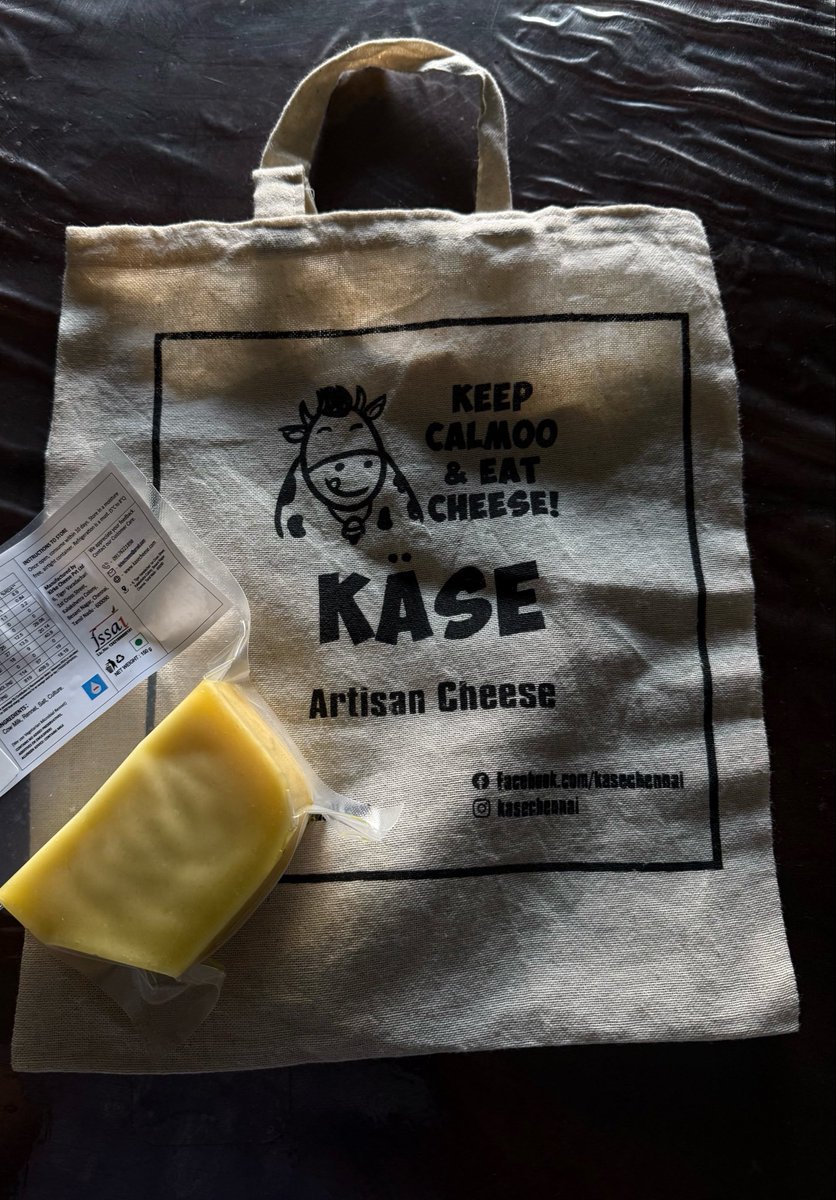
TIL (actually learnt this last week) that Kase Cheese from Chennai has won a few World cheese awards and is just a stone’s throw away from bessie.
Picked up some Gouda and Alpine style washed rind. 12/10 stuff highly recommend.
David Jerison, MIT 18.01
Funds pay half a million dollars a year for people who understand one idea. MIT teaches that exact idea for free, to eighteen-year-olds, in the first hour of freshman calculus. Almost none of them realize what they just sat through.
Calculus is not a hundred rules to memorize. It's one idea. Take two points on a curve, slide them together until the gap between them vanishes completely, and whatever slope is left when they meet is the derivative. That's the entire concept. Everything else is just that same idea wearing different clothes.
You already memorized fifty formulas that fall out of this one limit and never once asked why they worked.
Watch what happens once you actually sit with it. The power rule falls out of it. The product rule falls out of it. The chain rule, the exact thing you crammed the night before an exam, is just this same definition, applied over and over in a different costume.
No formula sheet. No memorized trick. One idea, reused without end.
Sit with that for a second. That same slope is velocity, the rate your position changes over time. It's marginal cost, the rate your expenses shift with one more unit made. It's the gradient that trains a neural network right now, the exact same operation, adjusting billions of parameters one small slope at a time.
Different fields. Different units. Same idea, hiding in plain sight in every single one of them.
The lecture has been free on MIT OpenCourseWare for twenty years. Almost nobody finishes it, because memorizing fifty formulas feels like progress and sitting still with one limit until it clicks feels like standing still.
The math is free. What nobody can sell you is the patience to actually understand the one thing instead of cramming the fifty things that fall out of it.
A Chinese developer just explained the shift from Loop Engineering to Graph Engineering better than anyone.
most people are still building agents the way that's about to be obsolete.
> why single-agent loops break and go "goal blind"
> the 4 parts of a graph: nodes, edges, state, policy
> 3 topologies that run everything: diamond, supervisor, pipeline
> Anthropic's 5 official workflow patterns
the punchline: it's not how many agents you run. it's the determinism you build with verifiers, code fallbacks, and reality anchors.
I broke the same architecture down with Kimi K3. Full A-Z guide below.
NEW: 🇨🇳 China's nuclear fusion research has completed a massive magnet weighing 582 tons.
The goal is an "unlimited energy" artificial sun.
They plan to start the first power generation by 2030.
A safe, CO2-zero ultimate energy race.
My friend applied to 200 tech jobs in two years. No MIT. No Stanford.
Last month Anthropic offered him $750,000.
I asked him how he broke in from zero.
He sent me the exact video that got him in. A 4-hour course on mastering Claude Code.
I watched it last night.
Halfway through, I realized I've been using Claude Code completely wrong for a year.
Bookmark this and read the article below.
• 00:00 - Claude Code setup
• 49:34 - building apps with Claude Code
• 2:07:52 - prompting Claude Code
• 2:46:16 - Claude Code for production
My friend makes $1.4 million/year as an Anthropic engineer.
I asked him how he learned prompting so well.
He sent me a video that was never supposed to get out. Their core team's prompting roundtable.
You won’t find anything better about prompting than this video.
I watched it last night.
Halfway through, I realized I've been using Claude the wrong way for two years.
Bookmark & watch this before someone takes it down.
@elonmusk Indian Govt. steals from hardworking parents to maintain their freebees ! there is no way any future mother want to participate in motherhood if she barely keeps up with her expenditure