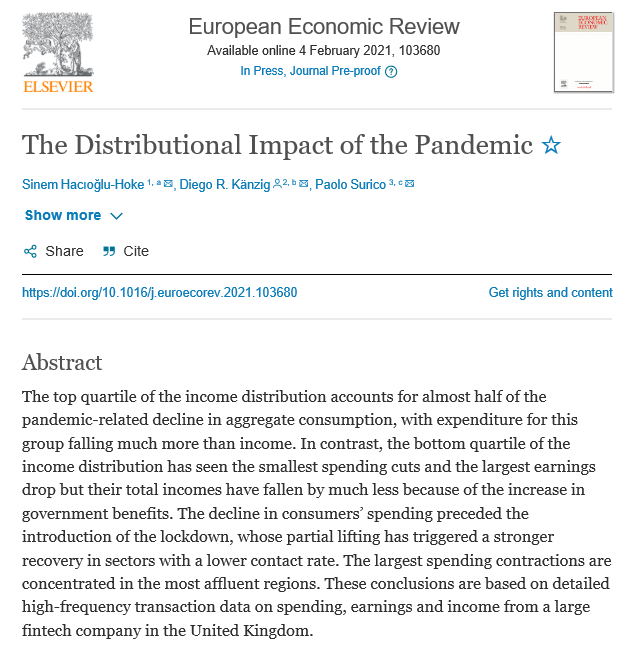
Publication: "The Distributional Impact of Pandemic", by Sinem Hacioglu-Hoke (BoE), Diego Kanzig (LBS) + Paolo Surico(LBS), in the European Economic Review. Looks at how earnings + spending evolved across the income distribution during the Covid outbreak.
https://t.co/S7Ar2BlzZc!
The authors analyze 125,000 US households' transactions to measure how 2025 tariffs affected spending. Tariffs passed through 15-20% to retail prices, raising affected-good prices 1-2%. But households cut spending by 3 to 4 times the price increase. (1/3) https://t.co/tigAbc3M2y
4) Survey linked to transaction data shows middle-income households drove the pullback, reallocating toward essentials and trading down to cheaper varieties
5) Is it stockpiling which unwinds? No. The spending drop is sustained, not front-loaded
A new paper is out! With Leo Feler
Paying more and Buying Less: 2025 Tariffs and US household Spending
1) Tariffs passed through 15-20% to retail prices, raising prices 1-2% on affected goods
https://t.co/xbNTeBGntT
2) But households cut spending by around 4%, which is 3-4 times more than the price increase
3) Heterogeneity across the income distribution. E.g. price pass through to low-income households’ basket is larger; low-income households bear a much larger welfare
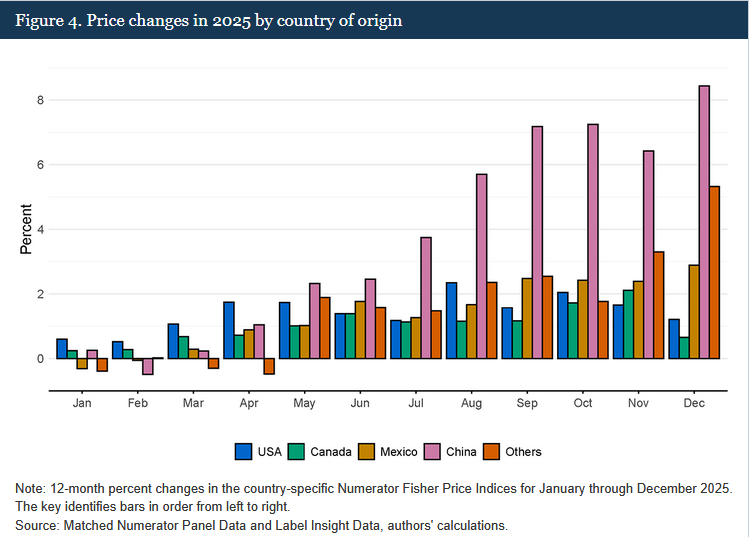
This #FEDSNote shows that price pressures developed gradually in 2025 rather than showing up as a one-time price spike and tariff effects have been greatest for goods imported from China with 8.5% year-over-year price increase by December 2025. https://t.co/A0YYkBVnDn
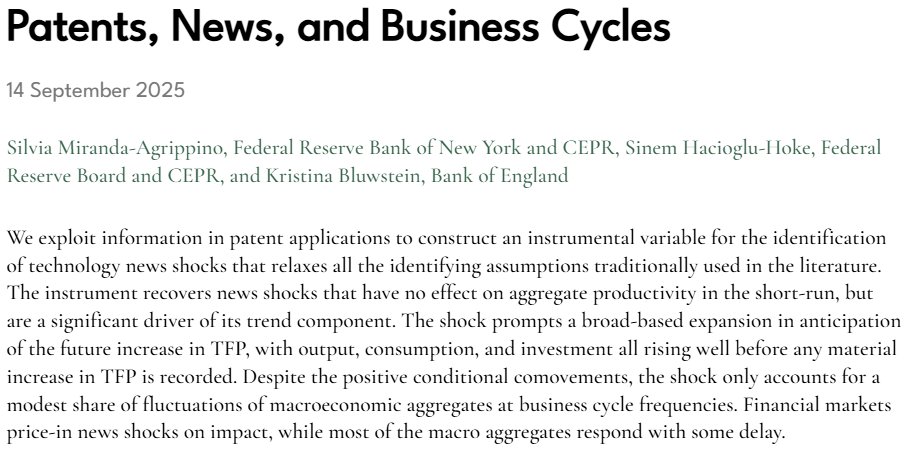
"Not all booms are built on hard data—some ride on expectations. Tech news shocks (via patents) drive expansions long before TFP rises. Markets react first; macro follows."
New paper by @_SiLviA_mA, @sinemhacioglu and Bluwstein:
https://t.co/YKgzaSM1E4
#econtwitter#REStud
This #FEDSNote summarizes the results of a household survey that aims to understand how changes in household incomes and spending between 2019 and 2024 shaped their economic sentiment. https://t.co/QSKqHw0oYI (1/3)
Who's driving consumer spending? It's middle- and high-income households! They're the ones fueling strong spending growth on retail goods and food services, while spending by low-income households has been flat. See this new #FEDSNote for more information: https://t.co/GD2R603uVp
Map by @landgeist shows tea consumption across Europe. The English national pride in drinking tea must be hurt by the Turkish consumption patterns. Poland stronger than intuited. Fun data!
New #FEDSNote: New evidence quantifies the supply and demand forces behind the recent run-up and retreat in U.S. manufacturing producer price inflation: https://t.co/X60gkojQP7 (1/2)
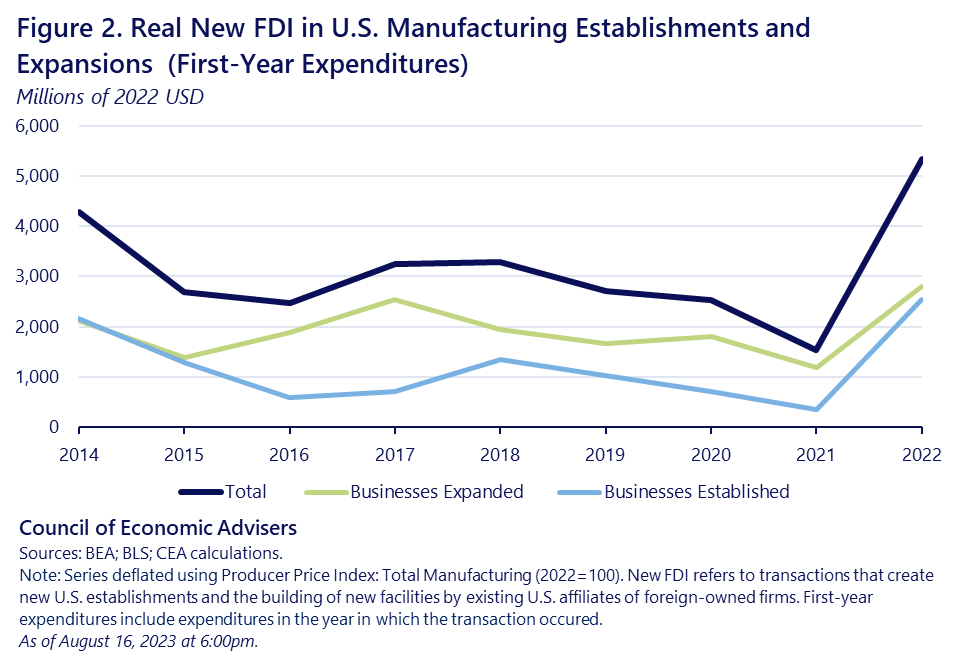
Foreign investors are contributing to this increase in U.S. manufacturing construction and expanded manufacturing capacity, with FDI in new U.S. manufacturing production capacity reaching $5.3 billion in 2022 and reversing a multi-year downward trend. 3/
@FlorinBilbiie Proud of the same for my birth country but also I am glad that its team has a female team member, the only one amongst all the countries in fact.
Still a long way to go on diversity but it’s a start…
Programme + registration details now out for the "Third Conference on Non-Bank Financial Sector and Financial Stability" organised with @cepr_org, @FMG_LSE'S Paul Woolley centre + @ImperialBiz's Brevan Howard centre. 31 May -1 June Imperial College London
https://t.co/jXY0eKWgwA