1/5 Integration of scRNA-seq data is key for cross-dataset comparison. Yet, substantial batch effects can't be sufficiently removed without losing too much biological information. We show how to improve the integration of substantial batch effects https://t.co/LQLbD9U3av
Want to annotate cells across whole organism? Led by @felix_f0097 with Villani lab, we propose scTab, a DL model for tabular single cell expr & show strong scaling behavior beyond linear. Comes with large benchmark useful for evaluating foundation models.
https://t.co/JiuExwvG0n
It's a wrap! Our two day annual meeting has come to an end. As everyone is heading home, we would like to thank all the speakers, our SAB, and the team for an enganging and productive meeting. Until next time! 👋 #GHGAtalks
(1/n)scPoli is now published in @naturemethods https://t.co/sWXY6tZ2qF; see below. scPoli is an open-world learner for multi-scale analysis of scRNAseq/ATAC-seq across samples and species with cell types and conditions hierarchies. With scPoli you can:
📢LIANA+, our all-in-one cell-cell communication framework for multi-condition single-cell and spatial data, is now part of the @scverse_team. In the same spirit, we are open to suggestions, requests and contributions👩💻👨💻https://t.co/MsFr5uWCJi
Here's a list of tutorials 👇
GET: a foundation model of transcription across human cell types
Scalable training across single-cell ATAC and RNA+ATAC datasets
https://t.co/H9Sszcczqf
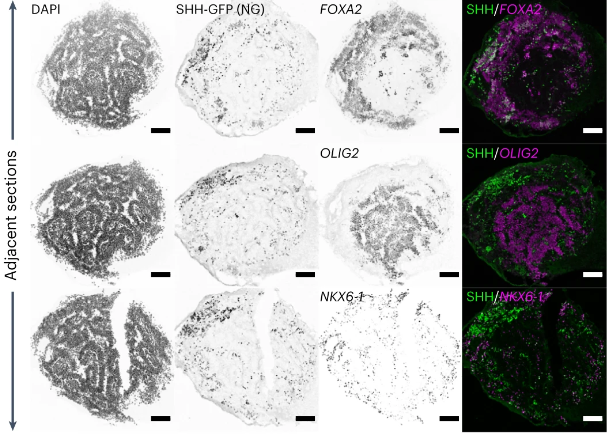
A workflow developed by @N_Rajewsky, @ILegnini and colleagues combines optogenetic perturbations and spatial transcriptomics to enable insights into cell fates and spatiotemporal gene patterns in organoids.
OA paper: https://t.co/BAyOpfxOS0
Excited that veloVI is out @naturemethods! Led by @adamgayoso & @PhilippWeiler7 w awesome @YosefLab, we combine deep generative modeling with a mechanistic single-cell transcriptional model for better RNA velocity analysis with uncertainty quantification. https://t.co/EaBpcqwexi
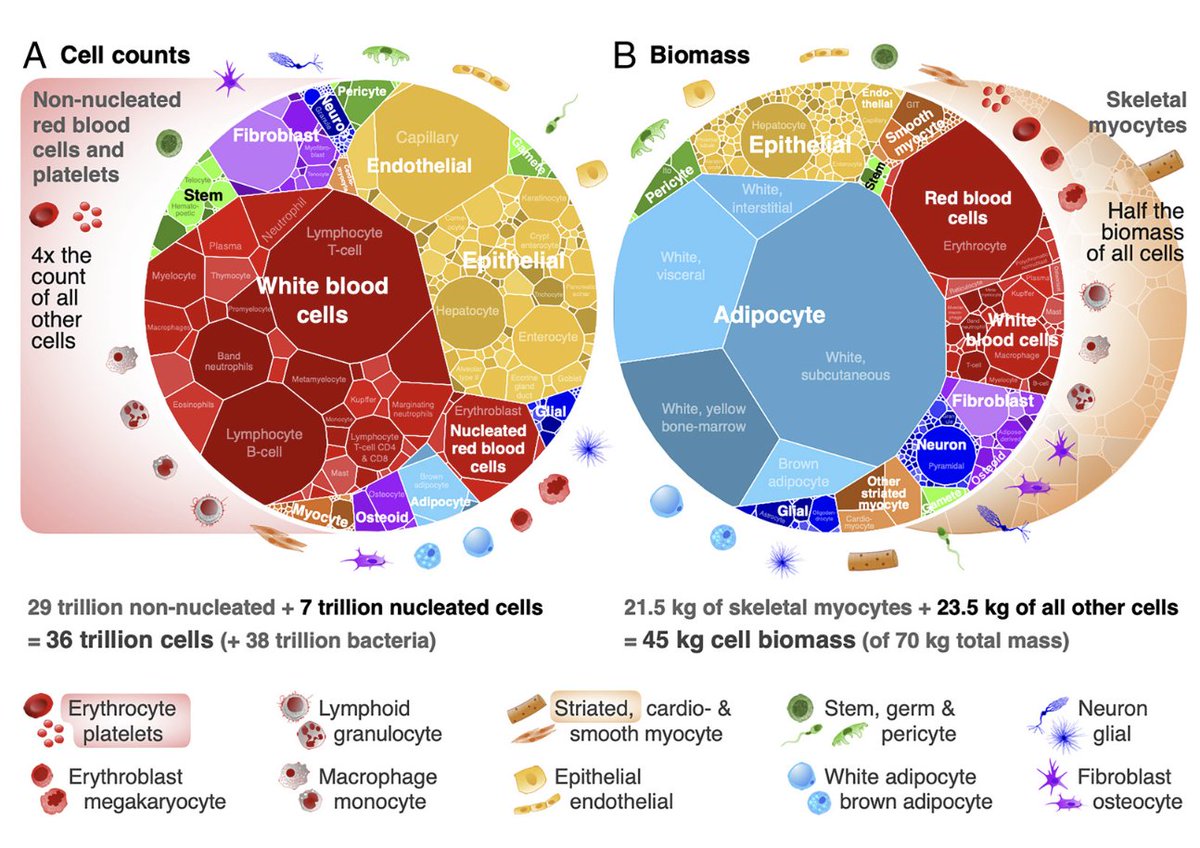
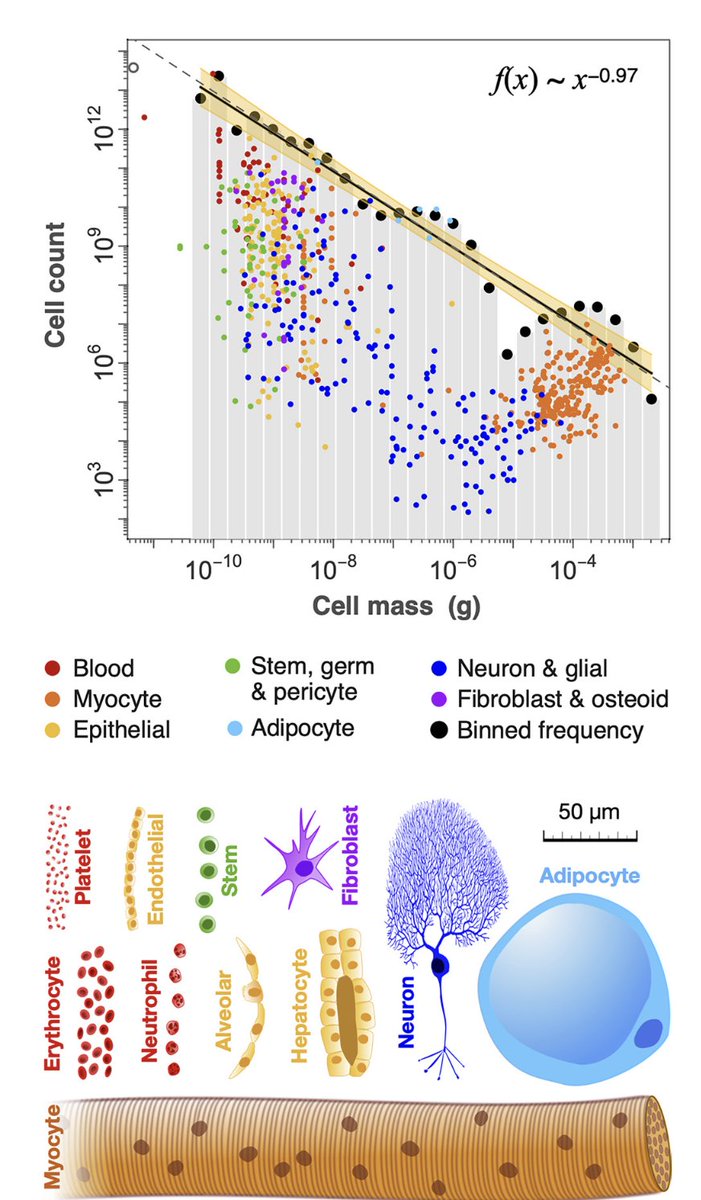
The latest on human total body cell count and cell size derived from >1,500 sources @PNASNews
Men ~36 trillion cells
Women ~28 trillion cells
an inverse relationship between cell size and count
https://t.co/i9qKqFOaVB
We are planning to build a high-performance computing cluster with 1000+ GPUs to accelerate AI for biomedical science, including advancing the development of new virtual cell 👇🪡https://t.co/fFDt7Y81I0
We are thrilled to share our latest work, a collaborative effort with @TreutleinLab, in Nature (https://t.co/pChgPCFEOM). We introduce CHOOSE, a powerful screening system within cerebral organoids, through which we identified developmental defects associated with autism.
🧵1/7
Our journey of multiplexed DIA, encompassing applications in spatial #singlecell#proteomics, is showcased on the cover of the latest issue of @MolSystBiol. We are excited about the prospects of sensitivity, reproducibility and high-throughput applications in clinical proteomics.
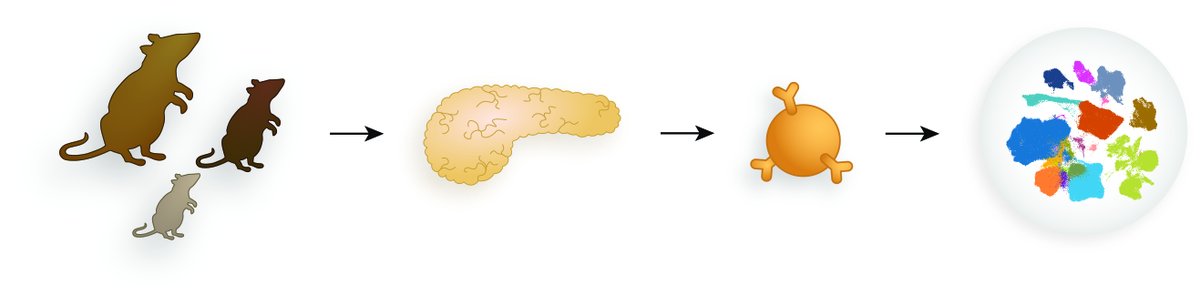
To ease understanding of diabetes, which is complicated by bio and technical factors affecting the regulators of blood glucose – the pancreatic islets, we created a comprehensive mouse islet atlas (MIA) by integrating multiple single-cell transcriptomic (scRNA-seq) datasets.
We thank the speakers, organizers and ca. 200 participants of the 16th Berlin Summer Meeting 'The MDC Celebrates 15 Years of BIMSB', 6-7 Sept 2023, for 2 days of superb presentations & discussions on the latest exciting findings in systems biology!
@MDC_Berlin#mdcBIMSB2023
📢 Starting now! Don't miss Céline's lecture "Mechanisms of cell plasticity in breast cancer".
@VallotCeline, @institut_curie, #SCOGVLS
✏️ Register: https://t.co/oGXJaNK1Pw