Learn Austrian Economics in one X post:
1. Humans act. Every choice a person makes traces back to an incentive, a trade-off, a cost weighed against a benefit. Remove the incentive and the action stops. Distort the incentive and the action warps.
Tax income at 90% and watch producers stop producing. Subsidize failure and watch failure multiply. The behavior follows the reward structure, always.
2. Value exists only in the mind of the person choosing. A glass of water is worth nothing to a drowning man and everything to a man dying of thirst. No central authority can calculate this, because it changes with every individual and every circumstance.
Nothing has value in itself, only the degree to which humans choose to value it. Diamonds and even gold only carry value because humans decided they do.
3. Money does not come from a government decree. It emerged spontaneously when traders needed something durable, divisible, and widely accepted to escape the limitations of direct barter. Gold won that competition across centuries and across dozens of independent civilizations because the market, not a ministry, chose it.
Fiat currency is the state hijacking that evolved institution and replacing it with paper backed by nothing but a legal threat. Every central bank on earth operates on this model right now.
4. Wealth does not fall from the sky. A farmer who eats his entire harvest produces nothing next season. The farmer who saves seed, plants it, and specializes in what he grows best accumulates a surplus. That surplus is capital. Capital funds everything that comes after.
Consumption without prior production is just burning down the furniture for warmth. Every welfare state eventually reaches this point.
5. Strip private property rights and production collapses. A farmer will work his own land until midnight. That same farmer, working collective land, stops at noon. The Soviet Union ran this experiment across seventy years and killed tens of millions, proving the point.
When you cannot own the outcome, you do not produce the outcome.
6. Voluntary trade generates wealth from nothing but mutual preference. When you pay twelve dollars for a meal, you value the meal above twelve dollars; the restaurant values twelve dollars above the meal. Both parties walk away wealthier in real terms. No politician, no regulator, no bureaucrat added anything.
Protectionism destroys this. The 2018 US steel tariffs raised steel prices for American manufacturers, killed more jobs in steel-consuming industries than existed in steel production itself, and transferred wealth from productive firms to a protected few.
7. Ludwig von Mises identified inflation as a tax. Every dollar the Federal Reserve creates without corresponding production dilutes every dollar you already hold. The new money flows first to the government and its contractors, who spend it at current prices. By the time it reaches you, prices have already risen.
The US M2 money supply grew from roughly 15 trillion dollars in January 2020 to over 21 trillion by early 2022. Consumer prices followed. Your savings took the loss.
8. Prices carry information. A price spike tells producers to produce more and tells consumers to use less. It coordinates millions of strangers without a single central command. Interfere with that signal and the coordination breaks.
Rent control in New York City is the cleanest example. Cap rents below market and landlords stop maintaining buildings, stop building new ones, and convert units to other uses. The people rent control was supposed to help pay the price through collapsing supply.
9. Interest rates are the price of capital over time. When the Federal Reserve pushed rates to near zero between 2008 and 2022, it told every investor that capital was nearly free. Businesses built projects that only made sense at zero percent. When rates normalized, the projects failed. The 2022 collapse of the US tech sector and the crypto market were not random events. They were the correction of a decade of artificially cheap capital.
The business cycle is not a mystery of capitalism. Central banks manufacture it.
10. Bureaucrats face no profit and loss. A businessman who misallocates capital goes bankrupt. A bureaucrat who misallocates capital writes a report requesting more funding. The feedback loop that disciplines markets simply does not exist inside a government agency.
The US Department of Education has spent over a trillion dollars since 1980. Literacy rates have not improved. No one at the department has been bankrupted by this outcome.
11. Every producer inside a local market holds knowledge that no bureaucrat in a capital city can replicate. A wheat farmer in Kansas tracks soil moisture, futures prices, local equipment costs, his specific buyer relationships, and a hundred other variables simultaneously. That knowledge lives in the price he sets.
Friedrich Hayek called this tacit knowledge in 1945. The Soviet central planners ignored him and spent fifty years proving him correct, producing chronic shortages of goods that private markets coordinate effortlessly. No model, no algorithm, and no committee can compress what millions of independent actors know into a single plan.
12. Every government intervention produces effects you see and effects you don't. You see the road the state builds. You don't see the factory the tax dollars never funded, the job that never existed, the innovation that never happened because capital was extracted at gunpoint and redirected by bureaucrats with no skin in the game.
Take the 2009 Cash for Clunkers program. Congress destroyed 690,000 working cars, handed dealers a short-term spike, and you saw the sales numbers. The used car market was stripped of affordable inventory, pricing working-class buyers out for years afterward.
13. Prices, supply chains, and language itself coordinate millions of strangers without any central planner issuing a single command. That coordination is spontaneous order: complex, functional patterns that emerge from individuals pursuing their own goals under rules they did not collectively design. No committee holds the dispersed local knowledge required to replicate what voluntary exchange produces every second.
Watch how English evolved. No king designed its grammar. Millions of speakers across centuries adopted words and structures that worked, dropped ones that didn't, and produced a language richer than any bureaucrat could have engineered. Central planners who believe they can replicate that process with price controls or production quotas destroy the feedback mechanism that generates the order in the first place.
Thanks for reading this long post! What would you add to this list?
Trump Pledges That If Voters Defeat Socialism In November, They Will Each Get An Equal Redistribution Of Wealth From The Government https://t.co/qe16k9ucsf
Hey @SecScottBessent & @realDonaldTrump, how about we pressure Congress to stop spending so much damn money instead of all the financial theatrics?
I overheard my wife complaining about her wifi being out and not being able to work because of it. So, I did the nerdy, chivalrous thing and snuck in her office and fixed it. Now she can work, but is complaining even more so.
I guess I messed up?
I asked my kids what their favorite type of sandwich was. Both of them said, "Cheeseburger". Respect.
Hoping to dig a little deeper, I asked what their top three were. However, my favorite girl in the entire world said, "Cheeseburger, hamburger, and burger".
My kids are awesome. Parenting is awesome.
Can't stop thinking about this quote..
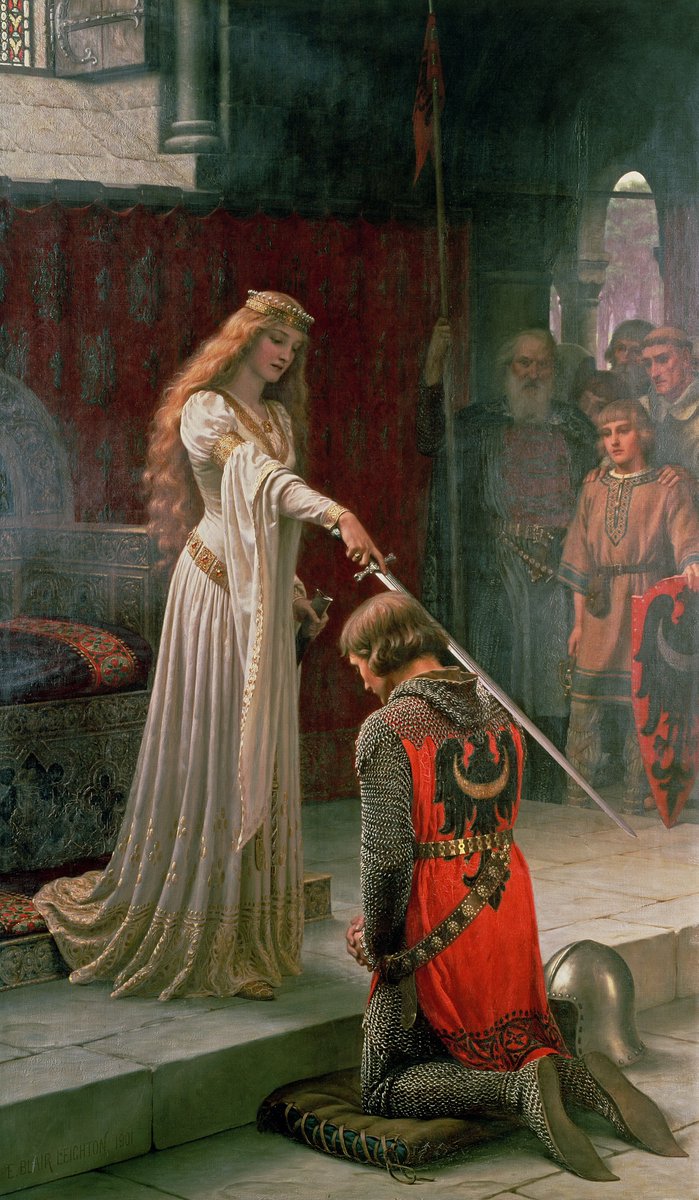
“Courage alone can never make a good knight, for a courageous fool can cause enormous damage. Therefore the knight needs wisdom. He must understand justice, know his faith, recognise his obligations, judge when action is necessary, and develop enough self-command to keep courage under the direction of reason. Just as the body of the knight is trained by riding, jousting, and the use of arms, so the soul must be trained by the study of the virtues, by knowledge of the Faith, and by understanding of the history and the civilisation he is sworn to defend. For if a man intends to defend something, he should first understand what it is, why it is worthy of defence, and how it is to be defended without destroying the very thing he seeks to protect.”
Saw the Odyssey last night; I have a lot of opinions (mostly bad), but I will refrain from all but one: O Brother Where Art Thou remains the best adaptation.