Vibe Coding with Codex - Complete Guide
Build a Web App, Desktop App & iOS App
with Codex + GPT‑5.5
(No Coding Needed, Beginner Friendly)
In this video you will learn:
> Vibe Coding Basics + Vocab
> How to build a web app using Codex
> Add db, auth + storage with @Firebase
> Github Basics
> Add AI Features (API's)
> Deploy to internet (@vercel)
> Convert Web App into Desktop app & iOS App
Chapters
00:00 Intro
01:12 Setting up Codex
01:57 The basics of Vibe Coding and Codex
02:20 Projects, Files, App
03:45 Example App - Microsoft Paint
04:25 Running app locally
06:39 Save My Code - Use Github
10:37 Quick Review before building app
12:24 Building a web app - The Prompt
15:32 Creating Web App Project
16:34 Explaining Firebase (Database, Storage, Auth)
18:42 Setting up Firebase Project
22:54 Prompting Codex to build our app
24:49 Inspect Element - Console
26:24 Verify Data being Stored in Database
27:51 Making Changes to App
31:29 Fixing Storage Permissions with Codex
32:20 GPT API - Adding AI to our app
36:20 Making more changes using screenshots
39:02 Queuing vs Steering
40:23 Deploying our app to Vercel (App on Internet)
43:09 Convert web app to desktop app and iOS app
47:15 Web App and Desktop App work Now
48:36 Now let's run the iOS app
50:27 All three apps work!
51:11 Making Changes to iOS app
52:51 Testing agent skill feature of our app
53:55 Summary of what we did
🚨BREAKING: CLAUDE CAN TRANSFORM YOUR AVERAGE RESUME INTO AN INTERVIEW-WINNING CV IN UNDER 5 MINUTES.
These 8 prompts do what a $300/hour career coach does.
Bookmark this before your next job application 👇
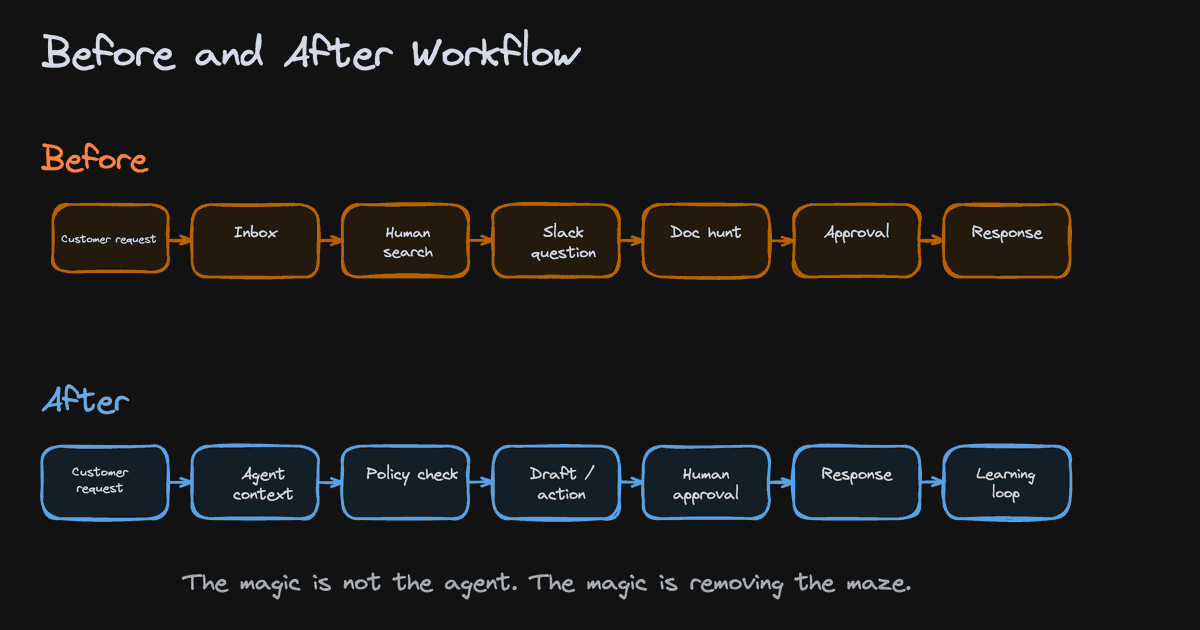
A friend asked me how to actually build a company that runs on AI agents.
I drew him 4 simple diagrams and this is what I told him:
For this to work, a few things have to be true.
- The humans move up to strategy, taste, and judgment while agents handle the execution.
- The whole business becomes readable to agents. Your data, SOPs, pricing, permissions, and decisions all live in one shared context layer.
- And you point it at the right work. Repetitive enough for an agent, complex enough that the incumbents never bothered. That's the goldmine.
In the old world, the company was the people. They held the knowledge, made the calls, did the work.
In this new world, the people become the creatives, the agents become the labor, and the company itself becomes the context layer.
That shared brain is the actual company now. The humans and the agents are just plugging into it.
Which means the most valuable thing you can build in 2026 is a business so well-documented that an agent can run it.
I see it everyday with @MeetLCA. I don't talk about it much publicly, but we've built a SWAT team for building AI-native orgs and AI-native products.
The moat is how legible your company is.
I drew it all out below.
Claude Code ships with 5 architectural layers most engineers never open.
Not features.
Not settings.
Layers.
Each solving a problem that raw LLMs alone cannot solve.
And 4 of them have almost nothing to do with prompting.
Here’s the real Agent Development Kit 👇
━━━━━━━━━━━━━━━
🧠 Layer 1 — CLAUDE.md
→ The Memory Layer
This is the agent’s constitution.
Stores:
→ architecture rules
→ naming conventions
→ testing expectations
→ repo structure
→ engineering workflows
Two scopes:
• ~/.claude/CLAUDE.md → global memory
• .claude/CLAUDE.md → project memory
Always loaded.
Always active.
This is not context you paste every session.
It’s context that never needs repeating.
━━━━━━━━━━━━━━━
📚 Layer 2 — Skills
→ The Knowledge Layer
Each SKILL.md contains:
→ domain expertise
→ workflows
→ specialized instructions
Claude dynamically matches the correct skill at runtime.
Then forks it into an isolated subagent.
Important detail:
Skills are:
→ on-demand
→ modular
→ isolated
Not always-on context pollution.
This gives:
→ cleaner context windows
→ lower token usage
→ specialized execution
→ fewer hallucinations
━━━━━━━━━━━━━━━
🛡️ Layer 3 — Hooks
→ The Guardrail Layer
Events:
→ PreToolUse
→ PostToolUse
→ SessionStart
→ Stop
→ SubagentStop
This is the layer most teams skip first.
And regret first.
Hooks are NOT AI.
They are deterministic shell triggers.
Examples:
→ auto-run linting on Write
→ hard-block rm -rf
→ enforce repo policies
→ inject runtime context
→ send Slack notifications
Flow:
Event fires → matcher checks → command executes
Quality enforcement moves from:
“prompt engineering”
to
“infrastructure engineering”
━━━━━━━━━━━━━━━
🤖 Layer 4 — Subagents
→ The Delegation Layer
Each subagent gets:
→ isolated context
→ separate tools
→ different permissions
→ independent models
The main agent delegates tasks downward.
Receives results upward.
That’s it.
No recursive chaos.
Subagents cannot spawn more subagents.
Hard boundaries by design.
This is where Claude Code stops behaving like:
“One assistant”
…and starts behaving like:
“A distributed engineering organization”
━━━━━━━━━━━━━━━
📦 Layer 5 — Plugins
→ The Distribution Layer
Bundle:
→ skills
→ hooks
→ commands
→ agents
→ workflows
…into one installable package.
One install.
Entire teams inherit the same behavior instantly.
Think:
npm packages
…but for organizational cognition.
━━━━━━━━━━━━━━━
Wrapping the entire stack:
← MCP Servers
GitHub • APIs • databases • integrations
→ Agent Teams
Parallel execution • message passing • shared permissions
━━━━━━━━━━━━━━━
The entire architecture in one line:
CLAUDE.md
sets rules →
Skills
provide expertise →
Hooks
enforce quality →
Subagents
delegate work →
Plugins
scale behavior across teams
━━━━━━━━━━━━━━━
Most production failures in agentic systems trace back to one missing layer.
The biggest misconception in AI right now:
People think the hard part is prompting.
It’s not.
The hard part is:
→ orchestration
→ memory
→ governance
→ reliability
→ context isolation
→ operational architecture
Most people are still chatting with AI.
A few are engineering cognition itself.
That’s the real shift happening.
#ClaudeCode #AIAgents #AIEngineering #AgenticAI #LLM #MCP #SoftwareEngineering
Someone solved one of the biggest problems with the WhatsApp API.
It's called OpenWA, a 100% open-source, self-hosted WhatsApp API you run on your own server.
No per-message fees. No third parties. No vendor lock-in.
→ Run unlimited WhatsApp accounts on one instance
→ Full API for messages, media, reactions, bulk sends
→ Real-time webhooks with built-in auth
→ Works with SQLite, Postgres, Redis, S3
→ React dashboard for sessions, API keys, webhooks
Just plug it in and send messages from your own number.
100% free. 100% open source.
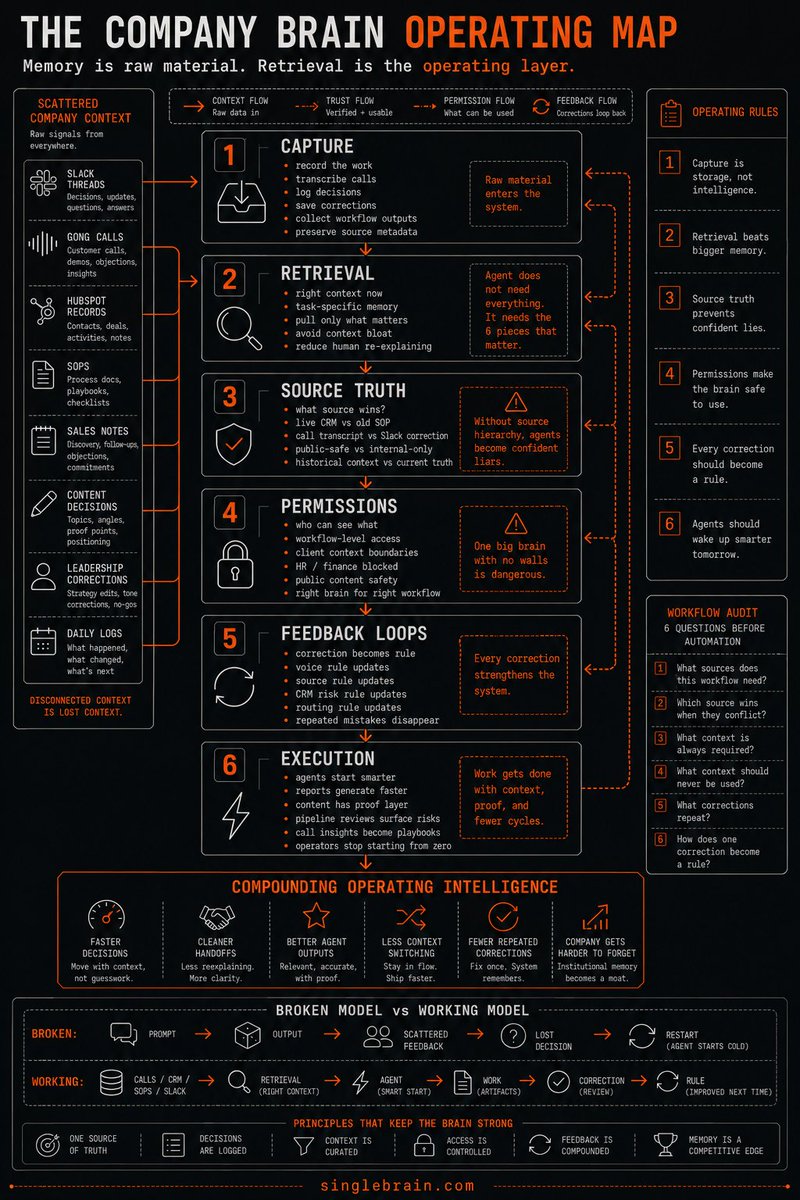
Every company is missing the same layer:
A company brain.
Right now, the memory of the business is scattered across calls, docs, Slack threads, dashboards, SOPs, and people's heads.
That's the part people miss when they talk about a company brain.
The value isn't a giant folder of company knowledge. Every company already has that.
The real advantage is the intelligence layer that sits between all that context and the work your team needs done.
This is the layer every AI-native company will need:
Claude Code just dropped "dynamic workflows" and it's pretty cool.
You type "create a workflow" or turn on "ultracode" in the effort menu and it spins up hundreds of parallel agents that check each other's work.
The unit of work you can hand off jumps from a file to an entire codebase. Migrations, audits, rewrites, framework swaps, stuff you used to plan in sprints now finishes overnight.
The part that got me:....the agents argue with each other before showing you the result. Independent attempts at the same problem, then adversarial agents trying to break the answer. It keeps iterating until they converge. That's how senior engineering teams work. Except this team runs at 3am and never gets tired.
Also if the workflow gets interrupted, it picks up where it left off. That means you can kick off work that runs for days. Not sessions. Days.
Fair warning though: this burns through tokens FAST.
Anthropic says so themselves. But if the task is a codebase migration that would have taken a team 3 months, spending $500 in tokens to do it in a week is the best trade in software.
The ceiling on what one person can build just moved again. Classic.
Going to be playing with this all week.
Pretty cool.
Anthropic engineers finally showed how they actually use Claude Code internally
31 minutes of internal workflow that most Claude users will never see on their own
here's what they cover:
> how to set up project context files the right way
> custom commands that save hours of repeated work
> hooks that make Claude behave exactly how you need
> subagents and how to actually spec them properly
"your agent isn't the problem, your spec is"
the people who understand how Claude Code actually works inside Anthropic are shipping things everyone else thinks requires a whole team
that's exactly why I put together a breakdown of Claude features most people have never discovered
you can find it below
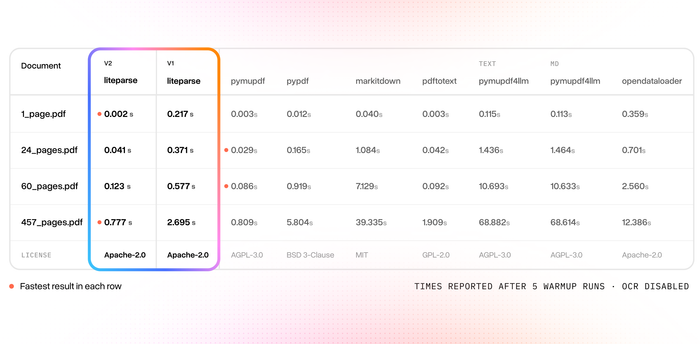
We've created the world's fastest PDF parser ⚡️
And it's more accurate than any other open-source, model-free PDF parser out there (pymupdf, pypdf, markitdown, pdftotext, opendataloader, pymupdf4llm)
Introducing LiteParse v2 - we rewrote the entire library into Rust and adapted it as native packages for Python and Node.
It supports 50+ different document types, can be triggered directly or installable directly within your favorite AI agent.
Blog: https://t.co/ckb0G73ESs
Repo: https://t.co/JNER0mVcB8
A guy named nbatman on Reddit accidentally built the most useful website on the internet.
It's called FMHY (Free Media Heck Yeah).
This is the website Google delisted from search for DMCA violations, Reddit shadow-banned for promoting piracy, the Motion Picture Association flagged as a top piracy threat, and the RIAA pressured hosting providers to drop. It is still online. It is still updated every month.
Here's how it works.
FMHY is the index. The wiki itself hosts nothing. It just tells you where every free thing on the internet actually lives, organized into 14 categories with safety ratings on every single link.
→ Movies and shows in 4K from 50+ streaming sites
→ Music at Spotify and Apple Music quality
→ Adobe Creative Cloud, Microsoft Office, AutoCAD, JetBrains
→ Every paid course on every major learning platform
→ 100 million books and papers through Anna's Archive
→ Free alternatives to every paid AI tool
→ A SafeGuard browser extension that flags unsafe sites in real time
It started as a single Google Doc maintained by one Reddit moderator in 2018. Google killed it with a DMCA takedown in 2023.
The community rebuilt the wiki on its own domain, mirrored it to GitHub and IPFS, and now runs it across 12 backup domains simultaneously.
There is no company. No CEO. No central server. Six anonymous volunteers maintain the entire thing in their spare time. Donations through Ko-fi pay for the hosting. Nobody profits.
Hollywood can't shut this down. Spotify can't shut this down. Adobe can't shut this down.
The entire subscription economy is held together by you not knowing this wiki exists.
https://t.co/AAr2rLlqgy
Anthropic engineer showed how one person can run 5 AI agents, that code, test, review, and deploy at the same time.
In 30 minutes they built the whole thing live in one session.
Here's what they cover:
> when to use one agent vs a full team
> how to split work so agents don't step on each other > the exact framework for deciding what each agent handles
that's exactly why, I put together a guide on building agent teams that actually work.
full guide in the article below 👇
Anthropic AI engineer just showed how to give AI agents real memory in 4 steps - and it changes everything
in 28 minutes he shows exactly how agents can remember across sessions, completely free
worth more than any $500 AI engineering course
here's what he covers:
• why agents forget everything between sessions
• memory stores - agents read, write across sessions
• dreaming - agents that improve their own memory
• 95% cache hit rate, so it stays cheap
most people are still copy-pasting context into every new chat - while the people who figured this out are building agents that get smarter every single night
watch full video then read article below
Godfather of AI: "If you sleep well tonight, you may not have understood this lecture."
This 47-minute lecture is the best thing I saw about AI in the last few months.
It will definitely help you understand how it actually works and where it's going.
Geoffrey Hinton built the neural networks behind every AI alive, then quit Google to warn the world about it.
The part nobody wanted to hear:
> AI is already developing abilities its creators didn't intend
> in most cognitive tasks it's already ahead of us
> the question is no longer if it surpasses us but when
> the only decision left is which side of that line you're on
Right now the average person opens Claude, types something, gets an answer, closes the tab.
They think they're using AI. they're using maybe 10% of it.
I went through his entire lecture, built a practical concepts from what he was describing.
The gap won’t be between people who use AI and people who don’t.
It’ll be between people who understand it and people who don’t.
Start with these 20 AI concepts today 👇
Anthropic AI team just dropped the Prompting Playbook that beats most paid courses.
33-minutes. Free. By the Anthropic team.
Control case + edge cases + knowing when to hand off to a human = a real eval suite.
Worth more than any $500 prompt-engineering course.
Yesterday, Chinese Ambassador to Nigeria posted on Twitter that Nigerians can now export cow bones duty-free to China.
Under the comment sections, some Nigerians were asking the ambassador to tell them what they are using the cow bones for😁
Some were telling the ambassador to tell his people to come and setup the processing facility here in Nigeria, so they can create jobs.
Funny people. I laughed at our inability to do simple Google search.
As a livestock farmer and Agro commodities trader, I already know the uses of cow bones.
And about building a factory here in Nigeria? Nigerians are the ones to do it, but sadly everyone is building hotels😁
Let me tell you a few uses of cow bones.
Here are 4 major uses of cow bones you can mention in your content;
✍🏻Bone meal fertilizer: Cow bones are processed into bone meal, rich in phosphorus and calcium, used to improve soil fertility.
They prefer this to fertilize their soil not the chemical sold to our rural farmers.
✍🏻Animal feed supplement: Processed bone meal can be used as a mineral supplement in livestock feed, especially for calcium and phosphorus.
We use this for chicken feed, pig, and fish feed production.
Verify the price per kg and you’ll be shocked.
✍🏻Gelatin production: Cow bones can be processed to extract gelatin, used in food, pharmaceuticals, capsules, and cosmetics.
Just imagine the volume of cow bones wasting in your village?
Pharmaceuticals companies are paying billions of dollars to buy it from those processing it.
And I believe those Chinese companies will focus more on this.
It is big money wasting away in Africa because we don’t know anything about value addition.
✍🏻Activated carbon / bone char: Burnt bones can produce bone char, used in filtration, sugar refining, and water purification.
Pause here and think deeply with me. They use bone char for water purification in their country.
But they produce capsules and sell to us for water purification😳
Let’s not blame them. We take responsibility.
Now, let’s be honest. This is a golden opportunity for us. Let’s export the cow bones and cash out.
Also, let’s learn how to process the cow bones locally and export the finish product too.
If I tell you now that chicken feed producers in Nigeria import bone meal, you won’t believe. Research it yourself.
A ton of bone meal is around $200 - $750 currently.
Bro, just imagine earning over $200 from wastage thrown around our local markets in Africa.
Business opportunity for you. Do your research and see how you can position to serve this market