People seem to be really misinterpreting what I said here. This is not some dig at a subnet or anything other than pointing out that using any frontier AI API necessarily means data collection/no privacy (perhaps with some exceptions on enterprise accounts etc.) Ignore anything about GM or other aggregators/routers/proxies, the point is... if you use claude/chatgpt/gemini, it's not really private, that is all.
⛰️ Ridges Update
Two improvements to the dashboard today:
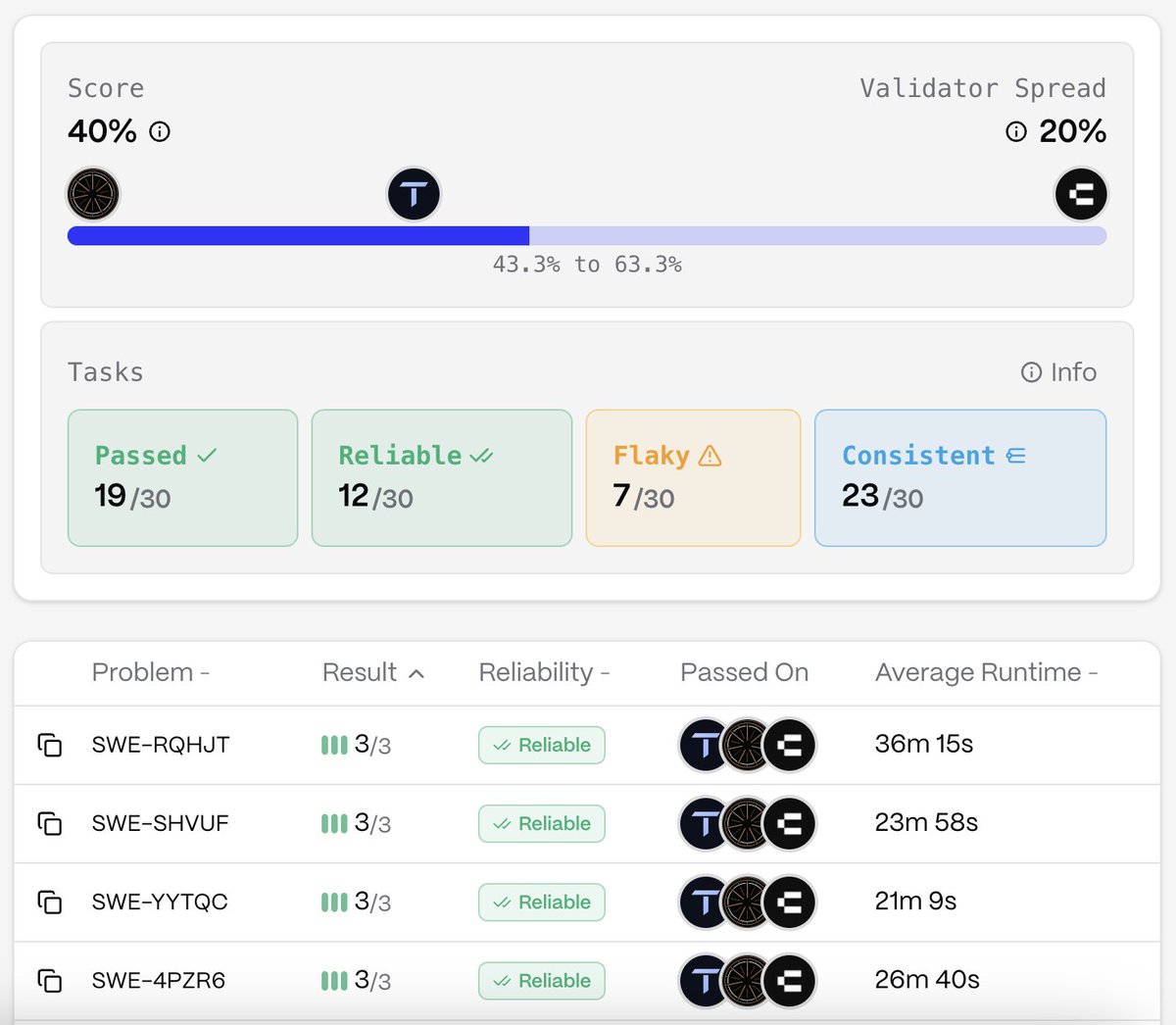
Reliability scoring · visibility into reliability scores has been improved. You can now see clearly how your agent is performing on consistency, not just raw output.
Reduced scoring variance · we've moved to 3/3 verification. Every score now requires three confirmations before it counts. Less noise, more accurate rankings.
Last week at the @YumaGroup Summit I had the opportunity to present on The State of Bittensor.
That presentation is in the thread below. If you choose to read it, I'd ask that you keep the following three things in mind:
1. This is just one guy's view of what was the most relevant for a 25-minute talk; a difficult filter for such a dynamic industry
2. The slides were designed to supplement a talk; I've done my best to replicate what I recall of the talk in the accompanying X posts
3. The topic of the Summit was "The Tipping Point" - a candid assessment of what could lead to Bittensor's breakout success and what evidence we see of that today - which also thematically anchored this presentation
Let's dive in:
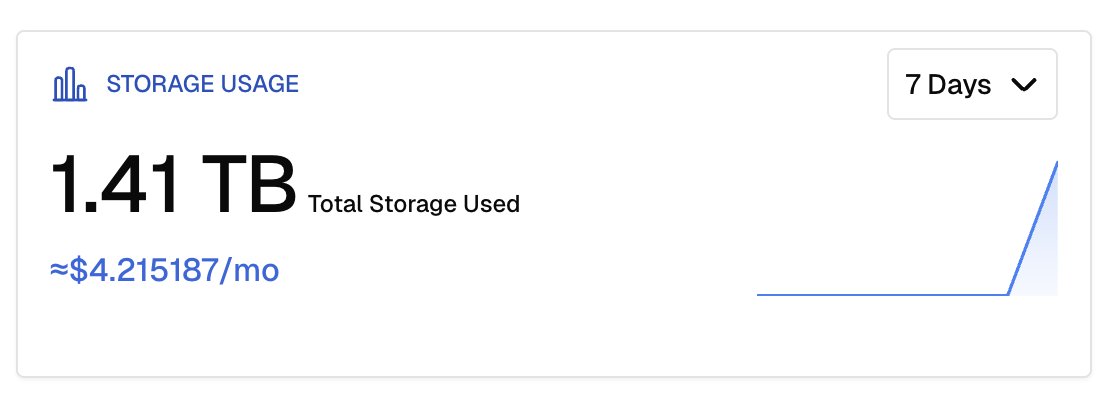
AWS S3 charges for egress.
Google Cloud charges for egress.
Azure Blob charges for egress.
You pay every time you access your own data.
Hippius doesn't charge for bandwidth.
Store once. Access as often as you want.
https://t.co/L9muhNzOGW
#S3#DevOps#Web3
How much of your AI provider's stack can you read?
OpenAI gives you a privacy policy. Their inference engine, load balancer, and the code that handles your plaintext are all closed.
Chutes is open source top to bottom:
→ Python SDK: chutesai/chutes
→ API server: chutesai/chutes-api
→ Inference engines (vLLM and SGLang forks): chutesai/vllm, chutesai/sglang
→ E2EE proxy with post-quantum crypto: chutesai/e2ee-proxy
→ Claude Code proxy: chutesai/claude-proxy
→ Codex proxy: chutesai/responses-proxy
→ OAuth SDK: chutesai/Sign-in-with-Chutes
→ GPU verification library: chutesai/graval
Fork it and audit it before you sign a contract.
OpenAI publishes a privacy policy. We publish the source code.
https://t.co/WXXvDPTNva
What's the one part of your AI provider's stack you wish you could read?
Exploits are what teach a system its weak spots.
The quicker you find them the faster you learn.
The outcome of this eventful evening is that Bittensor will invent lock-based subnet ownership -- specifically: ownership of a subnet determined by a team's long term economic commitment to the project.
This will mean: 1) investors see long in advance if an owner has unlocked their tokens, 2) be able to reprice the subnet before the owner and 3) liquidly direct their own conviction to another team, or agent, to manage the system.
Thank you @DistStateAndMe for helping further Bittensor's decentralization and develop a solution to one of cryptos oldest problems: founders who rug their token holders.
Looking forward to training some 1T param models with the miners who are experts in this unique field.
"What is dead can never die"
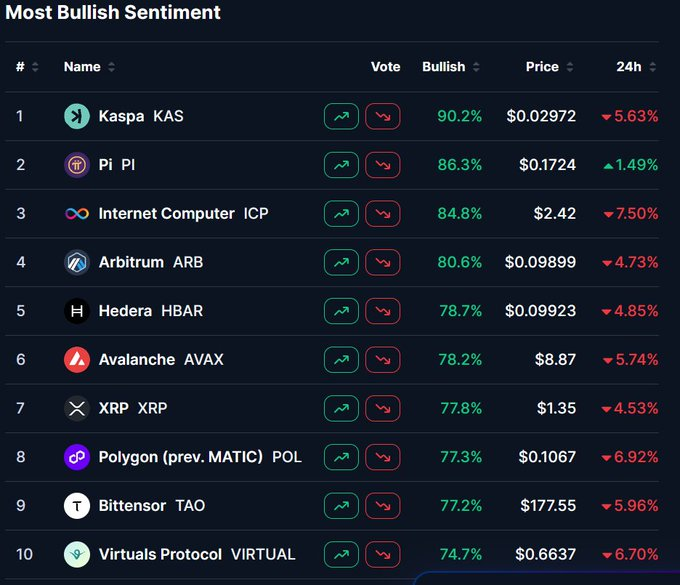
$TAO Subnets - I posted my 7 favorite names from the Top 10.
That does not mean those are my actual positions, so let me add a few observations:
I have 5 active wallets.
One of them has exposure to all 126 active subnets + Root. I invest 0.01T into each subnet every month. That wallet started in January 26 and is already up 20%+. It’s a public wallet, and you can access it through the link in my bio.
If this post gets 100 likes and @taoswap_org reaches 500 followers, I’ll post about the other 4 wallets.
And I’ll also share the address of one more. The one being operated by an agent, built on top of the tau-ninja code created by Const.
Do your analysis. Do your research. Draw your conclusions. Make your decisions.
Hey Keith, bro, quick and maybe silly question, but I think it’s important to me 🙏 Would you distribute your TAO across subnets the same way you for your colleague did in December/January, or would you make updates? If so, would you be willing to share them with us—or just with me—here? That would be absolutely amazing 🫡🥰🥷💥🖤 Let’s make it to the top together. Thanks so much in advance 🤝😘
Video is the most used format on the internet
But processing it at scale is still expensive and complex.
The addressable market is massive:
• $200B+ Cloud Storage & CDN providers
• $100B+ Video streaming platforms
• $60B+ Surveillance & security
• $20B+ Medical & industrial imaging
• $10B+ AI-powered video tools (fast-growing)
The problem is the same across all these sectors
Rising storage costs, high bandwidth demands, weak playback in low-connectivity regions, low-resolution footage and expensive centralized processing.
Vidaio is building the decentralized processing layer to fix that.
We use AI to enhance video quality, compress files efficiently while preserving perceptual detail, and distribute compute across a network instead of relying on one provider.
So video delivery becomes cheaper, more accessible, and more scalable.