$NVDA IN TALKS TO INVEST IN PERPLEXITY AT $30B+ VALUATION
NVIDIA is discussing an investment in Perplexity as part of a multibillion-dollar funding round that would value the AI startup at more than $30B, per The Information.
Perplexity’s annualized revenue has climbed to more than $750M, up from less than $250M at the start of the year, helped by growth from its AI agent, Perplexity Computer.
NVIDIA had previously considered paying billions to license Perplexity technology and hire some of its staff before discussions shifted toward a traditional equity investment.
The companies have also grown closer through NVIDIA’s Nemotron Coalition, with teams reportedly meeting multiple times a week on hardware and software development.
The creator of PostgreSQL just thanked Oracle for making his database win.
Michael Stonebraker created PostgreSQL. Now in his 80s, still building companies.
His exact words: "We have to thank Oracle for PostgreSQL's popularity because when they bought MySQL, everybody was afraid... that was the beginning of the PostgreSQL ascendancy."
Oracle acquired MySQL in 2010. Developers panicked and started migrating before Oracle had even done anything wrong.
Fifteen years later, Stonebraker says the fear was justified.
In September 2025, Oracle made widespread layoffs across its core MySQL team.
PostgreSQL became the most popular database among developers in 2023. Microsoft, Google and Amazon all built their own services around its protocol.
His verdict on MySQL today: "vanishing as a competitor."
His reason PostgreSQL keeps winning: "It's controlled by a gang of 20 or 30-ish very smart super programmers... That's open source at its absolute best."
Oracle spent 15 years accidentally building PostgreSQL's biggest advantage.
It never had a single owner to be afraid of.
Ox Alpha (stealth model) is free for the next week
- 1M Context
- Multi-modal
- Zero Data Retention
Generous rate limits, near unlimited usage
We have capacity for 100T tokens per day, lets see what you can do
Alex Atallah might be the luckiest founder of all time.
He co-founded OpenSea in 2017 and helped build the infrastructure behind the NFT boom. The company reached a $13.3 billion valuation. Atallah left his day-to-day role in July 2022, just as the market began to cool.
Then he co-founded OpenRouter as generative AI took off. One API for hundreds of models, charging roughly 5% on the AI spend routed through it.
Built around that fee, OpenRouter raised more than $150 million in venture funding, including a $113 million Series B at a $1.3 billion valuation in May.
Atallah described it as “an AI equivalent of Stripe.”
Now Stripe has reportedly agreed to acquire OpenRouter for more than $7 billion.
And one day later, Straitly launches the same service with one key difference: 0% markup. The fee model at the heart of OpenRouter was priced to zero by a new competitor one day after the deal was reported.
Atallah sold the toll booth just as someone made the toll free.
Twice now, he has left the party at almost exactly the right moment.
Stripe has finalized an agreement to acquire OpenRouter, a startup that helps companies switch between artificial intelligence models, for more than $7 billion, according to people familiar with the matter. https://t.co/NZRt1tYhX5
🚨Stripe is buying OpenRouter for $7 BILLION+
>founded 2023
>raised at $1.3B valuation just months ago
>today: $7B+ exit
CEO: “OpenRouter as the AI equivalent of Stripe”
Kimi K3's weights are free to download. Almost nobody on earth can actually run them.
2.8 trillion parameters. The download is the easy part.
Open weights used to mean you could self-host. At this scale it means you can read the file.
So people download it and call the API anyway. Daily revenue up at least 6x since launch.
Openness stopped being the opposite of a business model. It became the top of the funnel.
The license says the quiet part. Past $20M in revenue you negotiate a contract. Past 100M users you display their name.
Free for the developer. A contract for anyone the model actually earns from.
And publishing the weights kills the argument before it starts. Nobody can claim the benchmarks were cooked.
Independent indexes put K3 top three overall and first in frontend coding, with no one taking Moonshot's word for it.
That's the whole trade. Give away the artifact, keep the infrastructure, get the audit for free.
Check the last open model you praised. Ask whether you could serve it, or only download it.
𝗜 𝗯𝗿𝗼𝗸𝗲 𝗱𝗼𝘄𝗻 𝘁𝗵𝗲 𝗲𝗻𝘁𝗶𝗿𝗲 𝗔𝗜 𝗮𝗴𝗲𝗻𝘁 𝗺𝗲𝗺𝗼𝗿𝘆 𝗹𝗮𝘆𝗲𝗿: 𝗵𝗼𝘄 𝘁𝗼 𝘀𝘁𝗼𝗿𝗲 𝗶𝘁, 𝗳𝗶𝗻𝗱 𝗶𝘁, 𝗮𝗻𝗱 𝗸𝗲𝗲𝗽 𝗶𝘁 𝗰𝗹𝗲𝗮𝗻, 𝗶𝗻 𝗿𝗲𝗮𝗹 𝗰𝗼𝗱𝗲.
Free 30 min course on AI agent harness memories. Whiteboard first, then SQLite vs @mem0ai vs @zep_ai vs LangMem on the same facts.
🌟 Github Repo: https://t.co/dzS2f2Jdh1
💻 Join our Community: https://t.co/NMcEekLrmd
Most people bolt a vector database onto a chatbot and call it memory. The actual layer is four operations:
Store → Retrieve → Consolidate → Retire
@NousResearch Hermes and my own Waku Agent run zero embeddings. Plain text and one SQLite file. Open it, it's yours.
Retire is the one nobody implements. Deleting a fact and invalidating a fact are not the same system.
Full video in the first reply 👇
0:00 - Why every LLM call starts with amnesia
2:31 - Store memory as text, tables, or graphs
5:04 - Find it 4 ways: do nothing, keyword, RAG, Graph RAG
7:29 - Maintain it: add, delete, retire, attribute, reflect
9:47 - Build the whole thing in plain text and SQLite
13:13 - Add a vector store only when you actually need one
14:38 - Row memory vs graph memory vs temporal graph
21:03 - Run the code for all 5
You Can Build Anything. You Can Learn Anything. 💪
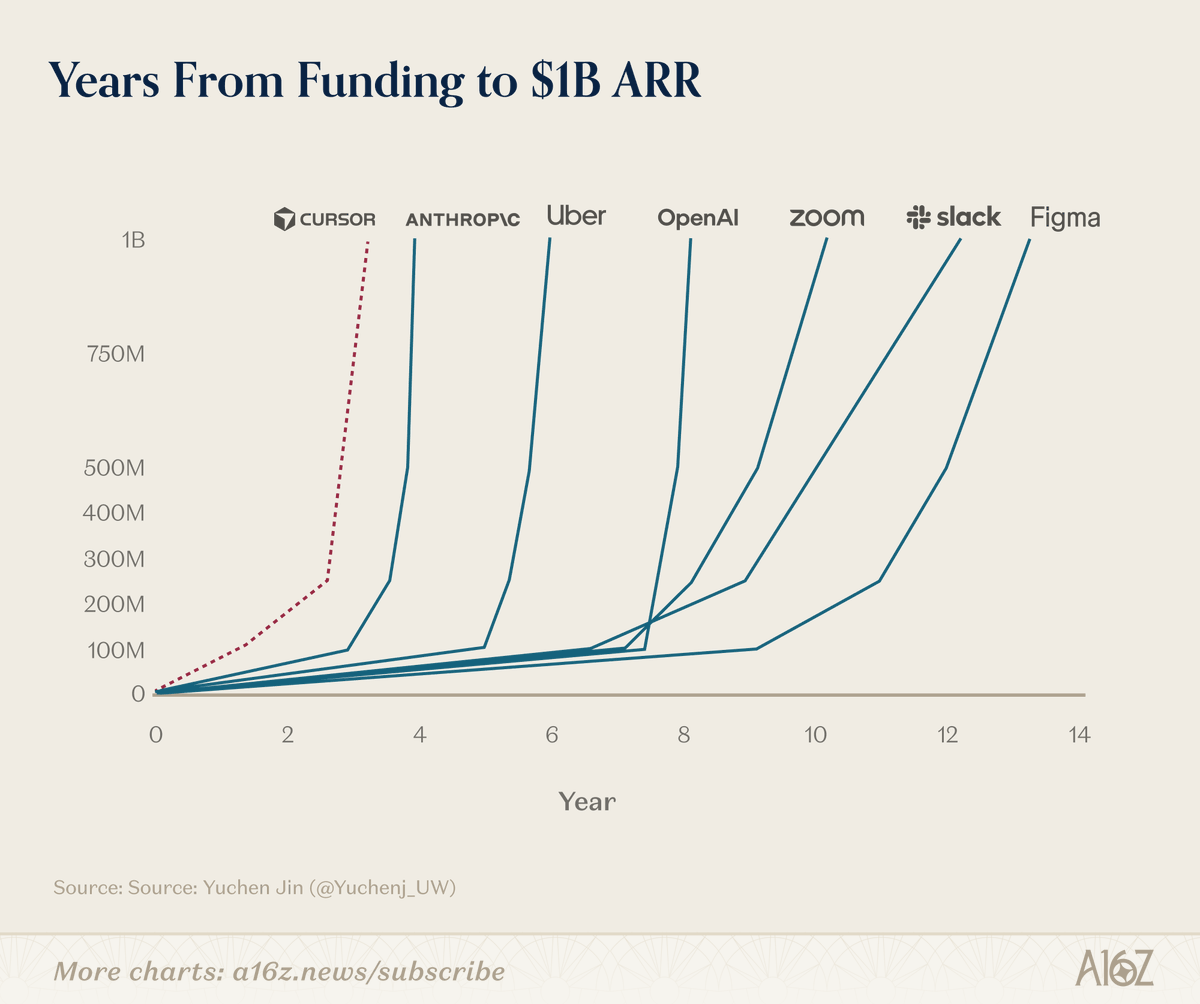
"Anysphere—which most people just called 'Cursor'—became the fastest software company in history to reach $100 million in annual recurring revenue."
"In 2024, things went vertical. Developers discovered the product and loved it, and they told their friends about it, and their friends loved it too."
"At one user meetup, a user from Japan explained that he’d flown in from Tokyo with a book he’d written in Japanese about how to use Cursor. It was honestly like the Beatles for software; we’d never seen anything like it."
Full piece from @sarahdingwang, @BornsteinMatt, and @martin_casado on Cursor + SpaceXAI: https://t.co/jnyXICp1pJ
GLM-5.3 has released, beating Fable & the new DeepSeek V4-Pro 0813 from just yesterday on Terminal-Bench.
It used GLM-5.2 as the base model with gains from more compute spent than ever before on post-training on diverse long-horizon tasks.
Open weights have hit escape velocity.